


February is the best month to rely on your microwave because it sits at the intersection of low energy needs, tight schedules, lighter meals, and changing routines.
Winter is easing out, the festive rush is behind us, and everyday life speeds up again. A microwave quietly becomes the most efficient way to cook, reheat, and reset without adding effort to already full days.
This is not about shortcuts.
It is about rhythm.
February rewards appliances that work with your life, not against it.
February is a transition month, not a comfort month.
January is about recovery.
March is about momentum.
February sits in between.
The cold is still there, especially in North India. But it is not an indulgent cold. It is practically cold. The kind where you want warmth without heaviness.
Meals change accordingly.
- Less deep frying
- More reheating
- Smaller portions
- Quicker cooking cycles
This is when a microwave stops being optional and starts being essential.
February cooking is about efficiency, not performance.
Why does February quietly favour microwave cooking?
Because February exposes friction.
Long cooking times feel unnecessary.
Multiple utensils feel wasteful.
Full gas flames feel excessive.
Microwaves thrive in moments like these.
They excel when the goal is simple.
Warm food. Even cooking. Minimal cleanup.
And February delivers these moments daily.
The real February kitchen problem is decision fatigue
Most people blame time.
That is not accurate.
The real problem is mental load.
Think about a regular February weekday.
- Office hours are back to normal
- Schools are fully operational
- Evenings are darker again
- Energy dips faster
Now add cooking decisions.
What to make.
How long it takes.
Whether it is worth the effort.
Microwaves remove at least half those decisions.
One button.
One container.
One clear outcome.
Good appliances reduce thinking before they reduce effort.
February meals are smaller and more frequent
This is an under-discussed shift.
February eating patterns look different from December or March.
Portions shrink.
Frequency increases.
People eat:
- Mid-evening snacks
- Early dinners
- Leftovers from earlier in the week
- Reheated breakfast items
Microwaves are designed for exactly this pattern.
Gas stoves are built for fresh starts.
Microwaves are built for continuity.
And February is all about continuity.
Three February cooking realities where microwaves win

1. Reheating without drying food
February food needs warmth, not intensity.
Microwaves reheat without overcooking when used correctly.
- Rice stays soft
- Rotis stay pliable
- Curries retain moisture
This matters more in February because meals are often carried forward.
Food preservation is as important as food preparation.
2. Cooking without overheating the kitchen
February days are deceptive.
Cool mornings.
Mild afternoons.
Chilly nights.
Using gas stoves for long durations heats the kitchen unnecessarily.
Microwaves contain heat.
They cook inside a sealed system.
This keeps kitchens comfortable, especially in compact urban homes.
3. Faster cooking during short daylight evenings
February evenings feel shorter than they are.
Work ends.
Sunlight fades.
Energy drops.
Microwaves compress cooking time.
- Steaming vegetables in minutes
- Heating snacks without supervision
- Cooking simple meals while doing something else
Speed is not the benefit. Flow is.
February is also the most energy-aware month
Electricity bills spike in January.
Cooling bills return in March.
February sits in the middle.
Households become cautious.
Microwaves consume controlled, predictable power.
Compared to prolonged gas usage or multi-appliance cooking, they offer consistency.
This is especially relevant in apartments and rented homes.
Energy efficiency becomes visible in February.
The microwave fits February lifestyles across generations

For working professionals living solo
February resets routines.
Lunch boxes return.
Meal prep resumes.
Late workdays increase.
Microwaves support:
- Batch cooking on weekends
- Quick weekday reheating
- Minimal dish usage
One person cooking does not need a full kitchen every time.
For couples setting up new homes
February is practical.
It is when real living begins.
Microwaves help new households:
- Experiment without pressure
- Cook small portions
- Avoid kitchen clutter
They allow learning without risk.
Confidence in cooking grows when mistakes cost less effort.
For parents managing school schedules
February is relentless.
Schools, tuition, activities, and work all collide.
Microwaves make predictable food available without extra attention.
- Morning reheats
- Evening snacks
- Late-night meals
Consistency matters more than creativity here.
February is the perfect month for convection microwaves
This is where the microwave evolves.
Convection microwaves combine:
- Microwave heating
- Oven-style baking
- Grilling and air frying
In February, this matters.
Why?
Because people want variety without volume.
A convection microwave can:
- Bake small batches
- Grill evenly
- Air fry without oil overload
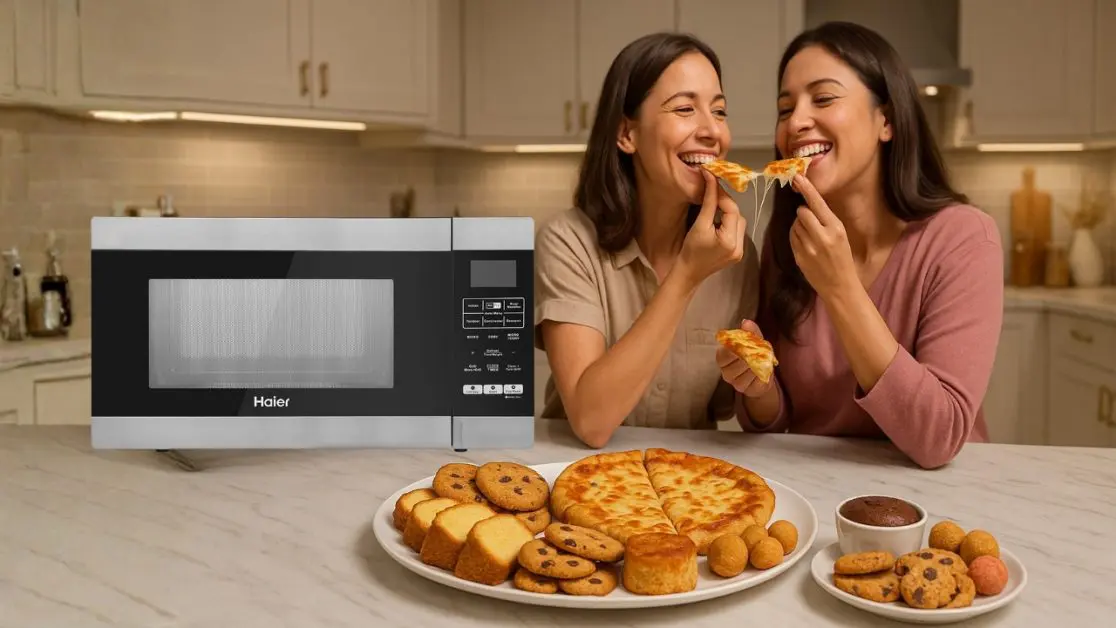
The Haier 30L Convection Microwave with In-Built Air Fryer is designed exactly for this kind of everyday versatility, offering multiple cooking modes, preset menus, and controlled heating in one compact system
Not for show.
For rhythm.
February cooking favours systems over skills
This is an important shift.
February does not reward culinary ambition.
It rewards reliability.
Microwaves operate as systems.
You set parameters once.
They repeat outcomes consistently.
This is why people rely on them more in February than they realise.
Consistency beats complexity in transitional months.
The overlooked advantage of microwaves in February
Silence.
Not acoustic silence.
Operational silence.
Microwaves do not demand attention.
They do not pull focus.
They do not interrupt conversations.
They do not force presence.
This matters during:
- Homework hours
- Late-night calls
- Post-work recovery
February is mentally dense.
Quiet appliances matter.
Microwave cooking aligns with February food psychology
People crave warmth, not indulgence.
Think:
- Soups
- Steamed dishes
- Soft grains
- Reheated comfort foods
Microwaves handle this category better than any other appliance.
They warm evenly.
They preserve texture.
They avoid overcooking.
This matches February moods perfectly.
February is when microwaves feel indispensable, not impressive
December appliances impress guests.
January appliances recover routines.
February appliances support life.
Microwaves shine here because they are not trying to be centre-stage.
They just work.
The best appliances disappear into daily life.
What relying on your microwave in February really means
It does not mean abandoning traditional cooking.
It means:
- Choosing efficiency when it matters
- Preserving energy for more important decisions
- Letting systems handle repetition
February is not dramatic.
It is functional.
Microwaves are built for functional living.
The larger pattern February reveals
Every year, February quietly teaches the same lesson.
Life does not slow down.
It stabilises.
And appliances that stabilise routines become indispensable.
This is why microwaves earn trust in February.
Not because they are modern.
But because they are dependable.
The takeaway worth remembering
February rewards tools that reduce friction, not effort.
Microwaves do exactly that.
They remove hesitation.
They simplify choices.
They fit into imperfect days.
And that is why February is the month when your microwave stops being a convenience and starts feeling like a necessity.
Not loudly.
Not dramatically.
Just naturally.
Exactly how good design should work.
Frequently Asked Questions
Why does cooking feel harder in February even when my schedule is “normal”?
Because February drains mental energy, not time. Routines return, expectations rise, daylight shrinks, and your brain hits decision overload. Cooking becomes one more choice you don’t want to make.
I’m not that busy, so why do I still avoid elaborate cooking in February?
February is a transition month. Your mind seeks stability, not stimulation. Appliances that reduce thinking like microwaves feel easier because they eliminate micro-decisions.
Why do I eat more leftovers and reheated food in February?
Portions shrink, frequency increases, and energy dips. February favors continuity over fresh starts. Leftovers fit that rhythm perfectly.
Is reheating food daily in the microwave unhealthy?
No, if done properly. Microwaves reheat evenly and retain moisture when covered and timed correctly, which often preserves food better than repeated stovetop heating.
I leave food overnight more often in February. Does a microwave help with food safety?
Yes. Controlled reheating reduces partial warming (a common hygiene issue with gas stoves), especially for rice, curries, and grains.
Why does using the gas stove feel excessive in February?
Because February doesn’t need intensity. Long flames overheat kitchens during mild afternoons, making the effort feel disproportionate.
How do microwaves keep kitchens more comfortable in February?
Heat stays contained inside the appliance instead of spilling into the room ideal for compact homes and unpredictable February weather.
Why do I suddenly care more about energy usage in February?
January bills arrive, March cooling hasn’t started yet, and February becomes the month of awareness. Consumption becomes visible.