


Sediment builds up in water heaters through the year and quietly reduces heating efficiency, increases electricity use, and shortens appliance life.
Flushing the tank before winter restores smooth water flow, better heating, lower bills, and safer performance. It is a simple, once-a-year reset that keeps your home ready for the season.
Why sediment becomes a winter problem

Every Indian home has a familiar moment.
The first cold morning of the season.
You switch on the geyser, wait for the water to heat, and the shower produces a lukewarm trickle that feels nothing like comfort.
That moment is not winter’s fault. It is sediment.
Winter magnifies whatever has been ignored through the year. A thin layer of minerals in March becomes a stubborn block in November. And like most hidden problems in a modern home, it shows up exactly when you need things to work smoothly.
Sediment is not random. It follows a system.
Hard water brings minerals. Minerals settle at the bottom. Heat produces more deposits. Over months, the heating element has to work harder, the water heats unevenly, and energy consumption rises.
This is the invisible system that shapes winter comfort.
Hot water follows physics. Physics follows maintenance.
And that is why one small act changes the whole season. Flushing the tank.
What sediment actually changes in a water heater
It helps to name the consequences. Sediment quietly affects four things.
1. Heating speed
When minerals settle at the bottom, they act like insulation. The heating element must burn longer to achieve the same temperature. Slow mornings follow.
2. Electricity consumption
The more the heater struggles, the more units it draws. A layer of scale increases power use significantly across months.
3. Comfort and consistency
Water becomes hot then cold then hot again. A pattern emerges. And patterns always tell a story about the system underneath.
4. Appliance life
Sediment accelerates wear. It corrodes parts, strains the thermostat, and reduces tank life.
Understanding these costs gives winter its clarity. Comfort comes from systems that stay clean and predictable.
How to flush out sediment before winter begins

Every home has three options. Each teaches us something about maintenance, risk, and long term cost.
One option is the annual manual flush
This is the simplest approach.
- Turn off the heater and let the water cool.
- Close the inlet valve.
- Attach a hose to the outlet and direct it to a drain.
- Open the drain valve and let water flow until it runs clear.
- Refill and restart.
The benefit is cost efficiency. You spend time instead of money.
The downside is accuracy. Some sediment settles in corners or around the heating element. A basic flush removes most of it but not all. For homes with very hard water, build up returns quickly.
The second option is a professional pre winter service
A technician performs a deeper clean.
- Complete tank drain
- Element inspection
- Pressure valve check
- Anode rod assessment
- Thermostat testing
This option offers certainty. Problems are spotted before winter pressure exposes them.
The cost benefit ratio becomes clear. One service can prevent major issues later. Maintenance is always cheaper than repair.
The third option is choosing a heater designed to resist sediment in the first place
Some appliances are engineered for invisible labour. They prevent the problem instead of fighting it.
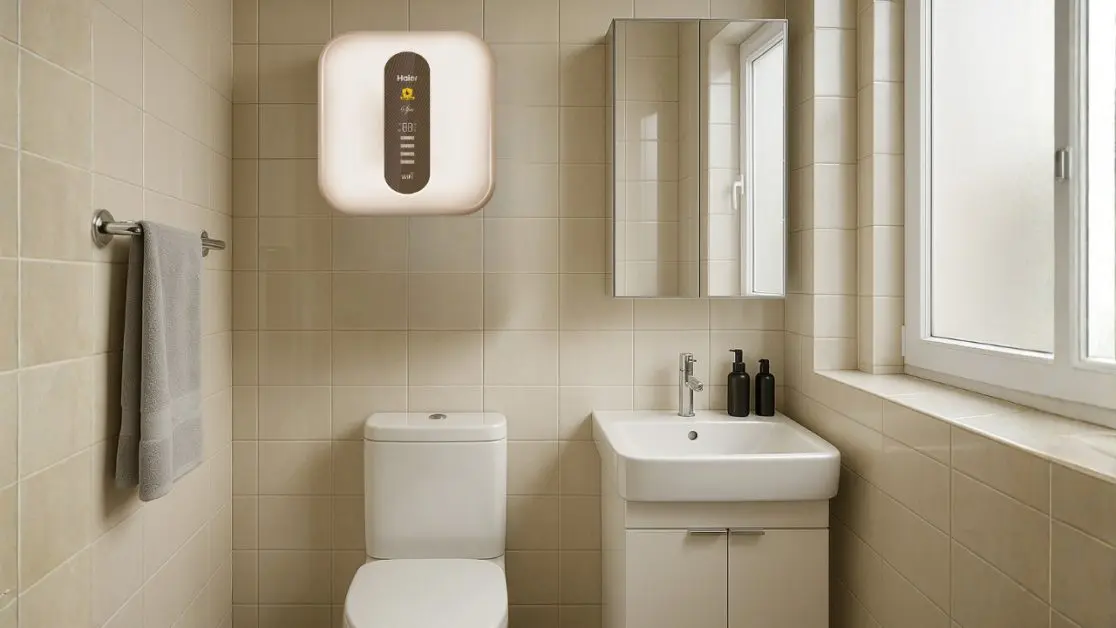
Haier’s 15L Square 5 Star Water Heater ES15V SD WIFI uses RSC U turn flow technology, to keep water circulating so minerals do not stagnate or settle permanently. This single feature delays sediment formation and keeps the flow consistent.
The model also includes a glass lined tank for corrosion resistance, an Incoloy 800 stainless steel heating element for long life, and PUF insulation that reduces reheating cycles. These elements together form a system that manages minerals, heat, and energy more intelligently.
Winter always rewards thoughtful design.
What flushing teaches us about home systems

A water heater looks like a simple appliance.
Heat. Store. Deliver.
But every simple system hides complexity. And sediment reveals it.
Insight 1: Every daily comfort is the final result of many small, invisible processes working well.
A perfect morning shower is not about the few minutes you stand under hot water. It is about the minerals, pressure valves, insulation, thermostat controls, and heating elements that quietly do their jobs.
Insight 2: Maintenance is a form of respect for future time.
Flushing your heater now saves hours, stress, and power bills later. It is a reminder that prevention is not just cheaper, it is wiser.
Insight 3: Systems remember neglect.
Sediment does not appear overnight. It accumulates because nobody checked earlier. A home stays efficient when attention stays consistent.
This is a principle that applies far beyond appliances.
Organisations. Teams. Projects. Even personal routines. They all degrade slowly until something important breaks.
Winter is not just a season. It is a test of systems.
How sediment affects winter energy costs
Hot water becomes one of the largest household energy loads during November to February. The maths is simple.
- A clean tank heats faster.
- A clean tank retains heat better.
- A clean tank cycles less often.
- A clean tank consumes fewer units.
Here is a quick comparison.
| Condition | Heating Speed | Energy Use | Comfort Level | Long Term Cost |
| Freshly flushed tank | Fast | Lower | Stable | Low |
| One year sediment | Slow | Higher | Fluctuating | Medium |
| Multi year sediment | Very slow | Very high | Poor | High |
In winter, efficiency feels personal.
A home where everything works smoothly becomes a place that supports you instead of demanding work from you.
How modern heaters reduce maintenance effort
Not all households have time for annual draining.
Not all want to open valves or deal with tools.
And not all heaters treat sediment the same way.
This is where engineering matters.
Models like Haier’s ES15V SD WIFI incorporate Bacteria Proof System (heating at 80 degrees to inhibit bacteria) and dual thermal protection, These features sustain tank health even when maintenance is delayed.
The RSC U turn flow technology mentioned earlier prevents stagnant water and improves circulation. This directly reduces mineral settlement.
These are not features for the sake of features.
They are systems designed so real homes can stay functional even when life gets busy.
The quietest innovations are those that solve problems before they become visible.
When should you flush your heater
Patterns help the decision.
1. At the start of winter
This is the golden moment. It prepares the heater for heavy seasonal use.
2. After six months of hard water exposure
Homes in cities like Delhi, Gurugram, Pune, Hyderabad, or Chennai experience faster sediment build up.
3. When water pressure drops suddenly
This is a classic sediment signal.
4. When the heater takes longer to warm up
Heat loss almost always points to deposits.
Think of flushing as seasonal upkeep.
Like servicing a car before a long trip.
Like checking a roof before the monsoon.
Winter comfort depends on what you do before winter arrives.
The hidden cost of delaying sediment removal
Maintenance choices always have ripple effects.
Delay changes three things.
- It strains the heating element and accelerates wear.
- It forces the thermostat to work longer and harder.
- It raises electricity bills for months.
The principle is simple.
What costs ten minutes today costs ten times more later.
Efficiency is not an accident. It is a consequence of timely intervention.
A practical winter readiness checklist
A clean tank is only one part of winter prep.
Homes feel comfortable when systems align.
Here is a short list.
- Flush the heater tank.
- Check the pressure relief valve.
- Inspect the anode rod in older heaters.
- Test the thermostat for accurate cut off.
- Ensure the bathroom ventilation is clear.
- Confirm insulation is intact around pipes.
- If using a smart heater, set a timer schedule.
Small decisions compound.
Winter comfort is built from rituals like these.
The bigger picture: why winter prep feels like life prep
Every season teaches a principle.
Winter teaches readiness.
We prepare heaters for the same reason we prepare careers, finances, organisations, or routines. Sediment is not just a mineral layer. It is a metaphor for everything we postpone until the deadline appears.
A home that runs smoothly is not a luxury. It is a foundation for everything else in your day. Work feels lighter. Mornings feel calmer. Nights feel warmer. This is the emotional ROI of simple, thoughtful maintenance.
A water heater is a small appliance.
But winter turns it into the centre of everyday comfort.
If you want a heater that stays clean longer
If your lifestyle leans toward set once and forget, look for features like:
- RSC circulation for consistent flow
- Glass lined tanks for corrosion control
- Incoloy 800 elements for long life
- PUF insulation that reduces reheating
- Safety systems like shock proof and dual thermostat cut off
Haier’s ES15V SD WIFI model includes all these elements
You do not choose a heater for winter.
You choose it for the percentage of your life that quietly depends on hot water.
The final insight
Flushing out sediment looks like a maintenance chore.
It is actually a reset button.
A small ritual that restores efficiency, extends life, reduces cost, and prepares your home for the colder months ahead.
Winter comfort is not created in December.
It was created in November.
And a few minutes of attention now can change the entire rhythm of your season.