


Winter vegetables deserve more than just a plastic bag in the fridge.
The key to keeping them fresh, nutrient-rich, and flavourful lies in how intelligently you store them and how smart your refrigerator is about adapting to the season’s rhythm.
When the chill hits, the fridge becomes the heart of the home

Winter does something beautiful to Indian kitchens.
The markets fill with colorful carrots and cauliflowers stacked like pyramids, fresh methi bundled with dew, peas popping out of pods, and coriander perfuming every basket.
It’s a season that turns cooking into comfort.
Soups simmer longer. Parathas multiply. Leftovers stretch into second meals.
But it’s also the time when vegetables wilt faster, fruits lose texture, and the fridge becomes overcrowded with “I’ll use this tomorrow” containers.
That’s the real problem: winter freshness is fragile. And most refrigerators, if not used thoughtfully, end up ageing your food instead of preserving it.
So how do you make your vegetables live longer without turning your fridge into a science experiment?
The first rule: Freshness is a system, not a feature
Most of us think storage is about temperature.
But freshness actually depends on how consistently that temperature, humidity, and air circulation are managed, not just how cold it gets.
When your fridge lacks precise control, leafy greens dry out, while onions and potatoes sprout prematurely.
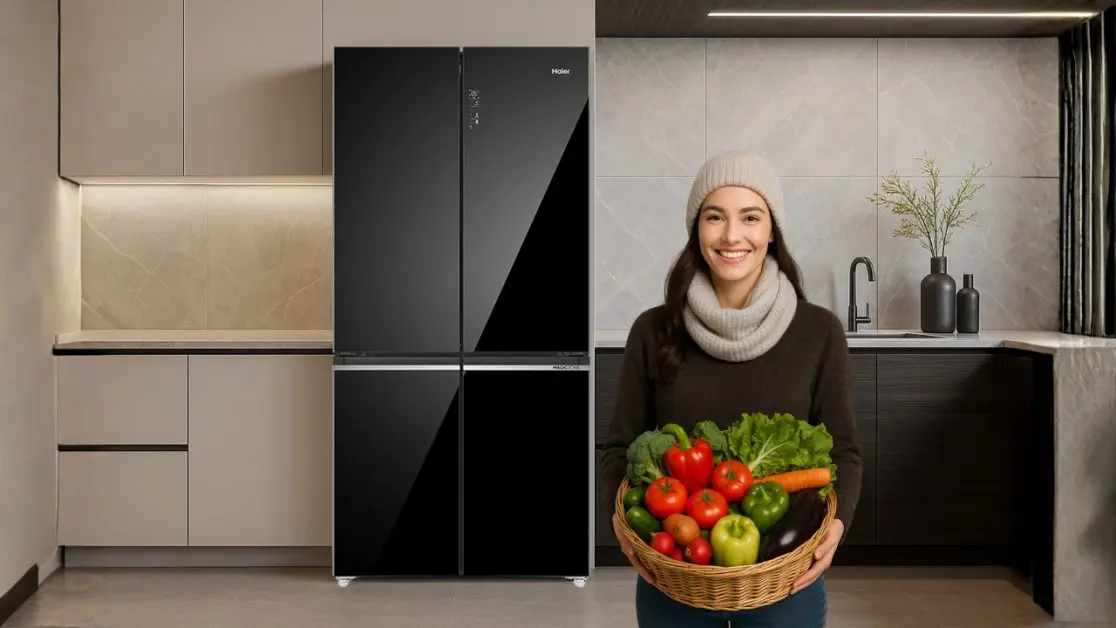
The Haier Lumiere 630L 4-Door Refrigerator, for instance, was built around this invisible system.
Its Smart Sense AI learns your usage habits when you open, how long you keep it that way, and what temperature your food actually needs. Then, it adjusts automatically.
That means your spinach isn’t freezing at the back, and your fruits aren’t sweating near the door.
It’s not just storing its understanding.
How winter vegetables behave (and why they test your fridge)
Every vegetable breathes differently.
- Leafy greens (like methi, spinach, coriander) release moisture quickly.
- Root veggies (carrots, radish, beetroot) dry up when air circulation is poor.
- Gourds and beans prefer slightly higher humidity.
A traditional refrigerator treats them all the same.
But a modern one like Haier’s Lumiere creates micro-climates through ABT Pro Technology, which absorbs odours and impurities while balancing moisture levels.
So your coriander doesn’t start smelling like yesterday’s dal, and your carrots don’t lose that snap.
Let’s talk space because clutter kills freshness
Every Indian family fights the same war: not enough fridge space.
Winter only makes it worse from peas you bought in bulk to half-used milk packets and airtight boxes of homemade halwa.
Here’s the trick:
- Don’t pack vegetables too tight. Airflow matters. Use separate boxes for greens and roots.
- Use transparent containers. What you see, you use. What you hide, you forget.
- Reserve a low-humidity zone for dry vegetables and herbs.
- Keep fruits and vegetables apart. Fruits release ethylene gas, which accelerates veggie spoilage.
The Haier Lumiere’s 630-litre capacity gives you room to follow these rules.
With Convertible Fridge Space, you can switch sections between fridge and freezer depending on your load. Have a big sabzi-prep week ahead? Convert your freezer into extra fridge space in seconds.
It’s flexibility that feels like breathing room for your groceries.
The invisible enemy: Condensation

If you’ve ever seen frost on your veggies, you’re not imagining humidity swings can quietly ruin freshness.
When warm air enters every time you open the door, it creates droplets that lead to spoilage.
The result? Soggy greens, ice-crusted boxes, and that faint smell you can’t quite locate.
That’s why Twin Fans and Auto Defrost systems matter more than people think.
The Lumiere’s dual-fan circulation ensures every corner gets even cooling, not cold spots.
You’ll notice the difference the next time you bite into a week-old apple that still crunches like it was bought yesterday.
What’s smart storage in a real Indian kitchen?
Forget Pinterest-perfect fridge layouts. Real kitchens have leftovers, halwa boxes, and weekend plans.
Here’s a smart system you can actually use:
| Section | What to Store | Ideal Tip |
| Upper Shelves | Ready-to-eat leftovers, soups, milk-based sweets | Keep in shallow containers for quick cooling |
| Middle Shelves | Vegetables and herbs | Use mesh bags or paper towels to absorb moisture |
| Lower Drawer | Roots and tubers like carrots, turnips, beetroot | Store unwashed; soil keeps them fresh longer |
| Door Shelves | Condiments, sauces, butter | Avoid placing milk or eggs here (too much temperature variation) |
This layout prevents waste and keeps flavours intact.
The new-age habit: Using your fridge like a planner
Food waste in India is often emotional, not careless.
You bought too much methi because it looked fresh. You cooked extra because guests “might drop by.”
Lumiere’s Smart Food Management feature lets you digitise this chaos.
Through the Haismart app, you can track expiry dates, plan meals, and even share your grocery list with family.
It’s like having a kitchen assistant who remembers what’s inside the fridge even when you don’t.
And here’s the real shift:
When you start managing freshness digitally, you reduce waste automatically.
Fridge wisdom from real kitchens
Every home has its hacks.
Your mother lines the vegetable drawer with old newspapers. Your neighbour swears by storing coriander in glass jars.
Here are some tested insights old wisdom, made smarter:
- Wrap herbs loosely in damp paper towels before storing.
- Don’t wash vegetables before refrigeration. Moisture speeds up decay.
- Store tomatoes outside the fridge until ripe, then refrigerate them.
- Group by temperature sensitivity fruits like apples and pears love it cool; bananas don’t.
Modern refrigerators like Haier’s ABT Pro Technology take these habits further removing bacteria and odours so traditional methods stay effective longer.
Winter is about nourishment, not just storage
Think about what we cook this time of year
gajar halwa, sarson ka saag, hearty soups, mixed vegetable sabzis.
These dishes rely on ingredients staying fresh until you actually use them. A wilted spinach leaf or a soggy carrot changes everything.
That’s why storage is emotional; it’s about protecting the potential in your ingredients.
A well-kept fridge means fewer midweek grocery runs, fewer “throwaway” moments, and more joy in cooking what you already have.
It’s not about luxury. It’s about peace of mind.
The modern kitchen is a living ecosystem

Your fridge isn’t just a storage box anymore. It’s part of a smarter rhythm of how Indian families eat, cook, and live.
The Lumiere series stands for that shift.
With AI-powered cooling, convertible design, and glass-finish elegance, it’s less about “keeping food cold” and more about keeping life fresh.
Because freshness isn’t a luxury it’s a lifestyle choice that shapes how we eat, waste, and live consciously.
Quick takeaways for fresher winters
Here’s a quick recap you can pin to your fridge:
- Use breathable storage bags and plastic traps.
- Wiping your drawers weekly moisture breeds bacteria.
- Don’t overload shelves air circulation = freshness.
- Group items by lifespan: older items in front, new ones behind.
- Let your fridge rest too many door openings = temperature imbalance.
- Go convertible, switch freezer space to fridge when vegetable load increases.
These are small rituals that make freshness last longer than the season itself.
A final thought: The quiet intelligence of freshness
There’s something deeply satisfying about opening your fridge midweek and seeing everything still crisp, the coriander fragrant, the carrots firm, the leftovers as inviting as the night they were made.
That’s not luck. That’s design meeting discipline.
Technology meeting tradition.
And that’s what Haier’s Lumiere refrigerator quietly represents, not just smarter storage, but a smarter way to live.
Because the real joy of winter cooking isn’t just in what you make, it’s in what you’re able to keep fresh long enough to enjoy.