

In India’s rainy season, misusing fridge compartments doesn’t just waste space it shortens freshness.
Vegetables wilt, leftovers spoil, and odours spread because most people don’t match food to the right compartment.
The fix isn’t complicated, it’s about rethinking how each shelf and drawer works with the season.
Why Rainy Season Exposes Our Refrigerator Habits
Monsoon brings more than chai cravings and wet laundry. It brings humidity. And humidity changes how food behaves.
- Vegetables like coriander and spinach turn slimy within days.
- Cooked dal starts to ferment faster.
- Even milk, kept in the wrong part of the fridge, can curdle quicker than in peak summer.
The irony? The fridge was built to fight exactly this. But most of us use it like a cupboard with cooling. We dump everything inside and hope for the best.
The rainy season reveals how fragile that system is.
Vegetable Box Isn’t a Free-for-All
Open any Indian fridge, and the crisper box looks like a farmers’ market gone wrong. Carrots next to chilies, coriander shoved in without wrapping, mushrooms suffocating in plastic.
Humidity is the culprit here. The crisper was designed to balance moisture, but it works only if you separate:
- Leafy greens wrap in newspaper or cloth bag before placing.
- Hard veggies (carrots, beans, gourds) are placed in loose perforated bags.
- High-odour items like onions shouldn’t go here at all. They release gases that make everything else spoil faster.
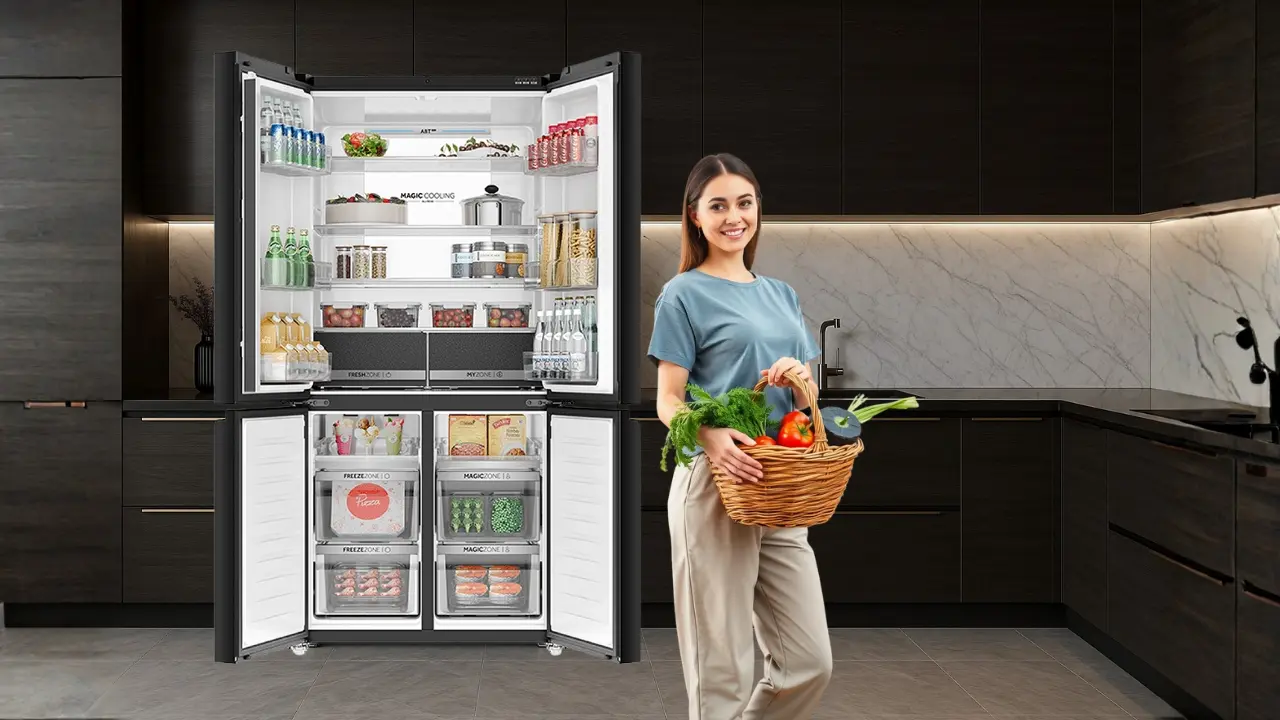
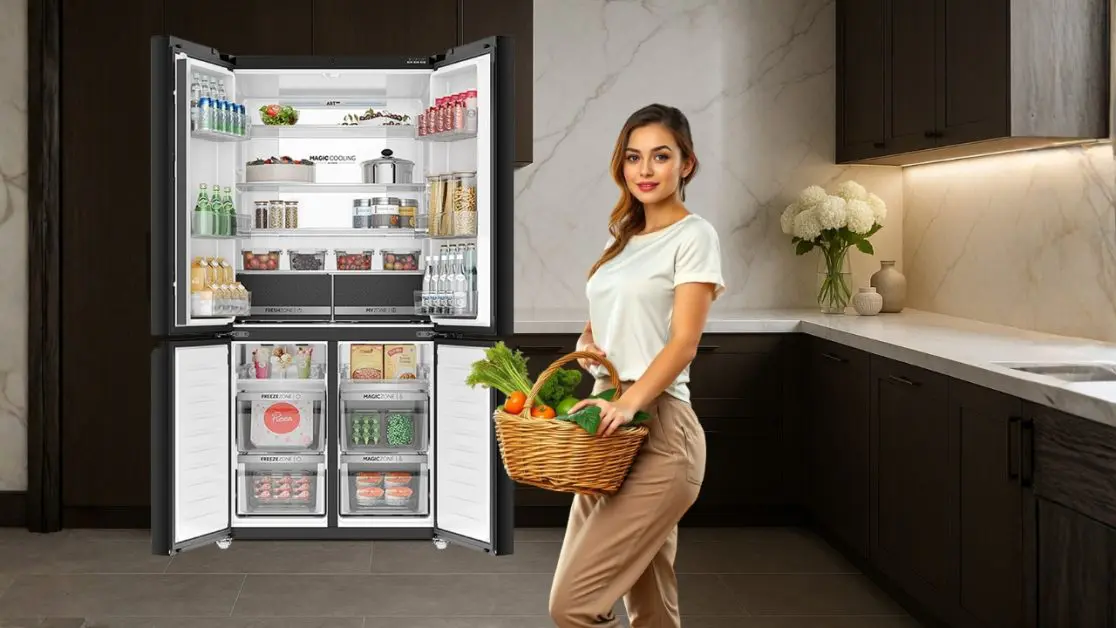
A smart fridge like Haier’s Lumiere 4-Door even uses ABT Pro technology to absorb odour and impurities but the principle stays the same: organisation is half the battle.
Stop Using the Door for Milk

It’s the most common Indian fridge mistake. Tall bottles of milk, juice, even half-used packets sit on the door shelves.
The problem? That’s the warmest part of the fridge. Every time the door opens, milk warms up slightly, making it spoil sooner. In monsoon, when bacteria multiply faster, that’s a direct ticket to curdled milk.
https://youtu.be/0NtUwyrZp4U?si=UaYs9z-uQNSuGcJiBetter spot?
Middle shelf, towards the back. That’s the coldest and most stable area. Save the door for sauces, pickles, and condiments that can handle temperature swings.
Leftovers Need Their Own Zone
In most households, last night’s biryani ends up on whatever shelf has space. Covered, uncovered, sometimes balanced on top of other containers.
Rainy weather accelerates spoilage. Which means you need discipline:
- Always cover tightly preferably glass or steel containers with lids.
- Place on upper shelves where the air circulation is stronger.
- Label with date yes, it feels extra, but you’ll thank yourself when you avoid eating sour sambar.
In high-capacity fridges like the Haier Lumiere, the 425L main fridge space means you can actually dedicate a shelf just to leftovers. That’s how organisation turns into peace of mind.
Convertible Compartments Are Rainy Season Gold
Here’s the underrated feature most Indian homes underuse: convertible fridge-freezer compartments.
Think about this:
- In festive winters, you want freezer space for meats, ice creams, and party prep.
- In monsoon, you want extra fridge space for veggies, chutneys, and snack storage.
Haier’s Lumiere refrigerator lets you switch a 103L section between fridge or freezer with a button. Which means no more cramming coriander into random corners.
The broader insight? Appliances today aren’t rigid, they’re adaptive. But they only work if we match them to our seasonal rhythms.
The Door Compartments: More Than Storage

The door racks aren’t just space-fillers. They’re designed for items that don’t mind quick temperature changes.
Good fits:
- Jams and sauces
- Cold drinks and sodas
- Packaged juices
Bad fits:
- Fresh milk
- Butter in peak monsoon (it melts faster at the door)
- Any medicine (yes, people still keep them there
The rule is simple: if it spoils quickly, it doesn’t belong in the door.
Rainy Season Dos and Don’ts (Quick Table)
| Compartment | Do | Don’t |
| Crisper Box | Wrap greens, separate hard veg | Mix onions or keep in plastic wrap |
| Middle Shelf | Store milk, dairy, leftovers | Balance uncovered dishes |
| Freezer | Freeze meats, prepped snacks | Shove in half-open packets |
| Door | Condiments, sauces, drinks | Fresh milk, butter, medicines |
| Convertible Zone | Switch to fridge for extra veg | Leave unused as clutter space |
Smart Tech Helps, But Habits Matter More
Modern fridges come with Smart Sense AI that adjusts cooling to your usage. They track patterns, reduce energy waste, and maintain freshness without you thinking about it.
But no AI can save a fridge where coriander sits unwrapped or milk lives on the door. Technology amplifies habits, it doesn’t replace them.
Why This Matters Beyond Food
It’s tempting to think fridge organisation is about saving coriander or avoiding sour milk. But zoom out.
- Every wasted batch of veggies = money thrown away.
- Every spoiled leftover = wasted time from cooking.
- Every curdled milk packet = frustration in an already stressful season.
Small inefficiencies stack up into real stress. And the rainy season only magnifies that.
When appliances work with your habits, not against them, life feels lighter. Which is the unspoken promise of brands like Haier: not bigger machines, but smarter homes.
Final Takeaway
The rainy season doesn’t have to mean slimy spinach and spoiled milk. It’s about using each fridge compartment as it was designed not as a dumping ground.
- Door for condiments, not milk.
- Crisper for wrapped greens, not onions.
- Freezer for sealed items, not random packets.
- Convertible zones for seasonal flexibility
The refrigerator isn’t just cold storage. It’s a quiet system that, if understood, saves money, reduces stress, and keeps rainy days a little fresher.