


Front load washing machines stay efficient in winter because they use less hot water, maintain temperature better, clean clothes with mechanical action instead of excess heat, and dry faster due to high spin speeds.
The system works with the season instead of fighting it, which is why Indian households feel the difference the moment the weather turns colder.
Winter slows everything down. Laundry included.

If you’ve ever washed a load on a foggy December morning, you know the feeling. Clothes take longer to dry. Water takes longer to heat. Detergent dissolves more slowly. Even your routine feels heavier.
We don’t usually talk about it, but winter has a very real cost inside Indian homes. The morning bucket fills late. The geyser gets overworked. The line-dried clothes stay damp till afternoon.
So the question becomes simple.
What kind of washing system performs well when the world around it slows down?
The quiet truth is this.
Front load machines are built for seasons like winter.
Not because they use more power. But because they understand how to use less.
Let’s break that open.
The science of winter washing is different
Cold weather reveals the weak links in a laundry system.
Clothes need more agitation to remove dirt.
Detergent needs more time to activate.
Water needs more heat to stay warm through the cycle.
A top load machine relies heavily on hot water and long soaking. A front load relies on physics. The drum flips clothes, presses them, lifts them, drops them. The mechanical action does what hot water usually does.
A simple principle emerges..
Machines that depend on heat struggle when heat escapes quickly. Machines that depend on movement stay efficient.
This is the first major advantage of front load systems.
Why front load machines outperform in winter
1. They use less water which means faster heating
Think of a large pot versus a small saucepan. Which one boils faster?
Front load machines need only one third of the water a top load usually consumes. Less water means quicker heating, stable temperature and lower electricity use.
In winter, this becomes a serious advantage because your water heater is already under pressure.
2. They maintain water temperature better
Hot water loses heat rapidly in open environments.
A front load drum is a closed, horizontal chamber.
Heat stays inside.
Cycles stay consistent.
Clothes get washed at the right temperature even on cold mornings.
3. They depend on drum rotation instead of high heat
This is the hidden system at play.
Front load machines clean by movement, not by soaking.
The drum tumbles clothes against each other.
Dirt is removed by friction and lift, not just temperature.
So even when the weather is cold, wash quality doesn’t drop.
4. They spin faster which shortens drying time
Winter is when drying becomes a full day activity.
Front load machines solve this at the source.
- High RPM removes far more moisture
- Clothes feel lighter
- Drying time reduces dramatically
A 1400 RPM spin cycle can pull out so much water that clothes often dry indoors without the musty smell that winter usually brings.
The real world scenario most families recognise
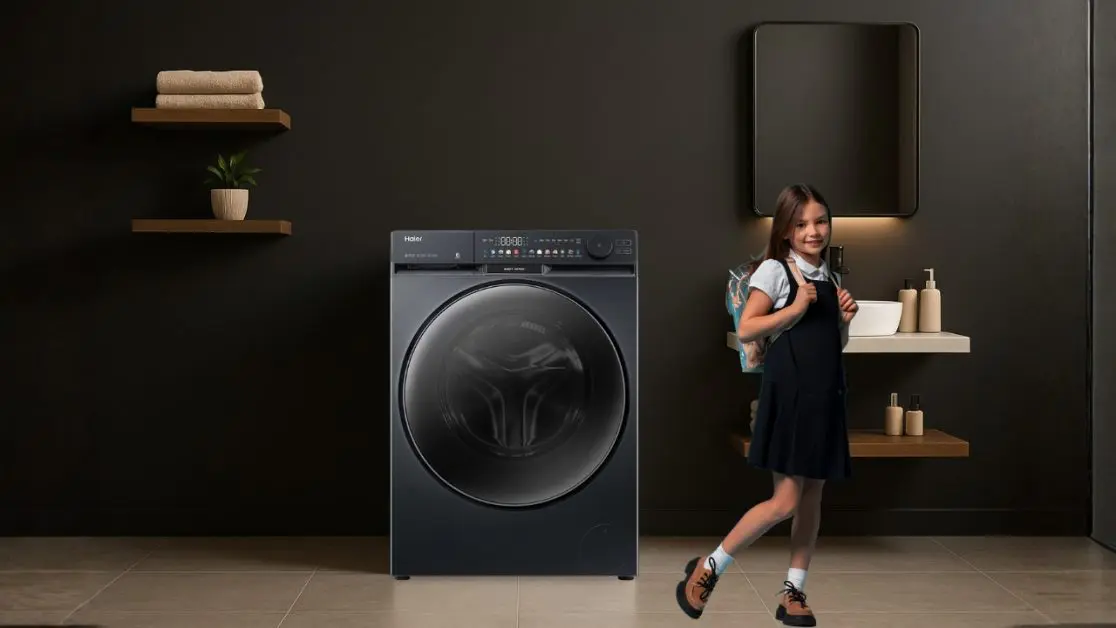
It’s 7 am in Delhi or Chandigarh. The house is cold. Kids’ uniforms need to dry before the sun sets. You already know towels will take hours.
A front load machine cuts that time significantly.
This is why many Indian parents say the difference between a stressful winter and a manageable one often begins with the washing machine.
Not because it “works harder”.
But because it “wastes less”.
What efficiency actually means in an Indian winter
Let’s explain the bigger system.
Efficiency is not about speed. It is about smart energy use.
Front load machines optimize five things at once.
- Less water
- Less heating loss
- Higher mechanical cleaning
- Shorter cycles
- Faster drying
This chain reaction saves electricity, water and time without adding effort. Households that switch rarely go back because the improvement shows up every single day.
And winter makes that difference unmistakable.
A quick winter comparison
| Feature | Front Load | Top Load |
| Water needed | Low | High |
| Heating time | Short | Long |
| Heat retention | Strong | Weak |
| Wash quality in cold | Consistent | Variable |
| Drying time | Faster | Slower |
| Energy efficiency | Higher | Moderate |
This is not a theory.
It is a lived experience across Indian cities where temperatures drop sharply for three to four months.
A small detail that matters more in winter
Front load drums seal better.
That one detail helps in two ways.
- Heat stays inside
- Noise stays low
Many families run laundry late at night in winter. A sealed drum means the household stays quiet, warm and undisturbed.
Machines like Haier’s Direct Motion Front Load range use motor technology that reduces vibration and keeps night-time cycles smooth. This is the kind of engineering that feels invisible until you experience it.
Good design becomes a form of comfort.
So what does this mean for your home this winter

Two insights stand out.
First, your laundry system should adapt to the season instead of demanding more from it.
A front load machine respects the constraints of winter. It uses them wisely.
Second, long term savings come from daily patterns.
Small efficiencies multiplied over a 90 day winter become meaningful.
Less heating.
Less drying stress.
Less fabric damage.
Less noise.
This is how homes become calmer without changing routines.
A quiet observation before we close
Indian winters are short but intense.
They test the hidden systems inside every home.
Front load washing is one of the few systems that improves when conditions get tougher. Good engineering works like that. It solves the problem without drawing attention to itself.
And if you’re setting up a new home or upgrading an older one this season, models with high RPM spin, direct motion motors and intelligent wash cycles make a noticeable difference. Haier’s front load line is a good example because the design choices match exactly what Indian winters demand.
Not a pitch. Just a useful truth.