


Ganesh Chaturthi isn’t just a festival. It’s a feeling.
If you’ve ever been in Mumbai during these ten days, you know the energy. The sound of drums echoing through lanes, the aroma of modaks wafting from kitchens, and the sea of devotees thronging iconic pandals like Lalbaugcha Raja or Siddhivinayak. It’s devotion wrapped in community, tradition woven with spectacle.
But here’s the truth. Not everyone can stand in those endless queues or brave the crowd. Many of us live away from Mumbai working in Bengaluru, studying in Delhi, or sitting in a quiet flat in Pune. Yet the longing remains: to witness the aarti, to feel part of the collective faith.
This is where technology quietly reshapes tradition.
Why the aarti feels different in 4K
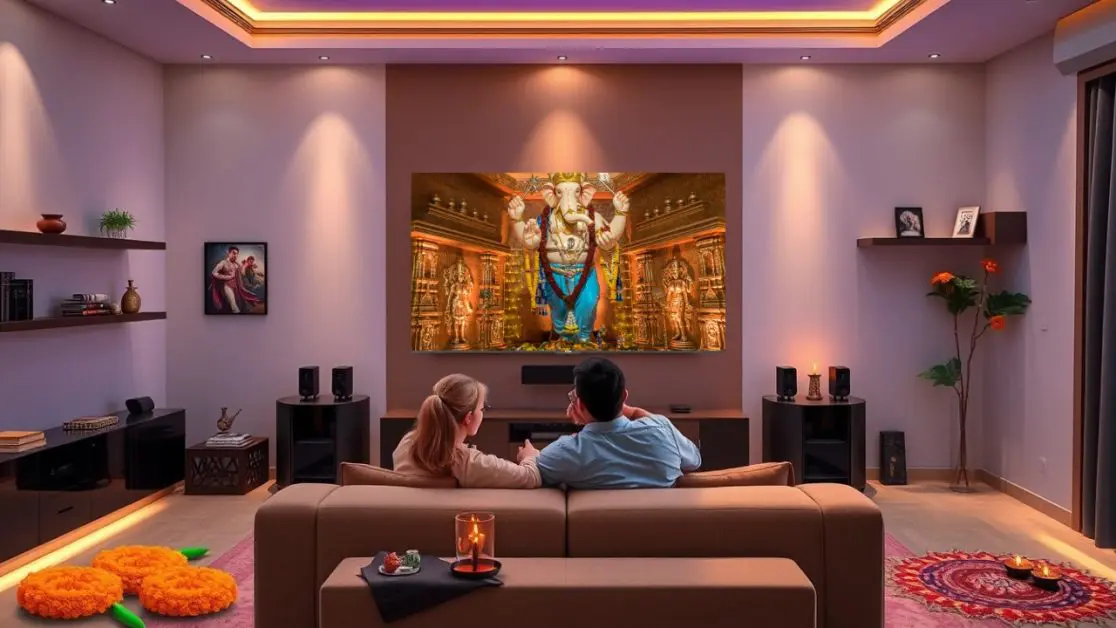
A decade ago, you’d catch a shaky live stream on your phone. Grainy visuals, lagging audio, constant buffering. The experience was more frustration than devotion.
Now imagine this instead:
- The glow of diyas captured in crisp 4K resolution.
- The intricate decorations of pandals revealed in colours as vivid as being there.
- The sound of the conch and chants delivered with cinematic clarity.
That’s what a modern 4K big-screen TV brings. It doesn’t just broadcast an event; it creates immersion. You don’t “watch” Ganpati aartis, you step into them.
Festivals migrate from public squares to private spaces
Something fascinating happens during Ganesh Chaturthi. What begins as a deeply public celebration, giant idols, crowded pandals, visarjan processions also spills into living rooms.
One option is simple: bring friends and family together at home, light diyas, play the live aarti in 4K, and create your own mini-pandals indoors.
The second option: connect with family members who live far away, grandparents in Nagpur, cousins in Dubai and stream the same aarti together. Screens become shared rituals.
The third option: for those living alone, a smart TV turns solitude into connection. Instead of scrolling endlessly on social media, you can stream live aartis, listen to bhajans, and feel tethered to the collective spirit.
Technology doesn’t replace faith. It extends it.
What makes the experience “living room worthy”?
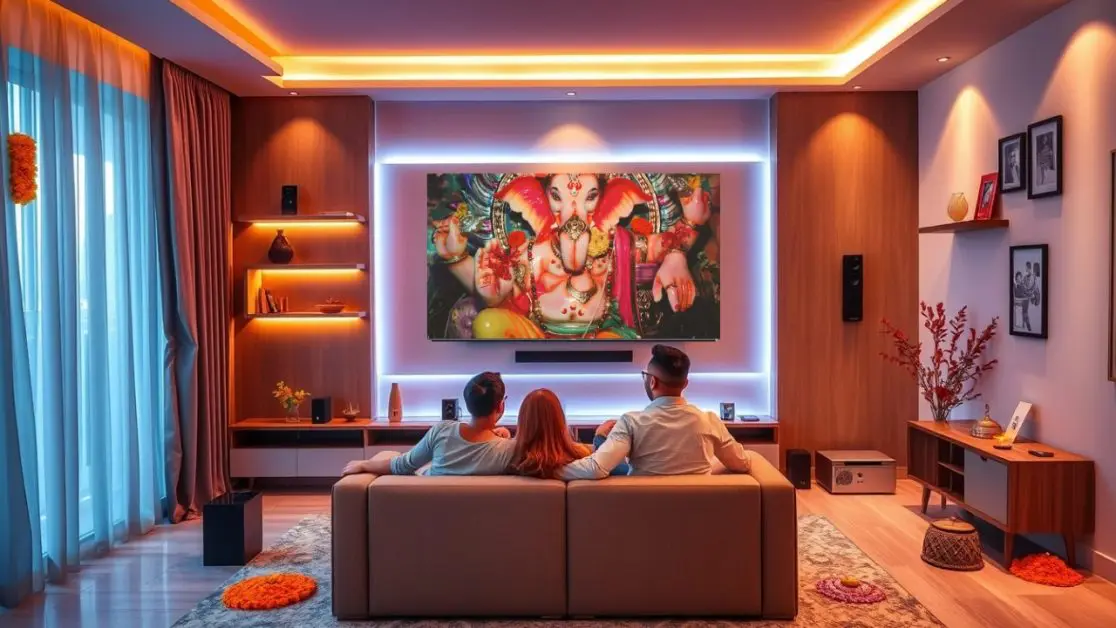
The big leap isn’t just the resolution. It’s the entire system.
- High refresh rates (DLG 120 Hz) make even fast-moving visuals the swirling of diyas, the dancing crowds smooth and lifelike.
- Cinematic audio systems tuned Sound by KEF mean the dhol-tasha feels like it’s beating right beside you.
- Dolby Vision and HDR ensure colours don’t just look bright they look real. From saffron flags to golden ornaments, every shade carries emotional weight.
- Smart connectivity allows you to jump between YouTube live streams, OTT apps, and devotional channels without missing a moment.
That’s the quiet promise of modern appliances: the ability to shrink distance without shrinking the experience.
The cultural truth behind live darshan
Here’s the invisible system at play: Indians crave both tradition and convenience.
We still queue for prasad, still fold our hands before idols. But we also juggle office calls, school runs, and traffic jams. The modern Indian doesn’t reject rituals; they remix them to fit life’s pace.
Ganesh Chaturthi on a 4K TV is the perfect example. You’re not abandoning pandals, you’re extending their reach. You’re not skipping devotion, you’re scaling it across geographies.
Why Haier enters the frame
Haier India has quietly built its identity around this exact need. Homes that want more than utility. Families that see appliances not just as machines but as lifestyle companions.
Take their 4K Smart TVs. Designed with Indian homes in mind, they’re slim enough for compact apartments yet powerful enough to deliver stadium-like sound and cinema-grade visuals. The kind of product that respects both your aesthetic taste and your devotional routines.
This isn’t about “buying a TV.” It’s about giving your family a front-row seat at Lalbaugcha Raja without leaving the sofa.
Rituals look different when tech plays along

Consider three real moments:
- The early morning aarti. Parents wake up, kids still drowsy. Instead of dragging them to a crowded pandal, you gather around the screen, modaks on the table, and play the live stream. Faith meets comfort.
- The visarjan. You may not be at Girgaon Chowpatty, but on a large 4K display, you feel the drumbeats, the chants of “Ganpati Bappa Morya” reverberating through the room. The goodbye is as emotional at home as it is by the sea.
- Working professionals abroad. In London or Singapore, you light a candle, stream the aarti, and suddenly the festival feels closer. The barrier of distance shrinks to the width of a screen.
These aren’t “use cases.” They’re realities.
The deeper pattern: festivals as shared screens
Think about it.
- Cricket unites families around big screens.
- OTT shows turn weekends into binge rituals.
- And now, festivals migrate onto the same canvas.
The living room becomes a temple, a stadium, a theatre depending on the day. The 4K screen is simply the stage. What you choose to project onto it makes the story.
The cost and benefit equation

Let’s strip it down.
- Costs: A premium TV requires an investment. It takes space. It demands a good internet.
- Benefits: You get not just entertainment, but belonging. Not just pixels, but presence. Not just shows, but shared memories.
In a country where family is everything, the benefit outweighs the cost. Because rituals are not just events they’re glue.
What this means for the future
Festivals will keep evolving. Tomorrow, we might wear VR headsets and walk virtually inside pandals. Or use AR glasses to project idols onto our dining tables. But today, the humble 4K smart TV is the bridge between tradition and technology.
And in Indian homes, bridges matter. They keep generations connected. They make cities less lonely. They remind us that even when life pulls us apart, we can gather again around a screen, around an aarti, around a shared faith.
Ganesh Chaturthi is no longer bound to geography.
From Mumbai’s crowded pandals to a small flat in Jaipur, from a Dubai apartment to a Bengaluru hostel devotion now streams in 4K.
All you need is a screen big enough to hold the faith of a million people. And a system powerful enough to make you forget you’re sitting at home.
That’s when technology stops being “tech.” It becomes culture.