
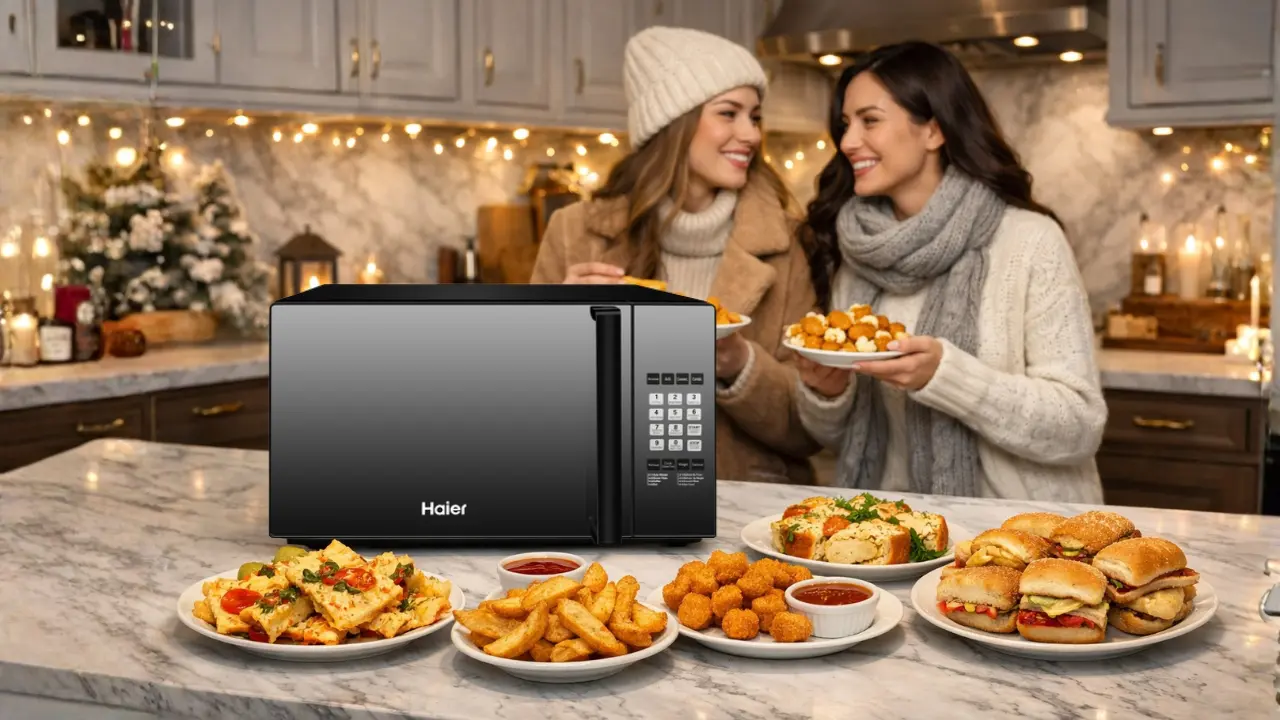

For everyday winter heating tasks like reheating meals, warming leftovers, and quick cooking, a microwave is usually cheaper, faster, and more energy-efficient than a gas stove.
Gas still makes sense for long, slow cooking or large batches. Winter efficiency is not about choosing one forever. It is about choosing the right tool for the moment.
That difference matters more in winter than most homes realise.
Why does winter change the gas vs microwave equation?
Step into an Indian kitchen on a January morning.
The floor is cold.
The gas flame feels comforting.
The instinct is to switch on the stove and wait.
But winter quietly changes how energy behaves.
- Cold air absorbs heat faster
- Preheating takes longer
- Cooking vessels lose heat quickly
- Kitchens stay colder for longer hours
In winter, wasted heat becomes real money.
And this is where gas and microwave heating diverge sharply.
Gas heats the room first.
Microwaves heat the food directly.
That single difference shapes everything else.
How gas stoves actually use energy in winter
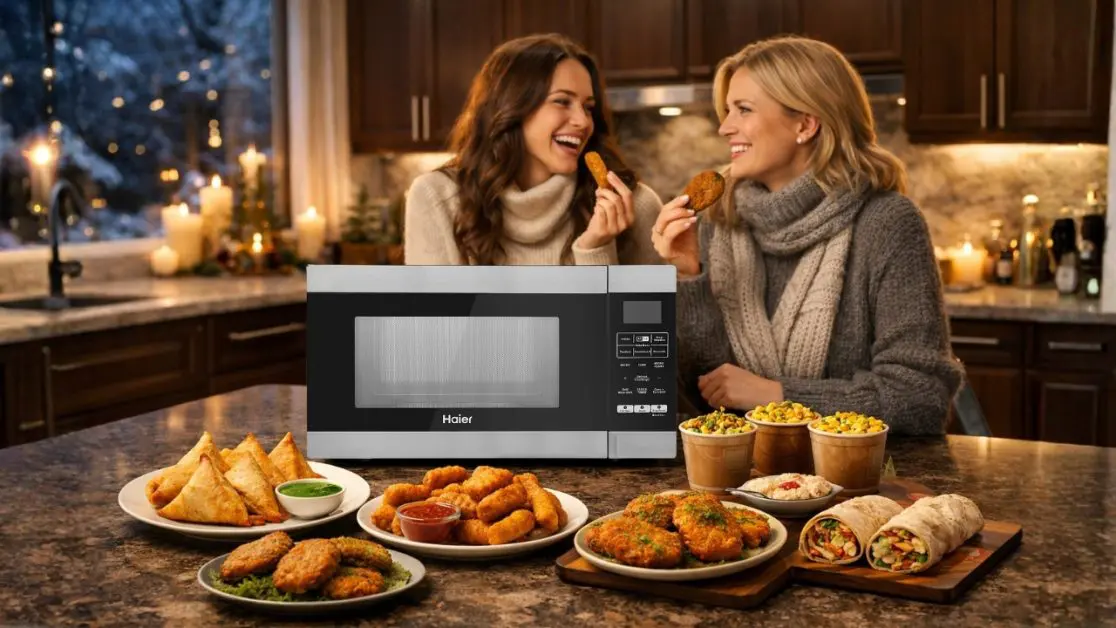
A gas stove feels powerful because the flame is visible.
But visibility is not efficient.
When you cook on gas in winter:
- Only about 40 percent of the heat reaches the food
- The rest warms the air, the vessel, and the kitchen
- Cold surroundings pull heat away continuously
- Cooking times stretch slightly longer than in summer
That means your stove works harder for the same result.
A simple example.
Reheating dal on a gas stove may take 6 to 8 minutes in winter.
Most of that flame heat never touches the dal itself.
It warms your hands.
It warms the pan.
It warms the kitchen air.
Comforting.
But costly.
How microwaves behave differently in cold months
Microwaves operate on a different logic.
They do not fight winter air.
They excite water molecules inside the food directly.
Cold kitchens do not slow that process down.
Which means:
- No preheating time
- Minimal heat loss to surroundings
- Same speed in December as in June
- Predictable energy use
A bowl of dal reheated in a microwave still takes 2 to 3 minutes.
Winter or summer.
Consistency is efficiency.
Cost comparison: gas vs microwave for daily winter use
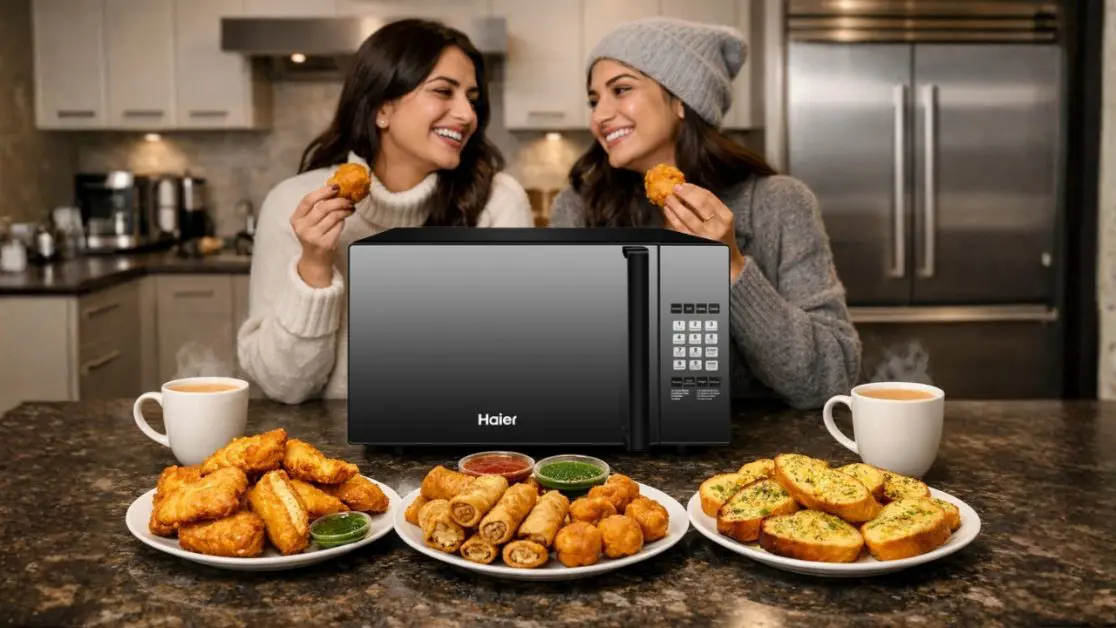
Let us talk numbers, not feelings.
Typical winter reheating scenario
- One bowl of cooked food
- Reheated twice a day
- 30 days
Gas stove
- Average LPG cost in India fluctuates between ₹900 to ₹1100 per cylinder
- One cylinder lasts roughly 25 to 30 days for a small family
- Reheating alone can consume 15 to 20 percent of gas usage in winter
Microwave
- Average microwave reheating uses 800 to 1000 watts
- A 3 minute cycle consumes about 0.04 units of electricity
- Even at ₹8 per unit, that is roughly ₹0.30 per use
Multiply that across a month.
Microwave reheating costs stay in tens of rupees.
Gas reheating costs quietly creep into hundreds.
The difference is not dramatic in one day.
It becomes obvious across winter.
Efficiency is not just energy. It is time and effort
Winter mornings are compressed.
School runs.
Office calls.
Delayed alarms.
Efficiency is not just about money.
It is about momentum.
Gas in winter demands
- Standing near the stove
- Stirring to avoid burning
- Monitoring flame intensity
- Waiting for vessels to heat
Microwave in winter allows
- Set and walk away
- Predictable results
- No supervision
- No cold exposure near the stove
Efficiency compounds.
Less time spent reheating means more time spent moving forward.
What about cooking, not just reheating?
This is where nuance matters.
Microwaves are not a replacement for everything.
They are a replacement for specific things.
Microwave wins in winter for
- Reheating leftovers
- Steaming vegetables
- Melting butter or chocolate
- Warming milk without boiling
- Quick snacks
- Oil-free or low-oil cooking
Modern convection microwaves expand this list further.
For example, convection models allow baking, grilling, and roasting with far better heat control and reduced energy waste compared to open flames.
Haier’s convection microwave range illustrates this shift well.
- Stainless steel cavities reflect heat efficiently
- Auto cook menus reduce trial and error
- Combination modes shorten cooking time
- Oil-free cooking reduces cleanup effort
These design choices are visible in models like the Haier 20L Convection Microwave with Mirror Glass Design and the 25L Convection Microwave with Bread Basket, which focus on faster, more controlled heating inside compact kitchens .
Efficiency here is engineered, not accidental.
Where gas still makes sense in winter
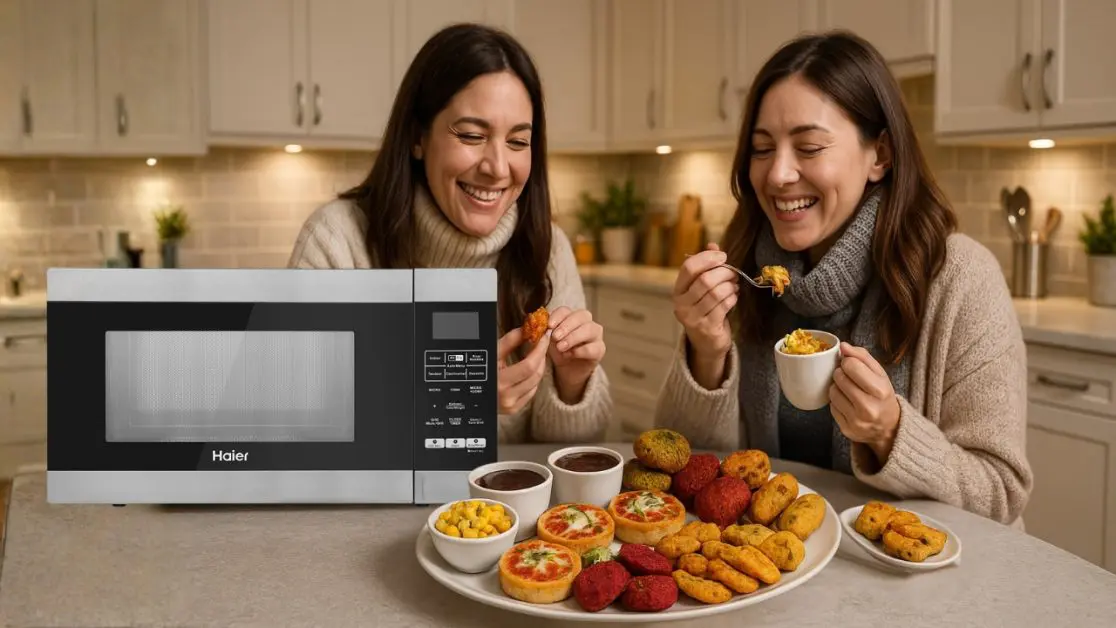
Gas is not obsolete.
It simply has a narrower role than before.
Gas works better when:
- Cooking large family meals
- Making slow-simmered gravies
- Handling large utensils
- Cooking outdoors or in ventilated spaces
Gas delivers volume.
Microwaves deliver precision.
Smart kitchens use both.
The hidden winter cost most homes miss
Here is what rarely gets discussed.
Winter cooking increases ventilation losses.
Cold air enters.
Warm air escapes.
With gas cooking:
- Windows stay open for fumes
- Exhaust fans run longer
- Indoor warmth drops faster
Microwaves reduce this cycle.
No flame.
Minimal fumes.
Shorter ventilation needs.
That indirect saving adds up.
Less heating loss.
Less discomfort.
Less energy waste.
Safety shifts in winter kitchens
Cold weather changes behaviour.
Hands numb faster.
Reflexes slow slightly.
Condensation increases.
Gas stoves introduce:
- Open flames
- Hot handles
- Steam burns
- Slippery surfaces
Microwaves reduce exposure.
Enclosed heating lowers risk during rushed winter mornings or late nights.
Safety is an efficiency metric too.
Choosing the right microwave for winter efficiency
Not all microwaves behave the same.
Winter efficiency improves with:
- Stainless steel cavities for better heat reflection
- Higher wattage for faster cycles
- Convection modes for flexibility
- Auto menus for consistency
Larger families or winter-heavy cooking benefit from models like the Haier 30L Convection Microwave with In-Built Air Fryer, which combines faster heating, grilling, and air frying into one enclosed system, reducing overall energy and time use across meals .
The appliance fades into the background.
The routine becomes smoother.
That is the point.
The real question is not gas vs microwave
The real question is where does heat go?
Gas sends heat everywhere.
Microwaves send heat where it is needed.
Winter punishes inefficiency.
It rewards precision.
The homes that feel calmer in winter are not working harder.
They are choosing tools that waste less.
A simple framework to decide at home
Instead of choosing sides, choose scenarios.
- Reheating, quick meals, daily use
Microwave wins on cost, speed, and comfort. - Long cooking, bulk preparation, weekend meals
Gas remains practical. - Small kitchens, solo living, winter routines
Microwave efficiency compounds quickly. - Large families, traditional cooking styles
Balanced use delivers the best results.
Efficiency is not about replacement.
It is about alignment.
What this means beyond the kitchen
Winter decisions reveal hidden systems.
Energy costs.
Time pressure.
Design thinking.
The appliances that matter most are not the loud ones.
They are the quiet ones that remove friction.
A microwave that saves three minutes every morning saves more than time.
It preserves momentum.
And momentum, especially in winter, is everything.
Final thought
Winter does not demand more effort.
It demands better choices.
Gas or microwave is not a rivalry.
It is a rhythm.
When heating aligns with how life actually moves, homes feel warmer without burning more fuel.
That is the efficiency most people can feel.
Frequently Asked Questions
Is it actually cheaper to use a microwave in winter, or does it just feel faster?
It is cheaper for reheating and short tasks. Microwaves heat food directly, so energy waste stays low even in cold kitchens. Over a winter month, this saves real money.
If gas feels warmer, doesn’t that mean it’s more powerful?
Feeling warmth ≠ efficiency. That warmth is mostly wasted heat escaping into the room instead of the food.
How much electricity does microwave reheating actually use?
About 0.04 units for a 3-minute reheat. Even at ₹8 per unit, that’s roughly ₹0.30 per use, far cheaper than gas for the same task.
Are modern microwaves actually different from old basic ones?
Yes. Convection and combination models cook faster, retain heat better, and reduce trial-and-error, especially useful in winter.
Why do stainless steel cavities matter in winter?
They reflect heat inward instead of absorbing it, improving cooking efficiency and consistency.
Are brands like Haier focusing more on winter-efficient design now?
Yes. Features like auto-cook menus, combination modes, and enclosed convection cooking reduce energy loss and supervision time, key winter pain points.
Can I fully switch to microwave cooking in winter?
For reheating, steaming, quick meals, yes. For large family cooking or slow gravies, no. Balance works best.