
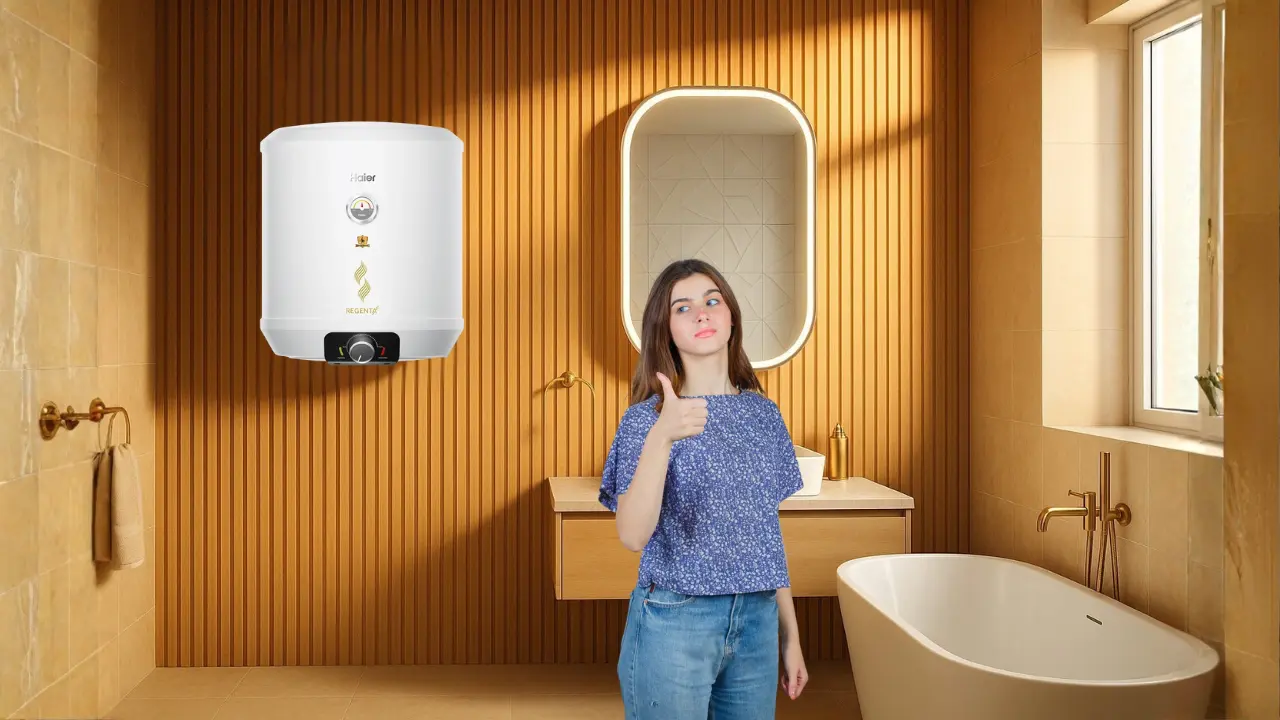

A glass lined tank keeps hot water cleaner, safer, and more stable during long Indian winters by protecting the inner metal tank from rust, bacterial growth, and heat loss. It is the upgrade that quietly improves everything about your water heater without you ever noticing the work it does.
Winter always exposes the truth about a home.
Cold floors. Slow mornings. Long showers that need real, dependable heat.
And somewhere in that morning rush, the water heater becomes the unsung hero of the season.
But here is the real question that decides whether your winter starts smoothly or starts with frustration.
What is happening inside the tank that heats your water every single day?
Because the answer to that question is what separates a winter that feels sorted from one that feels unpredictable.
And that brings us to a quiet but powerful upgrade.
A glass lined tank.
Not flashy. Not loud.
Just a small engineering decision that changes the entire experience of winter comfort.
Let’s unpack why.
Why does a tank’s inner surface matter so much in winter?
Every water heater has one job.
Heat water. Keep it hot. Do it safely.
But winter changes the rules.
Cold water enters the tank at lower temperatures, which means:
- more heating cycles
- longer heating times
- higher mineral deposits
- faster corrosion inside the tank
The tank becomes a battlefield of temperature extremes.
And metal alone cannot survive that comfortably.
This is where glass lining becomes the invisible shield.
A barrier between the water and the metal, protecting the tank through harsh winters.
A simple principle. A massive difference.
Glass lining is not decoration. It is defence.
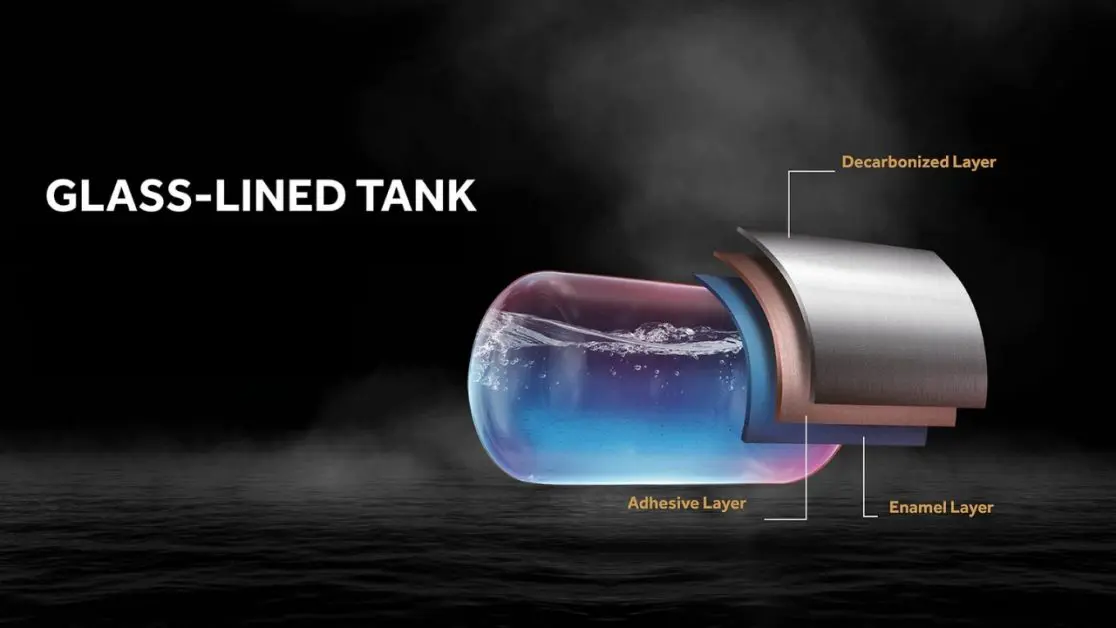
Think of it like coating the inside of a pressure cooker with a protective layer.
The flavour stays clean. The metal lasts longer. The experience feels smoother.
A glass lined tank works on the same idea.
What it prevents
1. Rust formation
Hard water minerals and winter temperatures create the perfect environment for internal rust.
A glass lining prevents direct contact between water and metal.
2. Scale buildup
Hard water deposits usually stick to steel.
Glass creates a smooth, non reactive surface that does not let scale settle easily.
3. Loss of heat
Corroded steel loses heat faster.
A protected surface holds temperature longer, reducing reheating cycles.
4. Bacterial growth
In a tropical country like India, bacterial contamination can be a silent risk.
Glass lining slows it significantly.
These are not product features.
These are quality of life features.
They decide whether your water heater silently supports your winter or becomes another thing on your to do list.
What a glass lined tank does for your winter mornings
This is where theory meets real life.
One. Heat stays stable
The biggest winter complaint is simple.
“The water became cold too fast.”
Glass lining reduces heat loss inside the tank and supports PUF insulation around it.
Haier’s Super Insulation design, for example, retains hot water for long hours by combining a glass lined tank with PUF insulation, reducing reheating needs.
Lower reheating means:
- less waiting
- fewer surprises
- lower electricity bills
Two. Water smells and feels cleaner
A poorly protected tank sometimes gives off a metallic smell.
Hard water minerals add to the discomfort.
A glass lined tank avoids direct metal contact, which means the water stays clean, fresh, and neutral.
Real comfort begins with details nobody talks about.
Three. Longer appliance life
Corrosion is the number one reason water heater tanks fail.
Glass lining slows down corrosion dramatically.
When paired with an Incoloy 800 element like the one in Haier’s Regenta Pro series, the entire system works more efficiently under extreme heat.
Longer life means you invest once, and it serves you for years.
Four. Better winter heating performance
Winter exposes weaknesses.
A glass lined tank eliminates one of the biggest weak spots by protecting the core structure.
You get:
- consistent temperature
- faster reheating
- stable performance across cold waves
And when paired with smart safety tech like Haier’s capillary thermostat and thermal control (TTS), the whole system becomes safer and more predictable.
Why does this matter more now in India?
Because winters in India are changing.
2024 recorded early and abrupt cold waves across North and Central India.
Night temperatures fell below normal in states like Delhi, Rajasthan, MP, Haryana, and Uttar Pradesh.
In colder winters, water hardness rises, heating cycles increase, and tanks face more strain.
Families who never thought about water heaters suddenly look for:
- faster heating
- safer water
- reliable pressure handling
- durability that survives winter extremes
And one small detail influences all these needs.
A glass lined tank.
It is the upgrade that protects the entire system without asking for your attention.
What makes a high quality glass lined tank different?
Not all linings are equal.
Three qualities matter.
One. Thickness of the lining
A stronger coating lasts longer and resists scaling.
Two. Uniformity
Any uneven layer becomes a weak point where corrosion begins.
Three. Compatibility with the heating element
When paired with a rust resistant, high temperature element like Incoloy 800, you get stability even under long heating cycles.
Haier specifically uses this element in the ES15V Regenta Pro model to ensure longer service life.
This is systems thinking in real life.
When one part is upgraded, the entire appliance becomes better.
A glass lined tank works quietly with everything around it
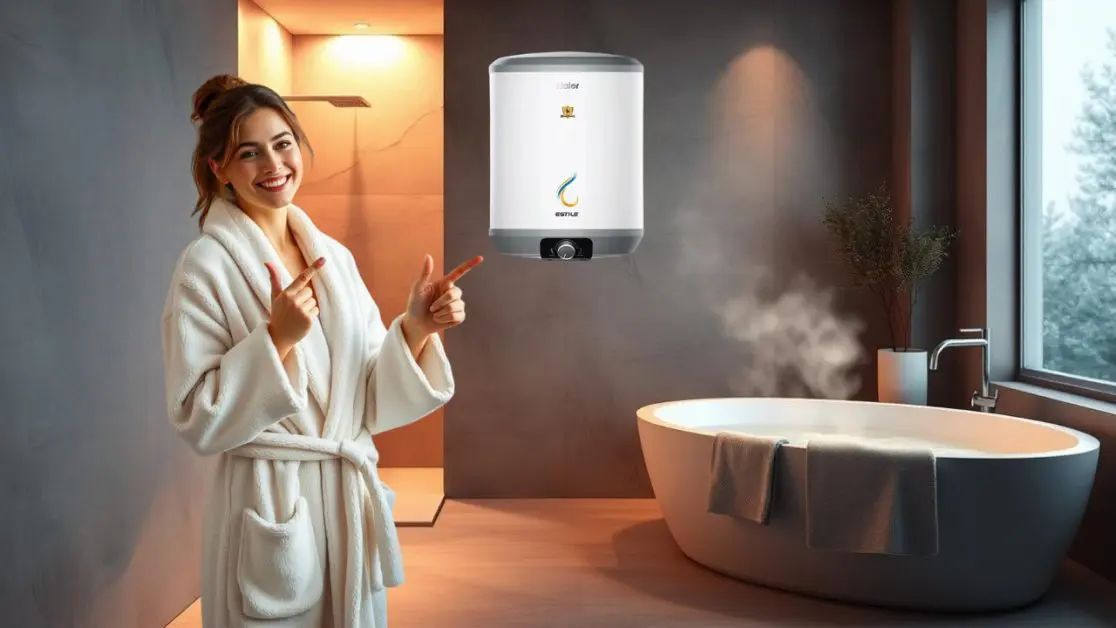
Think about how water heaters function as a system.
- PUF insulation slows heat loss.
- The heating element warms the water.
- The thermostat controls the temperature.
- The safety valve manages pressure.
- The tank holds everything together.
A glass lined tank amplifies all these parts.
It helps PUF insulation do its job better.
It helps the thermostat maintain accurate cut offs.
It helps the heating element avoid mineral deposits.
It reduces pressure related risks especially in 8 bar rated models designed for high rise buildings.
It is a small detail that strengthens the entire architecture.
Real world example: Why certain households see fewer repairs
Visit any apartment in Gurgaon or Noida with hard water supply.
Ask the building plumber which water heaters last the longest.
He will always point to the models with:
- glass lined tanks
- Incoloy elements
- strong insulation
- 8 bar pressure handling
Because these homes demand more from their water heaters.
Long showers.
Cold pipelines.
Hard water.
Shared family timings.
The ones with a protected tank simply age better.
This is not marketing.
This is engineering.
Where Haier fits into this story
Haier’s water heaters use a CrystalShield Tank coating which inhibits bacterial growth and maintains long lasting heating.
Combined with:
- Super Insulation
- Incoloy 800 heating element
- RSC Technology for stable hot water flow
- 8 bar pressure rating
- Bacteria Proof System that heats water up to 80 Celsius to deactivate bacteria
You get a system designed not just for winter but for Indian conditions all year.
The engineering is subtle.
The impact is clear.
You simply get a cleaner, safer, more stable water experience without thinking about it twice.
So what does this mean for your winter?
It means your water heater becomes a partner, not a problem.
It means the warm water waiting for you at 6.30 am feels predictable.
It means less electricity used on reheating.
It means fewer repairs in the long run.
It means water feels cleaner and safer.
It means winter mornings begin without stress.
Sometimes the most important upgrades are the ones we never see.
Glass lining is one of them.
The memorable insight
A water heater is only as good as the tank that protects it.
Upgrade the tank and the whole winter feels different.