
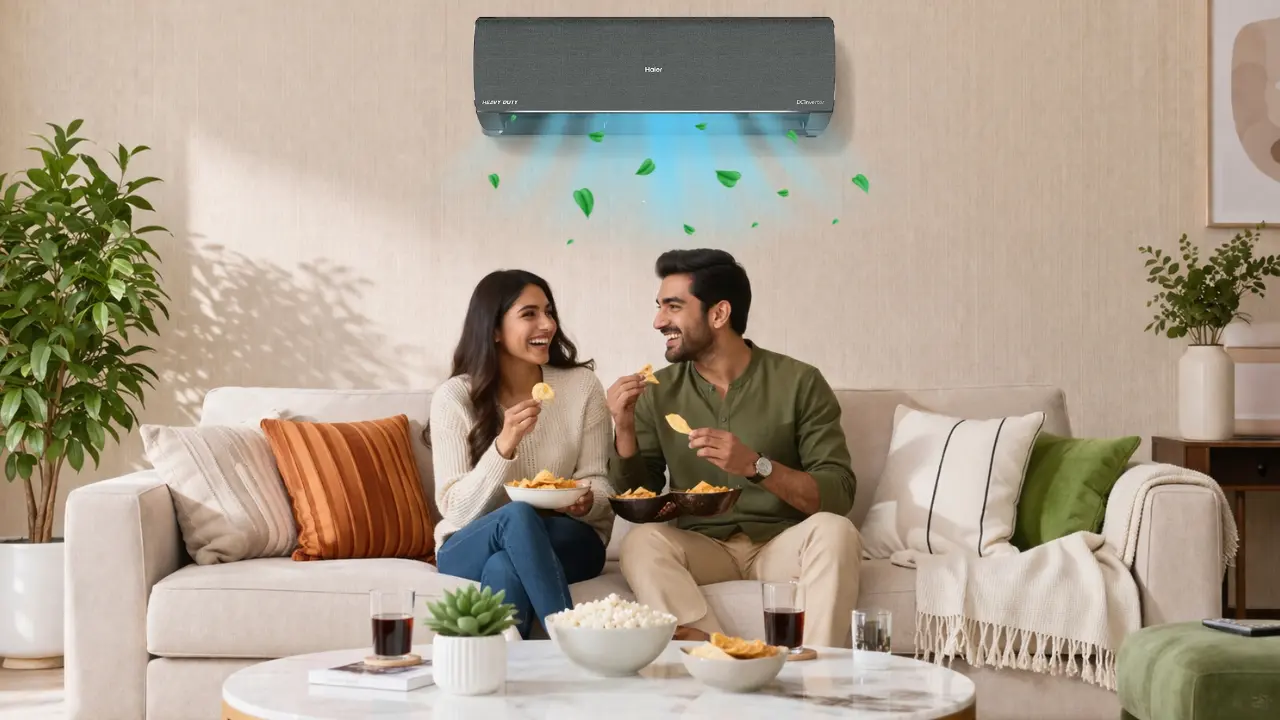

Haier offers better energy saving technology because it shifts appliances from reactive machines to intelligent systems that learn, predict, and optimize usage automatically.
Instead of simply consuming less power, it actively prevents waste by adapting to real-life behavior, environment, and timing.
The evening moment that reveals everything.
It is 9:30 PM.
Dinner is done. The TV is on. Someone opens the fridge again for dessert. The AC hums quietly in the background.
No one is thinking about electricity.
But electricity is thinking about them.
Every appliance is making tiny decisions. How hard to run. When to pause. When to adjust. Multiply that by 30 days, and it becomes your bill.
Energy saving is not about one decision. It is about thousands of invisible micro-decisions.
That is where the difference begins.
Why Traditional Energy Saving Falls Short
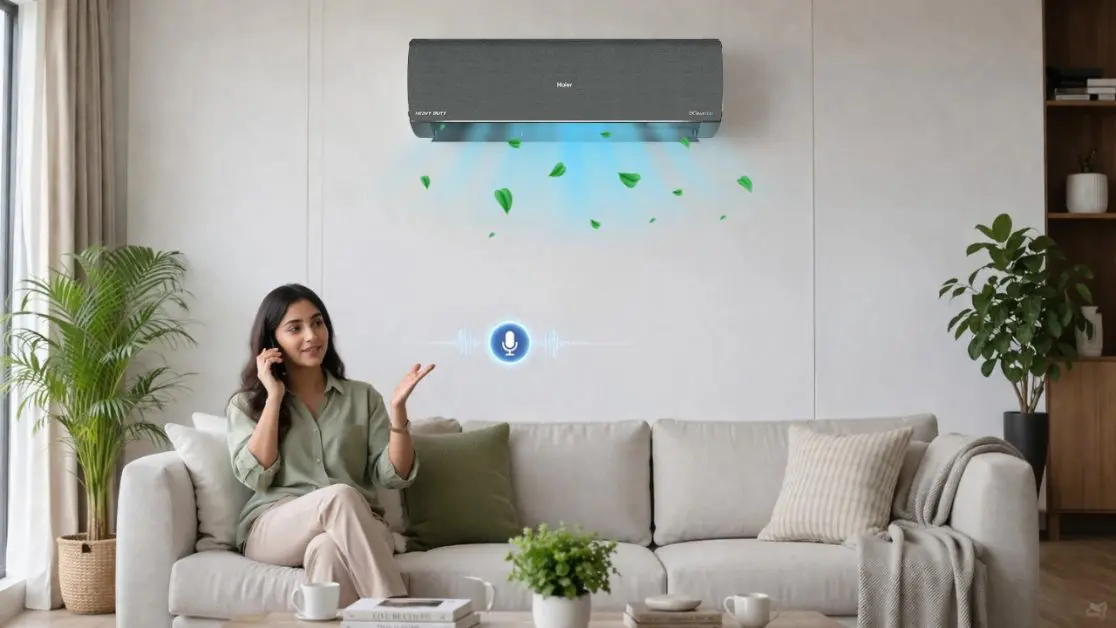
Most appliances still follow a simple logic.
You switch it on. It runs. You adjust. It reacts.
That model worked once.
It does not anymore.
The hidden problem with “manual efficiency”
- You forget to change temperature settings
- You leave devices running longer than needed
- You overcool rooms just to feel quick relief
- You rely on fixed modes that ignore real conditions
The result is predictable.
| System Type | Behaviour | Energy Outcome |
| Manual appliances | React after input | Higher wastage |
| Timer-based systems | Follow fixed schedules | Partial efficiency |
| AI-driven systems | Learn and adapt continuously | Maximum efficiency |
Efficiency improves when decisions move from humans to systems.
What Makes Haier’s Energy Saving Different
Haier does not just reduce consumption.
It redesigns how decisions are made.
At the center of this is AI-driven systems like AI Atmox which fundamentally change how appliances behave.
Instead of reacting, it predicts
- Learns your daily usage patterns
- Tracks temperature, humidity, and room conditions
- Adjusts cooling before discomfort happens
- Builds a personalized energy model over time
This is not a feature.
It is a shift.
From control to intelligence.
The Three Layers of Real Energy Saving
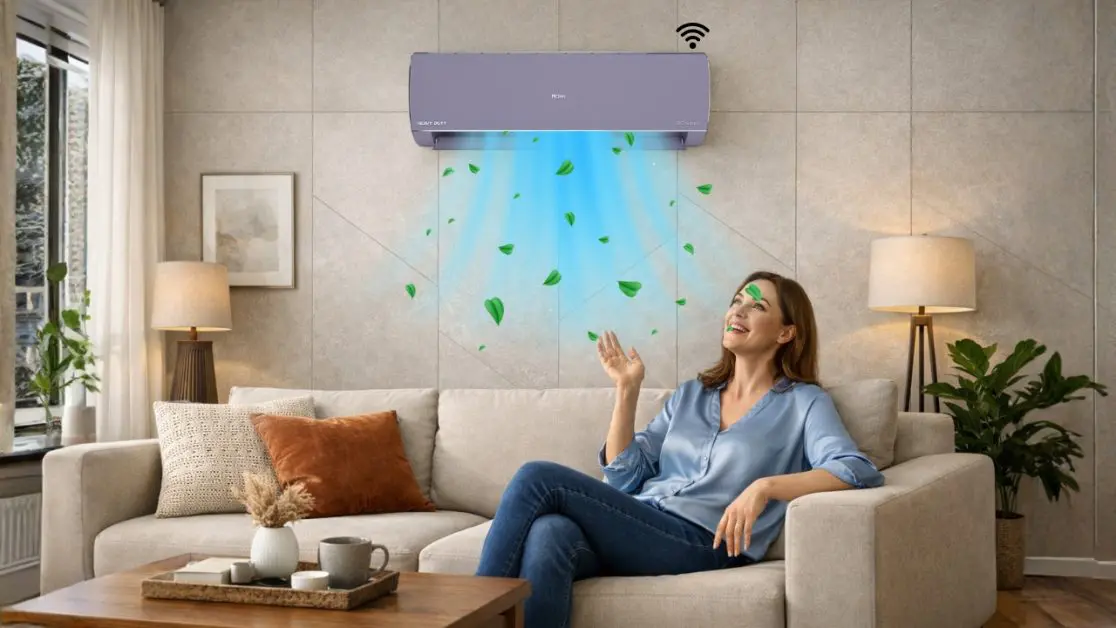
Most people think energy saving is about lower power consumption.
It is not.
It is about eliminating waste at three levels.
1. Preventing Overuse
Cooling only when needed.
- AI Human Detection senses room occupancy
- Automatically reduces power when no one is present
- Switches modes without manual input
No usage. No waste.
2. Reducing Excess Effort
Cooling smarter, not harder.
- AI Target Cooling directs airflow only where needed
- Avoids cooling the entire room unnecessarily
- Delivers faster comfort with less energy
Think of it like lighting.
You do not light the whole house to read a book.
3. Optimizing Timing
Using energy at the right moment.
- AI Pre-Cooling predicts arrival using geofencing
- Starts cooling before you enter
- Avoids sudden high-load usage
Right timing reduces peak energy spikes.
How AI Turns Data Into Savings
Most appliances collect data.
Few use it meaningfully.
Haier turns data into decisions.
What gets tracked
- Temperature patterns across the day
- Usage duration and frequency
- Preferred modes and settings
- Environmental changes like weather
What happens next
- Builds a personalized energy profile
- Adjusts performance dynamically
- Creates optimized energy plans automatically
This is where the real advantage lies.
Energy saving becomes automatic, not intentional.
The Power Manager Effect: When Awareness Changes Behavior
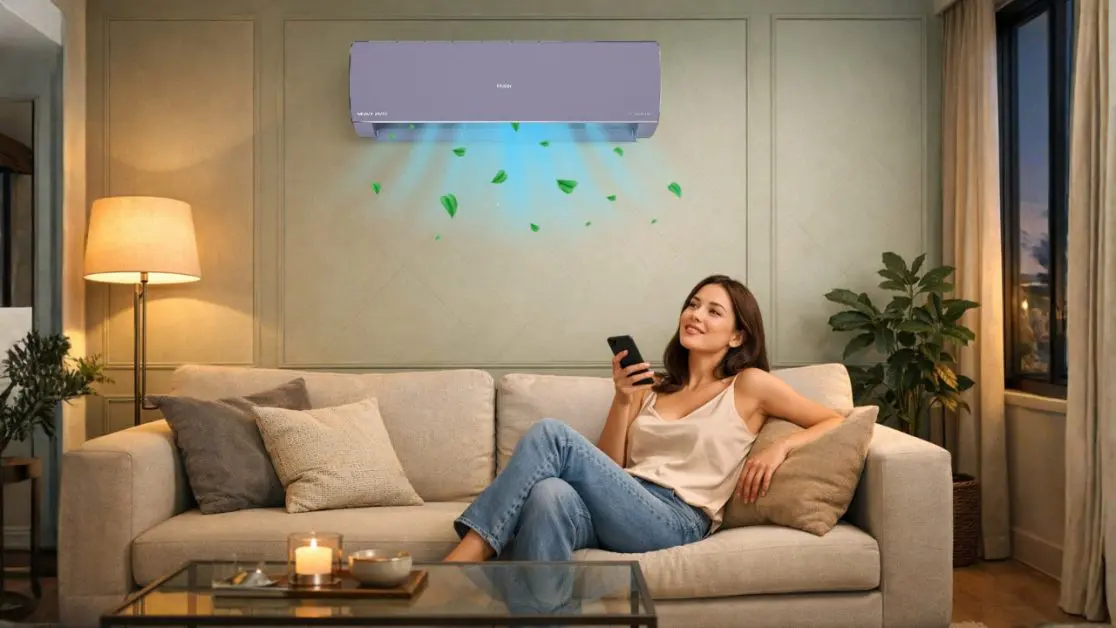
There is another layer most people ignore.
Visibility.
If you cannot see your consumption, you cannot control it.
What Haier enables
- Real-time Electricity monitoring 2.0
- Usage shown in units and cost
- Daily, monthly tracking dashboards
- Custom energy-saving targets
| Feature | What It Does | Impact |
| Electricity monitoring 2.0 | Tracks consumption visually | Better awareness |
| Cost Display | Converts usage into money | Smarter decisions |
| Mode Tracking | Compares normal vs eco usage | Behavioral shift |
| Custom Targets | Lets you define limits | Controlled spending |
What gets measured gets optimized.
Why AI Eco 2.0 Mode Is Not Just Another Setting
Most eco modes are static.
Lower power. Slower performance.
That is a compromise.
Haier changes that.
Dynamic Eco Intelligence
- Adjusts cooling levels based on temperature gap
- Uses multi-stage optimization (L1, L2, L3 modes)
- Balances comfort and savings in real time
This means:
- Higher cooling when needed
- Lower power when stable
- Seamless transition without user input
Efficiency without discomfort is the real innovation.
The Hidden Cost of Dirty Systems
Here is something rarely discussed.
Efficiency drops silently.
Dust builds up. Airflow reduces. Machines work harder.
Energy consumption rises.
Haier solves this with self-cleaning systems
- AI IDU Frost Self Clean cleans internal components
- AI ODU Cyclone Clean removes outdoor dust automatically
- Maintains heat exchange efficiency
Cleaner systems consume less power.
This is maintenance built into design.
Three Ways Indian Homes Actually Use Energy Saving Technology
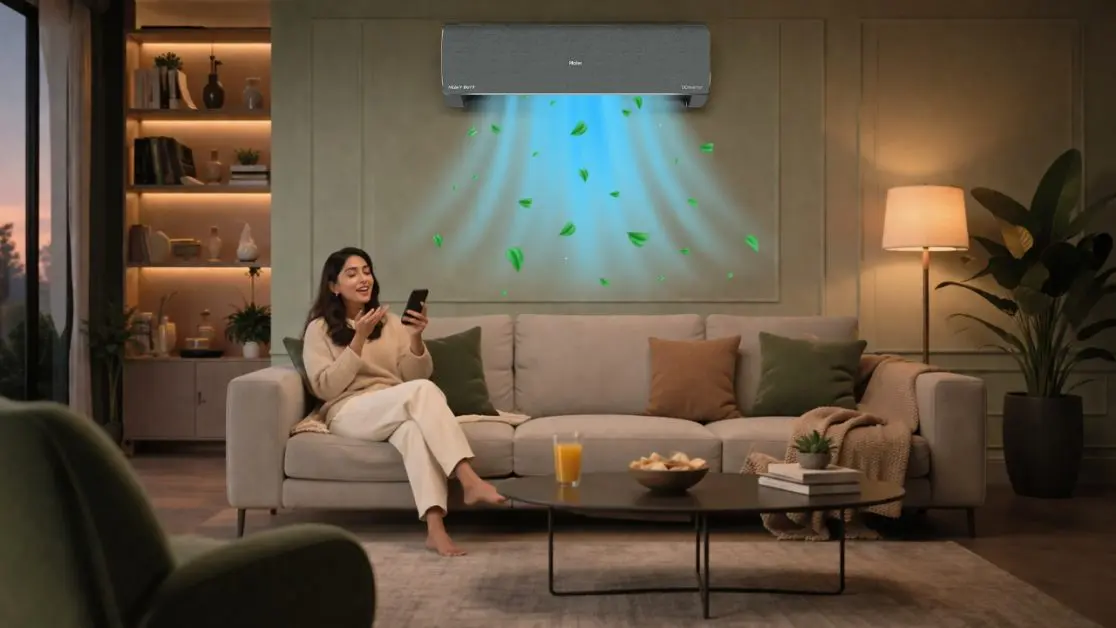
Every household is different.
But patterns repeat.
One option is passive saving
- Use eco modes occasionally
- Manually switch settings
- Low effort, limited impact
The second option is structured saving
- Use timers and schedules
- Track usage manually
- Moderate efficiency
The third option is intelligent saving
- Let AI handle decisions
- Systems adapt continuously
- Maximum efficiency, minimum effort
The gap between these options is not technology. It is involvement.
Why This Matters More in Indian Homes
India has unique conditions.
- Long summers
- Voltage fluctuations
- High usage frequency
- Multi-person households
Which means appliances run harder.
And longer.
Energy saving becomes a daily necessity
- Refrigerators run 24 hours
- ACs run 6 to 10 hours in peak months
- Multiple devices operate simultaneously
Even a 10 percent improvement matters.
Multiply that across months.
It becomes meaningful savings.
The Real Insight: Efficiency Is a System, Not a Feature
People often ask.
Which AC saves more electricity?
Which fridge is more efficient?
Wrong question.
The better question is:
Which system reduces unnecessary decisions?
Because every unnecessary decision leads to inefficiency.
- Forgetting settings
- Overcooling
- Running devices longer
Haier solves this by removing the need to decide constantly.
What This Means for How We Choose Appliances
Buying appliances is no longer about features.
It is about systems.
Ask three simple questions
- Does it learn from usage?
- Does it adapt automatically?
- Does it prevent waste before it happens?
If the answer is yes, energy saving follows naturally.
The Takeaway Most People Miss
Energy saving is not about using less.
It is about using right.
Less effort. Better timing. Smarter decisions.
That is the shift.
And once you experience it, going back feels inefficient in ways you cannot ignore.
The best technology does not ask you to think. It thinks for you.
Frequently Asked Questions
How do I know if I should buy a 1 ton or 1.5 ton AC for my bedroom?
If your room is up to ~120 sq ft, 1 ton works. Between 120–180 sq ft, go for 1.5 ton. But if your room gets a lot of sunlight or is on the top floor, lean toward the higher tonnage.
I feel stuck between two tonnage options what should I prioritize?
Prioritize real conditions over just size, sunlight, floor level, windows, and number of people matter more than exact square footage.
Am I overthinking AC tonnage, or is it actually that important?
It’s one of the most important decisions. Wrong tonnage leads to discomfort, higher bills, and long-term regret.
Is buying a bigger AC safer just to avoid undercooling?
No. Bigger ACs cool too fast, don’t remove humidity properly, and create uneven comfort.
What happens if I choose the wrong tonnage can I fix it later?
Not easily. You’d either live with inefficiency or replace the unit. That’s why getting it right upfront matters.
If I buy a smart or AI AC, do I still need to worry about tonnage?
Yes, but less precisely. Smart ACs adjust performance dynamically, reducing the impact of small sizing mistakes.
How do AI-powered ACs improve comfort compared to regular ones?
They:
Adjust cooling based on room conditions
Learn your usage patterns
Prevent overcooling and energy waste
Can a smart AC fix the wrong tonnage completely?
No. It can optimize performance, but it can’t fully compensate for a major mismatch.
What does “adaptive cooling” actually mean in real life?
It means your AC adjusts itself automatically instead of relying on fixed output, more comfort, less manual tweaking.