


It happens in every Indian living room.
A high-stakes scene. A power cut just missed. The fan is finally quiet. The hero is brooding in a dimly lit hallway.
And yet you’re squinting at the screen like your dad squints at WhatsApp forwards.
Because all you can see is shadows within shadows. No contours. No clarity. Just a vague suggestion of drama that’s completely lost in the murk.
So what’s going wrong?
And more importantly what’s finally making it right?
Not all darkness is created equal

The issue isn’t the scene. It’s the screen.
Traditional TVs, even those that boast “4K” often crush black levels. Meaning: they flatten details in dark areas, treating subtle differences in tone as one single black blob.
But in real life, darkness isn’t blank.
You can see the silhouette of a person against a midnight-blue curtain. You can tell the difference between moonlight on stone and shadow under a bed.
The question is: can your TV?
Enter HDR10+ and Dolby Vision IQ the invisible trick behind visible drama
HDR High Dynamic Range was meant to fix this.
But most HDR implementations stop at boosting brightness or contrast.
HDR10+ goes a step deeper. It uses dynamic metadata to adjust every single scene even frame by frame based on what the director intended. No overexposure. No under-lighting. Just faithful tone mapping across light and dark.
Then there’s Dolby Vision IQ. It doesn’t just adapt to the content. It adapts to your room.
If you’re watching in a dark bedroom or under tubelights in a rented 2BHK, it senses ambient lighting and recalibrates accordingly.
What you get is intelligent darkness. The kind that feels alive with texture, not dead with shadow.
A simple change that changes everything

You don’t need to be a cinematographer to appreciate this.
Because what it does is make emotion readable again.
- The trembling jaw in a dimly lit monsoon breakup scene
- The gleam of eyes during a candlelit confession
- The subtle shifts in expression when two characters just sit in silence
Without proper HDR, these vanish.
With it, they hit like they were meant to.
Why this matters more than ever in Indian homes
Let’s talk about context.
Indian homes are not designed like western media rooms.
We don’t have blackout blinds and soundproofing.
We have tubelights. Reflective tiles. Sometimes, sheer curtains let in enough sunlight to bleach every frame.
And yet we’re consuming more cinematic content than ever. From Malayalam slow-burn thrillers to moody Korean dramas on OTT.
Which means the need for intelligent visual tech isn’t luxury. It’s basic usability.
So why are Haier’s OLED TVs cracking this so well?
It’s not just marketing.
The new Haier OLED range available pairs Dolby Vision IQ with HDR10+ and adds one more underrated trick:
Pixel-level dimming
Each pixel in the OLED panel lights up or switches off independently. There’s no backlight spill. No greyness. Just pure, precise control over light and dark.
Pair that with:
- Dolby Atmos for directional audio (because what’s a good scene if it doesn’t sound right?)
- MEMC at 120Hz for fluid movement even in low-light action
- And 2.1 channel 50W speakers with a built-in woofer (yes, really)
And you’ve got a screen that finally respects the art of subtle storytelling.
The smallest scenes are often the biggest tests
Here’s a thought:
It’s easy to make action look good. Fireballs and explosions pop on even average displays.
But the true test of a screen is whether it can handle stillness.
- A long pause in a dark hallway
- A single tear in candlelight
- The detail in a charcoal sari during a night-time pooja
That’s where most TVs fail.
And that’s where OLED tech, especially its HDR10+ and Dolby Vision IQ integration shines.
Who is this really for?
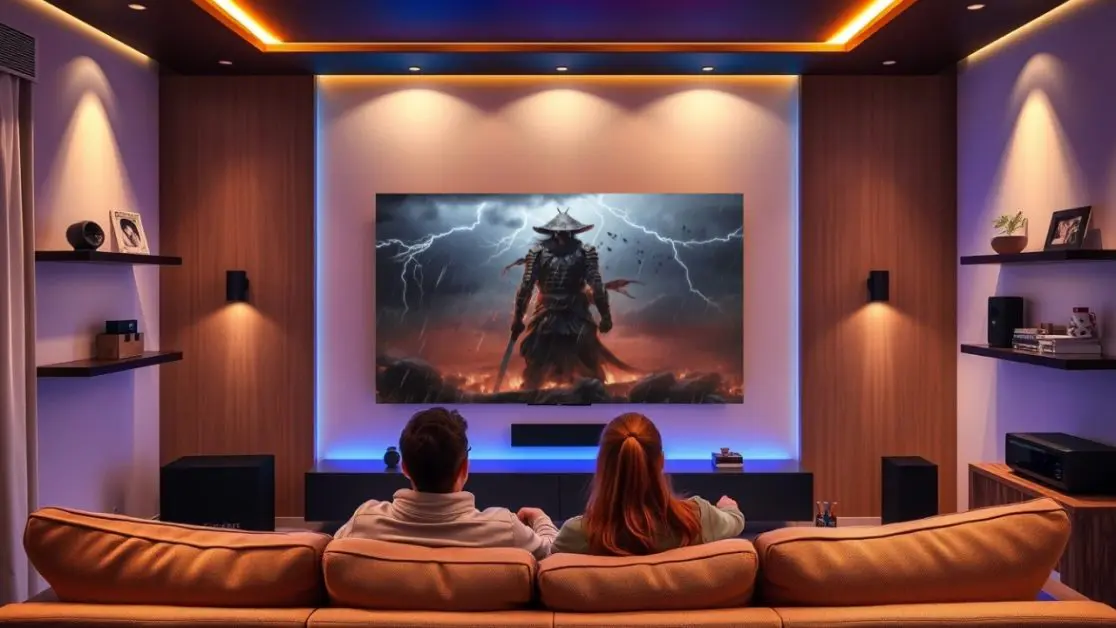
If you’re the kind of person who…
- Rewatches scenes from Suzhal, Darlings, or Paatal Lok just to catch the nuances
- Has cursed out loud when a dark scene turns into a guessing game
- Has invested in good audio but still felt underwhelmed by your screen
- Wants every rupee of your OTT subscription to feel worth it
then this isn’t just a TV feature. It’s a visual upgrade to your emotional bandwidth.
Three things that change when your TV gets HDR right
1. You stop squinting, start feeling.
No more “What’s going on?” moments during night scenes.
2. Every rewatch feels richer.
You start noticing background details, facial expressions, even the set design.
3. You get what the director intended.
Because the lighting, contrast, and tonality are preserved as shot, not flattened by poor tech.
Final thought: We notice what we didn’t know we were missing
HDR done right doesn’t scream for attention.
It reveals. It restores. It brings dignity back to dark scenes.
And once you’ve seen a night sequence the way it was meant to be seen, there’s no going back.
It’s not about brightness.
It’s about clarity in shadows.
And that, in a world built on storytelling, makes all the difference.