
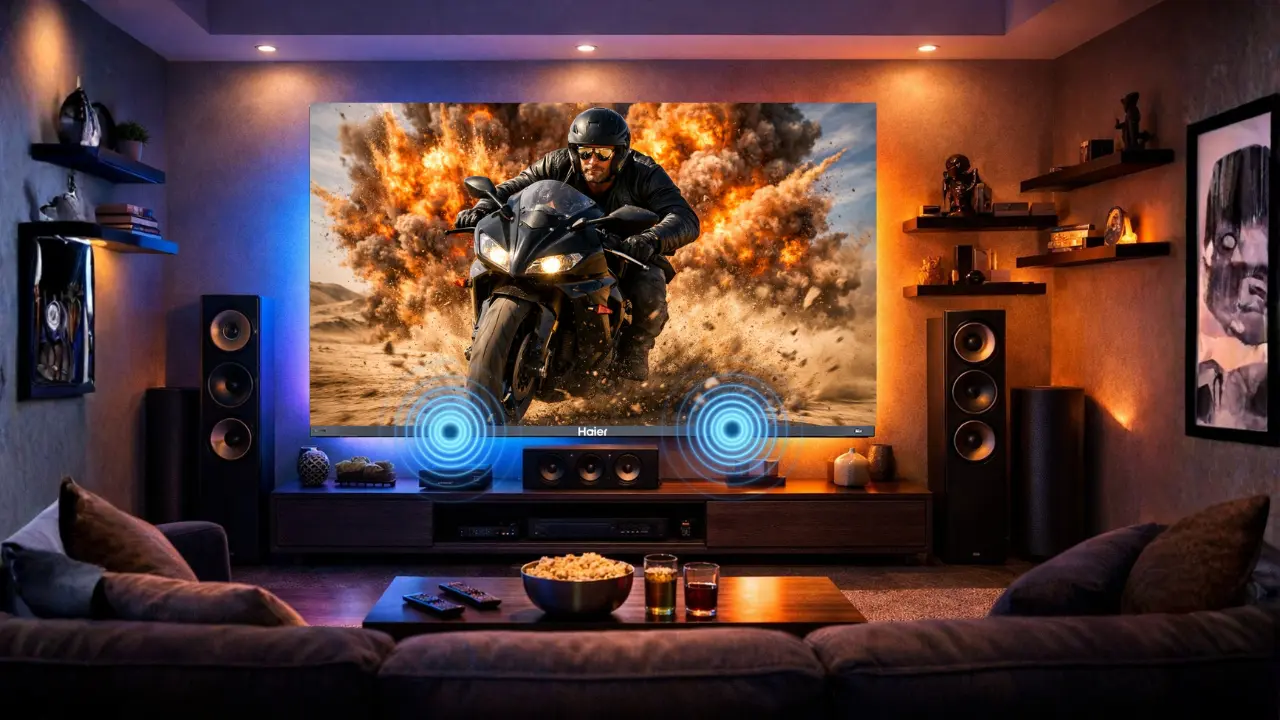

6.2.2 channel audio means sound is not just coming from the front of your TV. It moves horizontally, vertically, and through dedicated bass channels to create a layered, three dimensional sound field.
The result feels closer to being inside the scene than simply watching it, especially in everyday living rooms.
Sound is the first thing you notice when something feels real.
Before picture quality.
Before screen size.
It is the moment a cricket ball cracks off the bat.
The instant a movie door creaks behind you.
The low rumble that tells you something big is about to happen.
Most TVs still treat sound as an afterthought. Thin panels. Downward speakers. Audio that tries its best but never quite fills the room.
That gap is exactly where multi channel audio, especially 6.2.2 channels, changes how Indian homes experience sound.
Not louder.
Smarter.
Why does TV sound usually feel flat?
Most living rooms are not sound studios.
They are shared spaces.
Sofas pushed against walls.
Curtains half drawn.
Fans running. Conversations floating in from the kitchen.
Traditional TV speakers assume sound only needs to travel forward. That creates three common problems:
- Dialogues feel unclear during action scenes
- Background music overwhelms voices
- Bass feels weak or forced
The issue is not volume. It is direction.
Sound that only moves forward always feels like it is trapped inside the screen.
What does 6.2.2 channel audio actually mean
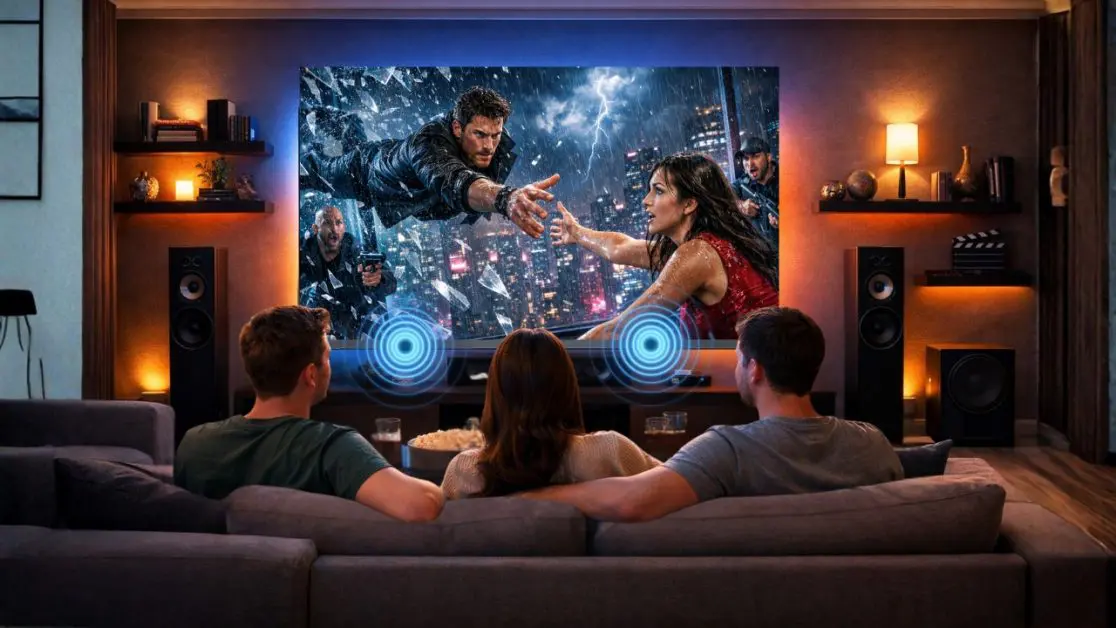
Let us break it down in plain language.
A 6.2.2 channel system is designed to move sound around you, not just at you.
Here is how the structure works
- 6 horizontal channels spread sound across the room from different directions
- 2 dedicated subwoofers handle deep bass without distortion
- 2 upward firing channels send sound above you, creating height
Together, they create layers.
Front.
Sides.
Above.
Below.
Sound stops behaving like noise and starts behaving like space.
According to Dolby Atmos guidelines, height channels significantly improve immersion by adding vertical sound placement, which is especially noticeable in films, sports, and gaming environments.
The difference you feel in everyday moments
This is not about demo rooms or showroom clips.
It shows up in ordinary evenings.
During a cricket match
The crowd noise spreads across the room.
The commentator stays clear.
The ball feels like it travels, not jumps.
During a movie night
Rain sounds fall from above.
Footsteps move across the floor.
Music wraps instead of blasting.
During casual TV watching
Dialogues remain sharp at lower volumes.
No need to constantly adjust sound settings.
Good sound reduces effort.
Why bass matters more than people admit

Bass is not about shaking walls.
It is about grounding sound.
With two dedicated bass channels, low frequencies do not fight with dialogue or music. They stay where they belong.
This has real benefits:
- Voices stay clean even during explosions
- Music sounds fuller at lower volumes
- Late night viewing becomes more comfortable
A study by the Audio Engineering Society highlights that separated low frequency channels reduce listener fatigue over long viewing sessions.
That matters in homes where TVs run for hours, not minutes.
Vertical sound is the quiet revolution
The biggest shift in modern audio is height.
Upward firing speakers change how scenes feel without you noticing the technology.
You do not think, sound came from above.
You think this feels real.
That is the difference between sound effects and sound placement.
In 6.2.2 systems, vertical channels create atmosphere:
- Thunder feels overhead
- Helicopters feel distant and moving
- Stadium ambience feels open, not boxed
It is subtle.
That is why it works.
Why this matters in Indian homes specifically
Indian living rooms are multifunctional.
They host family dinners.
They host guests.
They host late night scrolling sessions.
Audio systems that demand perfect placement rarely survive daily life.
Built-in multi channel sound solves that.
No extra wiring.
No separate soundbars.
No clutter.
It respects space while upgrading experience.
This is where Haier M96 Series 254cm (100) QD Mini LED AI Smart Google TV (Model H100M96FUX) with integrated Sound by KEF and 6.2.2 channel speaker architecture stand out, as seen in premium models like Haier’s M96 series, which integrates Sound by KEF tuned speakers directly into the TV design.
Why clarity beats loudness every time
People often confuse immersive sound with loud sound.
They are not the same.
Clarity lets you listen longer.
Balance lets you listen comfortably.
Direction lets you feel involved.
Multi channel audio systems distribute work across speakers instead of pushing everything through two tiny drivers.
The benefit is immediate:
- Lower listening fatigue
- Clear dialogues even at low volume
- Fewer volume jumps between scenes
This is especially valuable in apartments and shared households.
How 6.2.2 audio changes buying decisions
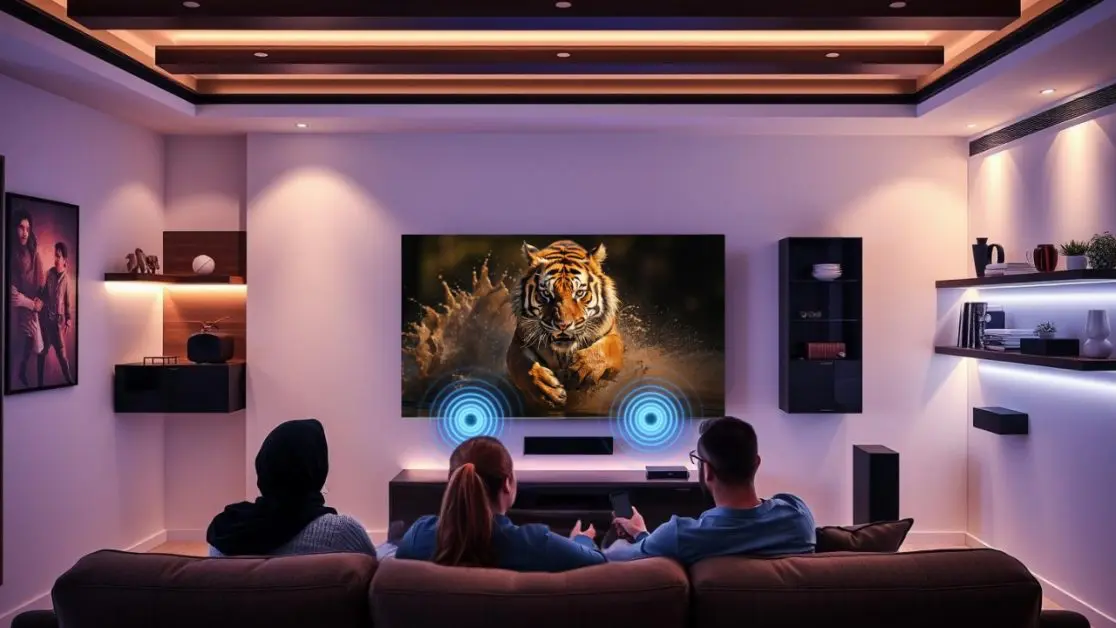
People usually upgrade TVs for picture quality.
But sound is what makes them fall in love later.
When audio works without effort, people stop thinking about upgrades. They stop looking at soundbars. They stop tweaking settings.
That is an underrated win.
One well designed system replaces multiple compromises.
The hidden system behind immersive sound
Here is the insight most people miss.
Immersion is not created by adding more features.
It is created by distributing responsibility.
The picture handles visuals.
Audio handles space.
AI handles balance.
When each system does its job quietly, the experience feels effortless.
That is why integrated solutions matter more than bolt ons.
A quick comparison that makes it clear
| Audio Type | Sound Direction | Clarity | Immersion |
| Standard TV Speakers | Front only | Average | Low |
| Soundbar Setup | Front plus simulated | Good | Medium |
| 6.2.2 Channel TV Audio | Front, sides, height, bass | High | High |
The goal is not complexity.
It is completeness.
Where this leaves the modern Indian buyer
People want homes that feel sorted.
Not louder.
Not flashier.
Just better thought through.
A TV that can move sound around you without extra boxes fits that mindset perfectly.
It blends into life instead of demanding attention.
And once you experience sound that has direction, height, and depth, flat audio feels impossible to go back to.
That is the quiet power of 6.2.2 channel sound.
You do not just hear it.
You live inside it.
Frequently Asked Questions
What exactly does 6.2.2 channel audio mean in simple terms?
It means your TV sends sound in multiple directions across the room (6 channels), deep bass through two dedicated subwoofers (2), and vertically above you (2 height channels). Instead of sound coming only from the front, it surrounds you.
Is 6.2.2 really different from regular TV speakers?
Yes. Standard TVs push sound forward only. A 6.2.2 setup distributes sound horizontally, vertically, and through dedicated bass channels, creating depth and immersion.
Isn’t this just about louder sound?
No. It’s about direction and clarity. The goal isn’t volume, it’s making sound feel natural and layered.
Do I still need a soundbar if my TV has 6.2.2 audio built in?
In most everyday living rooms, no. Integrated multi-channel systems are designed to eliminate the need for extra hardware and wiring.
Is it worth upgrading for sound if my picture quality is already good?
Many users upgrade for visuals but fall in love with sound later. Immersive audio often changes how you experience everyday TV.
Why does TV sound flat in normal homes?
Because most TVs project sound only forward. In shared living rooms with fans running and ambient noise, dialogue clarity suffers.
Will 6.2.2 audio work even if my sofa is against the wall?
Yes. Built-in multi-directional speakers are tuned for typical home layouts, not perfect studio setups.
Does vertical sound actually make a difference?
Yes. Height channels make rain, stadium ambience, or helicopters feel overhead, increasing realism.
Why are two bass channels better than one?
Dual subwoofers prevent bass from overpowering dialogue. Low frequencies stay controlled and reduce listener fatigue.