


Monsoon in India isn’t just a season. It’s a situation.
Wet socks on doormats. Humid walls that never quite dry. Laundry lines draped with damp clothes that smell like yesterday’s rain and today’s regrets.
And in the middle of all this?
Your washing machine is trying its best to keep up.
But here’s the catch: not all spin cycles are built for monsoon madness.
Let’s decode why heavy rains demand heavy-duty spin cycles and what that means for how Indian homes function, breathe, and stay fresh in the soggiest months of the year.
Clothes that don’t dry turn into clothes that don’t get worn

Let’s start with the core human frustration.
You put a load of clothes in the machine. Two hours later, they’re washed but soaking wet. There’s no sun outside. No balcony breeze. No space on the drying rack because yesterday’s jeans still aren’t dry.
So what happens?
You wear damp clothes.
Or iron them into submission.
Or worse leave them in the machine too long and get that smell.
It’s not just inconvenient.
It messes with your daily rhythm.
And that’s where the spin cycle becomes a make-or-break feature.
The spin cycle isn’t just the last step it’s the first defense against monsoon chaos
We think of spinning as a formality.
The “okay, we’re almost done” phase.
But in high-humidity climates especially during monsoon spin speed and power define how quickly your life moves forward.
A weak spin = water clinging to clothes
A powerful spin = water flung out like a storm of its own
Think of it like squeezing a wet towel.
One twist does nothing.
But a tight, strong wring? That’s where the magic happens.
Why traditional washing machines often fall short during monsoon

Not all machines are equal.
Some top-loaders, especially older models, offer basic spin speeds that are fine in dry weather. But when it rains five days straight? They choke. Clothes come out damp and heavy.
And here’s the bigger problem:
Humidity + retained moisture = bacterial breeding ground
That slight musty smell you notice? It’s not your imagination.
It’s microbial growth in your clothes.
Which means the right spin cycle isn’t just about drying it’s about hygiene.
Heavy-duty spin cycles: what actually makes them different?
It’s not just about RPM (rotations per minute).
It’s about a system built to remove moisture efficiently.
The best heavy-duty spin systems do 3 things well:
- Higher RPM with stability
Machines like Haier’s heavy-load top-loaders go up to 700-800 RPM without wobble critical when spinning heavier monsoon loads like jeans and towels. - Intelligent load balancing
Rainy days mean mixed laundry baskets. A good spin system senses weight and adjusts torque to ensure consistent drying without overworking the motor. - Moisture extraction, not just rotation
With Haier’s Oceanus Wave Drum and dual-magic filter systems, water is not just spun it’s evacuated strategically, ensuring fabrics aren’t just shaken, but properly sheared of excess dampness.
Let’s talk about real-life scenarios.

One: The office shirt panics.
You forgot to wash it yesterday. It’s 7:30 AM. The forecast says rain. A heavy-duty 15-minute quick wash with a high-speed spin might just save your day and your dignity.
Two: The Sunday linen struggle.
Bedsheets washed at 11 AM. Still wet by nightfall? Game over. But if spun with power, they dry by evening on a shaded balcony with no smell, no mildew.
Three: The solo bachelor juggle.
No help at home. No space for drying indoors. A powerful spin = fewer hours of clothes hanging on that one chair by the window.
This isn’t just about appliances.
It’s about lifestyle survival systems.
And what does Haier do differently?
Without shouting, let’s acknowledge the systems that stand out:
- Haier HWM90-H688BK (9 Kg Top Load): Features Softfall technology for quiet closure, anti-scaling design for long-term performance, and a spin system that actually feels engineered for Indian monsoons.
- HWM80-H688BK (8 Kg variant): Adds an in-built heater for germ-free cleaning a godsend during wet seasons when bacteria multiply fast.
- HWM80-688S8: Designed for low water pressure environments and still delivers powerful spins crucial when your locality’s supply trickles during peak rains.
These aren’t “features.”
They’re adaptations to how Indians actually live.
So how should a buyer think about this?
You have three options:
- Settle for the basics and rely on the weather
Risk: Clothes take 2 days to dry, or worse never do. - Overcompensate with iron, fans, and stress
Risk: Higher electricity bills, time lost, mental fatigue. - Invest in a machine with a high-performance spin system
Benefit: Dry clothes faster, safer, and more hygienically. Especially when the sky refuses to cooperate.
The third option is smarter.
Not just because it’s convenient but because it’s necessary in an unpredictable climate.
Drying is not just a process. It’s peace of mind
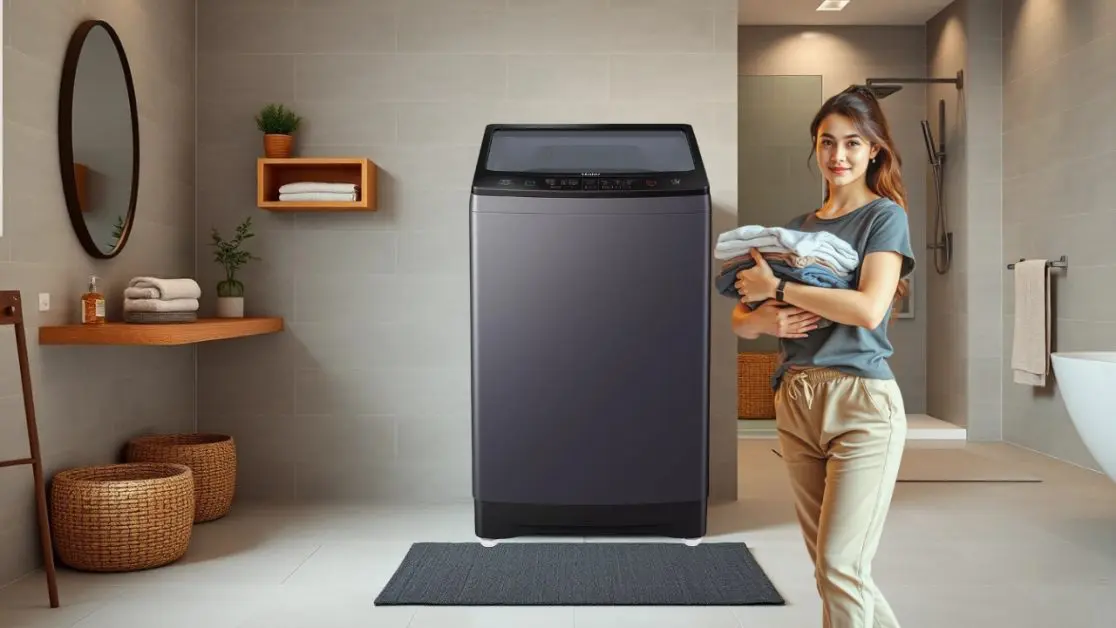
When it rains heavily, the world outside gets chaotic.
The last thing you need is chaos inside your laundry basket too.
A powerful spin cycle won’t change the weather.
But it will change how prepared you feel to face it.
And that’s the real upgrade not just a better machine, but a better system for everyday resilience.
One final thought:
Monsoons come every year.
But frustration doesn’t have to.
Sometimes, progress isn’t about doing more. It’s about spinning smarter.