


Revisiting holiday classics feels different today because our homes have changed. Screens are brighter, colours are truer, and sound fills the room instead of staying trapped inside the TV. When the technology gets out of the way, stories feel warmer, memories feel closer, and familiar films feel new again.
That is the quiet magic of modern viewing.
Not louder.
Not flashier.
Just more real.
Why holiday classics hit differently at home now
Every December, something predictable happens in Indian homes.
Someone suggested Home Alone.
Someone else insists on an old Shah Rukh Khan favourite.
Parents lean toward the film they watched when they were younger.
Kids roll their eyes, then get pulled in anyway.
Holiday classics are not just movies. They are rituals.
What has changed is the environment around them.
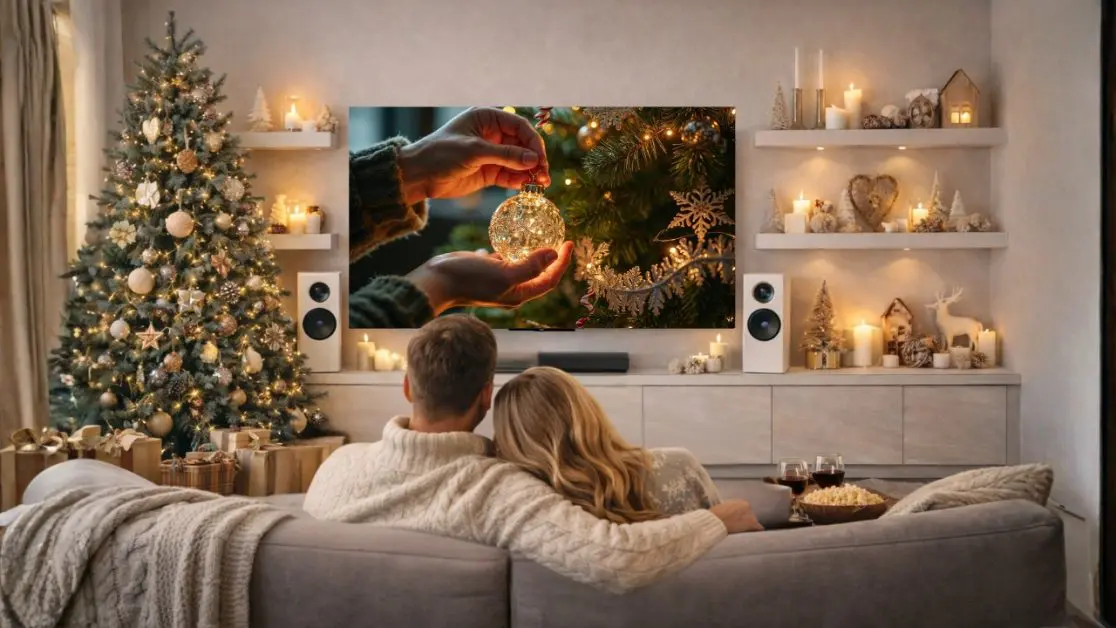
Living rooms are no longer just functional spaces. They are gathering spaces. Sofas are deeper. The lighting is softer. And screens have quietly become the centrepiece.
A good screen does one thing very well.
It disappears.
When colours look washed out or motion feels uneven, you notice the technology. When everything feels right, you forget it exists.
That is when stories do their work.
Rich colours are not a luxury. They are emotional cues
Think about the last time you rewatched a festive film from your childhood.
You remember the reds.
The glow of fairy lights.
The warm browns of wooden interiors.
The contrast between winter blues and golden indoor light.
Those colours are not decoration. They are storytelling tools.
Modern display technology, especially OLED panels, treats colour as information, not embellishment. Each pixel lights itself. Blacks are actually black. Reds feel deep instead of loud. Skin tones stay natural even in candlelit scenes.
This matters more than we admit.
According to Dolby’s own display research, accurate contrast and colour depth significantly improve emotional immersion during long-form viewing. Not because the picture is sharper, but because the brain stops compensating for missing details.
Less effort.
More feeling.
Warm stories need visual comfort, not brightness wars

There is a common misconception that festive viewing needs extreme brightness.
It does not.
What it needs is balance.
Holiday movies are full of dim interiors, night scenes, snowfall, fireplaces, and soft lighting. When a screen pushes brightness without context, those moments lose their intimacy.
Technologies like Dolby Vision IQ adjust visuals based on ambient light in the room, not just what the director intended in a studio. That means a late-night movie does not strain your eyes, and an afternoon rewatch still feels rich and clear.
This is not about specs.
It is about comfort.
A screen that respects the room respects the people in it.
The hidden system behind “family movie nights”
Family movie nights feel spontaneous, but they are systems in disguise.
One screen.
Multiple age groups.
Different attention spans.
Varying sound expectations.
What usually breaks the system is friction.
- Too many remotes
- Confusing menus
- Uneven sound
- Constant volume adjustments
Smart platforms like Google TV solve a quiet but important problem. They reduce decision fatigue.
Content feels organised. Recommendations feel personal. Switching between apps does not feel like work.
When the system works, no one talks about the system.
They talk about the movie.
Bright screens are about clarity, not intensity
Brightness is often misunderstood.
It is not about turning the room into a stadium.
It is about clarity that adapts.
A well-calibrated OLED screen keeps highlights crisp without flattening shadows. Snow looks soft, not harsh. Firelight flickers instead of glowing white. Festive décor feels layered instead of oversaturated.
That is why modern OLED televisions are increasingly chosen for long holiday marathons, not just short demos in showrooms.
They are built for hours, not minutes.
Haier’s C90 OLED 165 cm Google TV, for instance, combines OLED contrast with Dolby Vision IQ, HDR10+, and a 120Hz panel that keeps motion smooth during fast scenes or animated classics . The value is not the list of features. It is how little you notice them while watching.
That is a good design.
Three ways people revisit holiday classics today
One option is nostalgia-first viewing
Rewatching exactly what you loved, in the same order, every year. The benefit is emotional certainty. The cost is missing new interpretations.
The second option is mixed-generation marathons
Old favourites paired with newer family films. The benefit is shared discovery. The cost is managing taste differences.
The third option is comfort viewing
Letting the screen recommend, rewatching halfway, pausing often. The benefit is low effort. The cost is structure.
The best setups support all three without friction.
That is the real upgrade.
Sound completes what colour begins

Visuals set the mood. Sound makes it believable.
Holiday films rely heavily on ambient audio. Footsteps on snow. Crackling fires. Crowd murmurs. Background music that rises gently, not aggressively.
Televisions with well-tuned built-in sound systems, like 2.1 channel setups with dedicated woofers and Dolby Atmos processing, fill rooms evenly instead of forcing volume spikes.
You do not lean forward to hear dialogue.
You do not lower the volume during action scenes.
You stay seated.
What this season quietly teaches us
Holiday classics endure because they reward attention.
Better screens do not replace that attention. They protect it.
When technology works in the background, families focus on each other. Solo viewers settle in instead of scrolling. Couples stop adjusting settings and start watching.
That is the invisible system at work.
Smart homes are not about more control.
They are about fewer interruptions.
This season, revisiting holiday classics the right way is not about chasing the latest thing. It is about creating an environment where stories feel familiar, clear, and comforting again.
Because when the screen feels right, everything else falls into place.