
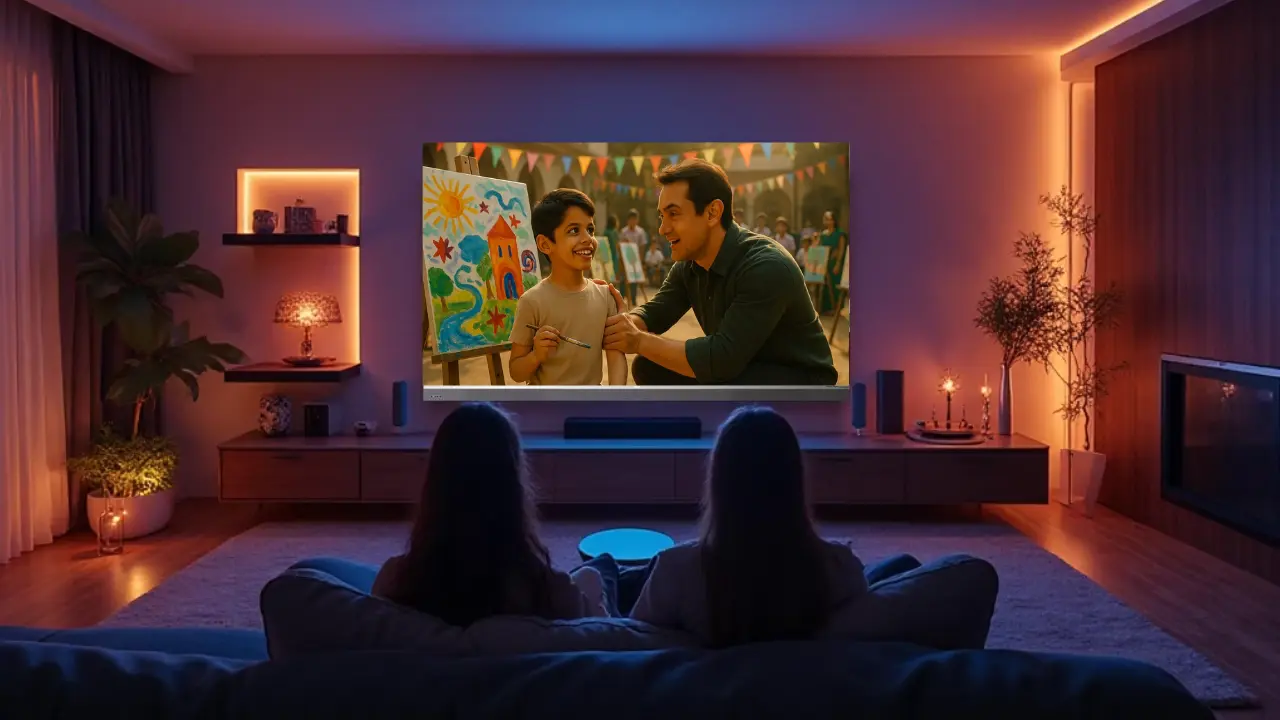

Home isn’t just where children live.
It’s where they first learn values, habits, and curiosity.
And the right tools, from smart TVs to energy-saving appliances, can quietly support parents in their role as everyday teachers.
Why the living room is today’s classroom

Every parent has lived this moment.
A child asking a question that no textbook prepared you for.
“Why is the sky blue?”
“Why does a teacher in ‘Taare Zameen Par’ remind me of you?”
Home becomes the place where lessons don’t follow a timetable but flow through everyday life. A kitchen doubles as a science lab. A balcony becomes a storytelling stage. And yes the TV becomes a blackboard of sorts, showing movies that stick longer than lectures.
When we talk about balancing work, parenting, and teaching, what we’re really describing is designing a home that teaches effortlessly.
Lessons come alive on screen
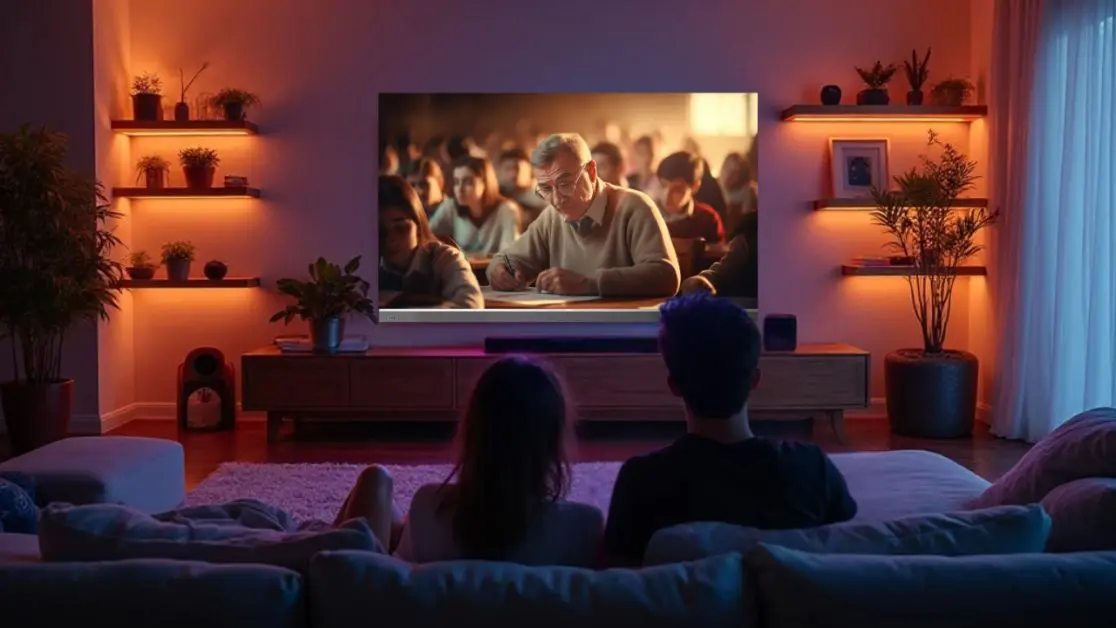
Think about the movies we revisit on Teachers’ Day: Dead Poets Society, Hichki, Taare Zameen Par. They’re not just films, they’re case studies in empathy, patience, and courage.
On a big-screen TV with Dolby Vision IQ and Atmos, the kind Haier now builds into its Mini-LED series, these stories don’t just play in the background. They become immersive classroom sessions for the whole family. The subtle expressions of a mentor, the hush of a classroom, the swelling of background score and these sensory details make “lesson time” feel like a shared experience, not homework.
Technology doesn’t replace teaching, it makes lessons unforgettable.
Appliances as teaching partners
Parents don’t always realise it, but the home’s appliances shape a child’s sense of discipline and comfort.
- Fridge: It teaches planning. Stocking healthy snacks, cooling mithai for surprise Teacher’s Day parties, or showing kids how leftovers shouldn’t go to waste.
- Microwave: It teaches independence. Teens reheating last night’s paratha before tuition, or learning to make mug-cakes between online classes.
- Smart AC: It teaches care. Explaining why keeping the room cool while saving electricity matters for both comfort and the planet.
- Big-screen TV: It teaches perspective. Not just entertainment, but exposure to worlds beyond school walls.
Each appliance is quietly shaping habits sometimes more powerfully than lectures.
What parents secretly juggle
Balancing work calls, homework checks, and family meals isn’t a trivial task. Parents in millennial and Gen Z households aren’t just guardians; they’re co-teachers.
The system looks like this:
- Morning: The fridge sets the stage with breakfast prep, keeping fruit fresh.
- Afternoon: The AC creates a calm environment for online classes.
- Evening: The TV transforms into family-learning mode, replaying inspiring teacher stories.
- Night: The microwave rescues tired parents with reheated chapatis or popcorn for “lesson + movie” time.
A home that’s been set up thoughtfully appliances working seamlessly becomes a co-teacher, not just a backdrop.
Why TVs matter most in the parent-teacher balance
In Indian families, the living room is a gathering point. And the TV is its anchor. But in 2025, TVs aren’t passive boxes anymore; they’re curated learning hubs.
Take the M95 Mini-LED Google TV. Its features aren’t just for cricket or binge-watching:
- Dolby Vision IQ adapts to room light, making both animated learning shows and classic teacher movies look vivid at any hour.
- Harman Kardon audio with Dolby Atmos ensures children hear every word and emotion in a story with clarity.
- Hands-free voice control means kids can ask, “Show me science experiments,” without fumbling for remotes.
- Game Mode with VRR/ALLM doubles as a tool for interactive, educational games blurring the line between play and learning.
A screen becomes more than a screen, it becomes the family’s front-row seat to the world.
The bigger principle: Teaching is environmental
Homes teach not by lectures but by systems. A fridge that nudges healthy eating. A microwave that enables independence. An AC that models mindful energy use. A TV that makes lessons visual and communal.
The invisible curriculum of a home is as powerful as any syllabus in school.
That’s why modern Indian parents, millennials setting up new flats in Pune, Gen Z couples furnishing their first homes in Noida, or solo professionals mentoring nieces and nephews are looking at appliances not just as conveniences but as co-educators.
Choices every family faces
If home is the first school, parents today face three choices:
- Ignore it: Treat appliances as background tools and rely only on formal schooling.
- Overdo it: Try to replicate classrooms at home with rigid schedules and heavy screen time.
- Balance it: Let appliances gently support life lessons, planning meals, saving energy, and watching meaningful stories together.
The third option is where harmony lives. And it’s also where brands like Haier matter not because of hard sells, but because design quietly supports life’s lessons.
Final thought: Homes don’t need chalkboards
Every Indian parent is already a teacher. Every home is already a classroom. The question is whether the systems inside the fridge, the AC, the microwave, the TV make that teaching easier or harder.
When designed well, appliances don’t just save time. They save attention. And attention, as every parent knows, is the most precious resource in teaching.
Because the home is the first school. And every tool inside it is part of the curriculum.