


Creating a home theatre experience for New Year is less about buying more devices and more about designing a moment.
An OLED TV becomes the anchor, while lighting, sound, seating, and content choices quietly work together to turn an ordinary living room into a space that feels cinematic, social, and immersive.
Because New Year is not just another night. It is a pause. A reset.
Why New Year viewing feels different
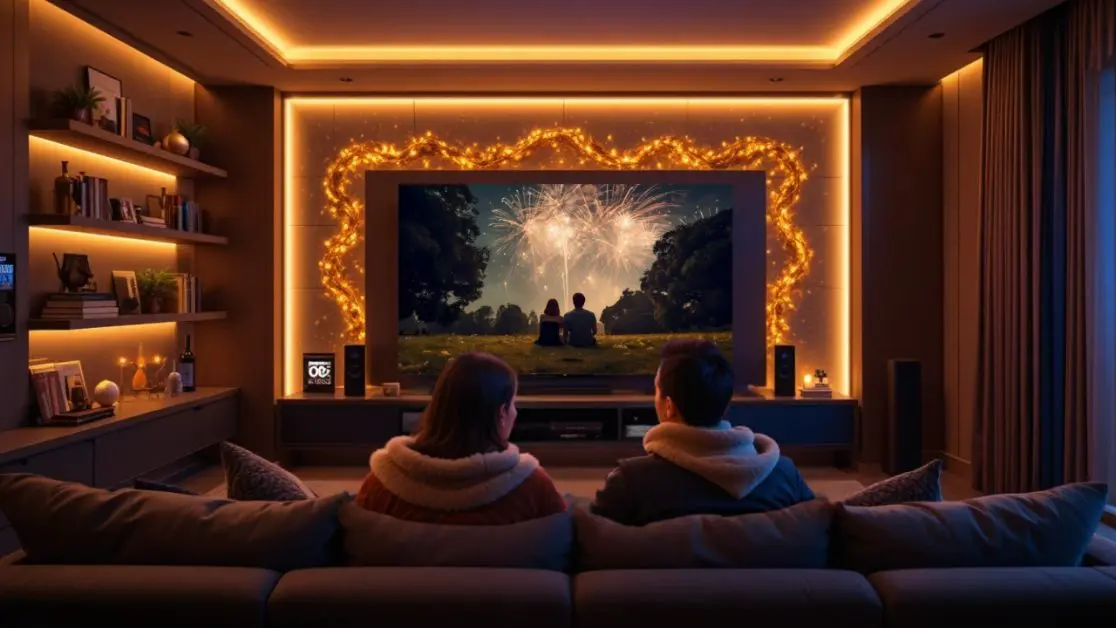
New Year nights behave differently.
People arrive late. Conversations overlap. Snacks keep coming. The TV is on, but attention is scattered.
This is not a technology issue.
It is an experience design issue.
A great home theatre works when everything in the room supports a shared focus. The screen draws people in without demanding effort. The sound fills the space without overpowering conversation.
OLED TVs change this balance. They are built for presence, not noise.
Why OLED makes a living room feel cinematic
OLED is not brighter. It is more honest.
Most TVs try to impress by pushing brightness. OLED works differently.
Each pixel lights itself. Black areas stay truly black. This creates contrast that feels natural rather than aggressive.
What this means on a New Year night:
- Fireworks look sharp against a real night sky
- Cityscapes feel layered, not flat
- Dimly lit scenes retain detail without straining the eyes
Display specialists often point out that perceived contrast matters more than peak brightness. OLED excels here because darkness becomes part of the picture, not a compromise.
Great visuals do not shout. They invite.
Adapting to real homes, not perfect rooms
New Year lighting is unpredictable
The curtains are half open. Decorative lights glow. Someone switches on a lamp mid-movie.
Instead of breaking the moment to adjust settings, modern OLED TVs handle this automatically.
Technologies like Dolby Vision IQ adjust picture output based on ambient light, keeping visuals consistent even as the room changes. This is especially useful in Indian homes where lighting setups shift throughout the evening.
For example, the Haier C90 OLED 165cm (65) Google TV with Dolby Vision IQ is designed around this idea of adaptability, not control. The TV adjusts quietly so the gathering continues uninterrupted.
That is a good design.
Design the room like a theatre, not a showroom
One option is darkness. The second is balance. The third is warmth.
You do not need a dedicated theatre room.
Choose one approach that fits your space:
1. Dark-first setup
- Switch off overhead lights
- Use floor lamps behind seating
- Let the OLED screen define the room
2. Balanced family setup
- Warm side lamps at low brightness
- No direct light on the screen
- Comfortable for mixed-age gatherings
3. Festive warmth setup
- Decorative lights behind the TV
- Soft yellow tones instead of white
- Keeps the celebration alive
Interior designers often recommend backlighting behind the TV to reduce eye strain and improve perceived contrast. Cinemas do this for a reason.
So should homes.
Sound decides whether people lean in
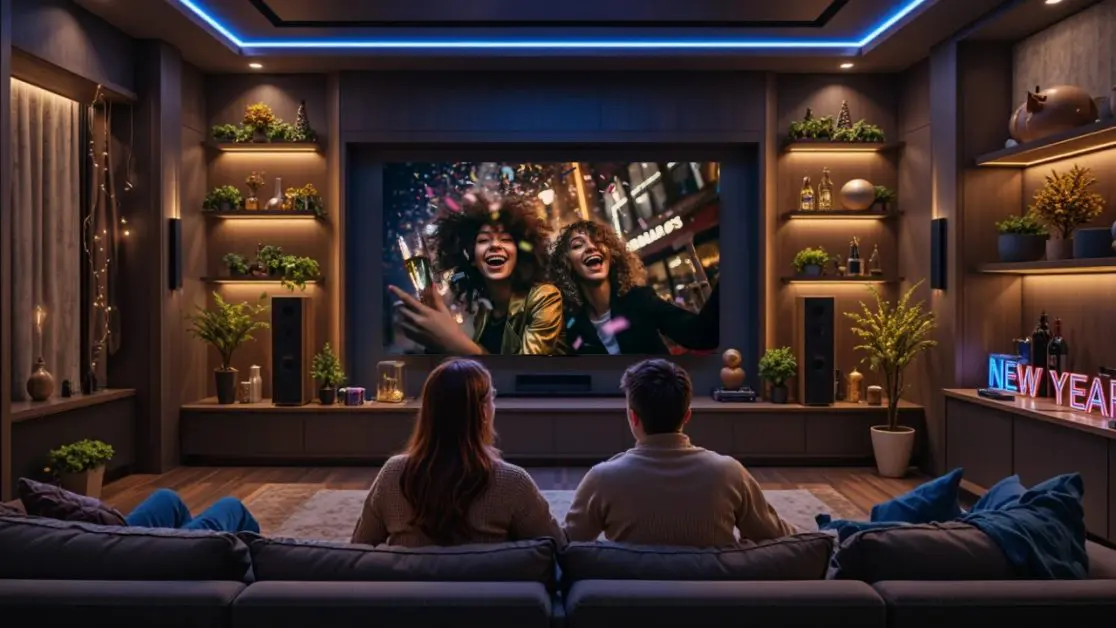
Visuals pull attention. Sound holds it.
A home theatre falls apart when sound feels thin.
Modern OLED TVs now integrate stronger audio systems, including dedicated bass and spatial sound formats like Dolby Atmos. This changes how moments land.
On New Year night, this matters because:
- Music feels full without raising volume
- Countdown moments carry tension
- Dialogues stay clear despite background chatter
Research from audio engineers consistently shows that low-frequency sound increases emotional engagement, even at moderate volume levels.
In simple terms, good sound makes people stop scrolling.
Content planning is experience planning
Do not browse endlessly. Curate intentionally.
The fastest way to lose momentum is endless app switching.
A better approach is to design a content flow:
- Start with something visually rich to settle the room
- Move to live events or countdown moments
- End with familiar, comforting content that invites conversation
Smart TV platforms like Google TV help by organising content across apps, reducing friction. On busy nights, this matters more than people realise.
Choice architecture shapes attention.
Seating distance changes emotion
Closer feels more personal
Many homes place sofas too far from the TV because that is how furniture arrived.
OLED screens allow closer viewing without visible pixelation, increasing immersion while staying comfortable.
A practical guideline:
- Sit about 1.2 to 1.5 times the screen size
- Keep seating aligned with the centre of the screen
Closer seating makes shared reactions more natural. Laughter spreads faster. Silence feels intentional.
Smarter celebrations waste less energy
Efficiency is part of modern living
New Year nights mean longer screen time.
OLED panels are naturally energy efficient because black pixels consume minimal power. Combined with built-in energy saving modes, this keeps consumption reasonable without compromising performance.
Haier designs its TVs with this balance in mind so longer celebrations do not quietly inflate electricity bills.
Sustainability does not need announcements. It works in the background.
The system behind a memorable night
A great home theatre experience is not about perfection.
It is about flow.
When visuals adapt automatically.
When sound fills the room without dominating it.
When the screen becomes a shared centre, not a distraction.
That is where OLED earns its place.
New Year does not need louder parties or bigger plans. Sometimes, it just needs the room to feel right.
And when it does, people remember the night long after the clock strikes twelve.