


What used to be a luxury is now a leftover. Here’s why.
Start with the lived reality.
It’s Saturday night. You’re finally free after a week of back-to-back Zoom calls, office deadlines, school runs, and leaky taps. You queue up a blockbuster, dim the lights, and crank up your high-end home theatre system.
Fifteen minutes in, you get a knock on the door.
“Thoda volume kam karo, please. Baccha so raha hai.”
Sound familiar?
That’s the reality of modern high-rise living in India.
And it’s turning the idea of a traditional home theatre into a problem.
What changed? The house, not the habit.

We still love movies. We still crave immersive sound and visuals.
But the spaces we live in have evolved.
High-rise apartments whether it’s a luxury tower in Gurgaon or a mid-range gated society in Pune come with sleek walls, tighter layouts, and ever-thinner patience from neighbours.
And more importantly:
They come with less control over your acoustic environment.
Your walls may look concrete. But they behave like paper when a woofer starts rumbling at 10 PM.
The cost of cinematic indulgence is rising and not just financially.
Let’s break this down.
1. Noise doesn’t respect walls
Home theatres are designed for detached homes or large bungalows with controlled acoustics.
Most Indian apartments? Not so much.
The moment a deep bass vibrates the floor, it’s not just your living room vibrating, it’s the toddler’s bedroom next door, the uncle downstairs doing his puja, the WFH engineer on a deadline.
You’re not just watching a movie anymore.
You’re disrupting the ecosystem.
2. Space isn’t designed for it.
Those tower speakers? That 7.1 surround setup?
They demand space, angles, distances.
But modern flats are optimizing every square inch.
A TV on the wall. A couch that doubles as a bed. A coffee table with wheels.
The idea of dedicating an entire room or even a full wall to sound diffusion is outdated.
3. Minimalism is in, maintenance is out.
Younger homeowners today, especially millennial and Gen Z couples aren’t investing in bulky audio rigs.
They’re choosing style, speed, and simplicity.
Why wire up a complex, dust-prone sound system when a single smart OLED TV can deliver cinematic performance with built-in 2.1 stereo speakers and Dolby Atmos?
Less mess. Less maintenance. Same wow.
Enter the smarter alternative: intelligent, immersive TVs
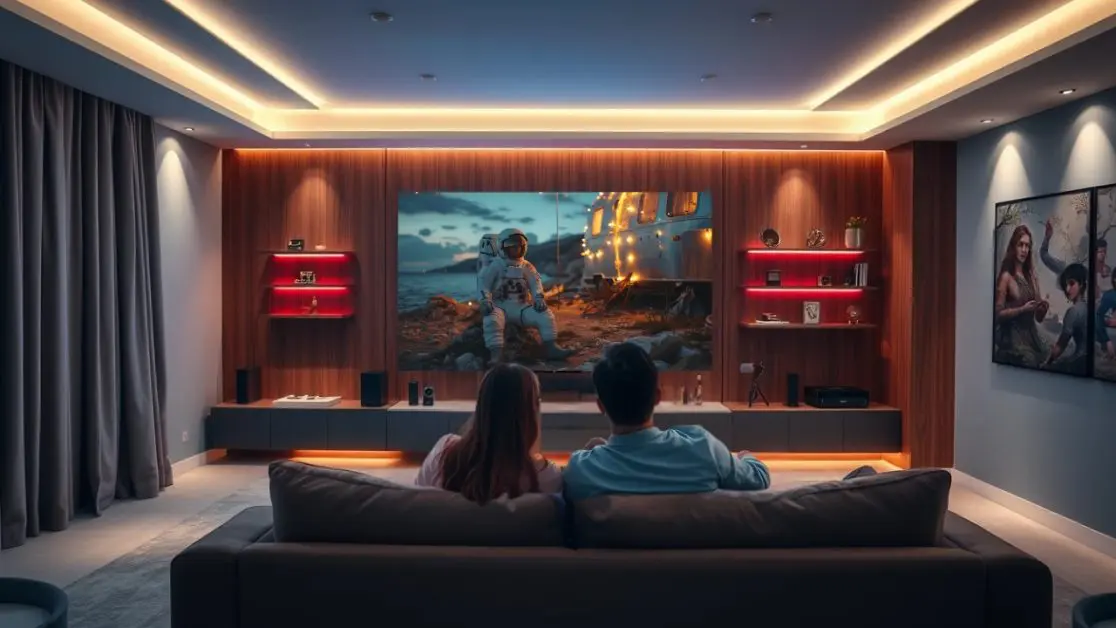
What used to need an entire audio arsenal now fits inside one device.
Take Haier’s new line of OLED Google TVs, for example.
These are not just screens, they’re smart entertainment systems in disguise.
What makes them so fit for high-rise life?
- Built-in 2.1 channel speakers with a subwoofer
Rich, room-filling sound without waking up the neighbours. - Dolby Atmos & Dolby Vision IQ
Creates a multi-dimensional soundscape and optimized visuals without external hardware. - MEMC 120Hz & HDR10+
Ensures smooth, lifelike motion even in action scenes right from the panel. - Hands-free voice control
No more juggling remotes or waking the baby during a search. - Solar-powered remote
Because even the accessories are thoughtful now.
So what are your options if you still want the ‘home theatre feel’?
You don’t have to give up the experience.
You just have to redefine what delivers it.
Option 1: Lean into smart TVs with cinematic features
OLED, Dolby Atmos, AI upscaling today’s smart TVs aren’t playing catch-up. They are the main event.
Option 2: Use soundbars, not speaker jungles
A sleek soundbar (with wireless subwoofer) gives depth without the visual clutter or structural disturbance.
Option 3: Invest in wireless personal audio
If you’re watching late at night, noise-canceling headphones paired with your smart TV deliver pure cinema with zero complaints.
Home theatres haven’t died. They’ve been absorbed.
The screen is smarter.
The sound is built-in.
The experience is intact but the clutter is gone.
Like landlines and physical photo albums, traditional home theatre systems are becoming artifacts of another era.
Useful once. Beautiful even. But it is no longer necessary.
What this says about how we live now
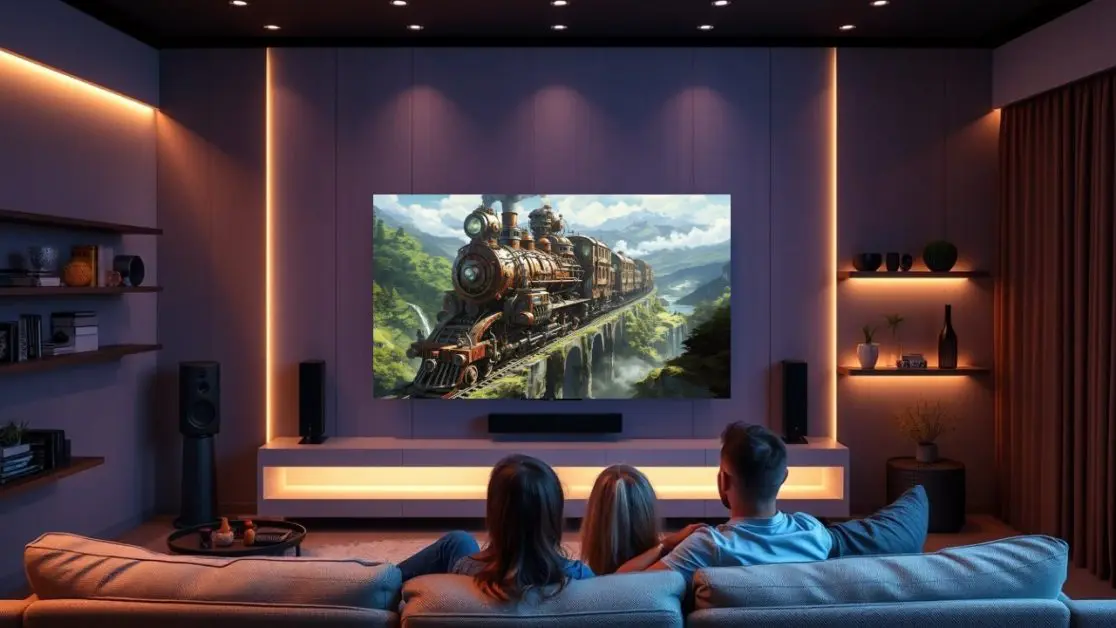
At its core, this shift isn’t just about technology.
It’s about adaptation.
To vertical living. To tighter communities. To multitasking spaces.
To want more from less.
It’s also about convenience winning over complexity.
And design evolving toward harmony with our neighbours, our lifestyles, and even our electricity bills.
The best tech today disappears into your life.
It doesn’t need a spotlight.
It is the spotlight.
And in homes that are 1100 sq ft and rising 30 floors into the sky, that’s exactly what we need.
Final thought?
Entertainment isn’t shrinking. It’s getting smarter.
So smart, it fits right into your living room wall without stealing your space, your peace, or your neighbour’s nap.