
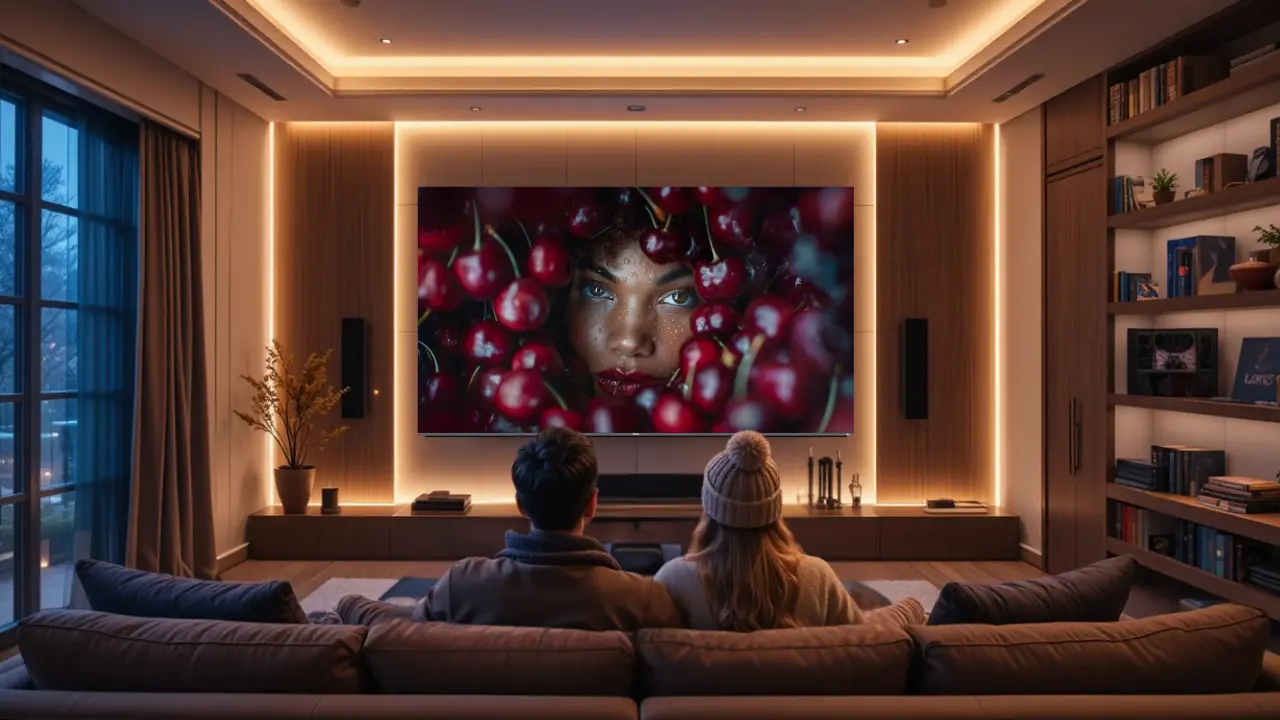

Hosting a great movie night at home today is less about the movie and more about the experience around it.
A big screen TV anchors that experience. It changes how people sit, talk, snack, react, and remember the night. When the screen feels cinematic, the room follows.
Movie nights are no longer “just watching a film”
Think about the last time people came over to your place.
Someone arrived late and asked you to rewind.
Someone else kept checking their phone.
The snacks finished faster than expected.
Now think about a night when the screen filled the room.
Nobody asked to rewind.
Phones stayed face down.
Even the quietest person reacted during key scenes.
That difference is not accidental.
A big screen TV changes behaviour. It pulls attention forward. It makes the room face one direction. It creates a shared focal point, which is the real secret of memorable movie nights.
When the screen feels small, people multitask.
When the screen feels large, people commit.
That is the system at work.
Why screen size quietly decides the success of a movie night
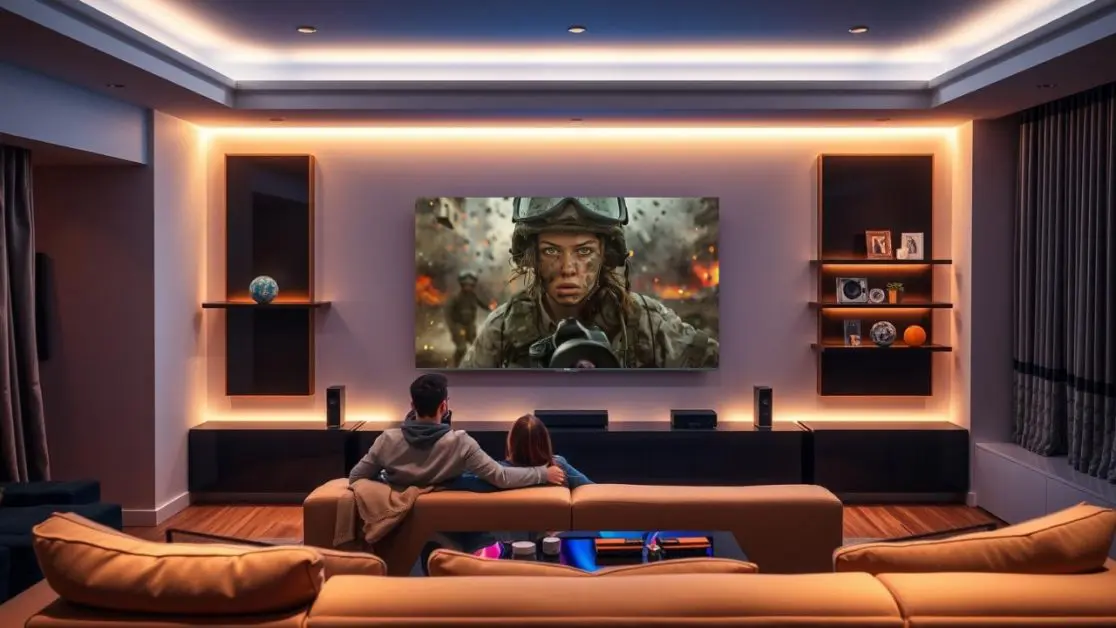
Most people think sound or content matters most.
Both matter. But they work after the screen earns attention.
A larger screen does three important things immediately:
- It increases immersion, even before the movie starts
- It reduces distraction by filling peripheral vision
- It equalises viewing, so people at the sides feel included
This is why cinema halls feel immersive even before the movie plays.
Your living room can borrow the same principle.
When the screen dominates the visual field, the brain treats the experience as important. Conversations slow down. Reactions sync up. The room settles.
Big screens do not just show content.
They set the tone.
The Indian living room has changed, and movie nights changed with it
Indian homes today look very different from a decade ago.
Sofas replace floor seating in many homes.
Open kitchens blur boundaries.
Living rooms double as work zones by day.
Movie nights now compete with notifications, laptops, and fatigue.
That means your setup has to work harder.
A big screen TV helps because it simplifies decisions.
Where to sit.
Where to look.
When the movie really begins.
In apartments where space is limited, a larger screen actually feels more efficient. It delivers a cinema effect without rearranging furniture or adding equipment.
This is why 165cm (65), 189cm (75), and even 215cm (85) TVs are no longer rare in Indian homes.
They match how we live now.
Choosing the right screen size is about distance, not bragging rights
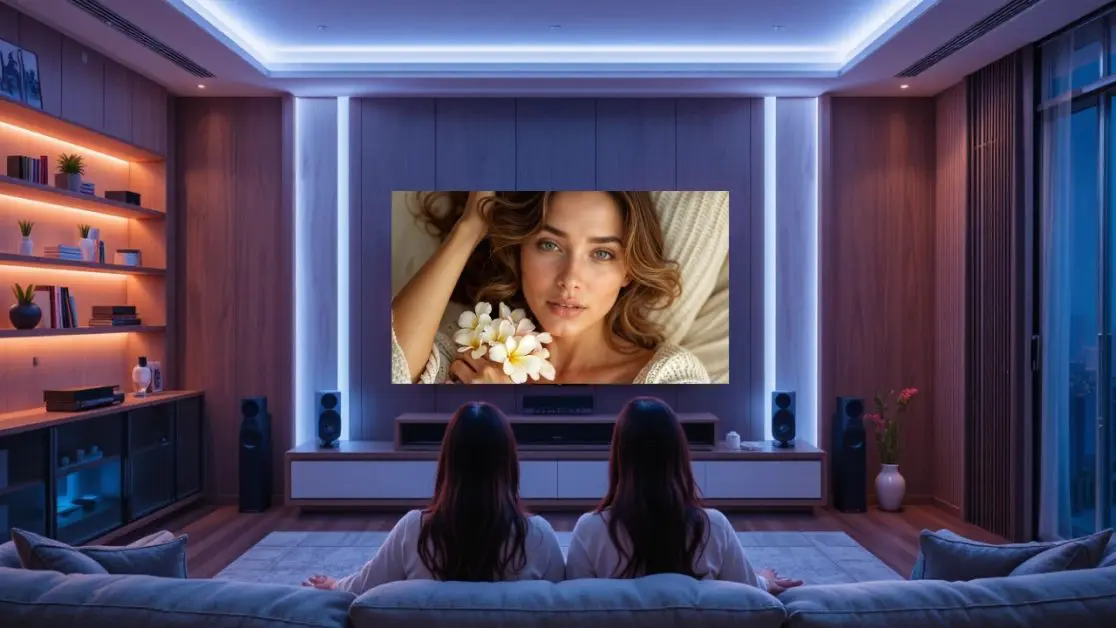
Bigger is better only when it fits the room.
Here is a simple way to think about it.
One option is a mid sized upgrade
- Works well for compact living rooms
- Ideal if seating is close to the TV
- Improves clarity without overwhelming the space
The second option is a large screen sweet spot
- Perfect for family movie nights
- Allows everyone to see clearly from different angles
- Balances immersion and comfort
The third option is a cinema scale screen
- Best for hosting groups
- Turns movie night into an event
- Makes OTT content feel theatrical
The cost difference between sizes often feels large on paper.
The experience difference feels even larger in real life.
Screen size is not about showing off.
It is about matching scale to usage.
Picture quality matters more on bigger screens
As screens grow, flaws become visible.
Compression artifacts.
Washed out blacks.
Uneven brightness.
This is where display technology matters.
Mini LED and advanced local dimming reduce those issues by controlling light more precisely. HDR formats like Dolby Vision help maintain detail in dark and bright scenes at the same time.
On a 215cm (85) screen, these differences are not subtle.
A well shot night scene looks cinematic.
A poorly handled one looks flat and tiring.
This is why many large screen TVs now focus as much on picture processing as size.
Sound is half the movie night, even when you do not notice it
Here is a counterintuitive truth.
Good sound disappears.
Bad sound distracts.
During movie nights, people rarely talk about audio unless something feels off.
Built in systems with dedicated woofers and tuned speakers matter because they reduce the need for extra equipment. Voices sound anchored to faces. Background scores feel fuller without being loud.
For example, large screen TVs with integrated premium audio systems and Dolby Atmos create depth without cluttering the room with cables and speakers.
That matters in real homes, not demo rooms.
Smart features make hosting easier, not flashier
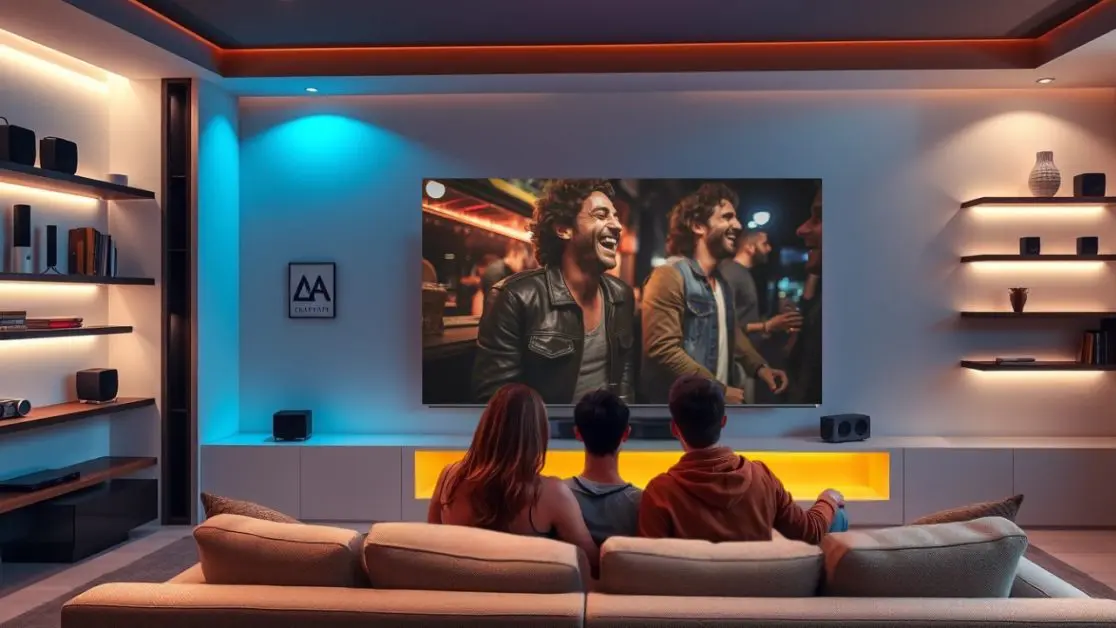
Hosting already involves effort.
Timing snacks.
Adjusting lights.
Helping guests find content.
Smart TV platforms reduce friction.
Voice search avoids scrolling.
Personalised recommendations cut decision fatigue.
Hands free controls help when hands are busy serving food.
These are not gimmicks during a movie night. They are small systems that reduce interruptions.
When the host relaxes, guests relax.
A real world example from modern Indian homes
Many households hosting regular movie nights now build the setup around one anchor product.
A large Mini LED Google TV with strong audio does the heavy lifting.
Take something like Haier’s 215cm (85) Mini LED Google TV with Sound by KEF. Its Mini LED panel, Dolby Vision support, 2.1 channel 50W audio with Dolby Atmos, and hands free voice control mean fewer add ons are required. It becomes a single, clean centrepiece rather than a collection of devices.
The insight here is not about the brand.
It is about consolidation.
Fewer devices.
Fewer remotes.
Fewer interruptions.
That is what makes hosting feel effortless.
Snacks, seating, and lighting follow the screen
Once the screen is right, everything else aligns.
- Seating naturally faces one direction
- Lighting shifts to softer tones
- Snack tables move closer to the couch
The screen decides the room choreography.
This is why people remember movie nights more vividly than casual hangouts. The environment has intent.
A big screen creates that intent automatically.
Movie nights are social rituals, not content sessions
The mistake many people make is treating movie night like solo viewing.
Group viewing works differently.
People laugh together.
They anticipate scenes.
They react to sound cues.
A large screen supports this shared rhythm. Everyone sees the same details at the same time.
That synchronisation is what creates memories.
Aphorism worth remembering:
Shared attention creates shared memory.
The hidden benefit: your TV gets used more, not less
Many households worry about buying a large screen and “wasting it.”
The opposite happens.
- Weekend movie nights become routine
- Sports screenings feel bigger
- Casual viewing feels indulgent
The TV shifts from background device to experience hub.
That is a better return than any spec sheet can explain.
What hosting movie nights really teaches us
This is not about entertainment.
It is about designing spaces that encourage togetherness.
A big screen TV is not a luxury when it consistently brings people into the same moment.
In busy lives, shared moments are the rarest currency.
Movie nights work because they remove choice, distraction, and fragmentation. Everyone watches the same thing, at the same time, in the same direction.
The screen makes that possible.
And when the screen is large enough, clear enough, and simple enough to use, hosting stops feeling like effort and starts feeling like a habit.
That is the quiet power of a well chosen big screen TV in a modern Indian home.
Not louder.
Not flashier.
Just better aligned with how we live now.
Frequently Asked Questions
Why does a bigger screen make guests behave differently?
A large screen creates shared attention. When everyone looks in one direction, reactions synchronise naturally.
Do big screen TVs really work in small Indian apartments?
Yes. Larger screens often feel more efficient because they deliver immersion without extra furniture or projectors.
Why does picture quality matter more as screen size increases?
Flaws like compression, washed-out blacks, and uneven brightness become obvious on large panels.
What technologies actually help on big screens?
Mini LED, local dimming, and HDR formats like Dolby Vision maintain contrast and detail.
Why do night scenes look bad on some large TVs?
Poor light control and weak processing flatten dark scenes.
Is built-in TV sound really enough for movie nights?
When done right, yes. Tuned speakers and dedicated woofers reduce the need for soundbars.