

Hot water usage doubles in December because Indian winter quietly rewires everyday routines.
Water coming into homes gets colder, bathing time increases, hygiene habits expand beyond bathrooms, and families cluster their usage into tighter morning and evening windows.
The result feels invisible, but the numbers add up fast.
Now let us slow down and look at what is really happening.
December changes water before it changes habits

Open a tap in December and the difference is immediate.
The water feels sharper.
The floor feels colder.
The body reacts before the mind does.
Across large parts of North, Central, and Eastern India, incoming water temperature drops significantly in winter. Even a small temperature drop changes how water feels on skin. Cold water does not just feel uncomfortable. It feels disruptive.
So people wait longer.
They heat more.
They stay under warm water a little extra.
That extra minute is where doubling begins.
Comfort stretches time. Time stretches consumption.
Bathing quietly becomes a longer ritual
In summer, bathing is about cooling down.
In December, bathing is about warming up.
This shift matters.
Parents spend more time bathing children so they do not shiver. Older family members avoid quick cold exposure. Working professionals take longer showers in the evening to unwind after a cold commute.
What used to be a functional routine becomes a comfort ritual.
- One bucket becomes two
- A short shower becomes a slow one
- The heater stays on longer between users
No one feels like they are using more water. They are just using it differently.
Hot water moves beyond the bathroom
December pulls hot water into parts of the home that barely needed it before.
Think about the kitchen.
- Washing oily utensils with cold water feels ineffective
- Morning tea cups get rinsed with warm water
- Lunchboxes come home greasy and need extra cleaning
Laundry follows the same pattern. Winter blankets, sweaters, and shawls get washed more often. Many homes shift to warmer washes to protect fabric and ensure proper cleaning.
Hot water stops being a bathroom utility.
It becomes a household resource.
When usage spreads across rooms, consumption multiplies.
Mornings and evenings create hidden pressure
December compresses time.
People wake up later. Bathrooms get crowded. Everyone wants hot water at the same time. Evenings stretch too, with post work showers happening back to back.
This clustering matters more than most people realize.
When multiple users draw hot water within short intervals, the system reheats more frequently. Even if the number of baths stays the same, the heater works harder because recovery time reduces.
Peak usage replaces steady usage.
This is why December feels different even if daily habits look unchanged.
Why electricity usage rises without warning

Many households notice higher electricity bills in winter and feel confused.
Nothing obvious changed.
No new appliance arrived.
No extra usage feels visible.
The difference lies in physics.
Colder inlet water requires more energy to reach the same output temperature. Longer bathing times mean heating elements stay active longer. Frequent reheating cycles increase total power draw.
Same routine.
Different input conditions.
Higher energy output.
This is why winter exposes gaps in appliances that were designed only for average days, not peak seasons.
How Indian homes respond in three distinct ways
When December pressure builds, households usually adapt in one of three ways.
One option is adjustment
Families tolerate slower heating, limit usage, or schedule baths. This works, but adds daily friction.
The second option is control
People switch heaters on and off aggressively to manage bills. This saves energy but increases mental load.
The third option is system readiness
Homes rely on water heaters built to handle winter patterns without constant supervision.
This is where design begins to matter more than capacity.
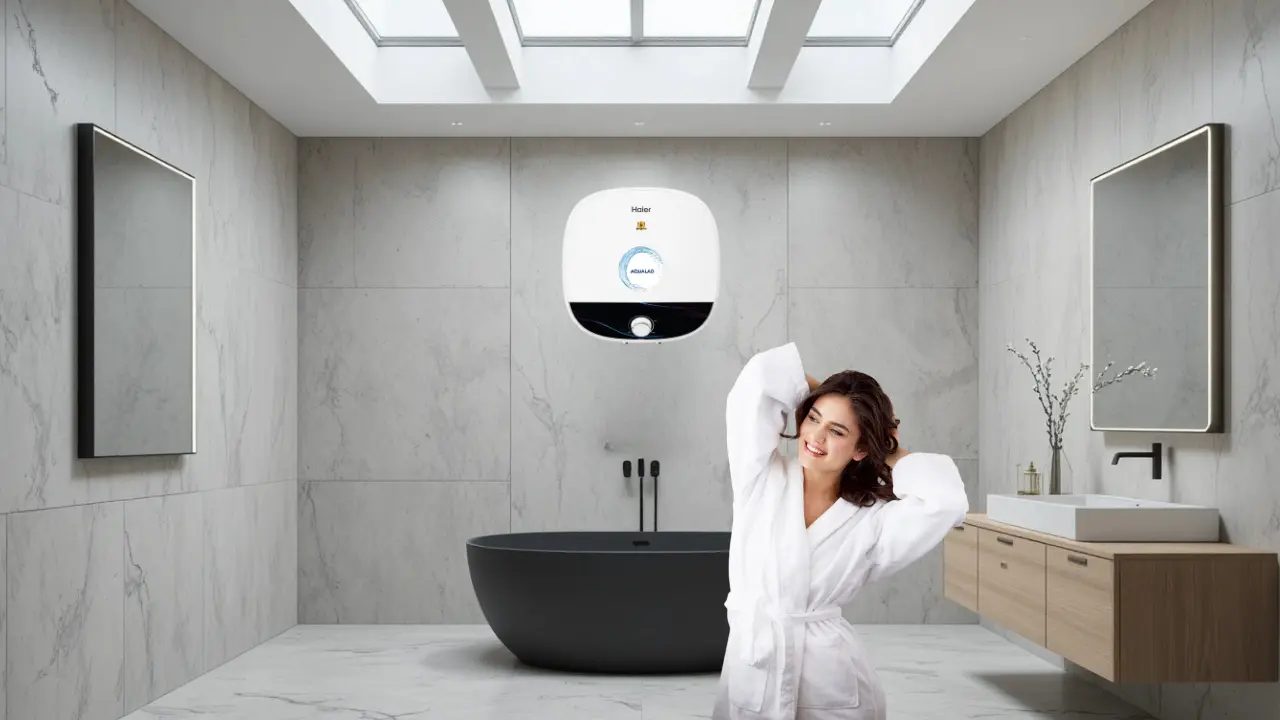
For example, the Haier 15L Square AQUALAD PRO 5 Star Water Heater is designed with strong insulation that helps retain heat longer, reducing the need for repeated reheating during peak morning hours. Safety layers and consistent heating become especially important when multiple family members use hot water back to back
Larger households often face a different challenge. More users mean longer queues and faster depletion. A model like the Haier 25L Square AQUALAD PRO 5 Star Water Heater addresses this by supporting higher demand cycles while maintaining stable performance during winter rush hours
These are not winter features. They are winter necessities.
What December really reveals about Indian homes
December is not just a cold month. It is a stress test.
It reveals whether a home is designed for average comfort or peak comfort. It shows how systems behave when time compresses, demand overlaps, and tolerance drops.
Hot water usage doubling is not a habit problem.
It is a system response.
Homes adapt to discomfort by expanding comfort infrastructure. The more seamlessly that infrastructure works, the less people notice the pressure.
That is the quiet goal of smart appliances.
Not to be noticed.
But to make winter feel manageable.
And when a home gets that right, December stops feeling like a season to survive and starts feeling like a season that simply works.