
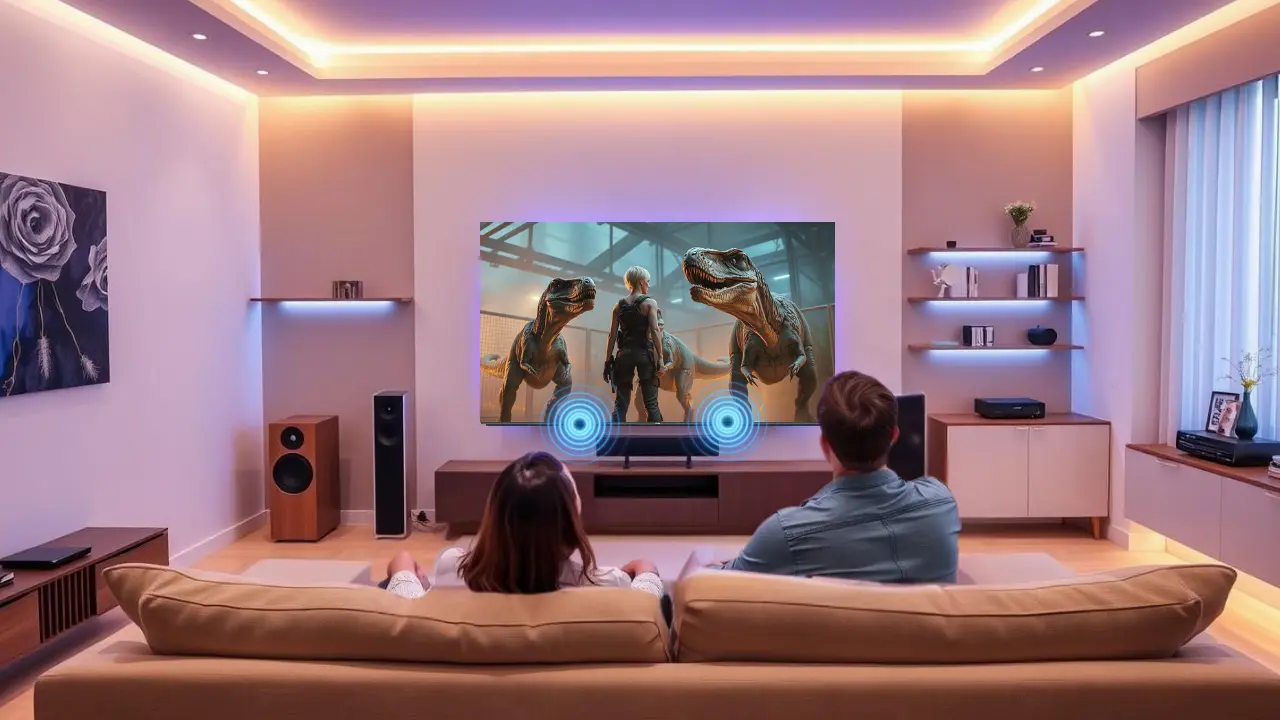

AI and KEF work together by splitting the job of immersion into two clear responsibilities. AI understands what is happening on screen in real time.
KEF ensures what you hear feels spatial, balanced, and emotionally right. One interprets the moment. The other delivers it with precision. Together, they turn everyday viewing into an experience that feels intentional, not accidental.
Immersion is not about louder sound or sharper pictures
Most people think immersion is about volume or screen size.
It is not.
Immersion is about alignment.
What you see, what you hear, and how your brain stitches the two together.
In a real Indian living room, that alignment is hard.
Ceiling fans hum. Pressure cookers whistle. Kids walk in and out.
Sound and picture have to adapt, not demand attention.
That is where AI and KEF start working as a system.
Not as features.
As roles.
What AI actually does inside a modern TV
AI in TVs is often misunderstood as a vague promise.
In practice, it is very specific.
AI constantly reads three things at once.
- Content type
Sports, movies, news, gaming, music. - Scene dynamics
Fast motion, dialogue-heavy moments, silence, crowd noise. - Environment cues
Bright room, low light, background noise, distance from screen.
Instead of using one fixed setting, AI adjusts picture and sound moment by moment.
On TVs like the Haier S90 QLED 254cm (100) Google TV with AI Center Max, this intelligence is centralized through what Haier calls AI Center Max, which coordinates visuals, sound, and performance as a single system rather than isolated tweaks .
The important insight is this.
AI does not try to impress you.
It tries to stay out of the way.
Why sound is the hardest part of immersion
Picture upgrades are obvious.
Sound upgrades are subtle.
And that is why most TVs fail here.
Indian homes are acoustically unpredictable.
Tiles. Curtains. Open kitchens. High ceilings.
Generic speakers struggle because they assume perfect rooms.
KEF does the opposite.
What KEF brings that regular TV audio cannot
KEF has spent decades obsessing over one question.
How should sound travel through space so it feels real?
That obsession shows up in three ways.
- Clarity first
Dialogue remains distinct even at low volumes. - Balanced spread
Sound does not feel like it is coming from a box. - Controlled bass
You feel depth without vibration taking over the room.
On the Haier S90 series, KEF is integrated into a 2.1 channel system with a dedicated subwoofer, designed to work with Dolby Atmos rather than fight it .
This matters because Atmos without proper speaker tuning feels artificial.
KEF ensures it feels anchored.
The real magic happens when AI and KEF talk to each other

Separately, AI and KEF are impressive.
Together, they become invisible.
Here is how that partnership plays out in real life.
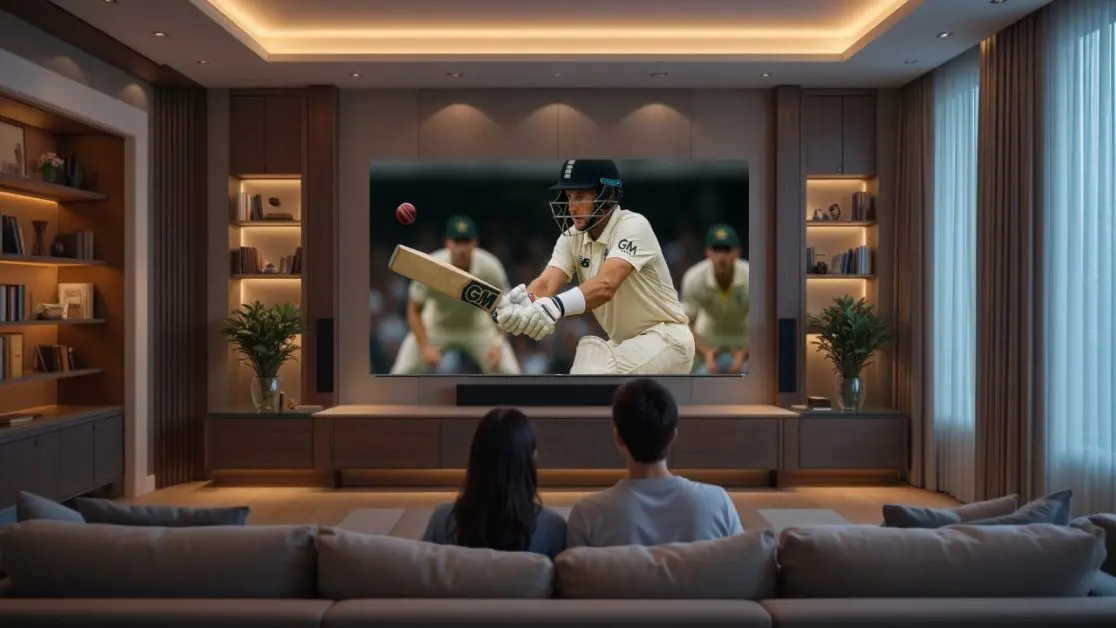
Scenario one: Cricket night chaos
The living room is full.
Commentary. Crowd noise. Snacks crunching.
AI identifies fast motion and crowd-heavy audio.
KEF prioritizes spatial separation.
The bat hit feels sharp.
The crowd feels wide.
Commentary stays clear without shouting.
No manual changes.
No volume battles.
Scenario two: Late-night movie watching
Lights are dim.
Volume needs to stay low.
AI detects low ambient light and dialogue-driven scenes.
KEF adjusts vocal presence without boosting overall loudness.
You hear whispers clearly.
Background score stays restrained.
Immersion without disturbance.
Scenario three: Gaming after work
Fast refresh rates matter.
Audio lag kills immersion.
AI syncs motion processing with sound delivery.
KEF ensures positional cues feel accurate.
Footsteps feel directional.
Explosions feel grounded, not chaotic.
This coordination is supported by gaming-focused features like high refresh rates, VRR, and low latency audio pathways built into the system architecture .
Why this matters more than specs
Specs are easy to list.
- 144Hz refresh rate
- Dolby Vision IQ
- Dolby Atmos
- AI processors
What matters is how they cooperate.
One option is to buy loud sounds.
Another is to buy smart visuals.
The better option is to buy a system where intelligence and acoustics are designed together.
Because immersion is not additive.
It is multiplicative.
A simple framework for understanding immersion
Think of immersion like a conversation.
- AI listens first
It reads the room and the content. - KEF responds next
It shapes sound to match that understanding. - You stop thinking about settings
And start paying attention to moments.
That is the goal.
Not wow.
But flow.
Why this approach fits Indian homes
Indian households multitask by default.
TVs compete with life, not silence.
An immersive system has to adapt, not dominate.
AI allows the TV to behave like a considerate guest.
KEF ensures when it speaks, it speaks clearly.
This combination respects space, time, and attention.
And that is why it feels premium without being performative.
The bigger pattern at work
Across appliances, the same shift is happening.
- Fridges predict usage.
- ACs adjust based on occupancy.
- TVs adapt to people, not presets.
The future of technology is not smarter features.
It is better judgment.
AI provides judgment.
KEF provides execution.
Together, they reflect a deeper design philosophy.
Technology should notice you, not interrupt you.