


Haier uses AI for smart cooling by combining real-time environmental sensing, user behavior learning, and Pre-cooling automation to deliver comfort before you ask for it, while reducing energy consumption and manual effort.
The system observes, adapts, and optimizes cooling continuously.
That is the short answer.
The real story lives inside everyday Indian homes.
Why does cooling still feel like work in most homes?
Step into a typical Indian summer evening.
You walk in. The room feels warm. The first instinct is automatic.
Switch on the AC. Wait. Adjust. Wait again.
This pattern repeats every single day.
Cooling, in most homes, is reactive.
- The room heats up
- You notice
- You act
- The machine responds
This system has a hidden cost.
Comfort always arrives late.
AI flips the sequence completely
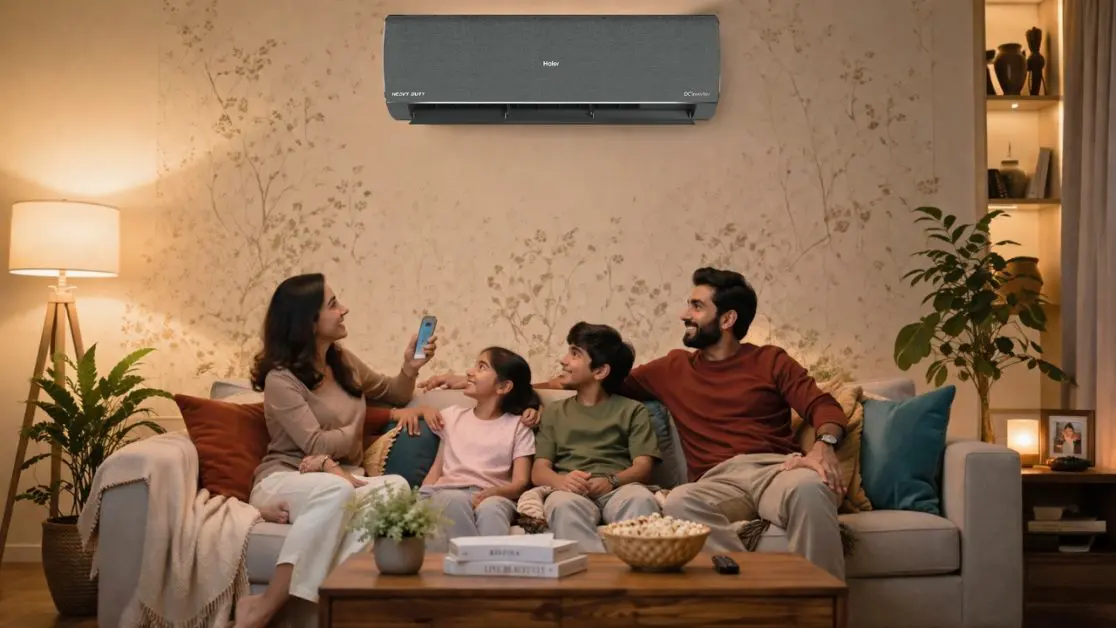
Smart cooling changes one thing that changes everything.
It moves from reaction to anticipation.
Instead of waiting for instructions, AI-powered systems observe patterns and act ahead of time. Haier’s AI Atmox platform builds this shift into the core of how cooling works.
The result feels simple.
Walk in. I feel comfortable. No effort.
But behind that simplicity sits a layered system.
The three invisible layers behind AI-powered cooling
1. Observation: The system watches quietly
AI starts by collecting signals.
- Room temperature and humidity
- Outdoor weather conditions
- Time of day and seasonal patterns
- Usage history and preferences
As highlighted in the AI Atmox system, the AC continuously analyzes environmental data and adjusts performance accordingly.
This matters because cooling is never static.
A May afternoon is different from a monsoon evening.
A crowded living room behaves differently than an empty bedroom.
2. Learning: The system builds a memory of your life
Over time, AI begins to recognize patterns.
- When you usually come home
- How long you run the AC
- Which modes you prefer
- How your usage changes across seasons
This is not a one-time setup.
It evolves continuously through machine learning, building a personalized energy and comfort model.
The machine stops being a device. It starts becoming familiar.
3. Action: The system responds without asking
Once AI understands patterns, it begins to act.
Automatically.
- Adjusting temperature
- Switching modes
- Optimizing airflow
- Managing energy consumption
No reminders. No manual inputs.
Just outcomes.
How AI shows up in real Indian life
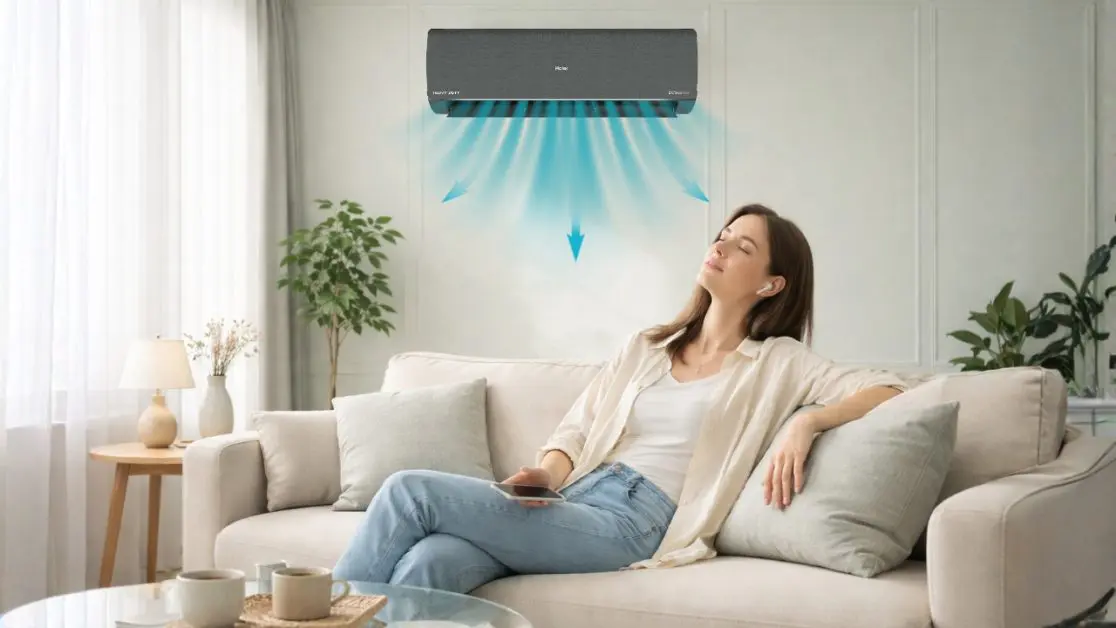
Let’s move from systems to scenes.
Because technology only matters when it fits into real moments.
Scene 1: The just got home moment
You return home at 7 pm.
Traditional AC: You switch it on and wait.
AI-powered cooling: The room is already cool.
How?
AI pre-cooling predicts your arrival using location and behavior patterns, and starts cooling in advance within a defined range.
Insight:
The best systems solve problems before they appear.
Scene 2: The everyone in one room moment
Weekend evening. The family gathers in the living room.
Traditional AC: Cools the entire room evenly.
AI-powered cooling: Focuses airflow where people actually sit.
AI target cooling uses layout data to direct air precisely to occupied zones, improving comfort while reducing waste.
Insight:
Efficiency improves when systems stop treating everything equally.
Scene 3: The empty room problem
AC running. No one inside.
Traditional AC: Keeps running.
AI-powered cooling: Detects absence and reduces or stops cooling automatically.
AI human detection can switch to energy-saving modes and even power down after inactivity.
Insight:
The smartest machines know when to stop.
The real advantage: Comfort and savings are no longer a trade-off
Most people think they have to choose.
Either comfort or lower electricity bills.
AI changes that equation.
Here is how.
Two traditional choices vs one new system
| Approach | What happens | Hidden cost |
| High cooling, manual control | Immediate comfort | High electricity bills |
| Conservative usage | Lower bills | Delayed or inconsistent comfort |
| AI-powered cooling | Optimized comfort automatically | Lower bills with minimal effort |
AI Eco 2.0 modes dynamically adjust performance based on temperature differences, shifting between levels to maintain efficiency.
Insight:
Optimization beats compromise.
Five ways AI quietly reduces your electricity bill
This is where AI becomes practical.
Not just impressive.
- Real-time adjustment
Cooling power changes based on actual need - Pre-cooling cycles
Avoids unnecessary runtime - Occupancy-based operation
Reduces cooling when no one is present - Energy monitoring
Tracks usage with visual insights and cost data - Personalized energy plans
Learns patterns and optimizes consumption automatically
The system even provides electricity tracking in graphical and calendar formats, helping users understand and control usage.
Insight:
What gets measured gets managed.
What makes this different from smart features of the past?
Many appliances have been called smart.
Few actually are.
Let’s break it down.
Old smarts vs. real intelligence
- Old smart: You control the appliance from your phone
- Real AI: The appliance reduces the need for control
- Old smart: You set schedules
- Real AI: The system learns schedules
- Old smart: You monitor usage
- Real AI: The system optimizes usage automatically
Insight:
Convenience is not intelligence. Adaptation is.
Where Haier’s AI Atmox system stands out
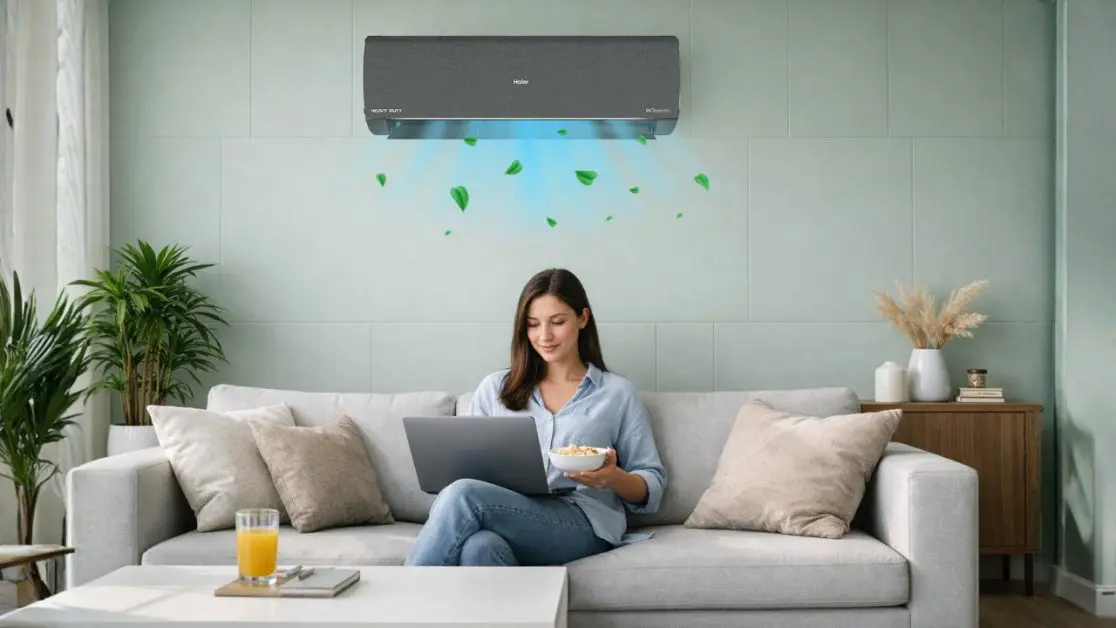
The AI Atmox platform is built as a connected system, not isolated features.
According to the product framework:
- AI Climate Control continuously adapts to environment
- AI Pre-Cooling prepares comfort in advance
- AI Target Cooling delivers focused airflow
- AI Eco 2.0 optimizes energy in real time
- AtmoX Power Manager tracks and manages electricity
- AI Auto Clean maintains performance and efficiency
Each feature solves a small problem.
Together, they remove friction from everyday life.
A simple way to think about AI cooling
Think of it like a good host.
A good host does three things:
- Notices what guests need
- Prepares before being asked
- Adjusts based on how the evening unfolds
That is exactly what AI cooling does.
It hosts your comfort.
The hidden system behind better living
This is not just about air conditioners.
It reflects a larger shift.
Homes are moving from:
- Manual control to intelligent systems
- Reaction to prediction
- Effort to automation
And the biggest change?
You stop thinking about the appliance.
What this means for modern Indian homes
For working professionals
It removes decision fatigue after long days
For families
It creates consistent comfort without constant adjustments
For new homeowners
It builds a home that feels responsive, not rigid
For everyone
It saves time, energy, and attention
The final insight: Comfort should not require attention
We grew up believing that machines need constant control.
AI quietly proves the opposite.
The best systems do their job so well that you stop noticing them.
That is the real promise of smart cooling.
Not more features.
Not more control.
Less thinking.
More living.
Frequently Asked Questions
Why do I feel tired of adjusting my AC every day after coming home?
Because traditional cooling is reactive. You walk in, feel discomfort, and then start adjusting settings repeatedly. AI-powered systems like Haier AI Atmox remove this loop by predicting your needs and preparing the room in advance.
I just want my room to feel comfortable without thinking why is that so hard?
Most ACs wait for your input. AI changes that by observing patterns and automating decisions. It eliminates micro-decisions like temperature tweaking, mode switching, and timing.
I came home late and my room was hot. Can my AC start cooling before I arrive?
Yes. AI pre-cooling uses behavior patterns and sometimes location data to start cooling before you reach home, ensuring comfort the moment you walk in.
My family sits in one corner, but the AC cools the whole room. Is that wasteful?
Yes, and inefficient. AI target cooling focuses airflow only where people are present, improving comfort and reducing wasted energy.
How does my AC know when to switch off if I forget?
AI human detection senses inactivity and reduces or stops cooling automatically, preventing energy waste.
Can I track how much electricity my AC is using daily?
Yes. Systems like Haier AI Atmox include energy dashboards showing usage trends, helping you manage costs better.
Sometimes my room feels unevenly cooled. What’s causing that?
Traditional ACs distribute air uniformly. AI systems use directional airflow and zone-based cooling to solve this.