
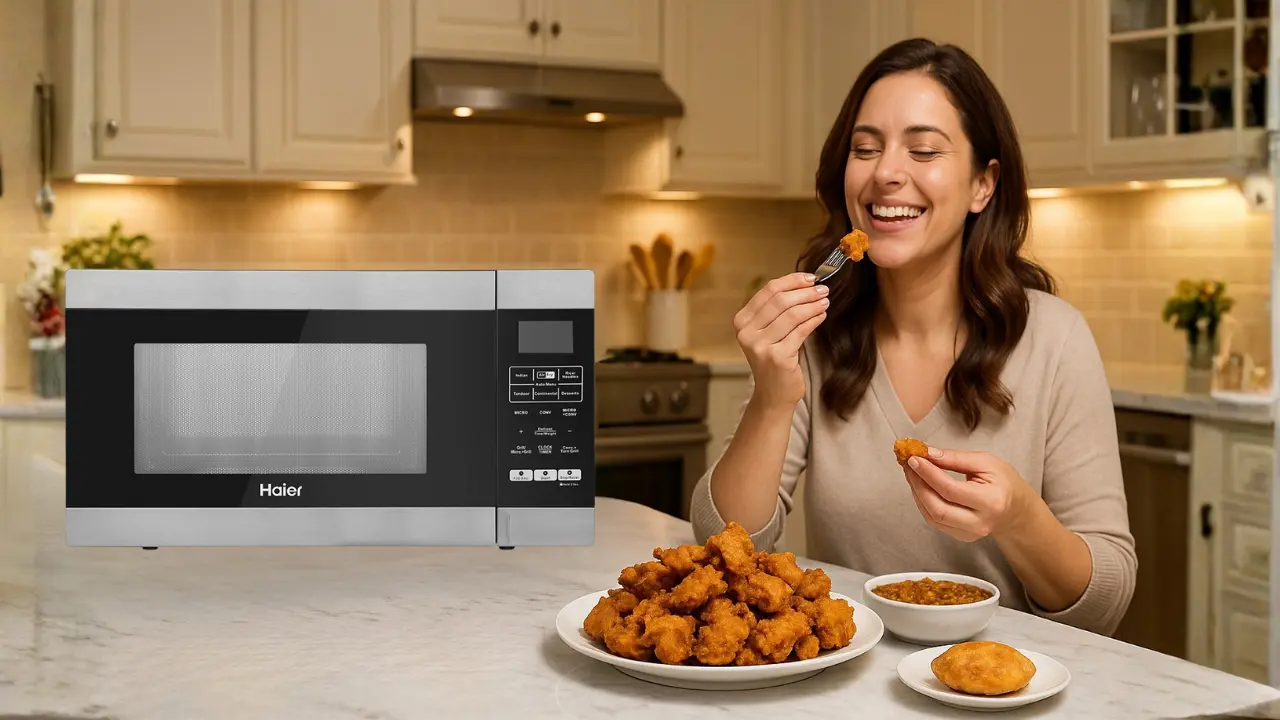

Microwaves fit perfectly into February routines because they support shorter days, unpredictable schedules, lighter meals, and the quiet return to structure after January’s chaos.
In Indian homes, February is about balance.
Less celebration, more rhythm. Less planning, more flow. A microwave earns its place not as a shortcut, but as a system that keeps everyday life moving without friction.
February is not a cooking month. It is a coordination month.
February feels different.
The calendar is full, but not loud.
Work settles into pace. Schools restart fully. Fitness plans turn realistic.
Evenings shrink.
This is not the month of elaborate cooking.
It is the month of making things work.
Dinner runs late. Lunch is packed quickly. Snacks bridge long gaps between calls.
Cooking has to fit into small, scattered pockets of time.
This is where microwaves quietly step forward.
They move from backup appliances to everyday infrastructure.
Why February routines demand different kitchen thinking
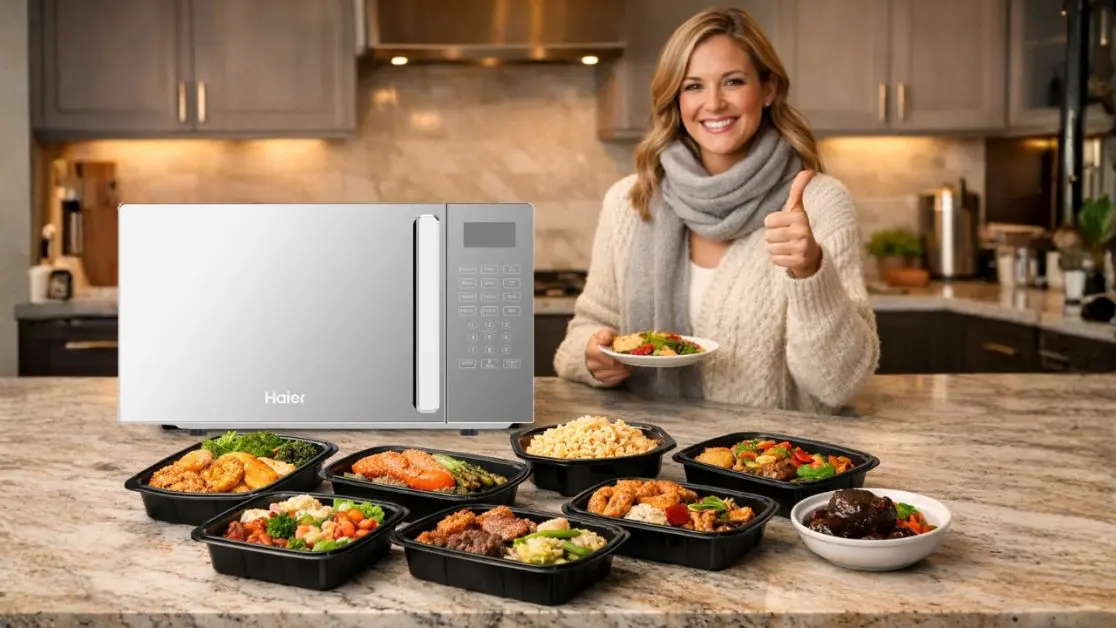
January is aspirational.
March is busy.
February sits quietly in between.
This is when routines are tested.
- Can meals stay warm without becoming heavy?
- Can food be prepared without standing in the kitchen?
- Can eating well coexist with long workdays?
For most Indian households, the answer is not motivation.
It is a system.
A microwave supports this system in three clear ways.
One. February meals are lighter but more frequent
Heavy winter foods begin to fade.
Summer habits have not fully arrived.
What replaces them is in-between food.
- Warm breakfasts that are quick.
- Evening snacks that are controlled.
- Dinner portions that feel enough, not excessive.
Microwaves handle this transition well.
Leftover dal reheated evenly.
Rotis softened without drying.
Vegetables cooked in smaller batches.
Studies referenced across modern kitchen appliance research show that microwave reheating preserves more nutrients than prolonged stovetop reheating, especially for vegetables and grains.
This matters when meals are simpler and repetitive.
A model like the Haier 20L Convection Microwave with Mirror Glass Design (HIL2001CSSH) supports exactly this kind of everyday use. Its stainless steel cavity allows even reheating without constant supervision, which is essential when meals happen between other responsibilities.
Two. Time compresses in February evenings
Sunset comes early.
Workdays stretch.
Most cooking happens in fragments.
Between calls.
After school drop-offs.
Before late gym sessions.
Microwaves work well in fragmented time.
They do not demand full attention.
They allow multitasking.
They shorten decision cycles.
This is less about speed and more about mental load.
Good appliances do not rush you.
They reduce thinking.
That is the real upgrade February demands.
The hidden role microwaves play in Indian homes
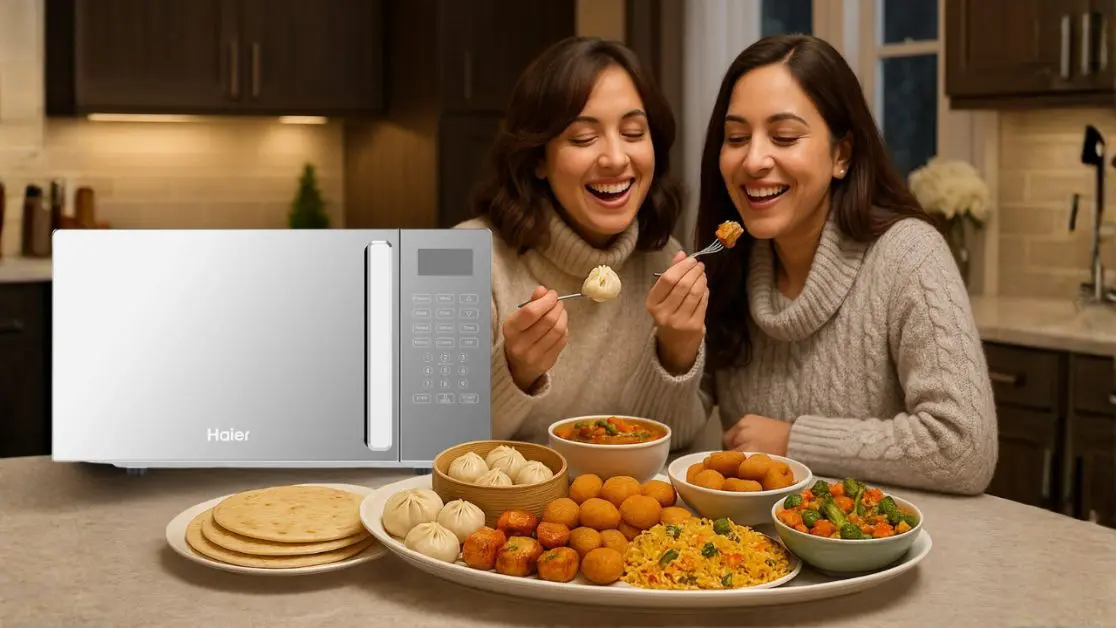
Microwaves are often misunderstood.
They are seen as reheating tools.
Or festival helpers.
In reality, they support continuity.
They help food fit into life instead of interrupting it.
This becomes visible in February.
Weekday lunches stop feeling repetitive
February lunches are practical.
Rice, sabzi, leftovers from the night before.
A microwave allows variety without fresh cooking.
- Vegetables steamed instead of fried.
- Paneer warmed gently without oil.
- One-pot meals prepared in smaller portions.
Microwave cooking typically uses less oil and shorter heating cycles.
This aligns well with February goals around lighter eating.
The Haier 25L Convection Microwave Oven with Bread Basket (HIL2501CBSH) is designed around this Indian reality. With over 300 auto cook menus and a dedicated bread basket for naan, paratha, kulcha, and garlic bread, it reduces guesswork during rushed weekday meals.
This is not about features.
It is about predictability.
Evening snacks become intentional
February is peak snack month.
Children are back in routine.
Work-from-home fatigue peaks.
Tea breaks multiply.
Microwaves make snack preparation predictable.
- Roasted makhana instead of fried snacks.
- Sweet potatoes cooked without pressure cookers.
- Sandwiches toasted evenly.
These are not gourmet choices.
They are sustainable ones.
Over time, these small decisions shape household habits.
February is about cooking less, but better
One of the biggest misconceptions about modern kitchens is that they exist to cook more.
They do not.
They exist to cook appropriately.
February teaches this lesson clearly.
The microwave fits because it respects scale.
Small portions.
Quick adjustments.
Minimal cleanup.
This matters more than we admit.
Why convection microwaves feel more relevant now
Traditional microwaves handled reheating.
Convection microwaves handle rhythm.
They allow baking, grilling, and roasting in smaller quantities.
This suits February perfectly.
- Banana bread without heating a full oven.
- Roasted vegetables without deep frying.
- Quick cakes without planning an afternoon around them.
The Haier 30L Convection Microwave with In-Built Air Fryer (HIL3001ARSB) expands this flexibility further. With dedicated air fryer menus and a motorised rotisserie, it supports healthier cooking without increasing kitchen clutter.
This is not indulgence.
It is efficiency expressed through design.
How microwaves support different February lifestyles
February looks different across households.
The same appliance plays different roles.
That versatility is its real strength.
For working professionals living solo
February meals are functional.
- One main meal cooked.
- Others assembled quickly.
Microwaves allow batch cooking without monotony.
Cook once.
Reheat thoughtfully.
Eat without compromise.
This reduces waste and decision fatigue.
A compact yet capable model like the Haier 20L Convection Microwave with Mirror Glass Design (HIL2001CSSH) fits well into smaller kitchens while still supporting baking, grilling, and reheating needs.
For families with school-going children
February routines are tight.
Uniforms. Homework. Early mornings.
Microwaves support:
- Warm breakfasts without rushing.
- Quick lunchbox fixes.
- Evening snacks without oil-heavy cooking.
Parents care less about novelty and more about reliability.
A mid-capacity model like the Haier 25L Convection Microwave Oven with Bread Basket (HIL2501CBSH) works well here because it balances size, versatility, and ease of use.
For couples setting up new homes
February is often when homes start feeling real.
Not festive.
Not staged.
Just lived-in.
Microwaves help new households build habits.
They reduce dependence on ordering in.
They make small cooking experiments less intimidating.
The Haier 30L Convection Microwave with In-Built Air Fryer (HIL3001ARSB) allows couples to explore healthier versions of familiar foods without investing in multiple appliances.
One device.
Many outcomes.
Microwaves fit February because they respect energy
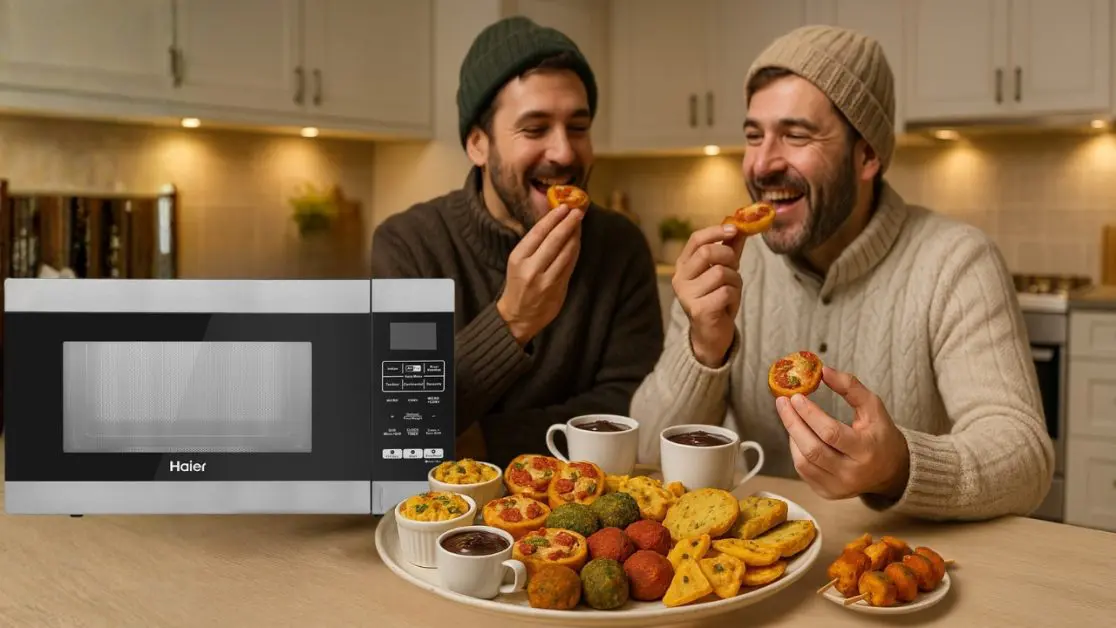
February is also about energy.
Personal energy.
Household energy.
Electricity usage.
Microwaves consume less energy than full-sized ovens and prolonged gas cooking for small meals.
Shorter heating cycles.
Targeted cooking.
Less wastage.
This aligns well with February’s quieter, more mindful living.
Energy efficiency is not a headline feature.
It is a lived experience over time.
The February kitchen is a systems problem
Kitchen stress does not come from lack of time.
It comes from poor systems.
February exposes this clearly.
When life slows just enough, inefficiencies surface.
Microwaves solve one specific problem very well.
They reduce the cost of interruption.
You can stop cooking.
Restart later.
Adjust portions.
Life remains flexible.
A simple framework for February cooking
Think of meals in three layers.
1. Foundation meals
Cooked once. Eaten multiple times.
2. Adjustment meals
Warmed, modified, repurposed.
3. Bridging snacks
Small, quick, intentional.
Microwaves sit squarely in layers two and three.
That is why they matter more than we realise.
Why this matters beyond February
February is temporary.
The systems built during it are not.
When appliances quietly support daily life, habits stick.
Microwaves teach one important lesson.
Cooking does not need to dominate your day to nourish it.
That insight scales.
Into March workloads.
Into summer schedules.
Into long-term living.
The quiet confidence of a well-used appliance
Microwaves rarely get credit.
They are not aspirational.
They are not dramatic.
They are dependable.
In February, dependability wins.
A microwave that fits into your routine without demanding attention becomes invisible in the best way.
It does its job.
Life moves forward.
That is not convenient.
That is thoughtful design doing its work.
The real reason microwaves fit February routines so well is simple.
They understand that life is not a cooking show.
It is a sequence of small moments stitched together.
Good appliances respect that.
And February, more than any other month, reminds us why that matters.
Frequently Asked Questions
I feel exhausted deciding what to cook every evening in February. Can a microwave actually reduce decision fatigue?
Yes. A microwave reduces the “fresh start” pressure of every meal. You can cook once and thoughtfully reheat or repurpose leftovers. It shifts cooking from daily reinvention to system-based eating.
I don’t have the energy for elaborate meals after work. Is relying on a microwave lazy?
Not at all. In February, routines stabilize but energy dips. A microwave supports lighter, efficient meals without compromising nutrition. It’s structure, not laziness.
I’m trying to avoid ordering food multiple times a week. Can a microwave realistically help?
Yes. Quick reheating, small-batch cooking, and easy snacks reduce the temptation to order in. It lowers friction between hunger and a healthy option.
My February schedule feels scattered. Can I cook in fragments instead of one long session?
Absolutely. Microwaves allow stop-and-restart cooking, quick reheats, and short preparation bursts between meetings or chores.
I left my dal in the fridge and reheated it twice already. Is microwave reheating safe?
Yes, if stored properly and heated thoroughly each time. Microwaves heat food quickly, reducing prolonged exposure to bacteria-friendly temperatures.
I left my lunch in the microwave overnight by mistake. Do I need to throw it away?
If it was unrefrigerated for more than 2 hours, it’s safer not to consume it. February evenings may be cooler, but food safety rules still apply.
Does microwave reheating destroy nutrients in vegetables?
Not necessarily. In fact, shorter microwave heating cycles can preserve more nutrients than prolonged stovetop reheating, especially when minimal water is used.
Are microwaves hygienic enough for daily family use?
Yes. Regular cleaning and covered reheating prevent splatter and odor buildup. Stainless steel cavities often make cleaning easier.