
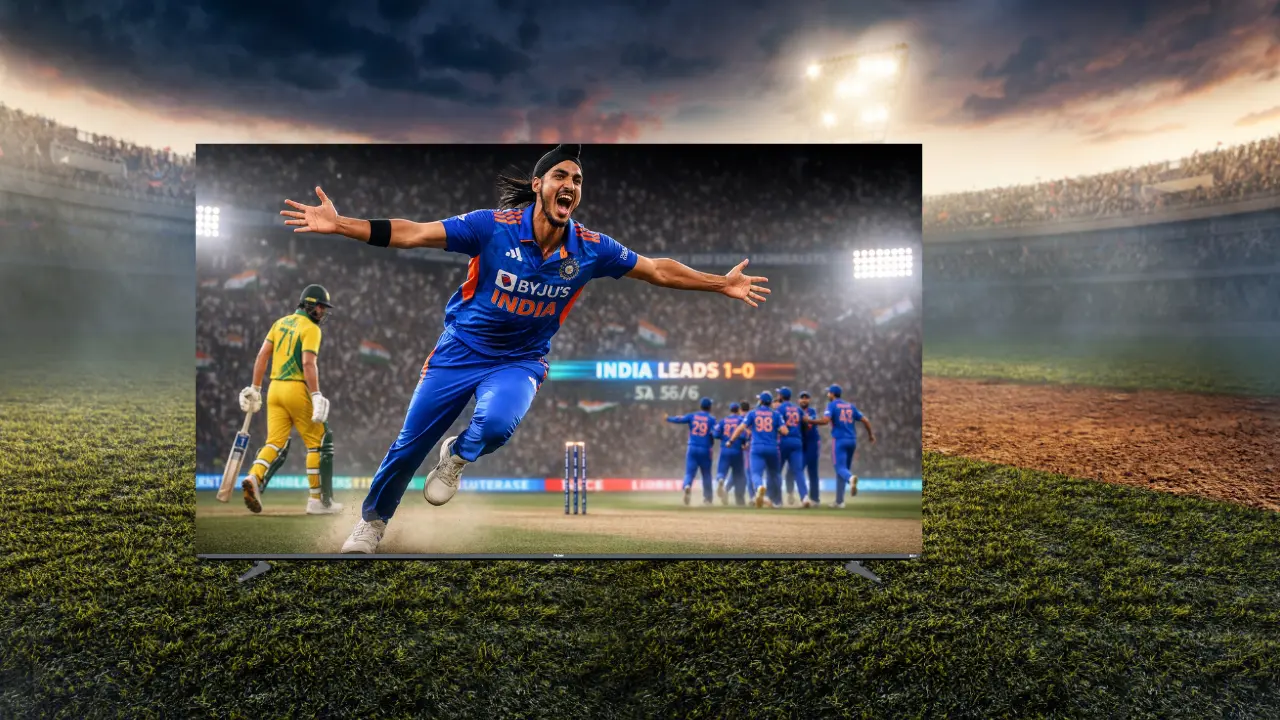

If there was ever a match built for a next generation TV, it was this one.
India’s 101 run victory over South Africa was not just a cricket performance. It was a reminder that sport deserves a screen that can keep up with its emotion. In 4K HDR, every micro movement becomes visible. Every mood shift becomes readable. Every big moment becomes unforgettable.
Hardik Pandya’s 59 not out. Arshdeep Singh’s early breakthroughs. South Africa folded for 74 in 12.3 overs. Some nights feel made for modern Indian homes and their evolving match day rituals.
And this match delivered exactly that.
What makes a cricket night unforgettable in Indian homes

There is a simple truth about cricket.
We do not just watch it.
We live inside it.
A living room becomes a stadium. A cheer becomes a ritual. A big shot becomes a story retold for weeks. This is why picture quality matters. Because what we see shapes how we feel.
4K HDR does something powerful. It closes the distance between your sofa and the stadium.
- Hardik’s sixes look cleaner.
- Brevis’ instinctive shot making looks sharper.
- Bumrah’s 100th T20I wicket glows with clarity.
- South Africa’s collapse becomes almost cinematic.
This is where modern screens step into the rhythm of Indian homes. They help us feel sport the way players experience it. Sharp. Bright. Alive.
Hardik Pandya in 4K HDR: A performance built for the big screen
The match turned the moment Hardik arrived.
His unbeaten 59 from 28 balls was not just power hitting. It was timing, composure and intent. On a regular screen, it feels thrilling. On a Mini LED panel with Dolby Vision, it feels like art.
According to the match report, Pandya hit six fours and four sixes that lifted India from a shaky start to 175 for 6
Under 4K HDR, the ball’s arc becomes more believable. Impact points appear sharper. The stadium lights bounce off the bat differently.
Your eyes follow every frame because the technology keeps the moment intact.
This is where Haier’s Mini LED TV quietly shines.
The product sheet shows how Mini LED offers deeper blacks, brighter highlights and 800 nits peak brightness for lifelike picture quality
Cricket benefits from this in surprising ways. The ball against dark stands. The white of the jersey. The red of the seam. The emotion on a player’s face right after a wicket.
You do not just watch. You notice.
Bowling spells that feel even sharper in 4K
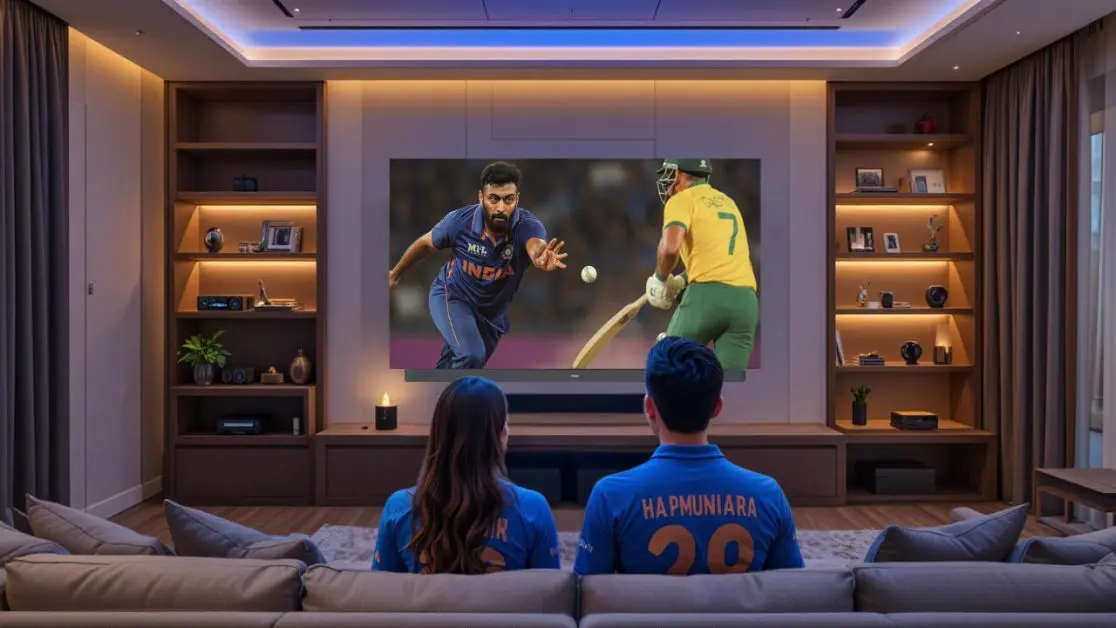
Arshdeep Singh’s opening burst.
Bumrah’s milestone wicket.
Varun Chakaravarthy’s flat darts rattling the stumps.
In the first innings, Arshdeep removed de Kock and Stubbs early, reducing South Africa to 16 for 2 within minutes
These moments are built for high refresh rates, because cricket is speed. Impact. Reaction.
A screen that refreshes at 120 Hz or higher holds fast motion without blurring. Haier’s DLG 120 Hz technology is built exactly for these high intensity phases of sport
For viewers, this means the ball stays crisp even when the bowler hits top pace. Fielders sprinting across the boundary appear smooth, not streaky. Replays feel more precise because motion clarity stays intact.
Fast cricket needs a fast screen.
Sound matters more than we admit
A great cricket night is not just visual.
It is sound.
The crowd roars. Stump mics. Bat thuds. Commentary rhythms.
Haier’s integration of Sound by KEF technology is one of those features that only makes sense once you hear it. Sound by KEF’s heritage in speaker design adds spatial clarity and depth that elevates broadcast sound in surprising ways
When South Africa collapsed from 41 for 4 to 74 all out, every wicket carried a different acoustic signature.
The edge. The appeal. The cheer.
A good speaker system adds gravity to these moments, making your living room feel like it is participating in the match rather than watching it.
Dolby Atmos layering completes the experience by placing sound around you rather than just in front of you. For cricket, this means:
- The crowd swells from the sides.
- The bat sound feels forward.
- The commentary sits clean at the center.
Small details change the emotional weight of big nights.
Why Indian households are quietly upgrading their match day setups
Something has shifted in Indian homes.
We no longer watch content in isolation.
We build experiences around it.
A young couple sets up their first home and marks weekends with shared match nights.
A working professional finishes a long day and needs a screen that makes downtime genuinely restorative.
Parents introduce cricket to their children and want visuals that actually help them understand the game.
Upgrading a TV has become less about size and more about what the experience unlocks.
Here is what a modern cricket-ready setup gives you:
1. Clarity that reduces eye fatigue
Sharper images mean less strain, especially during long matches.
2. HDR contrast that reveals missed details
Evening matches, floodlights, dark backgrounds. HDR improves visibility dramatically.
3. Smooth motion that keeps every delivery crisp
Especially important for fast bowlers and quick replays.
4. Audio clarity that pulls you into the moment
Better sound equals deeper engagement.
These are not specs. They are quiet upgrades to how a home feels.
A match worth remembering. A screen that makes you remember.
India’s 101 run win was commanding, emotional and beautifully chaotic.
Hardik’s return. Bumrah’s 100th wicket. South Africa bowled out for 74.
A match like this deserves a screen that can hold every detail without letting the moment shrink.
Haier’s Mini LED TV does not ask for attention.
It simply enhances the moments you already care about.
That is the difference between watching a match and being immersed in it.
And as Indian households continue to evolve, that immersion is becoming the new standard for how we experience sport, movies and everyday entertainment.
Because when the picture is clearer, the emotion gets louder.
And cricket has always been an emotion first.