
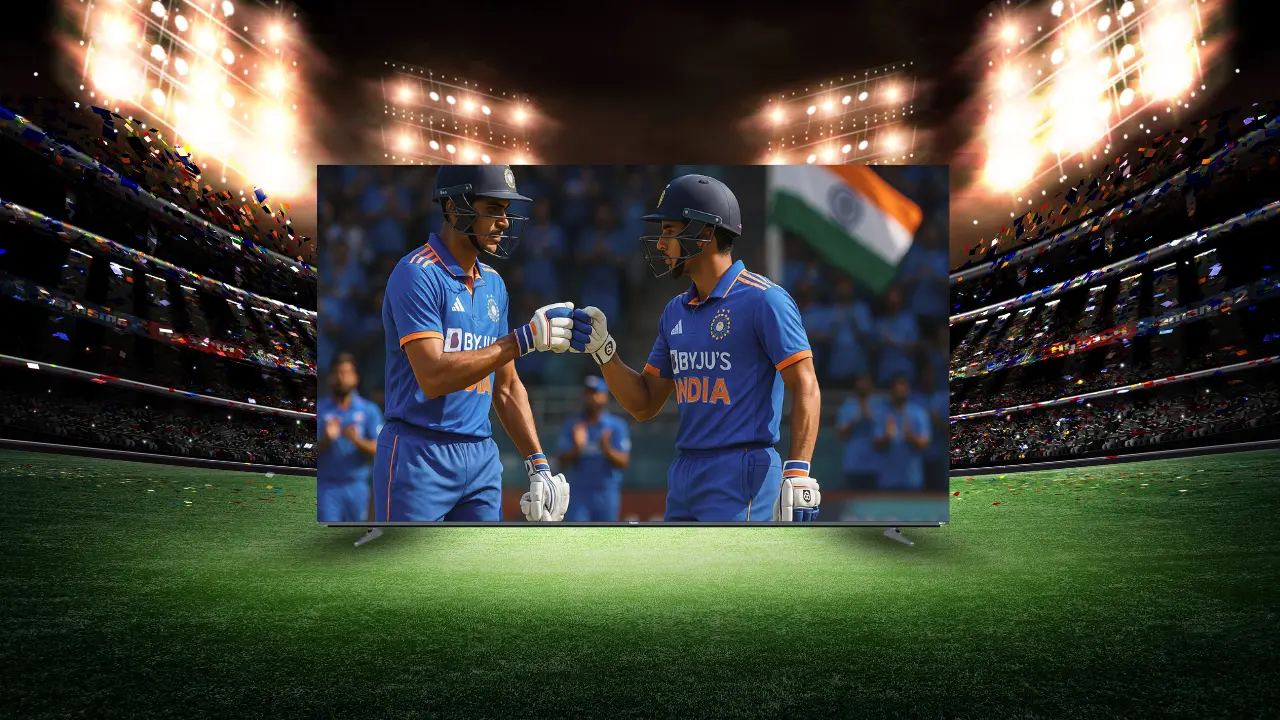

When India beat Pakistan in the Asia Cup 2025 Super Four, living rooms across the country shook with the same energy as Dubai’s stadium.
Families, friends, and neighbours gathered around big screens, shouting at every six, groaning at every dropped catch, and rising together when Abhishek Sharma’s blistering 74 lit up the chase.
For one evening, homes weren’t just homes. They were mini-stadiums.
Why cricket nights feel different at home now
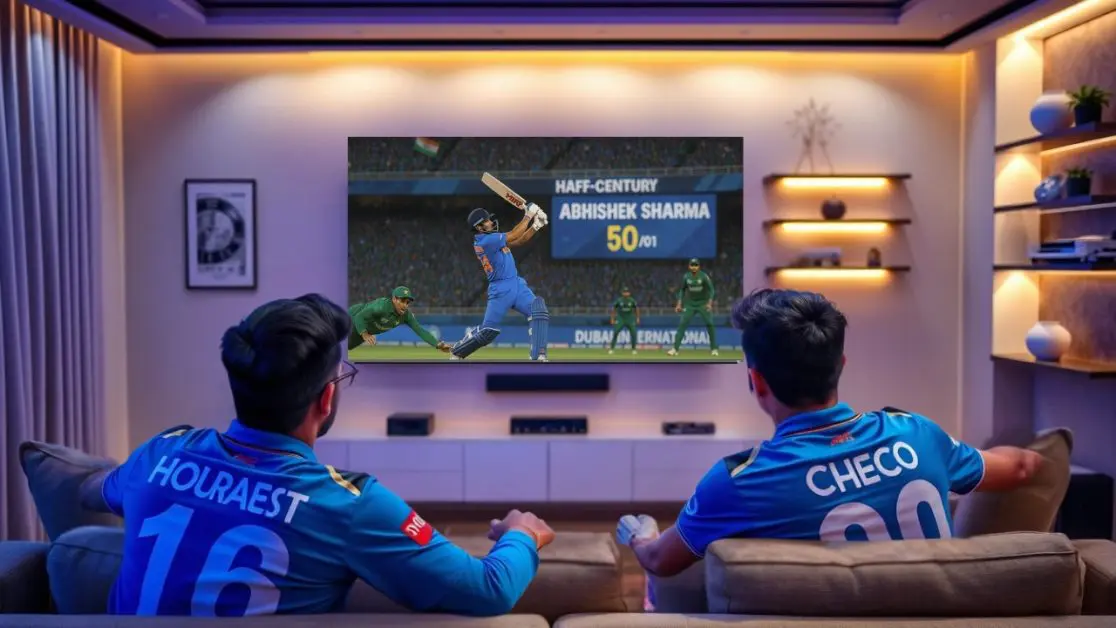
Watching India–Pakistan used to mean crowding around a single TV, battling over the best seat, or turning the volume high enough to drown out the neighbour’s commentary. But today’s living rooms tell a new story.
- Screens have grown bigger. An 215cm (85) display doesn’t just show the match, it immerses you in it. Every boundary feels like it’s racing past your sofa.
- Audio has levelled up. Sound systems tuned by brands like Sound by KEF turn the crack of the bat or the roar of the crowd into something you feel in your chest.
- Smart features keep pace with fans. Voice commands, AI recommendations, even solar remotes it’s no longer about just watching, but experiencing cricket with convenience.
In short, technology has caught up with the emotion cricket already carried.
The match that echoed in every neighbourhood
On September 21st in Dubai, Pakistan set a competitive 171/5, thanks to Sahibzada Farhan’s gritty 58. India’s reply was immediate and electric. Abhishek Sharma launched Shaheen Afridi’s first delivery for six, a statement that set the tone. Alongside Shubman Gill’s fluent 47, the pair stitched a record 105-run stand, leaving Pakistan gasping for answers.
Social media lit up instantly. From Delhi apartments to Bengaluru co-living spaces, clips of Sharma’s 24-ball fifty ricocheted across WhatsApp groups. Neighbours banged on doors not to complain about the noise, but to join it.
Cricket is often called religion in India. But on nights like this, it’s also a community builder.
Living rooms as new stadiums

Why did this win feel louder than others? Because India’s viewing culture has shifted.
1. Families treat it like a festival. Parents make pakoras, kids wave flags, grandparents quietly remind everyone of the ’83 World Cup.
2. Young professionals host watch parties. A rented flat becomes an arena when a dozen colleagues cheer in sync.
3. Solo viewers don’t feel alone. With a smart TV’s integrated social features, you can chat, stream highlights, and even sync reactions live.
The result? A living room isn’t just where you watch it’s where you belong.
Technology as the twelfth man
Here’s the hidden truth, matches feel more thrilling because the gear we watch them on has transformed.
Take the Haier 215cm (85) Mini LED Google TV. With Dolby Vision, 360 dimming zones, and a refresh rate designed for fast action, it ensures even a late cut looks razor sharp. Pair that with the Dolby Atmos sound by KEF, and you’re no longer straining to hear commentary, you’re in the thick of it.
What does this mean for households?
- Sharper detail makes every replay analysis-worthy.
- Three-dimensional sound lets you distinguish the thump of a bat from the gasp of the crowd.
- Hands-free controls mean you never miss a delivery while fumbling for the remote.
When technology blends seamlessly with tradition, cricket nights stop being background entertainment. They become main events.
The bigger pattern at play
India’s win over Pakistan wasn’t just about the scoreboard. It revealed something larger:
- Sport is one of the last communal experiences in a fragmented digital world.
- Homes are no longer private retreats, they’re shared stages for public joy.
- Appliances aren’t silent helpers, they’re cultural amplifiers shaping how we experience life.
The shift is clear. Just as Abhishek Sharma’s six off the first ball flipped momentum on the field, a well-placed big-screen TV can flip how an entire household bonds.
What this means for Indian homes
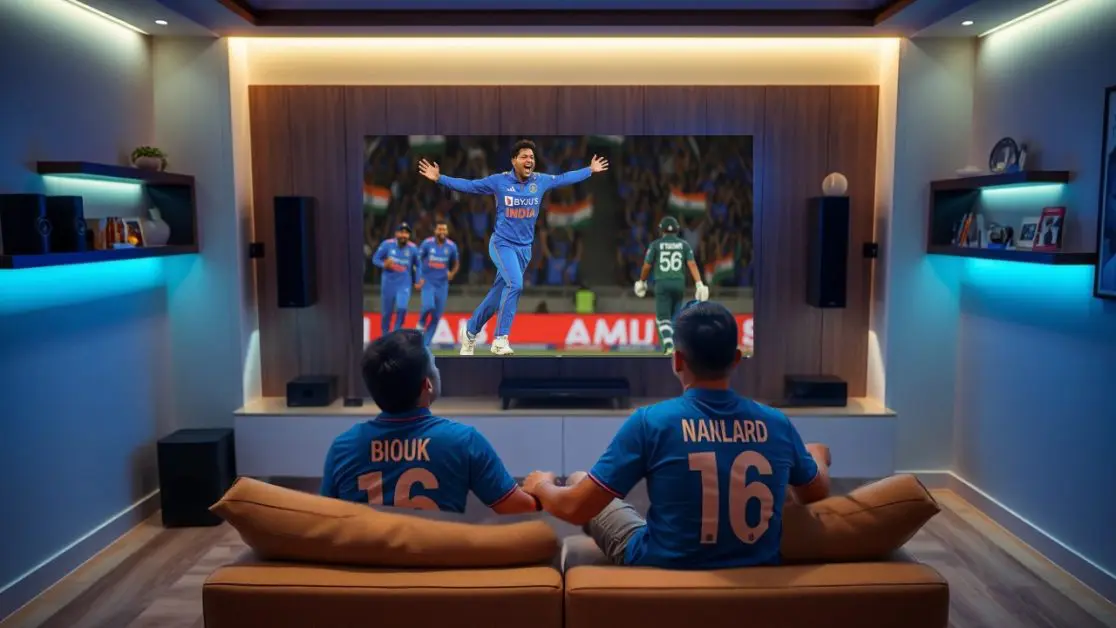
Every India–Pakistan clash has its heroes. On the pitch this time, it was Sharma and Gill. Off the pitch, it was the homes that transformed into buzzing theatres.
For modern Indian households be it a young couple in Pune, a joint family in Lucknow, or flatmates in Hyderabad the message is simple:
- Space matters. A bigger screen gives everyone a better view.
- Sound matters. Clearer audio means no more shouting “volume badhao!” during tense overs.
- Convenience matters. Smart features let fans focus on the match, not the mechanics.
Haier’s promise has always been this, to quietly power the moments that matter most. When India beats Pakistan and you feel like you were in Dubai itself, that’s not just cricket. That’s a design meeting desire.
Final thought
Cricket nights remind us of something deeper. Joy isn’t found in grand arenas alone. It’s stitched together in living rooms, over shared snacks, loud cheers, and screens that make distance disappear.
India’s six-wicket win in Dubai will be remembered for Abhishek Sharma’s fireworks. But it will also be remembered for the way it turned ordinary homes into extraordinary stadiums.
Because when technology, tradition, and togetherness collide the cheer is always louder.