
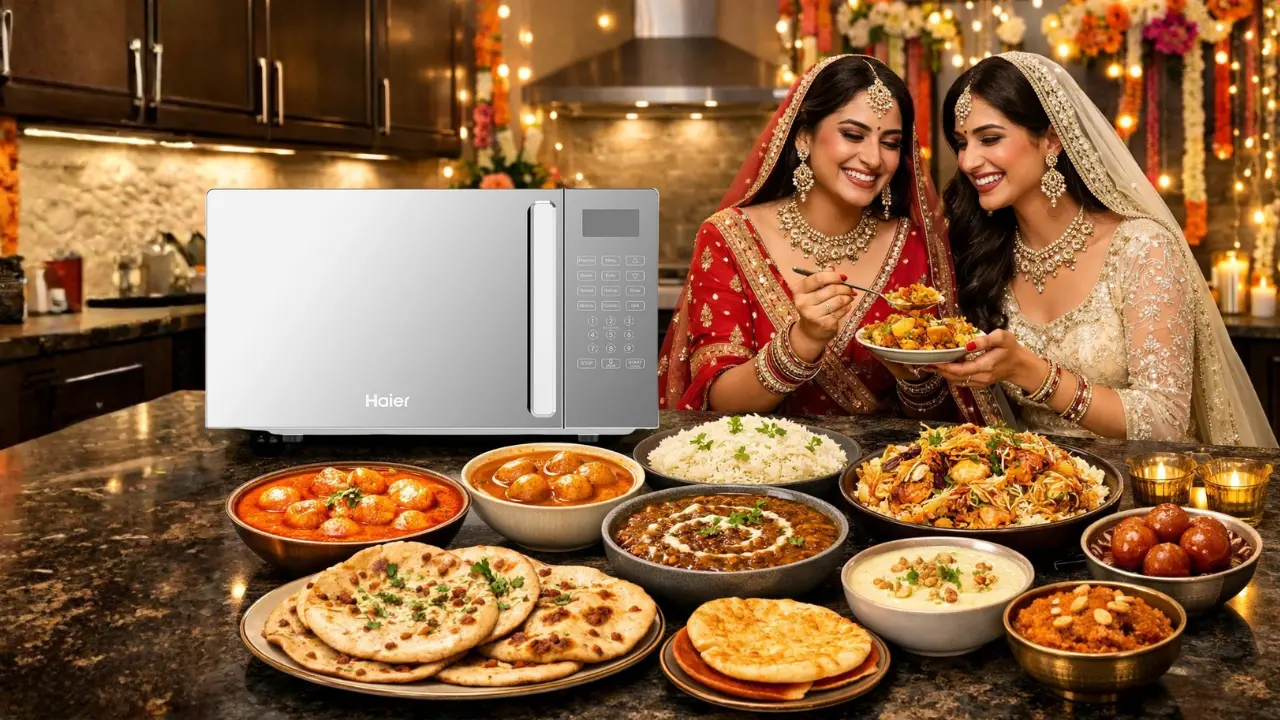

Indian wedding leftovers taste just as good the next day when reheating respects moisture, timing, and texture.
Gravies need gentle steam. Rice needs controlled heat. Starters need air, not blasting. When reheating matches the food’s original structure, flavour stays intact and the celebration quietly continues.
The morning after an Indian wedding feels familiar
The house finally slows down.
The mandap flowers are gone, but their smell still lingers.
The fridge, however, is full.
Paneer butter masala in steel dabba.
Dal makhani is thick enough to stand a spoon in.
Biryani layered carefully, rice and masala settled into each other.
Foil-wrapped naan.
A tray of starters no one could finish at midnight.
This is not leftover food.
This is an unfinished celebration.
Most people ruin wedding food not because it is old.
They ruin it because they rush it.
Why Indian wedding food is harder to reheat than everyday meals
Indian wedding cooking is built for abundance.
Large vessels.
Slow reductions.
High fat content.
Complex spice layers.
Once refrigerated, three things happen almost immediately.
- Fats solidify and trap flavour
- Starches tighten and absorb moisture
- Spices mellow and deepen
This is why aggressive reheating kills taste.
Reheating is not about speed.
It is about restoration.
Gravy dishes need steam, not shock
Paneer makhani.
Malai kofta.
Dal makhani.
These dishes fail when overheated directly.
What works every time
- Add 2 to 3 tablespoons of water or milk
- Cover the dish lightly
- Heat in short cycles
- Stir once, gently
The aim is even warmth, not rolling bubbles.
In everyday kitchens, a compact convection microwave like the Haier HIL2001CSSH 20L handles this well for small families. Its stainless steel cavity spreads heat evenly, which helps gravies warm through without splitting oil or burning edges.
Remember this.
Gravy thickens with patience. It breaks with force.
Rice and biryani need moisture before heat
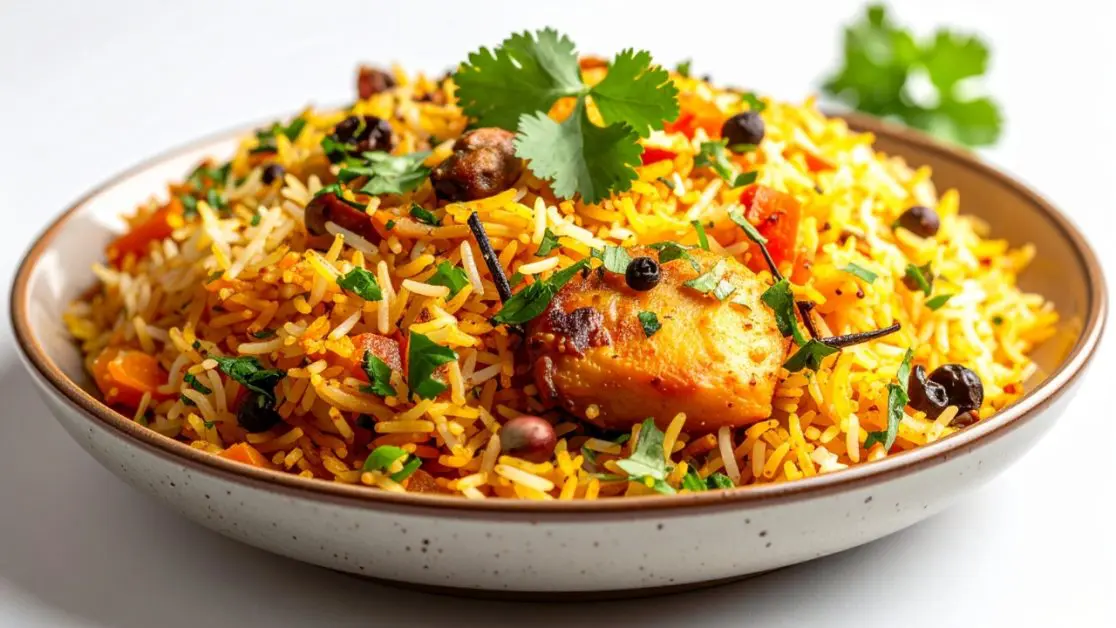
Biryani is an emotional food.
And emotional food is fragile.
Microwaved carelessly, rice turns tight and lifeless.
The correct approach
- Sprinkle a few drops of water across the rice
- Cover loosely
- Reheat in stages
- Fluff gently with a fork
This reintroduces steam, which relaxes the grains.
Microwaves that allow multi power-level cooking make this easier. A mid-sized option like the Haier HIL2501CBSH 25L lets families warm larger portions gradually, especially when biryani and raita are reheated side by side.
Rice does not want heat first.
It wants humidity.
Starters fall into two very different categories
Most people treat all starters the same.
That is where things go wrong.
Indian wedding starters are either:
1. Moist and marinated
2. Crisp and fried
They need opposite reheating logic.
Moist starters like paneer tikka or kebabs
- Reheat covered
- Use low to medium heat
- Finish uncovered briefly
This keeps proteins tender instead of rubbery.
Crisp starters like cutlets or pakoras
Never microwave directly.
They need moving hot air.
This is where a convection microwave with in-built air frying becomes useful. A larger model like the Haier HIL3001ARSB 30L, with dedicated air fryer menus and circulating heat, revives texture without soaking oil back into the crust.
Crisp food needs circulation, not radiation.
Indian breads are not reheated, they are revived

Naan.
Kulcha.
Tandoori roti.
These breads are already cooked twice.
Once in heat.
Once in a while.
How revival works
- Wrap bread lightly in a damp cloth or paper towel
- Heat briefly
- Finish uncovered if needed
Some microwaves classify Indian breads separately, which helps avoid over-drying. In daily use, the bread-focused presets on the Haier HIL2501CBSH 25L handle naan and parathas more gently than generic reheating modes.
Bread does not need more heat.
It needs restraint.
Desserts follow an entirely different system
Gulab jamun.
Kheer.
Halwa.
Sugar behaves unpredictably under heat.
What preserves dessert texture
- Reheat slowly
- Avoid boiling syrups
- Stir frequently
Short heating intervals prevent sugars from caramelising again.
Interestingly, microwave reheating retains more nutrients than boiling or pan reheating, especially for milk-based sweets. This makes controlled microwave reheating a practical choice for desserts that are eaten over multiple days.
Desserts forgive time.
They do not forgive impatience.
Smell is part of taste, even when we ignore it
Wedding leftovers carry strong aromas.
Garlic.
Ghee.
Smoke.
Repeated reheating can trap these smells inside appliances and kitchens, especially in smaller homes.
Microwaves with deodorising functions quietly solve this problem by removing vapours after cooking. Over time, this keeps both food flavour and kitchen air cleaner, especially when reheating heavy wedding meals across several days.
A good kitchen smells neutral.
The food carries the memory.
The hidden system behind good reheating
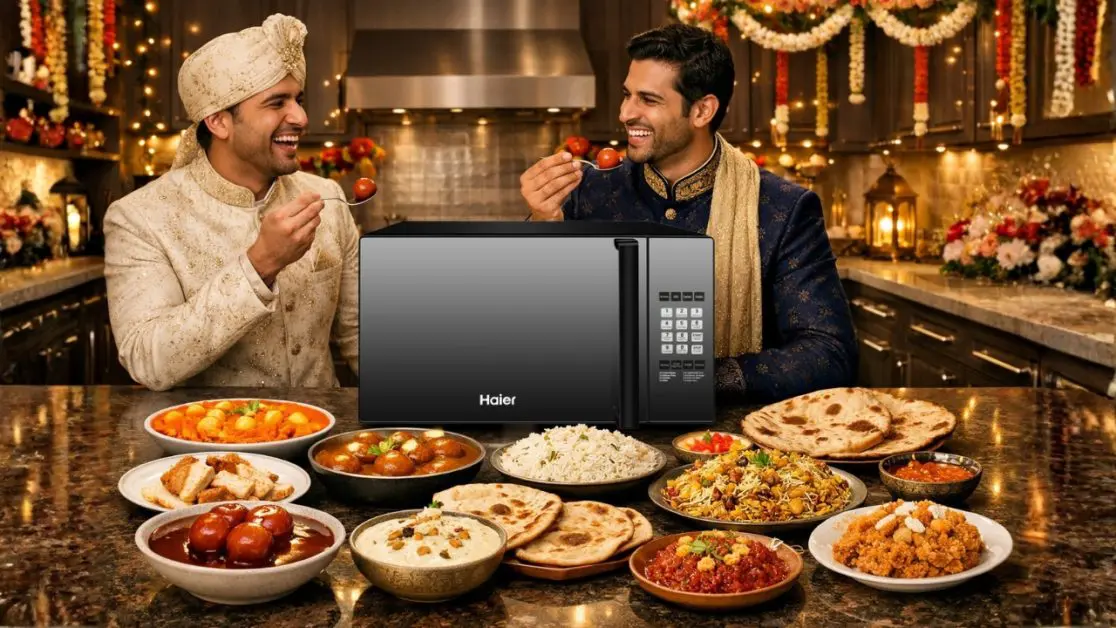
This is not about gadgets.
It is about understanding food behaviour.
- Moisture moves outward under heat
- Proteins tighten under sudden temperature spikes
- Starches harden when dehydrated
Good reheating works with these forces.
That is why kitchens with the right tools feel calmer.
They remove guesswork.
Not by doing more.
By doing things evenly.
Why this matters more than we admit
Indian weddings are not single-day events.
They stretch across meals, conversations, and quiet mornings.
The second-day lunch is slower.
More intimate.
Often more enjoyable.
When leftovers taste right, something subtle happens.
Effort feels respected.
Waste disappears naturally.
The celebration continues without pressure.
This is not about saving money.
It is about honouring what was already created.
The quiet role of smarter appliances in real homes
Nobody wakes up wanting another appliance.
What people want is fewer ruined dishes.
When kitchen tools understand Indian food habits, from bread to gravies to fried starters, they stop demanding attention. They simply support the rhythm of the home.
That is how appliances like the Haier HIL2001CSSH, HIL2501CBSH, and HIL3001ARSB fit into real kitchens. Not as upgrades to show off, but as silent helpers during festivals, weddings, and long family weeks.
One insight worth remembering
Reheating is not a shortcut.
It is a second chance.
When done right, wedding leftovers do not feel like compromise.
They feel like a continuation.
And that is how good food, good homes, and good memories stay warm, without losing what made them special in the first place.