
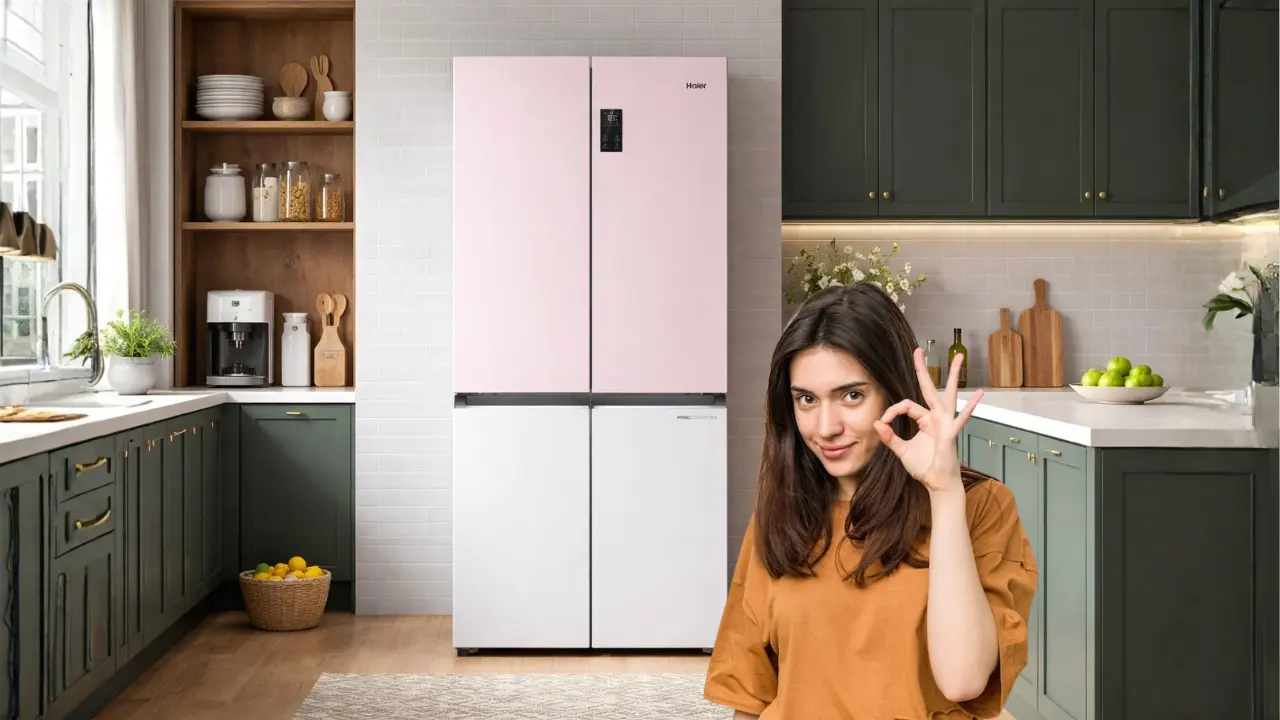

India’s most energy efficient refrigerators stand out not because they shout about savings, but because they understand how Indian homes actually live.
Haier builds refrigerators that adapt to heat, habits, and heavy use without demanding discipline from families. That is why models like the Haier Lumiere 520L 4 Door Convertible Refrigerator feel less like appliances and more like silent partners in daily life.
Energy efficiency here is not a promise.
It is a pattern.
Why does refrigerator energy efficiency suddenly matter more than before?
It usually begins with a small pause.
You open your electricity bill.
Nothing shocking. Just higher than expected.
The AC usage feels controlled. Lights are mostly LED. The washing machine runs twice a week. Yet the number creeps up.
The missing piece is often the refrigerator.
In Indian homes, refrigerators never stop working. They run through:
- Extreme summer heat
- Frequent door openings during cooking
- Heavy vegetable storage
- Festive leftovers and bulk groceries
According to the Bureau of Energy Efficiency, refrigerators alone can consume up to 30 percent of household electricity in urban India.
That makes efficiency personal.
The myth of star ratings as the full story
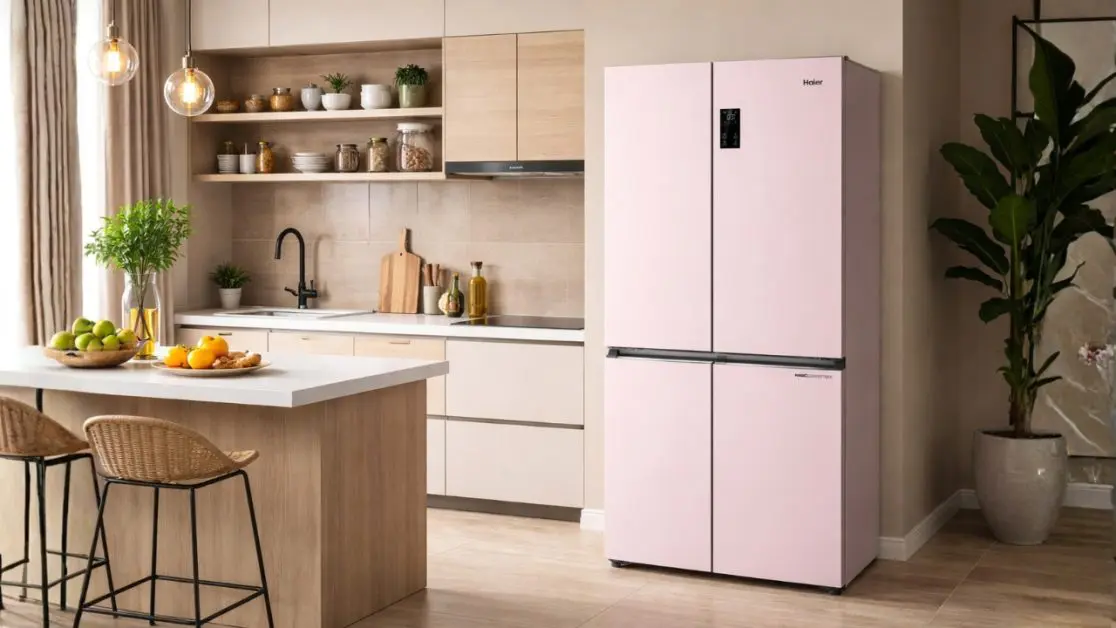
Star ratings matter.
But they are not the whole truth.
They measure performance in controlled environments. Indian kitchens are anything but controlled.
Real homes have:
- Power fluctuations
- Uneven loading
- Constant door movement
- Seasonal usage swings
True energy efficiency is about how a refrigerator behaves when life is unpredictable.
This is where Haier takes a different path.
Energy efficiency is a system, not a feature
Haier does not treat efficiency as one technology bolted on at the end. It designs refrigeration as a connected system.
Every part supports the other.
In the Haier Lumiere 520L 4 Door Convertible Refrigerator, energy efficiency comes from how cooling, storage, airflow, and usage patterns align.
Small efficiencies stack.
Over time, they change outcomes.
Inverter compressors that think instead of react
Traditional compressors operate in extremes.
They are either fully on or fully off. Each restart pulls extra power. Over a day, this adds up quietly.
Haier uses inverter compressors that continuously adjust speed based on cooling demand.
- Light load during the night means slower operation
- Heavy grocery load triggers higher output
- Stable conditions maintain gentle cooling
This avoids energy spikes and reduces unnecessary consumption.
Over a year, this adaptive approach can cut energy use by 20 to 30 percent compared to fixed speed systems, depending on household habits.
Efficiency feels calm.
That is by design.
Why convertible refrigeration saves power, not just space
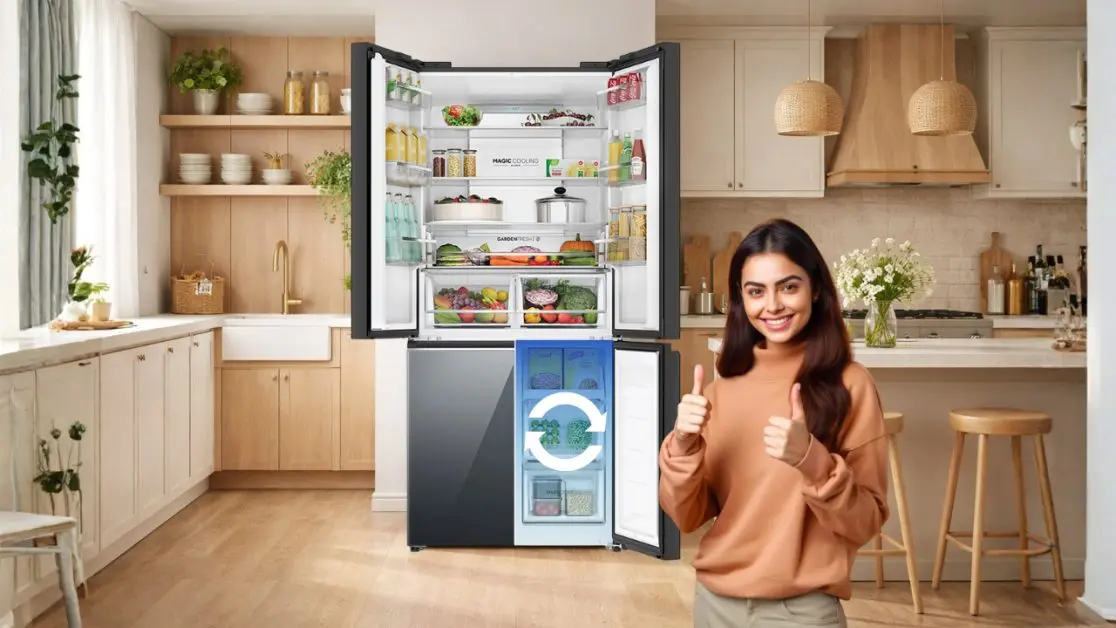
Many refrigerators waste energy cooling empty compartments.
Freezers often run half full.
Yet they consume full power.
The Haier Lumiere 520L 4 Door Convertible Refrigerator offers convertible fridge space, allowing families to shift between fridge and freezer modes based on actual needs.
This matters because:
- Freezing consumes more energy than cooling
- Reducing unnecessary freezing lowers compressor load
- The system stabilizes faster after door openings
This flexibility is not about convenience alone.
It is about smarter energy logic.
Uniform cooling prevents silent energy loss
Uneven cooling forces compressors to work harder.
When some shelves are colder than others, sensors push the system to compensate. The fridge runs longer than necessary.
Haier’s 360 degree Magic Cooling ensures cold air circulates evenly across compartments.
The result:
- Fewer temperature swings
- Shorter cooling cycles
- More stable energy consumption
A balanced system wastes less power.
Multi door design is an energy decision
Every door opening is an energy event.
Cold air escapes. Warm air enters. The compressor reacts.
Single door refrigerators lose cooling across the entire cabinet every time they open.
The four door layout of the Haier Lumiere 520L 4 Door Convertible Refrigerator limits this loss.
You open only the section you need.
Vegetables stay sealed while accessing beverages. Frozen items remain undisturbed during quick milk runs.
Less air exchange means faster recovery and lower power usage.
Architecture matters.
Freshness systems reduce energy indirectly
There is a hidden relationship between freshness and energy.
When food stays fresh longer, people open the fridge less often.
Haier’s Deo Fresh Technology absorbs odours and impurities, helping vegetables, dairy, and leftovers last longer.
Fewer checks.
Fewer door openings.
Less cooling loss.
Efficiency sometimes works through behaviour, not mechanics.
A simple comparison of energy thinking
| Aspect | Typical Refrigerator | Haier Lumiere 520L |
| Compressor | Fixed speed | Inverter based |
| Cooling flow | Uneven | 360 degree circulation |
| Storage use | Fixed zones | 85 percent convertible |
| Door opening loss | High | Sectional |
| Load response | Reactive | Adaptive |
The difference shows up over months, not minutes.
The long term cost perspective most buyers miss
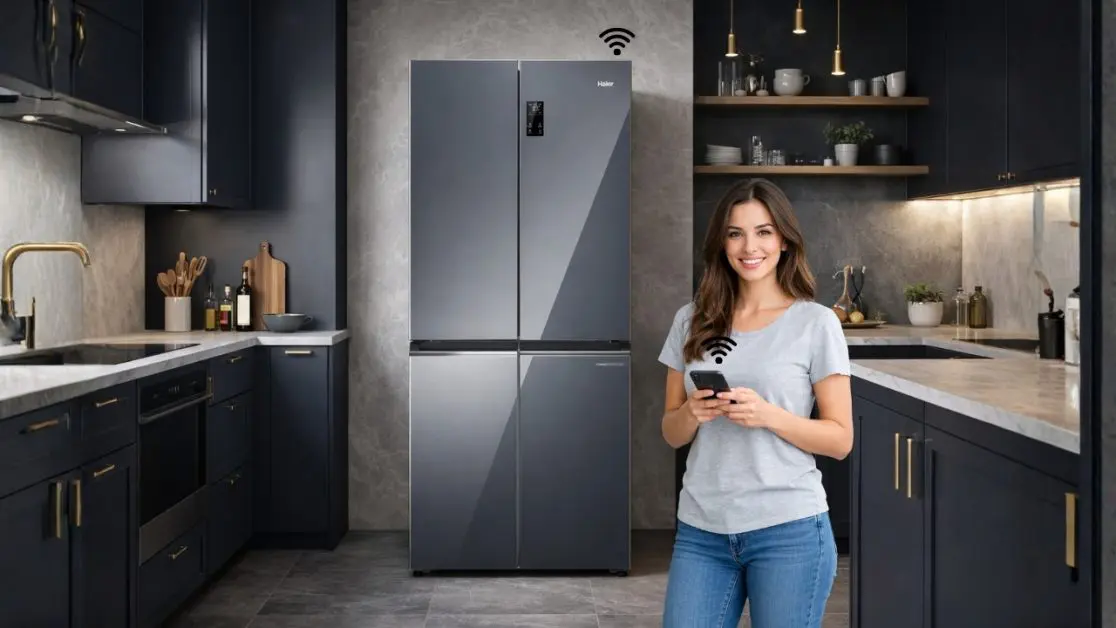
Energy efficient refrigerators may cost more upfront.
But refrigerators run 24 hours a day for years.
Over a decade, the savings come from:
- Lower electricity bills
- Reduced compressor stress
- Consistent performance over time
Efficiency is not about instant payoff.
It is about predictable ownership.
Why this approach fits Indian households
Indian kitchens are not static.
They change daily.
Morning tiffins.
Evening snacks.
Weekend bulk cooking.
Festival overloads.
The Haier Lumiere 520L 4 Door Convertible Refrigerator is designed for this rhythm.
It adapts instead of demanding discipline.
That is why it feels efficient without feeling restrictive.
The larger takeaway
Energy efficiency is no longer a specification.
It is a design philosophy.
The best refrigerators do not ask users to behave better. They behave better themselves.
Haier’s approach shows what happens when efficiency is built around real life, not ideal scenarios.
The quiet systems last longest.
And they earn trust one month at a time.
Frequently Asked Questions
I open my fridge constantly while cooking. Am I wasting a lot of electricity?
Every door opening releases cold air. A four-door design limits cooling loss by isolating sections, reducing compressor strain.
Power cuts and voltage fluctuations are common in my area. Will that impact efficiency?
Inverter compressors handle variable loads more smoothly than fixed-speed compressors, improving stability in fluctuating conditions.
My vegetables spoil quickly. Does that affect energy efficiency?
Yes. Spoilage leads to frequent door checks and temperature swings. Technologies like Deo Fresh reduce odours and extend freshness, indirectly lowering door openings and cooling loss.
I overload my fridge after grocery shopping. Will it spike my electricity bill?
Adaptive compressors increase speed only when needed, then stabilize once temperature is restored, preventing prolonged high-energy cycles.
I want fast cooling after loading groceries, but will that consume more power?
Short bursts of higher compressor speed are more efficient than constant on/off cycling. Inverter systems cool faster and stabilize quicker.
Does uniform cooling really save energy, or is it just marketing?
Uneven cooling forces compressors to run longer to balance temperatures. 360° air circulation reduces temperature swings, shortening cooling cycles.
Is freezing mode more expensive to run than fridge mode?
Yes. Freezing requires lower temperatures and higher energy. Convertible zones let you reduce freezer use when not needed, cutting power consumption.
Does a four-door refrigerator really save more power than a single-door model?
Yes. Sectional access prevents full-cabinet air loss, meaning quicker temperature recovery and less compressor work.
Is energy efficiency just about compressor technology?
No. It’s about how cooling, airflow, storage layout, and usage behavior interact as one system.
Can smart design reduce energy use without me changing my habits?
That’s the goal. Adaptive cooling and sectional storage reduce the need for behavioral discipline.