
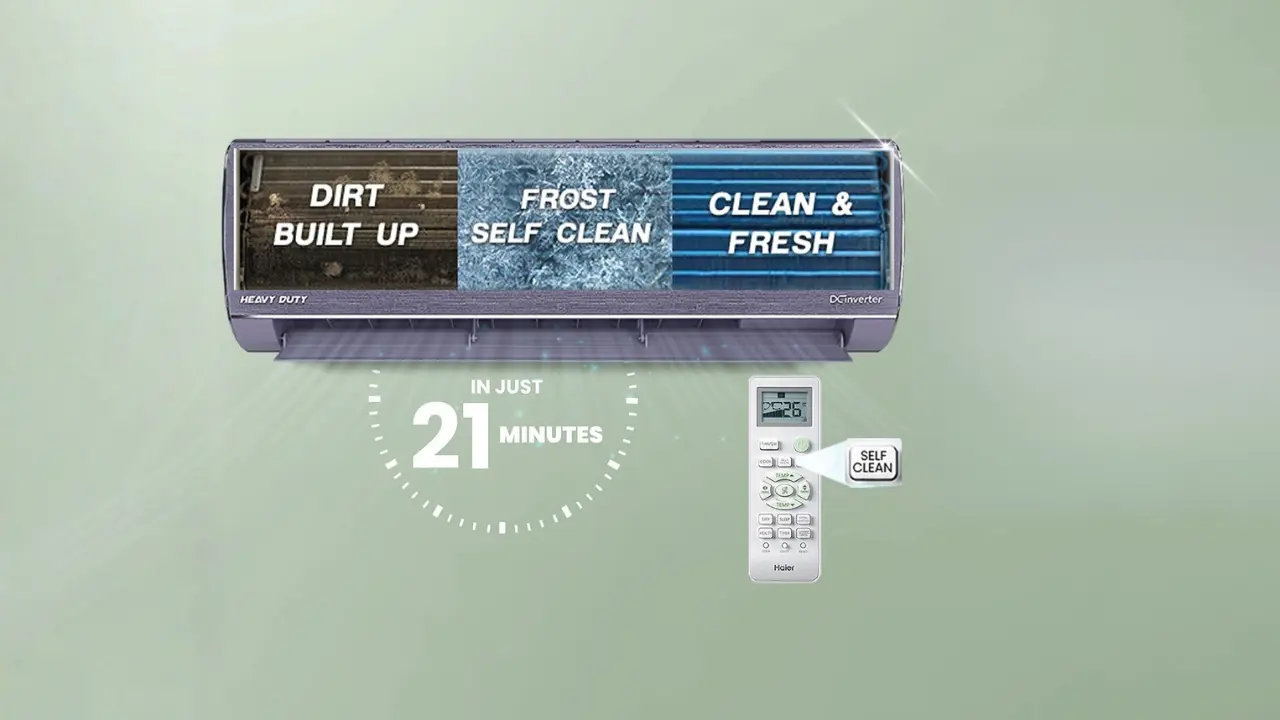

Indoor Frost Self Clean keeps your AC hygienic by freezing, loosening, and flushing out hidden dust, bacteria, and moisture from inside the indoor unit automatically.
Instead of relying on manual servicing, the system cleans the coils from the inside, helping the AC deliver fresher air, stable cooling, and better efficiency across seasons.
This is not about sparkle.
It is about what you cannot see.
Why does indoor AC hygiene quietly affect everyday life?
Every Indian home has a moment.
You switch on the AC after weeks.
The room cools.
But the air feels off.
A faint smell.
Dry throats.
Sneezing that starts five minutes in.
Most people blame the weather. Or pollution. Or allergies.
The real issue often sits inside the AC.
The hidden truth about indoor units
An indoor AC unit is a perfect trap.
- Warm air meets cold coils
- Moisture forms
- Dust sticks
- Microbes settle
Over time, the indoor unit becomes a silent collector of grime.
Not dramatic.
Just persistent.
And because it is invisible, it is easy to ignore.
Manual cleaning sounds simple. It rarely is.
Let us look at the usual options.
One option is doing nothing
Many homes wait until cooling drops or smell becomes unbearable.
Cost
Zero upfront.
Hidden cost
- Poor air quality
- Reduced cooling efficiency
- Higher power bills
The second option is periodic servicing
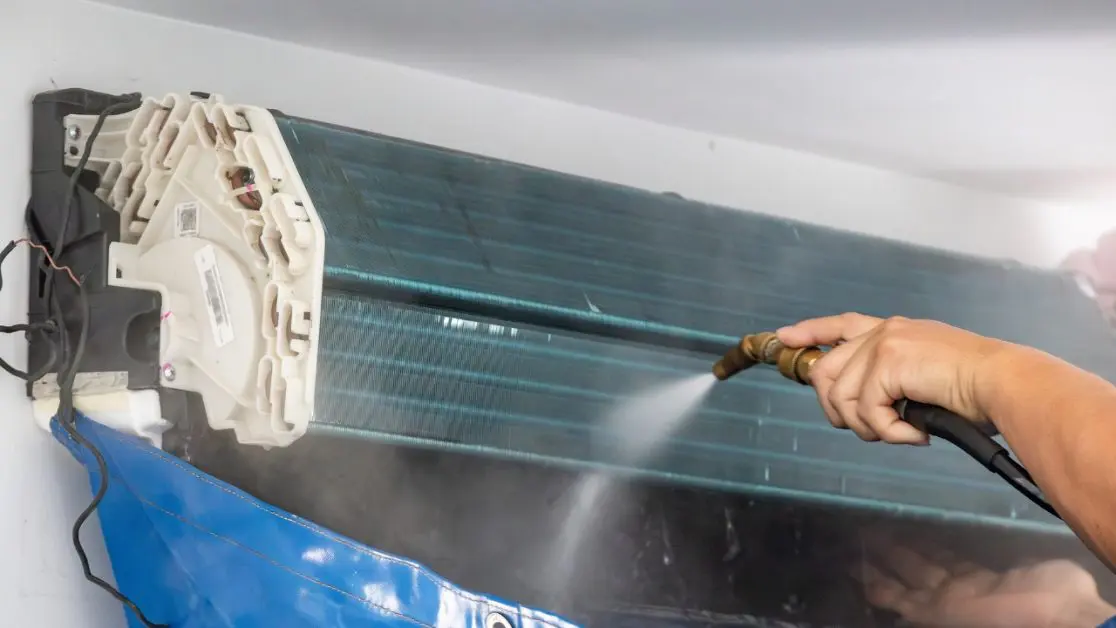
Technicians open the unit, wash filters, clean coils.
Cost
Recurring service charges.
Hidden cost
- Inconsistent quality
- Missed internal moisture
- Downtime and scheduling stress
The third option is self cleaning built into the AC
The AC cleans itself at regular intervals.
Cost
Built into the product.
Hidden cost
Almost none, if designed well.
This is where Indoor Frost Self Clean fits.
What is Indoor Frost Self Clean really doing
Indoor Frost Self Clean is not a surface wipe.
It is a process.
According to Haier’s AI Atmox Auto Clean system, the indoor unit initiates a frost-based cleaning cycle automatically after extended usage periods, typically around every 240 hours of operation.
Here is what happens inside.
Step 1: Frost formation
The indoor coil temperature drops rapidly.
Moisture inside freezes.
Dust and microbes get trapped inside the frost layer.
Step 2: Controlled thaw
The system gently melts the frost.
The melted water carries loosened dirt away.
Step 3: Internal drying
The AC dries the coil to prevent moisture from settling again.
No residue.
No damp smell.
Just a clean internal surface.
Why frost cleaning works better than wiping
Wiping cleans what you can reach.
Frost cleaning cleans what you cannot.
Manual cleaning limitations
- Only surface-level cleaning
- Internal coil sections often untouched
- Moisture may remain
Frost Self Clean advantages
- Reaches deep coil fins
- Uses physics, not pressure
- Cleans evenly, not selectively
It is similar to washing rice.
You rinse gently, let the water carry impurities away, and drain.
You do not scrub each grain.
How hygiene connects to cooling performance
Clean coils do more than improve air quality.
They change how the AC behaves.
Cleaner coils mean
- Faster heat exchange
- Stable cooling output
- Less compressor stress
According to Haier’s internal system logic, cleaner heat exchange surfaces help maintain cooling efficiency closer to factory performance levels over time.
That translates into a very real outcome.
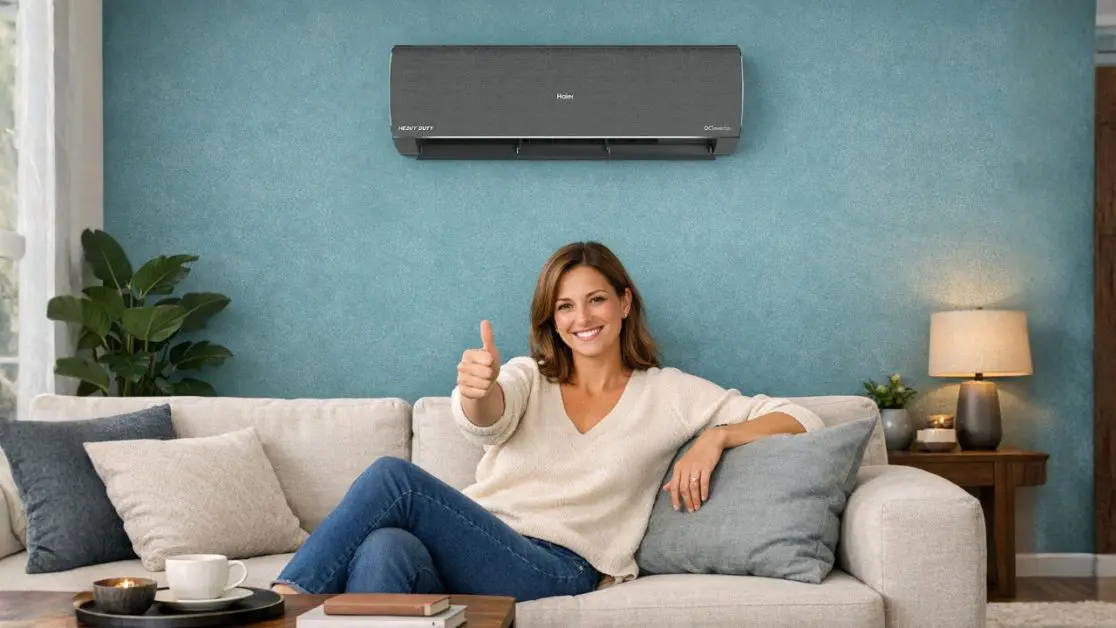
Comfort that stays consistent.
The air quality effect most homes underestimate
Indoor air quality is cumulative.
It is not about one night.
It is about every night.
When coils are dirty
- Airflow carries microscopic particles
- Odours linger longer
- Dryness and irritation increase
When coils stay clean
- Air feels lighter
- Smells disappear faster
- Breathing feels easier
Especially in homes with kids, elderly parents, or pets, this matters more than most people admit.
Why self cleaning fits modern Indian lifestyles
Indian households have changed.
Schedules are tighter.
Homes are smaller.
Maintenance windows are fewer.
Indoor Frost Self Clean works because it aligns with how people live now.
It works quietly
No reminders.
No service calls.
No planning.
It works automatically
The system prompts cleaning after extended usage and notifies once complete, without daily involvement from the user.
It works predictably
Clean cycles are timed, not reactive.
That predictability builds trust.
Hygiene is not a feature. It is a system.
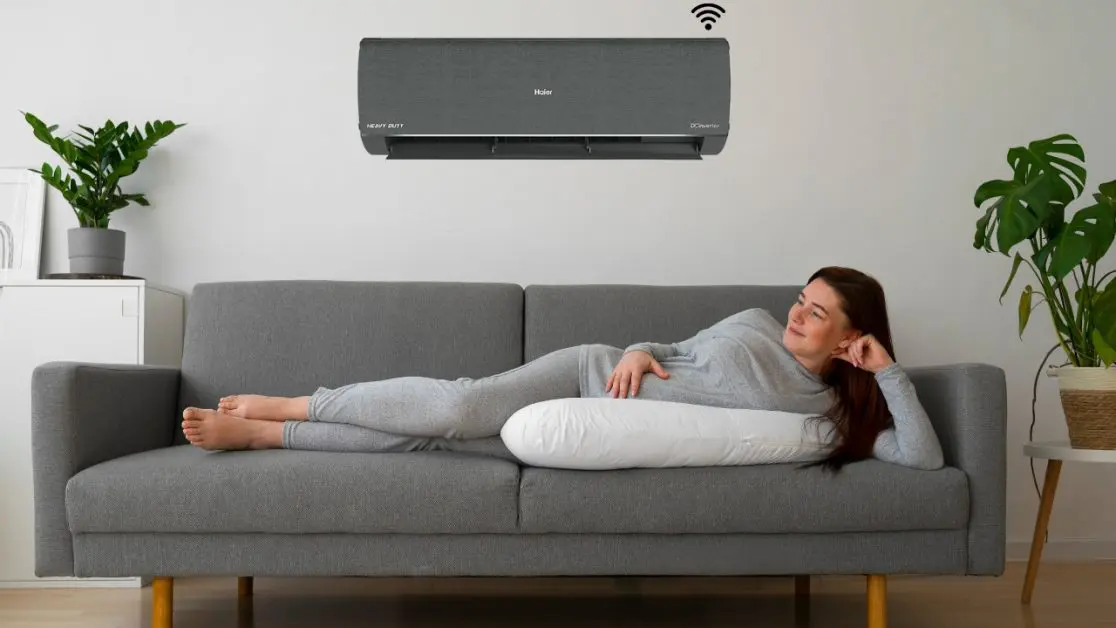
A clean AC does not come from one action.
It comes from a loop.
- Detect usage
- Trigger cleaning
- Remove moisture
- Restore efficiency
Indoor Frost Self Clean is one part of a larger hygiene system that includes airflow management and drying cycles.
That is how long-term cleanliness is sustained.
Not promised.
Maintained.
Where this matters most in real homes
Let us ground this.
Working professionals
You return late.
You want instant comfort.
You do not want to think about maintenance.
Young families
Children spend hours indoors.
Air quality matters more than aesthetics.
Compact apartments
Less ventilation.
Higher dependency on ACs.
Faster buildup of internal moisture.
In all three cases, hygiene becomes functional, not optional.
What Indoor Frost Self Clean changes psychologically
Here is the subtle shift.
You stop worrying.
- About smells
- About service calls
- About air quality
The AC becomes background infrastructure.
That is the real upgrade.
When a machine stops demanding attention, it starts adding value.
The bigger pattern behind self cleaning technology
This is not about ACs alone.
It reflects a broader shift in home appliances.
From maintenance-heavy to maintenance-aware
Machines that know when they need care.
From reminders to autonomy
Systems that act without nudging.
From ownership to experience
You care less about the product and more about how life feels around it.
Indoor Frost Self Clean is one signal of that shift.
So what should homeowners really look for
Not labels.
Not buzzwords.
Ask one question.
Does this appliance take responsibility for its own hygiene?
If the answer is yes, life gets simpler.
If the answer is no, you inherit the work.
The insight worth remembering
Clean air is not about effort.
It is about design.
When hygiene is built into the system, comfort becomes consistent.
And when comfort becomes consistent, home starts feeling lighter.
That is what Indoor Frost Self Clean quietly delivers.
Not drama.
No noise.
Just air that feels right.
Frequently Asked Questions
Does self cleaning replace technicians completely?
No. It reduces dependency by handling routine internal hygiene automatically, while technicians handle repairs and deep inspections.
What exactly does Indoor Frost Self Clean do inside the AC?
It freezes moisture on the indoor coil, traps dust and microbes in frost, melts it in a controlled way, and then dries the surface completely.
How often does this frost cleaning happen?
Typically after extended usage cycles (around 240 hours), triggered automatically without user intervention.
Will self cleaning help maintain long-term efficiency?
Yes. By keeping coils closer to factory-clean conditions, cooling performance remains stable over seasons.
Is Indoor Frost Self Clean useful for small apartments?
Yes. Smaller spaces have less ventilation, making internal moisture buildup faster and hygiene more critical.