
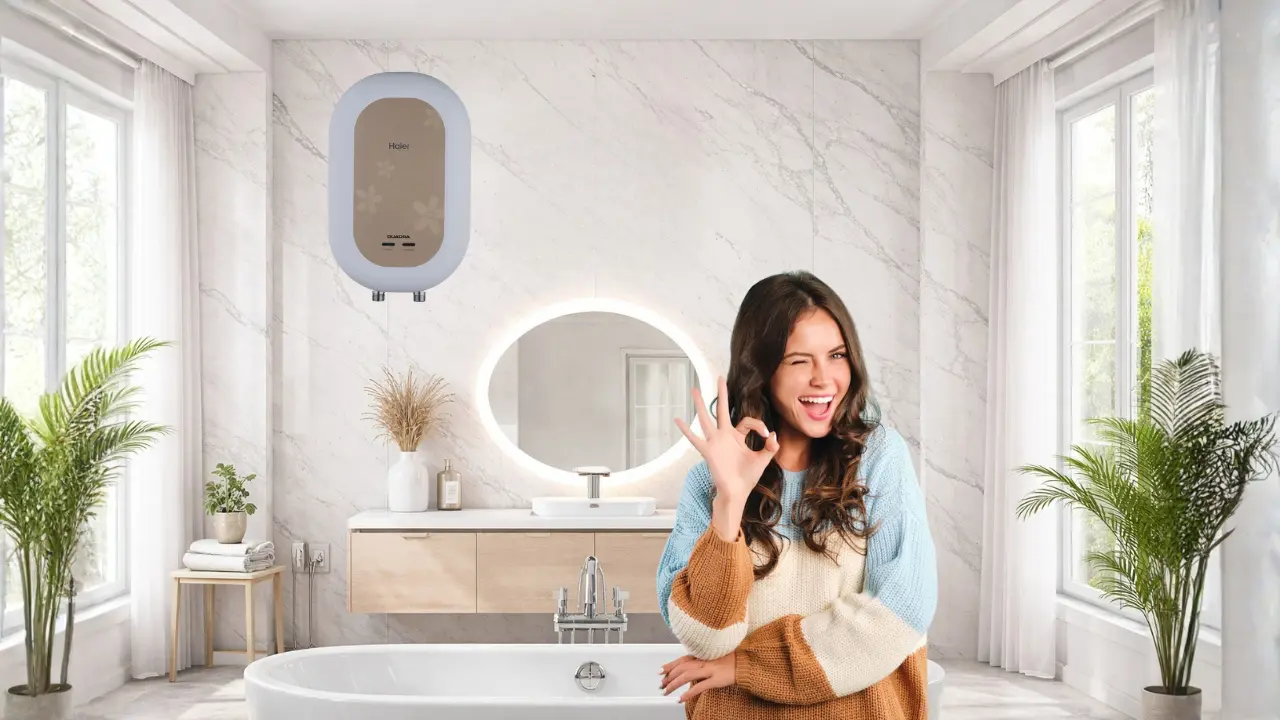

Investing once with long-term peace of mind means choosing appliances built for durability, safety, and efficiency so you avoid repeated costs, service stress, and performance drops over the years.
It is not about spending more.
It is about spending wisely.
In modern Indian homes, the smartest investment is the one you make once and do not have to think about again for a long time.
Why do we keep replacing things that should have lasted?
Walk into any mid-sized apartment in Mumbai or Bengaluru.
You will see the pattern.
A fridge that works fine but struggles during peak summer.
A water heater that trips when pressure rises.
An AC that cools unevenly after two seasons.
None of them failed suddenly.
They faded.
That fading costs more than breakdowns.
According to industry estimates from the Bureau of Energy Efficiency, inefficient appliances can increase electricity bills by 15 to 30 percent over time. Small inefficiencies compound. Just like EMI interest.
And here is the quiet truth.
Most households do not overspend on appliances.
They under-spec for their actual usage.
That decision creates long-term friction.
Peace of Mind Is a System, Not a Feature
Peace of mind does not come from one checkbox on a product sheet.
It comes from systems working together.
1. Safety Systems That Think Ahead
Take water heaters in high-rise apartments.
Many Indian buildings operate at high water pressure. Some cross 8 bar levels. That is serious pressure.
A heater not designed for it fails quietly.
The Haier 3L Instant Water Heater EI3V-C1(W)-P is rated for 8 bar pressure and includes Dual Thermal Proof protection, which automatically cuts off heating at 75°C and again at 95°C if needed.
Two layers of protection.
Not one.
That is not luxury.
That is foresight.
2. Durability That Handles Indian Water Conditions
Indian water is unpredictable.
Hard water. Sediments. Pressure variation.
Glass-lined tanks and enamel layers exist for a reason.
The Haier 3L IPX4 Ivory Instant Water Heater uses a glass-lined tank to enhance corrosion resistance and longevity.
Corrosion is slow.
Until it is expensive.
3. Hygiene That Works in the Background
Bacteria build-up inside water tanks is invisible.
You do not see it.
But it exists.
Haier’s Anti-Bacterial Function heats water up to 80°C in BPS mode to inhibit bacteria growth.
It is a small cycle.
It creates long-term health security.
Peace of mind often hides in invisible features.
The Real Cost of Buying Cheap
There are three common buying paths in Indian households.
One option is buying the lowest price model.
- Lower upfront cost
- Higher maintenance probability
- Shorter lifecycle
The second option is mid-range without checking specifications.
- Feels balanced
- Hidden compromises
- Average durability
The third option is investing in long-term design and safety.
- Slightly higher initial spend
- Lower maintenance cost
- Longer usable life
Now ask the harder question.
Which one costs less after five years?
Durability Is Design Thinking
Look at heating elements.
Many entry-level water heaters use basic copper elements.
Premium models use Incoloy 800 heating elements for higher corrosion resistance and longer service life.
Why does that matter?
Because heating elements face constant thermal stress.
Metal expands.
Contracts.
Repeat.
If the material cannot handle that cycle, it fails early.
Durability is not marketing.
It is metallurgy.
Water Resistance Is Not Optional Anymore
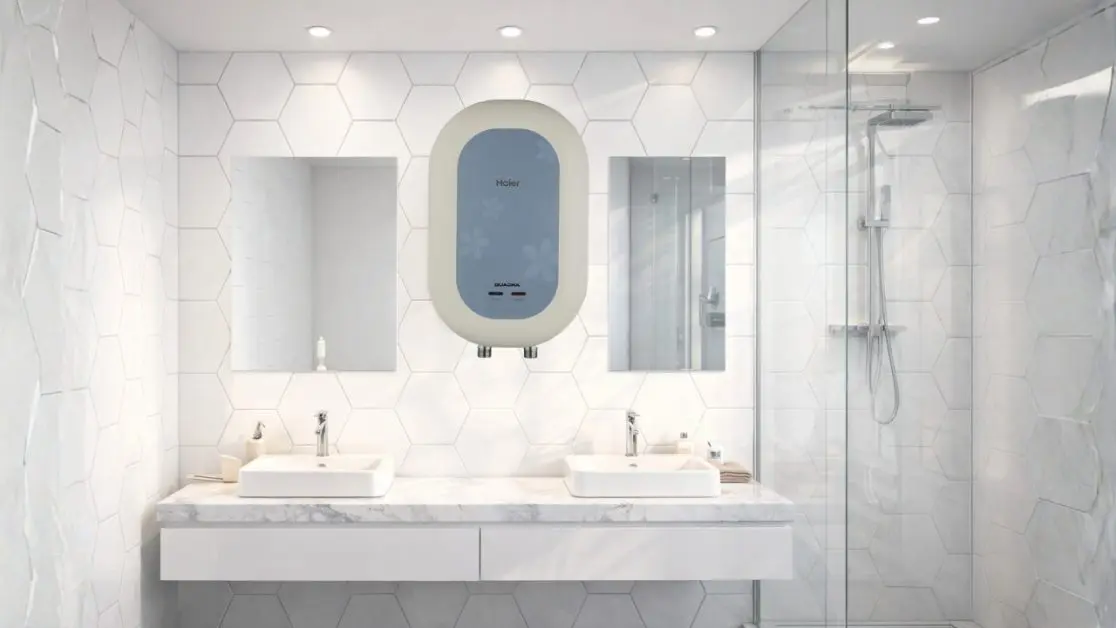
Bathrooms today are compact.
Water splashes everywhere.
IPX4 water resistance protects against water splashes and is suitable for indoor and semi-exposed installations.
When apartments shrink, specifications must expand.
That is how long-term peace works.
It adapts to modern living constraints.
How This Principle Extends Beyond Water Heaters
The idea of investing once applies across the home.
Refrigerators
- Multi-airflow systems maintain uniform cooling
- Toughened glass shelves prevent sagging
- Inverter compressors reduce long-term electricity cost
Air Conditioners
- Energy monitoring features prevent surprise bills
- Smart sensors avoid overcooling
- Corrosion-resistant coils survive coastal climates
Televisions
- High refresh rate panels last longer under gaming loads
- Advanced audio systems reduce the need for external soundbars
- AI picture optimization adapts to content automatically
The pattern is consistent.
Strong internal systems reduce long-term friction.
The Organizational Parallel Nobody Talks About
If you have ever managed a growing team or a mid-sized business, you know this feeling.
You can hire quickly.
Or hire well.
You can install temporary processes.
Or build durable systems.
The same logic governs home appliances.
Shortcuts feel efficient.
Until they are not.
A well-chosen appliance behaves like a reliable employee.
It does its job quietly.
Consistently.
Without supervision.
That is the real luxury.
Long-Term Peace Is Also About Warranty Structure
Warranty is not paperwork.
It is confidence.
For example:
| Model | Product Warranty | Tank Warranty | Rated Pressure |
| Haier 3L IPX4 Ivory | 3 Years | 5 Years | 8 Bar |
| Haier 3L EI3V-C1(W)-P | 4 Years | 7 Years | 8 Bar |
Longer tank warranty signals material trust.
Manufacturers do not extend warranty casually.
It reflects design confidence.
Fresh Water Flow Is an Overlooked Detail
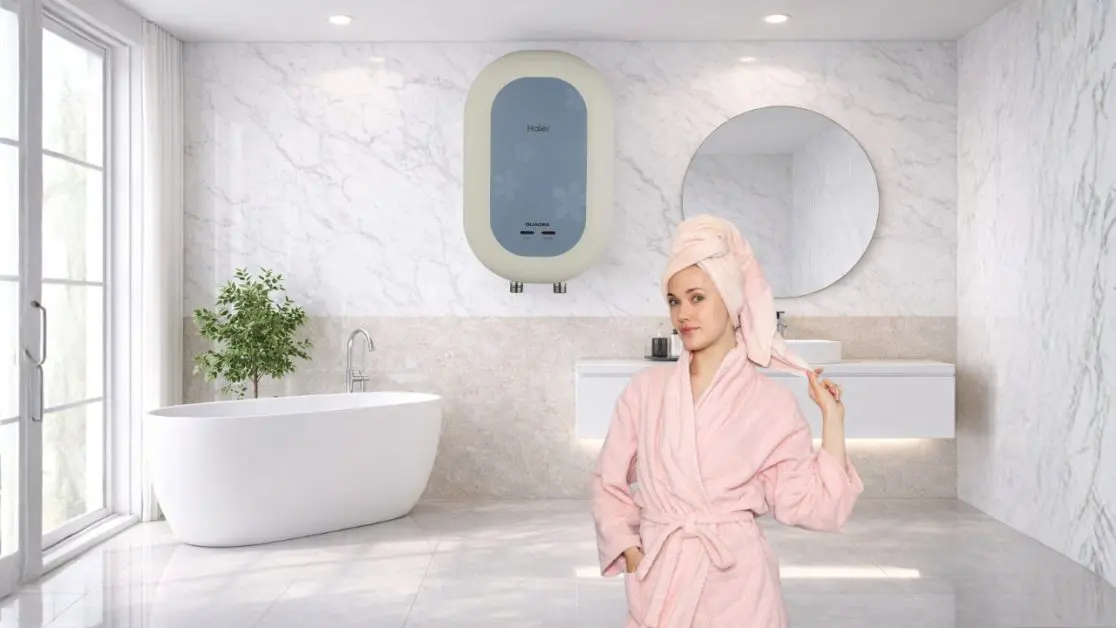
Stagnant water inside tanks creates odor and inefficiency.
RSC U-turn Flow Technology ensures continuous water circulation to prevent stagnant water deposition.
Circulation equals freshness.
Freshness equals reliability.
Small engineering decisions compound over years.
Electricity Bills Reveal Long-Term Thinking
In Indian metro cities, electricity tariffs can climb sharply during summer.
Appliances rated at 3 KW provide faster heating cycles, reducing active runtime.
Faster heating means shorter operational windows.
Shorter runtime often means energy savings.
It is not just about wattage.
It is about time efficiency.
The Hidden System Behind “Buy Once”
Let us simplify the idea.
Long-term peace of mind depends on four pillars:
- Material durability
- Multi-layer safety systems
- Operational efficiency
- Warranty-backed confidence
Remove one.
Stress enters.
Keep all four.
Silence follows.
What Does This Mean for Modern Indian Homes?
Millennial buyers today think differently.
They compare.
They read specifications.
They understand the lifecycle cost.
Gen Z renters upgrading to owned apartments want smart investments.
Parents setting up homes for newly married children want reliability.
Nobody wants emergency service calls on festival mornings.
Nobody wants cold showers during winter exams.
Appliances that quietly do their job become invisible heroes.
The Decision Framework
Before buying any major appliance, ask:
- Will this handle Indian voltage fluctuations?
- Is it designed for high-rise pressure levels?
- Does it have layered safety systems?
- Is corrosion protection clearly specified?
- Does warranty reflect material confidence?
If the answer is yes, you are not buying a product.
You are buying calm.
Investing Once Is a Cultural Shift
Indian households traditionally stretched budgets.
That habit built resilience.
But modern urban life demands something else.
Time efficiency.
Energy efficiency.
Stress reduction.
The cost of appliance downtime is no longer just repair money.
I missed meetings.
Interrupted routines.
Frustrated mornings.
The Bigger Picture
Peace of mind is not a soft concept.
It is engineered.
In water heaters with Dual Thermal Protection.
In corrosion-resistant tanks.
In 8 bar pressure ratings.
In anti-bacterial cycles.
Each feature answers a future problem before it appears.
Here is the one insight worth remembering:
A well-designed appliance saves you from decisions you should not have to make twice.
That is the essence of investing once.
Not extravagance.
Not over-specification.
Just thoughtful selection.
In uncertain times, whether in organizations or households, stability becomes the most valuable asset.
And stability often begins in places we overlook.
Like the wall of a bathroom.
Or the quiet hum in the kitchen.
Invest once.
Think long-term.
Let your home handle the rest.
Frequently Asked Questions
How do I know if I’m buying an appliance that will actually last 5–10 years?
Look for durability indicators such as corrosion-resistant materials, pressure ratings suitable for Indian homes, layered safety systems, and longer warranties. These signal that the product is designed for long-term performance rather than just a low upfront cost.
I always end up buying the cheaper appliance and replacing it later. Am I actually spending more in the long run?
Often yes. Cheaper appliances may have lower build quality, fewer safety systems, and shorter lifespans. Over 5 years, repair costs, higher electricity usage, and replacement purchases can exceed the cost of buying a well-built appliance initially.
What should I check before buying a water heater for my apartment?
Key checks include pressure rating (8 bar for high-rise buildings), tank material, heating element durability, IPX4 splash protection, and warranty coverage for both the product and the tank.
Why do so many appliances feel fine for the first year and then slowly get worse?
Many appliances degrade due to thermal stress, corrosion, or inefficient internal components. Lower-grade materials or insufficient protection against Indian water and voltage conditions cause gradual performance decline.
Do smart appliance features really improve everyday life or are they just marketing?
Some smart features genuinely reduce friction. Examples include energy monitoring, automated sensors, and adaptive performance modes that optimize usage without manual adjustments.
Why are new appliances designed with more internal systems than older ones?
Modern appliances are designed to anticipate common issues such as pressure fluctuations, water quality changes, or uneven cooling. These systems prevent problems before they become noticeable.
Are smart appliances necessary for smaller urban apartments?
In compact homes, efficient design and smart features help manage space, energy usage, and daily convenience more effectively.