


Smart water heaters are quietly becoming the next big shift in Indian homes making mornings smoother, showers safer, and bills lighter.
The Internet of Things (IoT) has moved beyond buzzword status. It’s no longer about futuristic “smart homes.” It’s about small but meaningful choices, a fridge that reminds you when the milk is low, an AC that adapts to your sleep patterns, a TV that doubles as your after-school tutor. And now, a water heater that connects to WiFi and remembers exactly how hot you like your bath water.
Why Water Heaters Are the Unsung Hero of Indian Homes
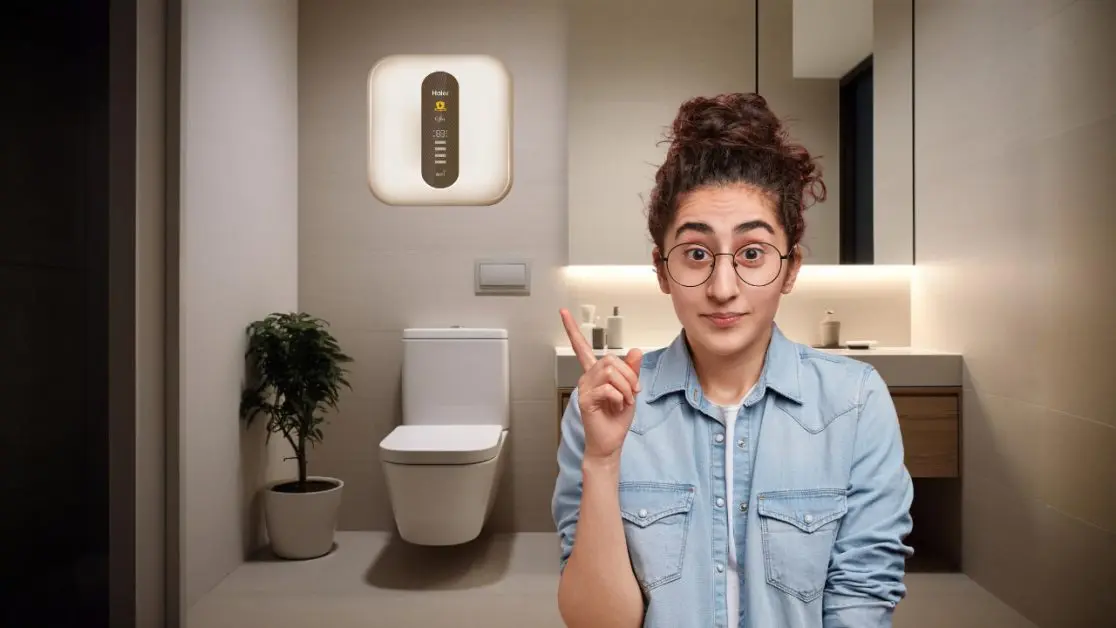
Think about it.
We talk endlessly about fridges, TVs, and washing machines. But what’s the one appliance every family uses without ever thinking about it? The water heater.
- Morning showers before school and office runs
- Buckets of warm water for grandparents’ comfort baths
- Quick hand washes after frying pakoras in monsoon season
- Evening rituals when kids return sweaty from cricket coaching
The geyser has always been in the background, silently doing its job. Until now.
With IoT, that background player has stepped into the spotlight.
What Makes a Water Heater “Smart”?
A connected water heater isn’t just about WiFi. It’s about intelligence. The system listens, learns, and adapts.
Here’s how it changes daily life:
1. Remote control: Switch it on from your phone while still in bed.
2. Smart timer: Schedule heating for the exact hour you need. No wasted electricity.
3. Memory function: It recalls your family’s preferred temperature so your child’s shower isn’t scalding and your winter bucket is always perfect.
4. Safety alerts: Sensors cut off power in case of overheating, leakage, or pressure build-up.
In short, it’s like having a butler for your hot water. Always ready, always safe.
The Bigger Picture: Why IoT in Water Heaters Matters Now
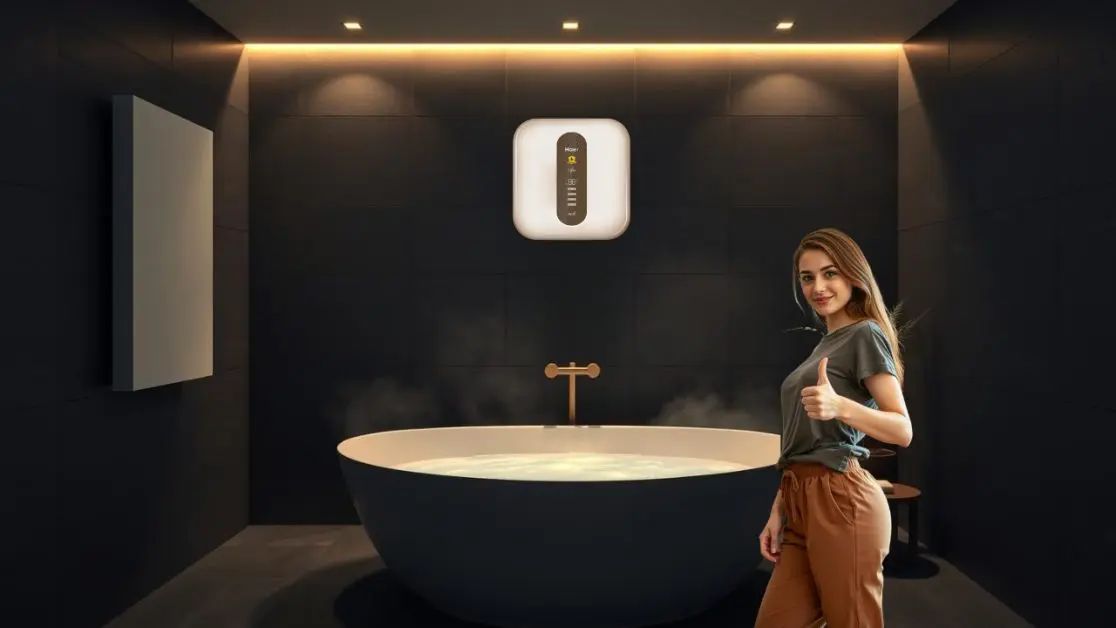
This isn’t just a story of convenience. It’s about systems thinking.
- Energy efficiency: A smart geyser prevents reheating cycles, cutting power use. For a 4-member household, this can mean 15–20% lower bills.
- Health and hygiene: Features like anti-bacterial BPS mode heat water at 80°C to kill bacteria. That’s particularly useful in cities with hard water or during humid seasons.
- Urban living patterns: In high-rise apartments, 8-bar pressure technology ensures consistent performance. You don’t have to pray for strong flow.
- Work-from-home realities: With staggered schedules, IoT ensures water heating matches lifestyles instead of wasting resources.
The real insight? A connected water heater isn’t a luxury. It’s a response to how Indian families actually live today.
A Day in the Life of a Connected Water Heater
Picture this.
- 6:30 am: Your geyser switches on automatically, heating water just in time for your jog and your kid’s quick shower.
- 10 am: You leave for the office. The heater shuts off automatically, ensuring no wastage.
- 4 pm: Grandma taps a button on the Haier Smart app. Warm water is ready for her evening bath.
- 9 pm: You activate Eco-Smart mode, which maintains just the right insulation overnight without reheating again and again.
One appliance. Multiple rhythms. A family-sized solution.
The Indian Parent’s Test: Safety First

Every parent knows this truth: appliances are judged by how safe they are for kids and seniors.
Connected water heaters are designed with safety layers:
- Shock-proof design reduces voltage to safe levels during leakage
- Dual overheat protection cuts power if the element goes beyond 75°C or 95°C
- Pressure relief valves prevent bursts in high-rise plumbing
- IPX4 water resistance safe even with bathroom splashes
For parents, this isn’t a “feature.” It’s peace of mind.
How Does IoT in Water Heaters Save Money?
We often assume smart devices are expensive to run. The opposite is true here.
Here’s the cost logic:
- Traditional heater: Heats water whether you use it or not. Keeps reheating as water cools down.
- IoT-enabled heater: Heats only when scheduled. Superior PUF insulation holds heat longer.
Over a year, the savings add up. One Bengaluru-based energy consultancy found that smart geysers can save up to ₹2,500 annually for mid-sized households. That’s not just a gadget upgrade that’s groceries for a week.
Millennials and Gen Z: Why This Feels Tailor-Made
The first digital-native homeowners in India have different expectations:
- They hate waiting. If Netflix can stream instantly, why should hot water take 20 minutes?
- They value apps and dashboards with a simple interface over complex switches.
- They’re eco-conscious, seeking energy savings without sacrificing comfort.
- They’re also renters, often moving between cities. A connected appliance feels portable, predictable, and modern.
In other words, IoT in water heaters speaks their language: smart, fast, and sustainable.
Example: Haier’s 15L Smart WiFi Water Heater
Let’s ground this in a real example.
Haier’s 15L Square 5-Star Smart WiFi Water Heater isn’t just another appliance. It’s a case study of how IoT transforms a utility into an experience:
- Remote control and smart timer: Warm water exactly when you need it
- Smart memory: Learns household routines
- Shock proof, overheat proof, antibacterial mode: Safety + hygiene built in
- PUF insulation and glass-lined tank: Long life, lower energy bills
- 8-bar pressure design: Perfect for metro high-rises
It costs ₹12,299 (against an MRP of ₹25,900). But more importantly, it redefines what a “geyser” means in 2025.
What Are the Options for Indian Homes?
If you’re considering a water heater upgrade, think systematically:
1. Traditional heater
- Low upfront cost
- High long-term electricity bills
- No safety intelligence
2. Semi-smart (basic digital timers)
- Moderate cost
- Slightly better efficiency
- Limited adaptability
3. IoT-enabled smart water heater
- Higher upfront investment
- Consistent savings over years
- Safer, more hygienic, more convenient
The third option is increasingly becoming the default choice for young households.
The Hidden System: Why IoT Water Heaters Are Just the Start

Look deeper. A smart geyser is not just about hot water. It’s a node in a network.
- When linked with smart meters, it provides real-time energy analytics.
- When integrated with solar panels, it can prioritize renewable use.
- When paired with voice assistants, it becomes part of your daily routine “Alexa, prepare my shower.”
This is how IoT evolves: one connected device at a time, until your entire home runs like a symphony.
What This Means for the Future of Indian Homes
Here’s the takeaway.
Water heaters are proof that IoT is no longer about flashy luxury. It’s about solving ordinary pain points with extraordinary simplicity.
- No waiting.
- No worrying about safety.
- No guilty electricity bills.
As families get busier, homes get smaller, and expectations get bigger, appliances like the Haier Smart WiFi Water Heater will shape the rhythm of everyday life.
Because in the end, technology isn’t about gadgets. It’s about how smoothly your home runs go when no one is watching.
Final Thought
The rise of connected water heaters shows us something profound: the future of living isn’t built on grand inventions, but on small, intelligent adjustments that make life easier every single day.
And when those adjustments arrive in familiar forms like the geyser in your bathroom that’s when technology truly feels at home.