
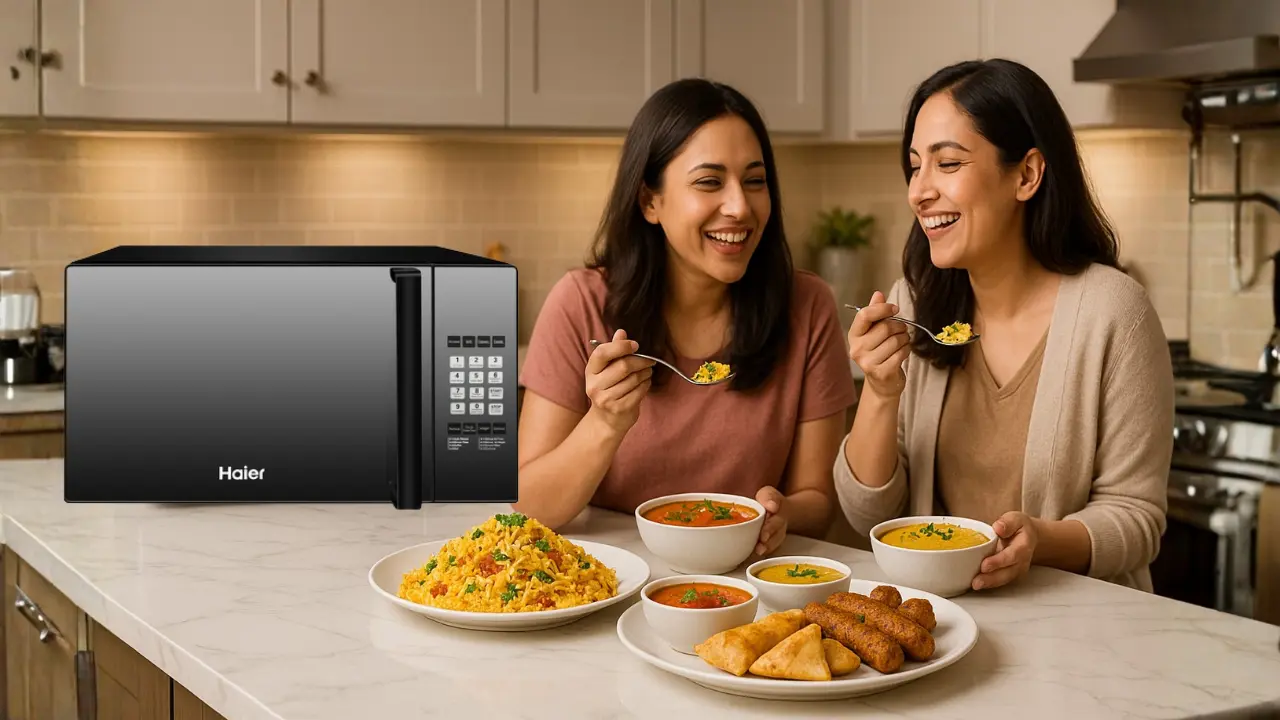

You keep food warm without overcooking by reducing direct heat, controlling moisture, and using appliances that hold temperature instead of reheating from scratch.
Convection modes, multi-power levels, insulated setups, and short bursts of gentle heat protect texture and flavour while keeping meals ready for late eaters.
This is the hidden truth.
Warmth is a system. Overcooking is a symptom.
And every Indian home feels this dilemma when dinner timings stretch, guests arrive late, or parents wait for kids returning from tuition.
Why this question matters more than we admit
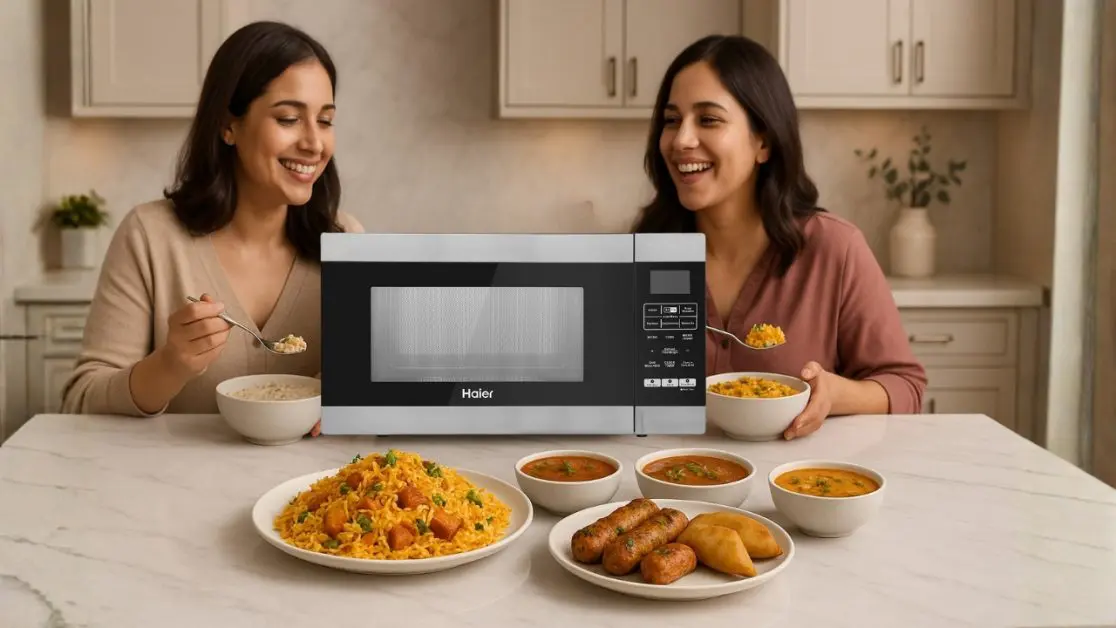
Picture a simple weekday.
Rotis come off the tawa piping hot.
Dal simmers just long enough to get its aroma right.
Vegetables are cooked to that perfect spot between tender and bright.
Then someone says, “I’ll be fifteen minutes late.”
That sentence is where the real problem begins.
We don’t want to reheat the whole dish.
We don’t want food drying out.
We don’t want soggy rotis or scorched tadka.
We want a warm meal that still tastes like the moment it was cooked.
This is not just a kitchen challenge.
It is a system challenge that every urban household recognizes.
So the question becomes simple and sharp.
How do you hold temperature without ruining texture?
To find the answer, let’s explore the invisible forces that govern warmth, moisture, and precision in everyday Indian cooking.
The principle behind keeping food warm
Warmth escapes.
Moisture evaporates.
Flavours dull under prolonged heat.
Keeping food warm without overcooking becomes a game of three levers:
1. Temperature
2. Moisture control
3. Even, indirect heating
Pull them right, and the dish stays close to its original state.
Pull them wrong, and you get the usual suspects: dry chicken, rubbery paneer, mushy rice, leathery rotis.
The real enemy is not heat – it is continued cooking

Most people assume the problem is temperature. It is not.
The problem is active cooking happening long after you intended it to stop.
- A pot left on the flame continues to break down fibres.
- A kadai retains heat that pushes vegetables beyond their sweet spot.
- A microwave on full power sacrifices texture for speed.
So the system we choose matters more than the temperature we set.
This is where modern appliances, especially convection microwaves, play a quiet but transformative role. They don’t just reheat. They hold. They protect. They stabilize.
The science behind it: Holding temperature vs generating heat
There are only three ways to keep food warm safely:
1. Retained heat (passive warmth)
Examples: insulated casseroles, oven-carryover heat.
Great for short durations.
Limited control.
Food continues cooking inside these containers.
2. Moisture-protected warmth
Examples: steam trays, double boilers.
Good for preventing dryness.
Not ideal for Indian breads or crisp items.
3. Controlled, low-power indirect heat
Examples: convection microwaves with multi-level heating.
This is the gold standard for household use today.
It offers:
- Lower, adjustable temperature
- Circulated warm air instead of harsh direct heat
- Power-level modulation that prevents overcooking
- Even heating thanks to stainless-steel cavities in microwave interiors
Haier’s microwave range reflects this design philosophy. The 25L Convection Microwave with 305 Auto Cook Menus includes a stainless-steel cavity engineered for even heating, avoiding hotspots that lead to overcooking .
The 20L Mirror Glass Convection Microwave also uses stainless-steel interiors that enhance uniform warming, keeping food warm without pushing it into the overdone zone .
Warmth becomes predictable.
Texture stays intact.
What makes Indian food particularly sensitive to overcooking?

Indian dishes behave like different personalities under heat.
Rotis stiffen as gluten tightens.
Rice absorbs steam and bloats.
Dal thickens and loses aroma.
Paneer turns rubbery.
Dry sabzis lose crunch and colour.
Curries continue reducing, altering balance.
Which means the goal isn’t heat.
The goal is precision.
Precision is what separates reheating from preserving.
And precision is what modern convection systems provide.
Six reliable ways to keep food warm without overcooking
Below are the most dependable options, arranged in a systems-thinking format. Each works for a different kind of dish and a different kind of Indian household rhythm.
1. Use a convection microwave on low power
This is the modern Indian home’s best friend.
Convection microwaves allow food to stay warm at low power without harsh reheating.
Haier’s 25L convection model offers multiple power levels and combinations that let you maintain warmth while avoiding active cooking .
Best for:
Dal, sabzi, curries, rice, pasta, gravies.
How it works:
- Set the microwave to 10 to 30 percent power.
- Use short bursts of 20 to 30 seconds.
- Allow resting time in between so heat spreads evenly.
Why it works:
Low power simulates a gentle warmth environment without altering texture.
Quotable insight:
Gentle heat warms. Strong heat cooks. Know the difference and every meal stays in its sweet spot.
2. Use the convection mode to hold temperature
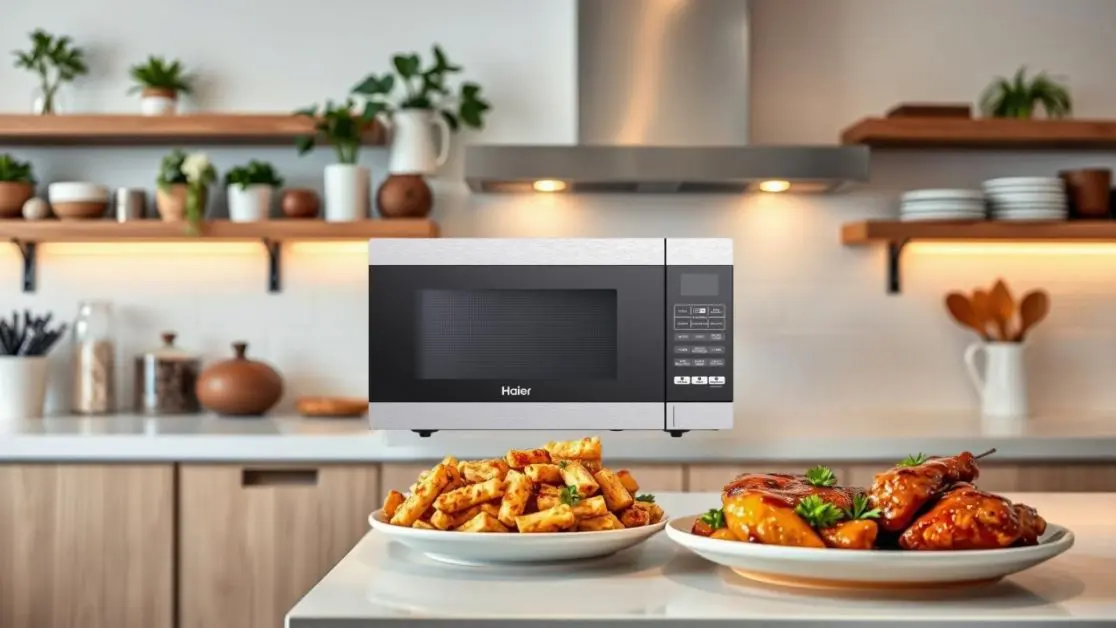
Convection mode circulates warm air uniformly.
Haier’s 30L Convection Microwave with In-Built Air Fryer features a stainless-steel cavity designed for even heat flow, which prevents edges from drying while centers stay warm .
Best for:
Breads, baked dishes, biryanis, roasted items.
How to use:
- Preheat the convection mode to 90–110 degrees.
- Place food inside uncovered if crisp; lightly covered if moist.
Why it works:
Air circulation preserves texture.
3. Hold rotis and parathas the right way
Rotis often lose the battle against time.
Here’s the trick:
You don’t let steam escape too quickly, and you don’t trap it completely.
Two-step method:
1. Wrap rotis in a clean cotton cloth.
2. Place them inside an insulated casserole pre-warmed with hot water.
This preserves softness for up to an hour without sogginess.
Parathas can be kept in the convection microwave at low warm settings for 5 to 7 minutes before serving.
4. Use steam efficiently without soaking the dish
Steam is protective.
Steam is dangerous.
Too much steam ruins texture.
Too little steam dries out edges.
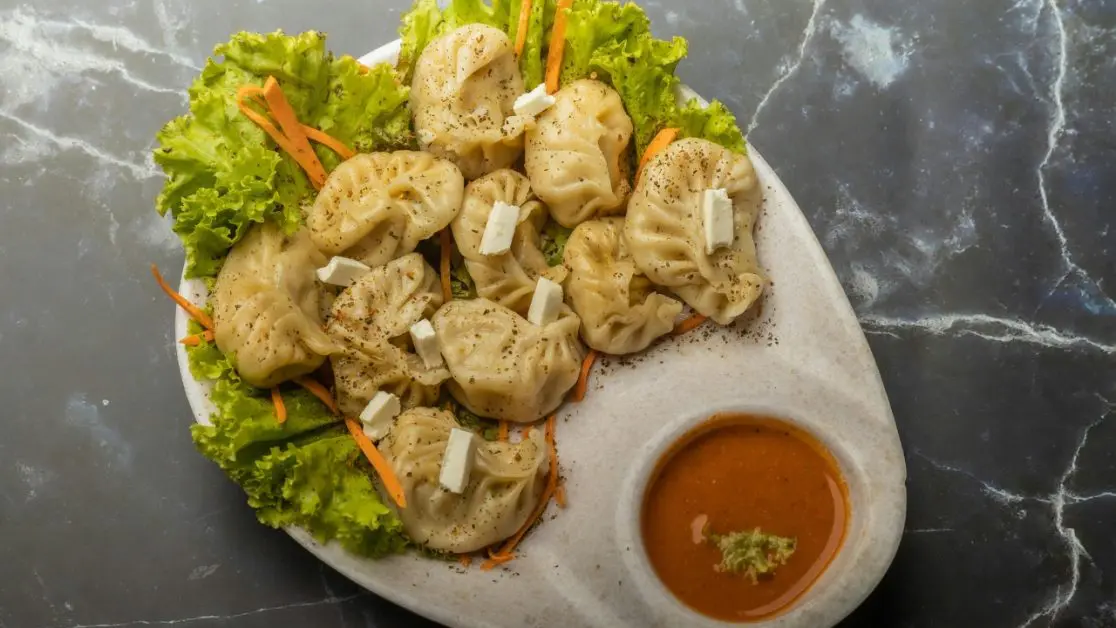
For items like idlis, momos, dhokla and rice dishes:
- Place food in a container
- Add a small bowl of hot water next to it
- Cover loosely
This gentle steam buffer keeps warmth stable.
5. The double-boiler method for dal and gravies
Restaurants use this.
Home kitchens rarely do.
Place your kadhai inside a larger vessel with hot water.
The outer vessel provides indirect heat.
Why this matters:
Indirect heat stops overcooking but protects warmth for 30–45 minutes.
6. Use short-cycle microwaving for each late eater
This fits the modern schedule where everyone eats at a different time.
Instead of reheating an entire dish multiple times, warm individual portions using:
- 20 to 30 seconds
- Low power
- Occasional stirring
This protects moisture and nutrients.
According to the Haier microwave FAQs, microwaving preserves more nutrients compared to boiling or steaming because it uses shorter heating durations and gentle heat cycles .
Comparison Table: Best method for each Indian dish
| Dish Type | Best Warming Method | Why It Works |
| Rotis | Cloth + insulated casserole | Retains moisture without trapping excess steam |
| Parathas | Low-power convection warming | Keeps crispness without drying |
| Dal/Gravy | Double boiler or low-power microwave | Prevents further cooking |
| Rice | Steam buffer or 20-sec low-power bursts | Retains fluffiness |
| Sabzi | Convection mode or low-power heating | Avoids limp texture |
| Snacks/Fried items | Convection or air fryer mode | Restores crispiness |
How Haier microwaves support these warming methods
This is where smart product design quietly aligns with everyday household rhythms.
Haier 20L Convection Microwave
- Stainless steel cavity for even heat distribution
- 66 Auto Cook Menus that optimise time and power
- Digital control that allows precise warming
Haier 25L Convection Microwave
- 305 Auto Cook Menus
- Memory function for repeated warm setups
- Combination cooking that prevents overheating
- Paneer/Ghee/Curd making modes (helpful for temperature precision)
Haier 30L Convection Microwave with In-Built Air Fryer
- 5 power levels for fine-tuned control
- Air fry tray for restoring crisp textures
- Convection power of 2500W for uniform circulation
These features aren’t just technical specs.
They are tools for managing everyday Indian food-lifecycle challenges.
The hidden system inside Indian kitchens
Keeping food warm is not a single step.
It is a chain reaction shaped by choices.
- When we cook.
- When everyone eats.
- How long we wait.
- How much moisture we allow.
- How much heat we apply.
In busy homes, especially across metro cities where schedules rarely sync, smart appliances act like invisible helpers.
They don’t just reheat.
They solve timing mismatches.
They keep food safe.
They preserve the effort that went into cooking.
They reduce daily friction.
Haier’s convection microwaves don’t need to scream for attention.
Their quiet promise is simple.
Food stays warm.
Food stays right.
Food stays the way you intended.
The larger implication
Every household has its own rhythm.
Meals rarely happen at the same time every day.
So the real question is no longer:
“How do I keep food warm?”
The real question becomes:
“How do I keep life flowing smoothly even when timings shift?”
When warmth becomes predictable,
meals become effortless,
and daily life feels less like a negotiation.
This is what modern appliances solve.
Not just cooking.
Not just reheating.
But coordination.
A warm chapati at 9 pm tastes like care.
A perfectly warm meal at 10 pm feels like comfort.
A crisp snack reheated correctly feels like home.
Small wins.
Daily wins.
The kind that shapes a household.
The memorable insight
Warm food is not about temperature. It is about timing.
Master the system, and every meal feels freshly made.