


Every Indian kitchen knows this truth:
The real challenge isn’t just making malai, rabri, or lassi taste divine.
It’s keeping them perfect until it’s time to serve.
Festival evenings. Family lunches. That unexpected knock at the door.
You want your sweets and drinks to arrive at the table with the same freshness, texture, and aroma they had when you made them. Not half-melted, not altered in taste, not dulled in colour.
So how do you protect these delicate creations in the hours between preparation and that first spoonful?
Why traditional methods often fail
Indian households have their share of old tricks
- Keeping the bowl covered with a steel plate.
- Resting it in a shallow water bath.
- Storing it in the coolest corner of the fridge.
But here’s the hidden problem: temperature fluctuations.
Every time the fridge door opens for vegetables, cold drinks, or chutney jars, your malai loses its delicate structure. Rabri starts forming an extra skin. Lassi loses that first-sip chill.
In short, even the best recipes lose their magic if storage is an afterthought.
The science of perfect preservation
Malai, rabri, and lassi share one fragile trait: they are milk-based emulsions. Their taste and texture depend on two things:
Stable temperature – Keeps fats, proteins, and sugars in balance.
Odour control – Dairy absorbs surrounding smells quickly, so the faint whiff of last night’s curry can ruin the experience.
If you can master those two factors, your festive prep becomes stress-free. You can make desserts hours in advance and still serve them as if they were fresh from the stove or churner.
How modern kitchens are solving this
Here’s where Indian kitchens have quietly been upgrading, moving to large, multi-zone refrigerators that let you store each dish in its ideal environment.
One example is the Lumiere Series 630L 4-Door Convertible Refrigerator. It’s not just about size; it’s about control.
- Convertible Fridge Space – A 103-litre section that can shift between fridge and freezer depending on the season’s needs. Your rabri gets fridge-cooling while ice cream sits frozen beside it without compromise.
- ABT pro Technology – Neutralises odours so your lassi doesn’t pick up garlic from the chutney bowl next to it.
- Smart Sense AI – Learns your family’s usage pattern and adjusts temperature to keep food stable, even during peak fridge-opening hours before guests arrive.
It’s this kind of precision that bridges the gap between “good enough” and “absolutely perfect.”
A real-world scenario you’ll recognise
You’re hosting a Janmashtami dinner. Malai was set early in the morning. Rabri reduced slowly over hours. Lassi churned at 4 pm. By 8 pm, relatives start arriving.
The fridge is in overdrive, kids opening it for cold water, your sibling hunting for salad dressing, your spouse fetching chutney.
In a regular fridge, temperature swings hit your dairy dishes like tiny earthquakes. By the time dessert is served, malai feels loose, rabri’s cream line is disrupted, lassi has lost its silky chill.
With a dedicated, stable zone, all three emerge exactly as they were made creamy, aromatic, and perfect.
What makes dairy storage different from everything else

Unlike fruits or curries, dairy desserts are highly sensitive to temperature and texture changes.
- Malai – Needs consistent cooling to maintain its soft yet structured layer.
- Rabri – Loses flavour depth if over-chilled, but spoils if kept warm.
- Lassi – The balance between foam and liquid breaks if the temperature fluctuates too much.
With a large-capacity refrigerator featuring My Zone, you can:
- Store each dessert in its own pre-set mode whether it’s Dairy, Beverage, or Treasure to keep it at the perfect temperature.
- Prevent odour mixing by keeping them separate from strong-smelling foods.
- Avoid crowding, allowing proper air circulation for freshness.
My Zone’s 5 pre-set modes Dairy, Fruits & Veggies, Dry Fruits & Spices, Beverage, and more make sure every item stays just as it should, from malai’s silky layer to lassi’s creamy foam.
Three smart storage moves for dairy perfection
1. Use dedicated space
In a convertible section, set the temperature to the optimal fridge range (around 4°C) for dairy. Avoid placing hot dishes beside them and let cooked items cool first.
2. Cover without suffocating
Use shallow, wide containers with tight-fitting lids. This keeps odours out but still allows minimal air exchange to prevent condensation from dripping onto your dessert.
3. Chill the serving bowls in advance
An often-missed detail: pre-chilled bowls keep your malai or lassi cooler for longer on the table, especially in summer evenings.
The bigger lifestyle shift
For many Indian households, upgrading the refrigerator isn’t just about food preservation, it’s about stress reduction.
When you know your dishes are safe, you:
- Spend less time worrying about last-minute prep.
- Avoid re-heating or re-chilling disasters.
- Focus more on conversation and hosting.
It’s the difference between serving dessert and presenting dessert like an event.
When technology quietly becomes tradition
Here’s the beautiful irony: our grandmothers relied on instinct and climate to keep food right. We now rely on tech.
Yet, the purpose is the same:
- Preserve the recipe’s integrity.
- Respect the effort put into making it.
- Serve guests the very best version possible.
The Lumiere Series model takes this further with Smart Connectivity letting you adjust settings from your phone. So if you’re out shopping and know guests will be late, you can tweak cooling remotely to match the new timeline.
What this means for modern Indian hosting
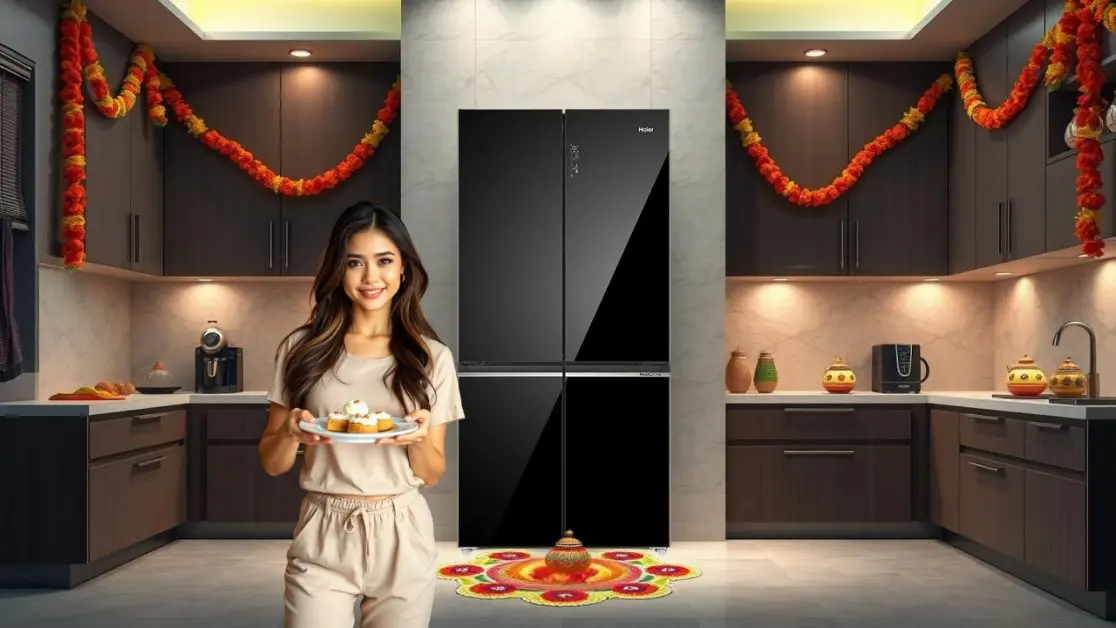
In urban homes where fridge space is always a battle between fresh veggies, party drinks, and ready-to-serve platters a multi-zone, odour-controlled, AI-cooled refrigerator is not a luxury.
It’s a hosting tool.
It means you can make malai in the morning without sacrificing its midnight taste. Or churn lassi after lunch and still have it glass-cold when guests arrive after sunset.
Final thought: the invisible host
Guests see the smile, the neatly laid table, the beautiful bowls of dessert.
What they don’t see is the invisible host of your refrigerator working quietly in the background, protecting every flavour note.
Because the truth is simple:
Perfect malai, rabri, and lassi aren’t just made in the kitchen. They’re kept perfect in the fridge.
And when that fridge happens to be smart enough to understand your rhythms, big enough to handle your feasts, and precise enough to protect your recipes, hosting stops being stressful and starts being joyful.