
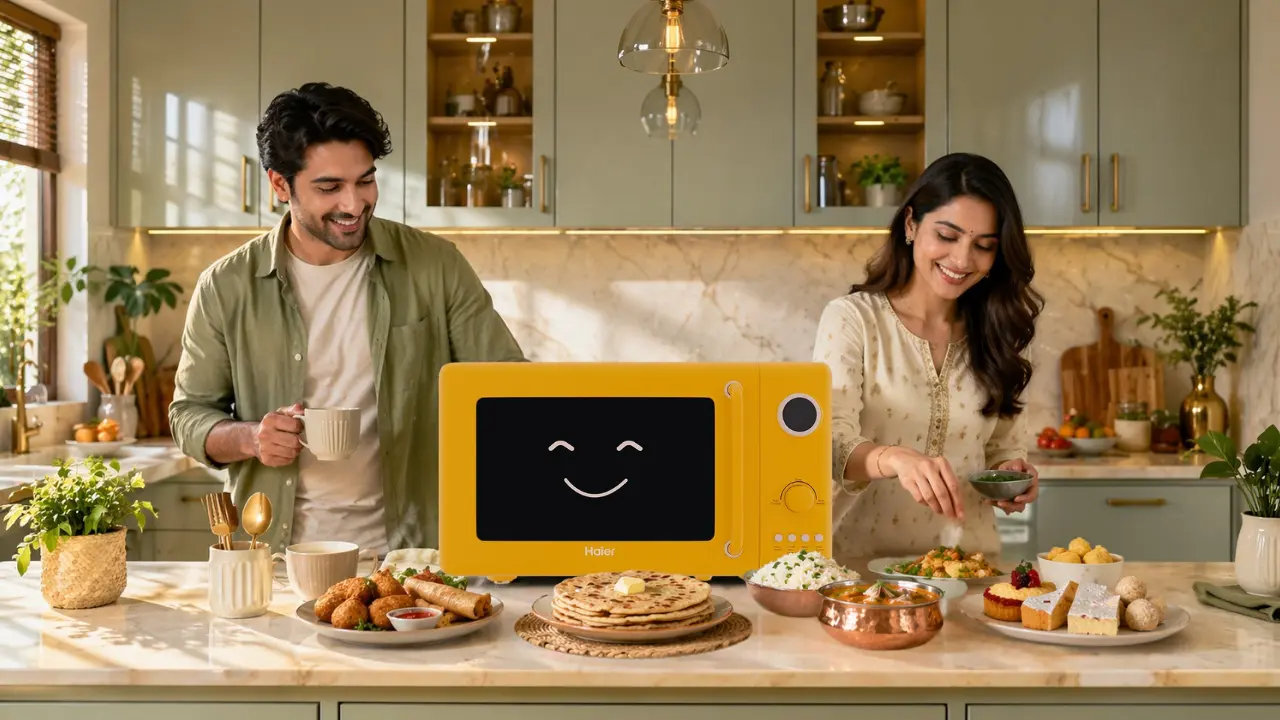

Kitchen appliances are becoming stylish because the kitchen itself has changed. It is no longer a hidden utility space.
It is a social, visual, and emotional centre of the home. As homes evolve, appliances shift from being tools to becoming design statements that blend function, identity, and lifestyle.
The kitchen is no longer just for cooking.
Walk into a modern Indian home on a Sunday morning.
Someone is making chai. Someone is on a video call. Someone else is plating breakfast for Instagram.
The kitchen is not a backroom anymore. It is a stage.
And when spaces become visible, everything inside them is expected to perform visually.
That includes appliances.
- Open kitchens are now standard in urban apartments
- 62% of new home buyers prefer integrated kitchen designs
- Social media has turned everyday spaces into shareable moments
The implication is simple.
If your kitchen is visible, your appliances cannot be invisible.
From Machines to Meaningful Objects
Earlier, appliances solved one problem. Cook faster. Cool better. Store longer.
Now they solve something deeper.
They help people feel good about their space.
Think of it like this.
A microwave is no longer just a heating device. It sits on your counter every day. It becomes part of your visual environment.
Which means design matters.
This is why you see products like:
- Haier Vogue 20L Lemon Solo Microwave Oven with Auto Cook Menus and Digital Display (HIL20V1MYPD)
- Haier Vogue 20L Peach Solo Microwave Oven with Auto Cook Menus and Digital Display (HIL20V1MOPD)
- Haier Vogue 20L Blueberry Solo Microwave Oven with Auto Cook Menus and Digital Display (HIL20V1MBPD)
These are not just appliances. They are visual elements.
- Multi colour finishes like blue, orange, and yellow give users design control
- Smiley glass doors add personality to everyday use
- Compact 20L capacity fits modern urban kitchens
This shift tells you something important.
People do not just buy appliances. They buy how those appliances make their homes feel.
Why Style Is No Longer Optional
There are three forces quietly shaping this change.
1. Smaller homes demand smarter aesthetics
Urban homes are getting compact.
Which means fewer walls. More shared spaces.
Appliances now sit in plain sight. On countertops. Against designer walls.
One option is to hide them.
The second option is to integrate them.
The third option is to celebrate them.
Most modern households choose the third.
Because hiding is difficult. Integration is expensive. But style is accessible.
2. Millennials and Gen Z buy differently
This generation does not separate function from aesthetics.
They expect both.
- 70% of Gen Z consumers prioritise design when choosing home products
- Colour psychology influences purchase decisions
- Minimalism and personal expression coexist
They ask a different question.
Not “Does this work?”
But “Does this fit my life?”
That question changes everything.
3. Appliances are long-term visual commitments
A refrigerator stays for years. A microwave sits in your kitchen every single day.
That is a long time to look at something.
Which means people choose appliances like they choose furniture.
- Does it match the wall colour?
- Does it complement lighting?
- Does it feel premium or playful?
The cost of ignoring design is not financial.
It is emotional.
Living with something that works but does not feel right.
The Hidden System Behind Stylish Appliances
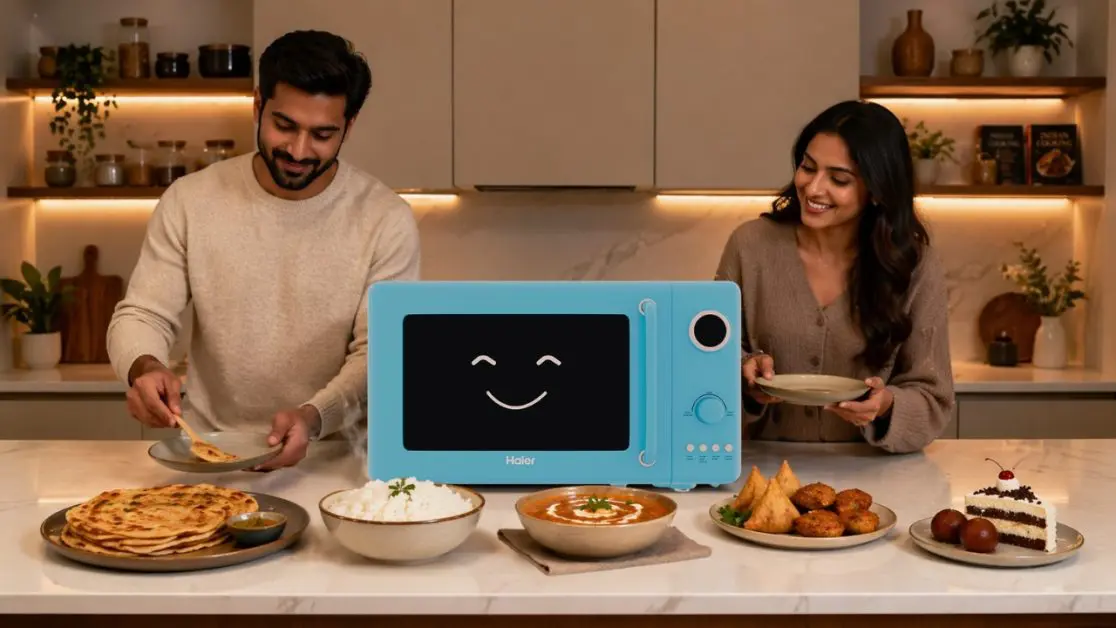
This is not just a design trend. It is a system shift.
Earlier system:
- Appliance design was engineering-led
- Focus on durability and function
- Neutral colours to fit all homes
New system:
- Appliance design is experience-led
- Focus on usability, aesthetics, and emotional connection
- Customisation through colours and finishes
What changed structurally
| Factor | Earlier Appliances | Modern Appliances |
| Design approach | Functional | Lifestyle-driven |
| Colour options | Limited | Multi-colour choices |
| User interaction | Mechanical | Intuitive and visual |
| Role in home | Utility | Identity |
The takeaway is clear.
When the system changes, the product changes.
Technology Is Enabling Better Design
Technology did something subtle.
It removed friction.
Modern kitchen appliances now include:
- Auto cook menus that handle time and power automatically
- Instant start features for quick use
- Jog dial controls for smoother interaction
When usage becomes simple, design becomes visible.
And that changes buying behaviour.
Style Is Becoming a Form of Personalisation

Look at how people design kitchens today.
Some go minimal.
Some go bold.
Some mix styles.
Appliances now participate in that choice.
One option is to match everything in neutral tones.
The second option is to create contrast with bold colours.
The third option is to mix styles intentionally.
Each choice has a cost.
- Neutral is safe but forgettable
- Bold is expressive but needs planning
- Mixed is unique but requires balance
The important shift is this.
Appliances are no longer background objects. They are design decisions.
The Instagram Effect Is Real
People share their homes now.
And kitchens are a big part of that.
- Kitchen design content dominates short-form video
- Aesthetic setups influence buying decisions
- Visual appeal drives engagement
This creates a loop.
Beautiful kitchens inspire purchases.
Purchases create more beautiful kitchens.
Appliances sit at the centre of this loop.
What This Means for Indian Homes
This trend is spreading fast.
Even beyond metro cities.
Why?
Because aspiration moves faster than income.
- Modular kitchens are becoming accessible
- Financing options reduce upfront cost
- Design awareness is increasing
The result is visible.
Homes look more intentional.
Not because they are bigger.
But because they are better designed.
How to Think About Stylish Appliances

If you are choosing kitchen appliances, think in systems.
Not in isolation.
A simple decision framework
- Define your kitchen role
Functional, social, or hybrid - Choose a visual direction
Minimal, warm, bold, or mixed - Decide appliance visibility
Hidden, integrated, or highlighted
Match your choice to your reality
- Compact kitchen
Choose sleek and minimal - Open kitchen
Choose visually strong appliances - Expressive kitchen
Choose colour-forward designs
This is not about trends.
It is about alignment.
The Bigger Insight
This shift is not really about appliances.
It is about how people relate to their homes.
We are moving from utility-driven living to experience-driven living.
From “What does this do?” to “How does this feel?”
And once that shift happens, everything changes.
Even a microwave.
The One Thing to Remember
When spaces become visible, design becomes inevitable.
The kitchen changed first.
Appliances followed.
And now, every object in your home is quietly asking the same question.
Do I just work?
Or do I belong?
Frequently Asked Questions
Why am I suddenly caring so much about how my kitchen appliances look?
Because your kitchen is now a visible, shared space not a hidden utility area. What you see daily affects how you feel daily.
Should I prioritise design or function when buying appliances?
Today, it’s not either/or. Modern appliances are expected to deliver both. Ignoring design often leads to long-term dissatisfaction.
I feel confused choosing between neutral and bold colours. What should I do?
Neutral is safe and blends easily. Bold adds personality but needs coordination. Choose based on how expressive you want your kitchen to feel.
Am I overthinking this, or do appliances really impact my home’s vibe?
You’re not overthinking. Appliances sit in plain sight every day they act like permanent decor elements.
Why do appliances now come in multiple colours and designs?
Because people want to personalise their homes. Appliances are no longer hidden; they’re part of your visual identity.
How do I match appliances with my kitchen style?
Start with your kitchen theme (minimal, warm, bold). Then choose appliances that either blend in or intentionally stand out.
What’s the best choice for a small urban kitchen?
Go for compact, sleek designs that don’t visually clutter the space.
Can appliances really reflect personality?
Yes. Colour, finish, and form all communicate mood playful, premium, minimal, or bold.