


What happens when your phone-sized battlefield suddenly turns into a wall-sized arena?
For Indian gamers, that’s not a fantasy anymore. It’s the reality of moving from six-inch screens to 98-inch canvases where every frame, every shadow, every step feels larger than life.
Think of BGMI on a smartphone. You’re squinting at the corner, trying to spot an enemy hidden in the grass. Now picture the same moment on a 249 cm QLED screen. No missed detail. No eye strain. Just a living, breathing map in your living room.
A small screen makes you play the game. A large screen makes you live it.
Why size suddenly matters in online gaming
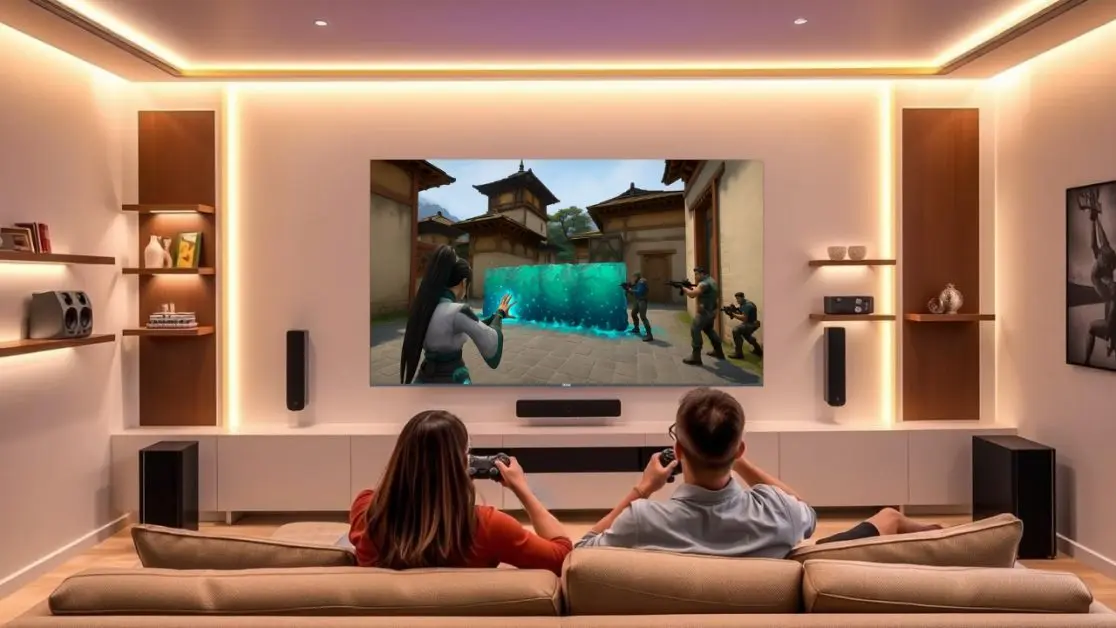
Gaming isn’t just a pastime anymore it’s a culture. From Valorant tournaments streamed on Discord servers to BGMI squads teaming up after dinner, Indian players want immersion, not just access.
And immersion starts with scale.
- Bigger visuals mean better awareness. In tactical shooters like Valorant, peripheral vision can decide who gets the headshot.
- Faster refresh rates decide pace. A 144Hz panel doesn’t just display the game; it keeps up with the reflexes of Gen Z gamers trained on milliseconds.
- Sound completes the picture. Hearing footsteps in PUBG on phone speakers is one thing. Hearing them in Dolby Atmos across your living room? An entirely different game.
A large-screen TV is no longer “for family movie nights.” It’s now a personal arena for India’s fast-growing community of competitive and casual gamers alike.
The hidden shift: from individual to collective play
Here’s what’s fascinating. On a phone, gaming feels solitary. On a giant screen, it becomes social.
- Friends pile into the living room for a Valorant stream.
- Parents see the skill, not just the screen time, when their kid explains BGMI rotations on a 98-inch display.
- Couples compete in co-op modes instead of scrolling on separate devices.
When the screen grows, gaming moves from the private corner to the shared stage.
Technology doesn’t just change how we play, it changes who plays with us.
Where Haier fits into this story
Not all big screens are created equal. For gamers, specs matter as much as size. That’s where the QLED 249cm (98) Google TV 144Hz – 98S9QT steps in.
- 144Hz + MEMC technology: Smooth, blur-free motion for fast-paced shooters.
- Game Mode with VRR/ALLM: Reduced input lag, optimized graphics, and instant responsiveness when stakes are high.
- Dolby Vision IQ + Dolby Atmos: Visuals that adapt to your room lighting and audio that drops you right into the crossfire.
- Nanocrystal QLED tech: Vivid colors that make maps, skins, and environments pop like never before.
And because it’s a Google TV, it’s not just for gaming. Your Netflix, Hotstar, and YouTube binge lives right next to your ranked matches.
The bigger picture: India’s gaming moment
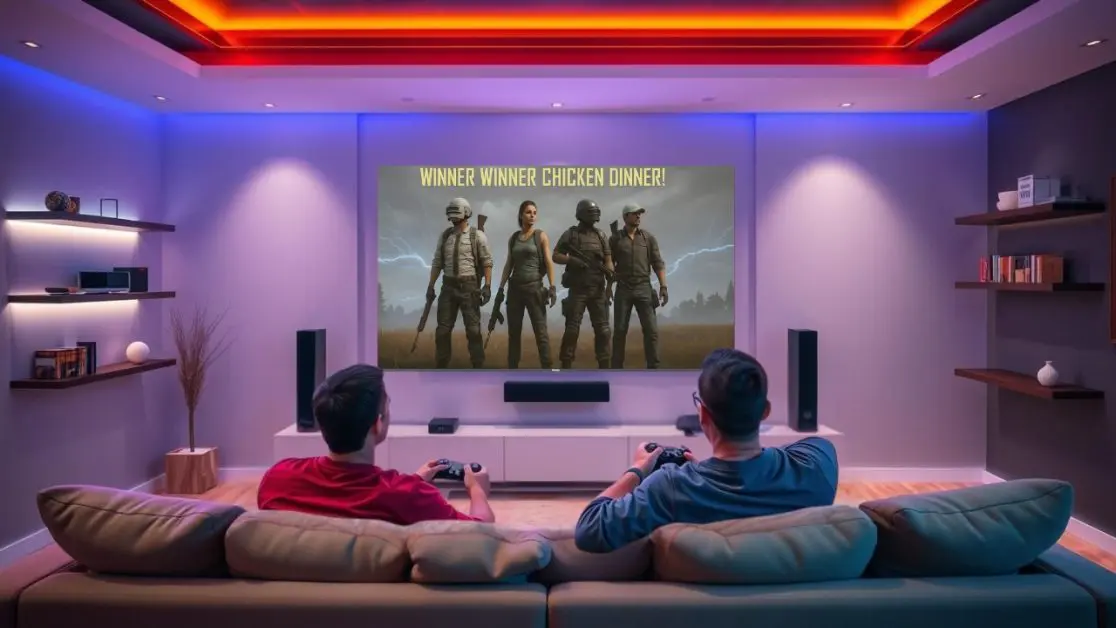
The timing couldn’t be more interesting. The Online Gaming Regulation Bill, 2025 is being tabled in the Lok Sabha. It promises a structured ecosystem encouraging e-sports while banning exploitative money games.
This means one thing: gaming is no longer on the fringes. It’s mainstream, regulated, and ready for living rooms in Delhi, Lucknow, Indore, and beyond.
Large-screen TVs like the 98-inch QLED aren’t just entertainment devices. They’re the new stadiums bringing tournaments, teams, and personal gameplay into the heart of Indian homes.
So, what does this mean for gamers like us?
- A phone will always be handy.
- A PC will always be precise.
- But a large-screen TV gives something neither can: collective immersion.
It’s the difference between playing a song in your headphones and hearing it live at a concert. Same notes, different world.
From BGMI squads to Valorant lobbies, the future of gaming isn’t just faster or sharper it’s bigger. Literally.
And in Indian homes where screens already anchor cricket nights and movie marathons, the next logical upgrade is clear:
A screen that’s big enough, fast enough, and smart enough to keep pace with the country’s gamers.