
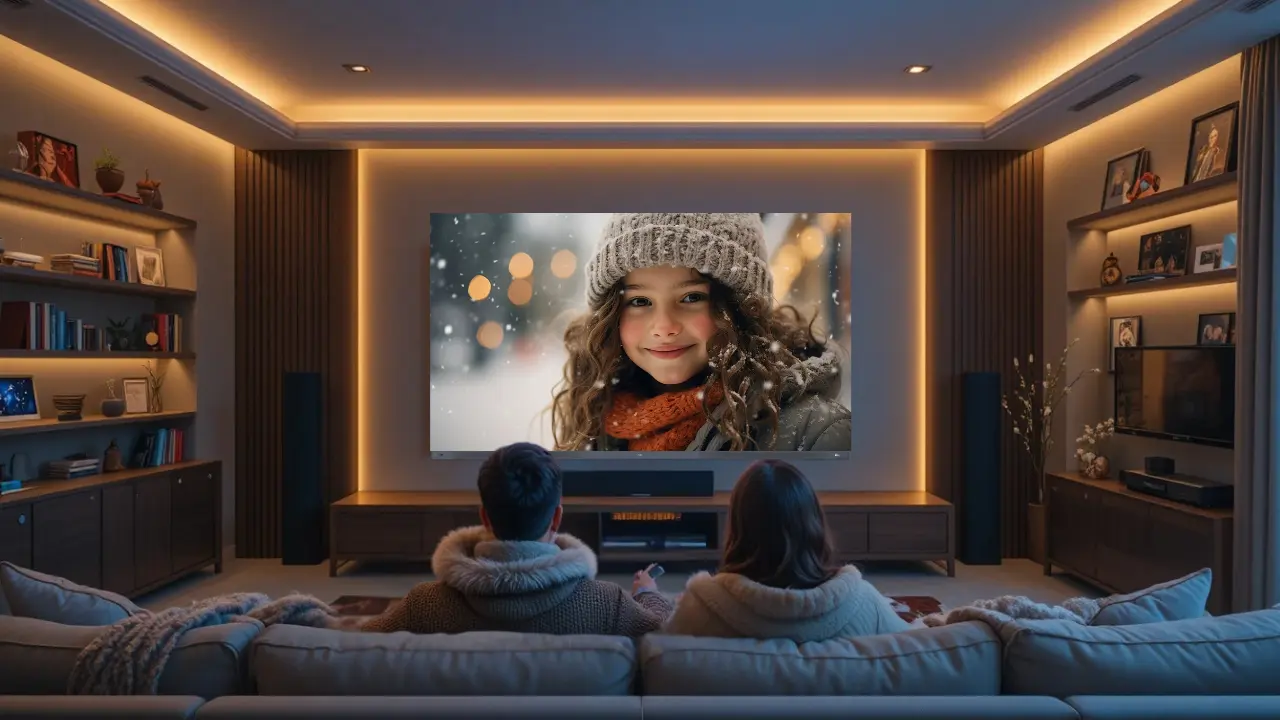

The biggest living room trend this December is the shift toward experience-first spaces.
Indian households are turning their living rooms into multi-use zones for entertainment, rest, work, and family time. The goal is simple. A room that adapts to you rather than the other way around.
Why This Trend Appears Now
Something interesting happens every December in India.
Life starts slowing down just enough for us to notice the little things. Shorter evenings. Cooler nights. Longer conversations. Festivals wrapping up. Cricket ramping up again. Families preparing for guests. Young professionals nesting after the chaotic monsoon.
The living room becomes the unofficial headquarters of the home.
And quietly, without anyone announcing it, a new question begins to shape how we design our space:
What if the living room did more for us than look good. What if it made life easier?
That question is driving this trend.
Because people are not chasing decor this year. They are chasing comfort, adaptability, and smarter routines.
A room that listens. A room that responds.
A room that feels like a soft landing at the end of the day.
The Rise of the Experience-First Living Room
Every home is experimenting with the same core idea.
Living rooms should work harder without looking cluttered.
Three patterns are emerging.
1. The Theatre-at-Home Setup
Families are upgrading their entertainment corner more than anything else. Not because they want a bigger TV. But because they want a better experience.
A good example is the shift toward Mini LED TVs. The reason is obvious once you see it.
- Brighter scenes that hold up against daylight
- Deeper blacks that make night scenes dramatic
- AI optimisation that fine-tunes colour and depth in real time
- Motion clarity that keeps sports crisp during fast bowlers and goal replays
This is where Haier’s new Mini LED range often becomes part of the conversation.
The H100M96FUX, for instance, uses an AI Ultra Sense Processor with real-time scene tuning, sharper contrast, and Dolby Vision IQ for ambient-light adaptation. The same model also brings KEF powered multi-layered sound and a 144 Hz display for sports and gaming perfection .
But the trend is not about the tech.
It is about what the tech enables.
Shared movie nights. High-definition memories. A place where grandparents and grandchildren watch cricket with the same excitement. A weekend escape without leaving home.
A living room becomes a theatre.
More importantly, a theatre becomes a family ritual.
2. The Calm Corner Movement
Not everyone wants entertainment front and centre. Some want their living room to feel like a quiet room after a busy day.
This has created a new design rule.
One seating zone must exist purely for pause.
What fills that pause varies.
A soft throw blanket. A floor lamp. Indoor plants. A warm rug. A reading chair. A side table that finally has space for a cup of tea.
The hidden logic.
Everyone wants one spot in the living room that expects nothing from them.
No productivity.
No performance.
Just stillness.
3. The Modular Everyday Space
This is the practical part of the trend.
Modern households live in layers. A living room is a gym at 7 pm, a workstation at 10 am, a dining room at midnight, and a kids play area every time you turn away.
This December, modularity is the real hero.
Homes are adding:
- Lightweight nesting tables
- Sofas with storage
- Foldaway seating for surprise guests
- Wall mounted TV units to free floor space
- Smart ACs that adjust to changing routines
Haier’s Gravity Series AC, for example, is one appliance that plays quietly into this trend. AI airflow adjusts itself based on room conditions, so the living room stays comfortable during guests, workouts, or long movie nights.
A room that adapts wins every time.
What Exactly Changed This Year
The shift did not come from design magazines.
It came from Indian behaviour.
Work-from-home periods taught us
that the living room needs to multitask.
Festive gatherings taught us
that seating must expand and contract on command.
OTTs taught us
That sound matters as much as storytelling.
Energy awareness taught us
that every appliance must be clever, not just powerful.
And all of it adds up to one truth.
A living room is no longer a room. It is a system.
A system that holds our routines, our families, our devices, our moods, and our seasons.
The better the system, the smoother the day.
The Three Zones Every Modern Living Room Now Has
Whether you live in a large family home or a compact city apartment, the trend settles into three clear zones.
1. The High-Definition Zone
This is the hero wall.
A Mini LED TV. Clean cables. Slim shelves. Neutral background. Good acoustics.
Why does it matter?
When visuals are sharp, everything feels intentional.
When the sound is clear, the room feels larger.
When the screen adapts to light, your eyes relax.
Haier’s H65M92FUX and H75M92FUX models use Dolby Atmos, HDR10+, and KEF sound to deliver an immersive experience even in bright rooms, thanks to high brightness levels and AI scene optimisation .
A good screen is not just a gadget.
It becomes the anchor of the room.
2. The Comfort Zone
This is where the winter blanket lives. The lamp that turns on with a warm 7 pm glow. The sofa that everyone fights for.
This zone teaches something important.
Your living room is emotionally charged real estate.
One warm corner does more for mental health than any scented candle.
3. The Utility Zone
Every home invents this zone differently.
Some use it for kids’ toys.
Some for charging devices.
Some for a yoga mat that never quite gets put away.
Some for small appliances that make life simpler.
This is where smart home integration quietly shines. Haier TVs, for example, double as control hubs since Google TV and HaiSmart make it easy to manage connected devices from one screen.
Utility stops feeling like clutter when it is organised.
How Indian Homes Are Styling Their Living Rooms This December
Soft Colours, Strong Stories
People are choosing calmer shades but bolder textures.
Beige rugs with charcoal sofas. Olive cushions with ivory curtains.
Winter light makes textures look richer and more intimate.
Warm Lighting Over Bright Lighting
Lights are no longer used to brighten rooms.
They now set moods.
Three lamps placed thoughtfully often beat ten ceiling bulbs running at full power.
Hidden Tech, Visible Ease
This trend is subtle.
People want advanced appliances, but they want them to disappear visually. Slim bezels, hidden cable management, and wall hugging designs are winning.
Haier’s zero gap and slim fit TV designs fit perfectly into this cultural shift where tech blends with the room instead of announcing itself.
Smarter Placement, Better Flow
Homes are rearranging furniture to open up movement.
Guests should be able to walk in and sit without navigating obstacles.
Families should be able to gather without moving half the room.
Flow determines comfort.
Comfort determines memory.
A Quick Comparison Table for This December Trend
| Living Room Goal | What People Are Choosing | Benefit |
| Better entertainment | Mini LED TVs, Dolby Atmos sound | Cinema effect at home |
| More comfort | Soft seating, warm lamps | Stress free evenings |
| More space | Modular furniture, wall mounted screens | Airier layouts |
| Energy efficiency | Smart ACs, power smart modes | Lower bills and smarter usage |
| Calmness | Plants, natural textures | Softer mood, better focus |
Why This Trend Resonates With Every Generation
Gen Z wants flexibility.
A room that adapts to streaming, gaming, home workouts, and weekend friends.
Millennials want balance.
A room that feels peaceful after work and lively on weekends.
Parents want practicality.
Less clutter. Safe corners. Strong appliances. Reliable routines.
Grandparents want simplicity.
Clear visuals, comfortable seating, and easy to operate tech.
One trend.
Four generations.
A single living room that works for everyone.
That is the beauty of experience-first design.
So What Does This Trend Really Teach Us
A living room is the emotional barometer of a home.
When it is organised, life feels smoother.
When it is warm, families bond faster.
When it is tech smart, downtime becomes meaningful.
And when it becomes a space that truly supports your habits, everything else feels a little lighter.
The December trend is not about new furniture or new televisions or new rugs.
It is about new intentions.
A living room that finally reflects how we actually live.
Not perfectly styled.
Not socially approved.
Just deeply lived in.
And that is what makes it beautiful.