

Long term savings on power bills come from appliances designed to use energy intelligently, not simply consume less electricity.
In modern Indian homes, smart compressors, inverter technology, and adaptive cooling systems reduce wasted energy while maintaining performance. The result is simple: lower monthly bills without sacrificing comfort, freshness, or convenience.
That is the short answer.
The longer answer begins in a moment many Indian households recognize.
The 9:30 PM electricity bill conversation.
Dinner is done.
Someone checks the electricity bill on their phone. The number looks slightly higher than expected.
The first reaction is predictable.
“Which appliance is using so much power?”
Fans spin slowly above the dining table. The refrigerator hums quietly in the kitchen. An AC cools the bedroom for the night.
None of them look excessive.
Yet together they shape the electricity bill every month.
Here is the quiet truth about energy in modern homes.
Electricity bills are not created by one appliance. They are created by systems running all day.
Refrigerators never switch off. Washing machines run several cycles every week. Air conditioners operate through entire summer nights.
Small inefficiencies multiply.
Over a year, those small inefficiencies become thousands of rupees.
This is why modern appliances are no longer built only for performance.
They are built for long term efficiency.
Why Long Term Energy Savings Matter More Than Purchase Price
Most appliance decisions begin with the price tag.
But the real cost appears later.
A refrigerator, washing machine, or AC may stay in the home for 10 to 15 years. During that time, electricity consumption often exceeds the purchase cost itself.
Consider this simplified comparison.
| Appliance Cost Factor | Low Efficiency Appliance | Energy Efficient Appliance |
| Initial Price | Lower | Slightly Higher |
| Electricity Usage | Higher | Lower |
| Monthly Power Cost | Higher | Reduced |
| 10 Year Ownership Cost | Significantly Higher | Often Lower |
The insight is simple.
The cheapest appliance today can become the most expensive appliance tomorrow.
Energy efficient appliances flip the equation.
Instead of spending more electricity every month, they quietly reduce energy consumption.
That difference accumulates year after year.
The Hidden System Inside Energy Efficient Appliances
Energy savings do not come from a single feature.
They come from multiple technologies working together.
Think of it like a well run kitchen during dinner prep. One person chops vegetables. Another cooks the dal. Someone prepares rotis.
Efficiency appears when each task flows smoothly.
Modern appliances follow the same principle.
1. Inverter Technology Reduces Energy Fluctuations
Traditional compressors operate like a switch.
They run at full speed. Then they stop completely. Then they start again.
Every restart consumes extra electricity.
Inverter compressors behave differently.
They adjust their speed based on actual cooling demand. When the refrigerator or AC reaches the desired temperature, the compressor slows down instead of switching off completely.
The benefit is clear.
- Less electricity spikes
- Stable cooling
- Lower long term power consumption
For example, appliances like the Haier 596L Regal Steel 2 Door Smart Convertible SBS Refrigerator (HRS 682WRSU1) use Expert Inverter Technology, which enables smart cooling while maintaining steady energy efficiency.
2. Smart Sensors Reduce Unnecessary Power Usage
Older appliances run on fixed settings.
Newer ones observe usage patterns.
Sensors detect temperature changes, door openings, food load, or laundry weight. The appliance then adjusts its operation automatically.
The impact appears in three ways.
- Less wasted electricity
- More precise cooling or washing cycles
- Longer appliance lifespan
Technology is not just adding features.
It is removing inefficiency.
3. Stabilizer Free Operation Protects Both Appliance and Power Bills
Indian homes often face voltage fluctuations.
Traditional appliances require external stabilizers, which consume additional electricity and add cost.
Modern refrigerators often include stabilizer free operation.
This offers three benefits.
- Protection from voltage fluctuations
- Reduced need for external devices
- Improved long term energy efficiency
The Haier side by side refrigerator, for instance, includes stabilizer free operation that protects the appliance while improving energy efficiency and extending its lifespan.
Three Everyday Habits That Influence Power Bills

Technology helps.
But household habits matter too.
Energy efficiency works best when appliances and users operate as a system.
Here are three common patterns seen in Indian homes.
One Option Is Continuous High Usage
Some households run appliances without considering timing.
ACs run even when rooms are empty. Washing machines operate with half loads. Refrigerators open repeatedly during cooking.
The cost is predictable.
Higher electricity consumption.
The Second Option Is Restricted Usage
Some households respond by limiting appliance usage.
ACs run only for a few hours. Washing machines operate once a week. Refrigerators stay overloaded to avoid multiple grocery trips.
The benefit is lower electricity usage.
But the tradeoff is convenience.
Life becomes slightly uncomfortable.
The Third Option Is Intelligent Usage
This is where modern appliances shine.
Energy efficient systems allow households to enjoy full comfort while controlling power consumption.
Examples include:
- Running ACs with inverter compressors that adjust power automatically
- Washing machines that detect load weight before deciding water and motor usage
- Refrigerators that maintain cooling with minimal energy fluctuations
Smart appliances do not restrict usage. They optimize it.
Why Refrigerators Play a Bigger Role Than We Realize
Among all household appliances, refrigerators consume electricity continuously.
They operate 24 hours a day, 365 days a year.
Even small improvements in efficiency can significantly affect power bills.
Consider these features found in modern energy efficient refrigerators.
Convertible Storage Improves Efficiency
Convertible refrigerators allow users to change freezer space into fridge space depending on need.
During festivals or large grocery purchases, more fridge space becomes useful.
When storage needs change, the appliance adapts.
This prevents unnecessary overcooling of unused sections.
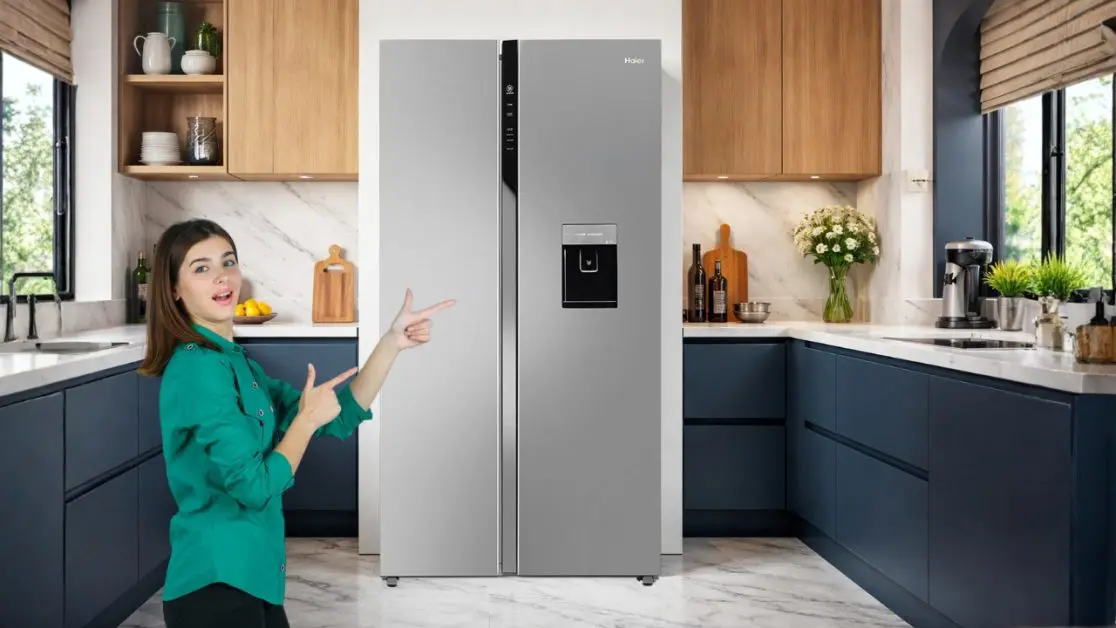
For example, refrigerators like the Haier 596L Smart Convertible SBS Refrigerator allow conversion between freezer and fridge spaces, offering flexible cooling while maintaining energy efficiency.
Advanced Cooling Maintains Food Freshness Longer
Food waste quietly increases electricity costs.
Spoiled food means additional refrigeration cycles and extra grocery purchases.
Technologies like Deo Fresh systems maintain hygiene and reduce bacterial growth inside refrigerators, helping food stay fresh for longer periods.
Fresh food lasts longer.
Which means fewer grocery trips and better storage efficiency.
The Economics of Smart Appliances
Let us simplify the math.
Imagine a refrigerator that saves 20 to 30 percent electricity compared to older models.
If a household spends ₹2000 per month on electricity, even a modest 10 percent reduction creates noticeable savings.
Over time, the numbers add up.
| Time Period | Estimated Savings (Example) |
| 1 Month | ₹200 |
| 1 Year | ₹2400 |
| 10 Years | ₹24,000 |
And this is just one appliance.
Multiply this across ACs, washing machines, and kitchen appliances.
Energy efficiency compounds like interest in a savings account.
Small monthly savings create a large long term impact.
The Real Reason Smart Homes Use Less Electricity
Technology often receives the credit.
But the real driver is something deeper.
Design.
Smart appliances are designed around a principle.
Efficiency should happen automatically.
The user should not need to think about electricity consumption every day.
When appliances quietly optimize power usage, households experience three outcomes.
- Lower electricity bills
- Greater convenience
- Longer appliance lifespan
Comfort increases while energy waste decreases.
A Small Insight About Modern Homes
Walk into a typical Indian apartment today.
You will notice something interesting.
Homes are getting smaller.
But appliances are becoming smarter.
This is not accidental.
Urban life demands systems that work efficiently within limited space, time, and energy.
And appliances are evolving to meet that reality.
The future of home appliances is not just about power. It is about precision.
Using exactly the energy required.
No more.
No less.
The Bigger Lesson Behind Lower Power Bills
Electricity bills teach a quiet lesson.
They reveal how systems behave over time.
Appliances that waste energy do not show their cost immediately. They reveal it slowly through monthly bills.
Appliances designed for efficiency behave differently.
They save small amounts every day.
Those small amounts accumulate silently.
Until one day the electricity bill arrives and something feels different.
Lower.
More manageable.
Less stressful.
That is the real goal of energy efficient design.
Not dramatic savings overnight.
But steady savings grow year after year.
And in modern Indian homes, that kind of quiet intelligence often makes the biggest difference.
Frequently Asked Questions
I’m confused. Should I spend more upfront on an energy-efficient appliance or save money now?
If you plan to use the appliance for 5–10+ years, energy-efficient models almost always cost less overall. The higher upfront price is offset by lower monthly electricity bills.
I always go for the cheapest option. Am I actually losing money long-term?
Yes, in many cases. Lower-cost appliances often consume more electricity, leading to significantly higher total costs over time.
How do I know if an appliance will actually save electricity or is it just marketing?
Look for inverter technology, smart sensors, and energy ratings (like BEE stars in India). These directly impact real energy savings.
I’m setting up a new home in India. How should I balance the budget vs long-term electricity savings across appliances?
Prioritize energy efficiency in appliances that run frequently or continuously (refrigerator, AC). These have the biggest impact on your bill over time.
What does inverter technology actually do in simple terms?
It adjusts power continuously instead of turning on/off repeatedly, reducing energy spikes and saving electricity.
Are smart sensors really useful or just extra features?
They’re crucial, they detect usage (like load, temperature, door opening) and prevent unnecessary energy use.
What is stabilizer-free operation and why should I care?
It protects appliances from voltage fluctuations without needing an external stabilizer, saving both energy and cost.
Do convertible refrigerators actually save electricity?
Yes. They prevent overcooling unused sections by adapting storage space based on your needs.