


Love, in real homes, looks like warm food made quickly.
Not the kind plated for applause. The kind that arrives just in time. When energy is low. When the day has been long. When hunger and tiredness show up together.
In modern Indian households, love rarely announces itself.
It just shows up warm.
This is a story about that kind of love.
The everyday kind.
The practical kind.
The kind that understands time is tight but care still matters.
Why does warm food still feel like love?
Warm food does something no notification ever can.
It slows the body down.
It reassures the mind.
It tells you that someone, somewhere, thought ahead.
In Indian culture, warmth has always been an emotional currency. A hot roti. Fresh dal. Reheated sabzi that still tastes like yesterday’s effort.
The emotion has not changed.
The context has.
Homes are busier.
Days are fragmented.
Energy is rationed carefully.
And yet, the expectation remains. Food should be warm.
The invisible system behind everyday meals

Meals do not exist in isolation anymore.
They live between calendar alerts and commute times.
Between school drop offs and late work calls.
Between fatigue and recovery.
Most people are not cooking elaborate meals every day. They are managing a system.
That system looks like this.
- Cook once when time allows
- Store safely
- Reheat quickly when needed
This is not laziness.
This is modern household design.
Love adapts to constraints. Systems make that possible.
Speed as an act of care
There is a strange belief that effort equals time spent.
It does not.
Effort equals intention.
When someone heats food quickly, evenly, and without fuss, they are not cutting corners. They are protecting energy for what matters next.
Think of familiar moments.
- A parent reheating breakfast before the school bus honks
- A couple sharing last night’s leftovers after a draining commute
- A solo professional choosing home food over another delivery app order
In each case, speed enables nourishment.
Quick does not mean careless.
Quick means thoughtful under pressure.
What actually makes food feel loving
It is not complex.
It is not a novelty.
Food feels loving when it is:
- Warm enough to comfort
- Ready when hunger hits
- Familiar in taste
- Easy to share
The emotional payoff comes from reliability, not extravagance.
That is why systems matter more than recipes.
Why reheating is no longer a compromise
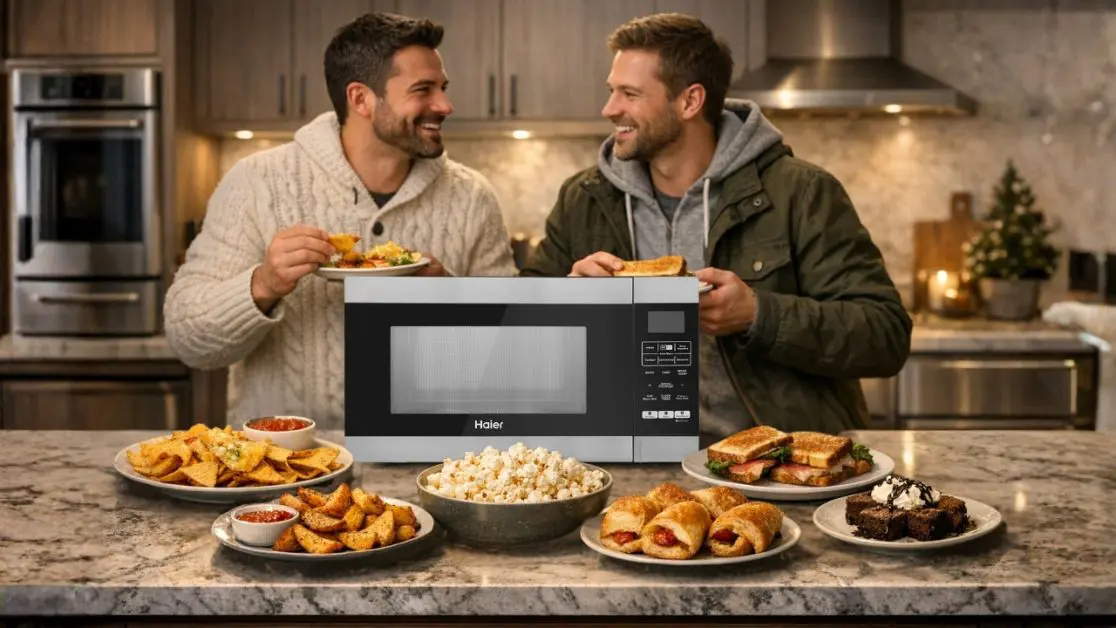
Reheating used to feel like settling.
It no longer does.
In modern homes, reheating is a strategy.
It helps households:
- Reduce food waste
- Save money
- Avoid daily decision fatigue
- Maintain eating routines
Urban household data consistently shows that leftovers now form the backbone of weekday meals, especially in dual income families.
The goal is not to vary every day.
The goal is continuity.
Warm food made quickly supports that goal.
Three ways homes manage everyday warmth
Most households fall into one of these patterns.
Option 1: Cook fresh every time
- Emotionally satisfying
- Time intensive
- Hard to sustain daily
This works when schedules are flexible.
Option 2: Depend on outside food
- Convenient in the moment
- Expensive over time
- Less control over nutrition
This works occasionally, not as a system.
Option 3: Cook smart, reheat well
- Balanced effort
- Predictable outcomes
- Sustainable long term
This is where most modern homes settle.
It is efficient.
It is economical.
It still feels caring.
The quiet role of the microwave
Microwaves are often misunderstood.
They are not about speed alone.
They are about consistency.
A good convection microwave does something important.
It removes uncertainty.
- Food heats evenly
- Moisture is preserved
- Texture remains familiar
- Supervision is minimal
That reliability matters when meals happen between responsibilities.
The Haier HIL2501CBSH 25L Convection Microwave Oven with Bread Basket is designed around this exact reality. Features like a stainless steel cavity for even heating, 305 auto cook menus, combination cooking modes, and a dedicated bread basket exist for one reason.
To make warm food predictable.
Not impressive.
Just dependable.
Why dependable warmth changes habits
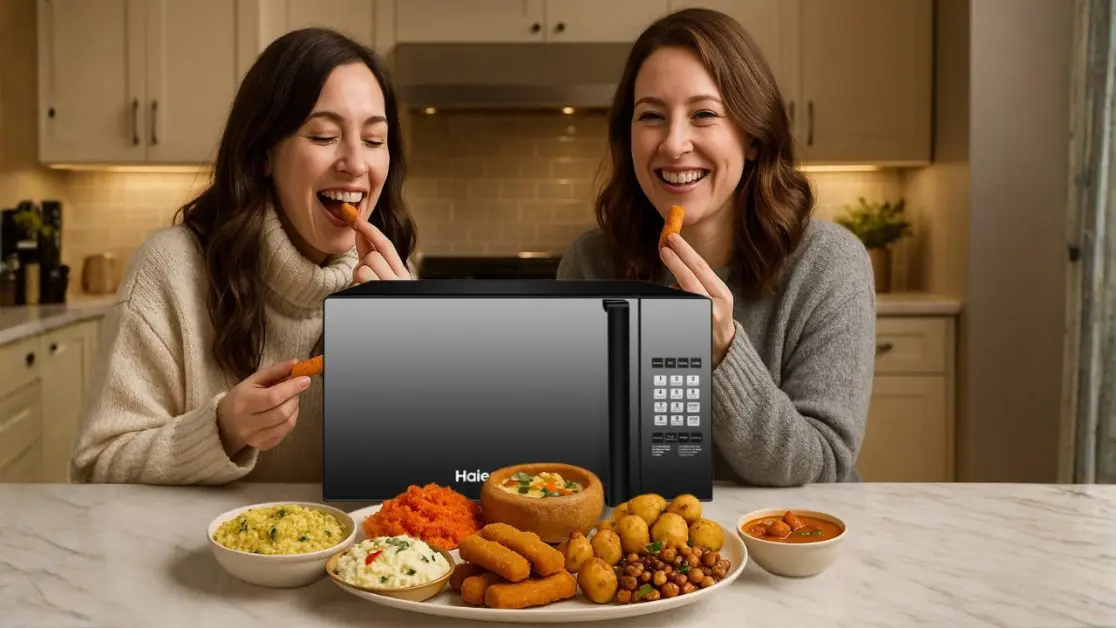
When heating food feels effortless, people eat at home more often.
That has ripple effects.
- Health improves gradually
- Food waste drops
- Grocery planning becomes simpler
- Evenings feel less chaotic
Effort is not removed.
It is redistributed.
Less time managing appliances means more time being present.
Warm food as emotional regulation
Warm food does more than feed the body.
It regulates emotion.
Psychological studies link warm meals to lower perceived stress and higher feelings of comfort, especially when shared. Warmth signals safety. It tells the nervous system that things are under control.
That is why even reheated soup can feel grounding after a long day.
It is not nostalgia.
It is biology.
How kitchens quietly adapt to modern love
Love today is logistical.
It lives in reminders and timers.
It lives in appliances that do not demand attention.
It lives in systems that work even when people are tired.
A convection microwave with oil free cooking options supports healthier routines.
A bread basket mode simplifies Indian staples like naan, paratha, and roti.
Combination cooking saves time without sacrificing results.
The Haier HIL2501CBSH 25L Convection Microwave Oven with Bread Basket fits neatly into this system. It does not ask households to change how they live. It adapts to how they already do.
That is what trust looks like in appliances.
The economics of warmth
Warm food made quickly is not just emotionally smart. It is financially smart.
Over a month, the difference is clear.
| Meal approach | Cost impact | Time impact |
| Daily takeout | High | Low |
| Fresh cooking daily | Moderate | High |
| Planned cooking plus reheating | Low to moderate | Low |
The third option wins consistently.
It saves money.
It saves time.
It preserves health.
That is why it scales across family sizes, cities, and lifestyles.
Why love needs systems, not grand gestures
Big gestures are memorable.
Systems are sustainable.
The most caring homes are not the ones that cook elaborate meals once a week. They are the ones that ensure warm food shows up every day.
That takes planning.
That takes tools.
That takes appliances that work quietly in the background.
Technology does not replace care.
It protects it from exhaustion.
Warm food and future ready homes
Modern households think beyond today.
They think about energy usage.
They think about efficiency.
They think about longevity.
Oil free cooking supports long term health.
Efficient heating reduces electricity waste.
Multi function appliances reduce clutter and cognitive load.
A microwave that grills, bakes, reheats, and supports Indian breads reduces dependence on multiple tools.
That is not indulgence.
That is system design.
The larger pattern hiding in plain sight
Warm food made quickly is not about convenience.
It is about continuity.
It keeps routines intact during busy weeks.
It allows care to show up without burnout.
It makes nourishment reliable, even on hard days.
This pattern exists beyond kitchens.
At work.
In parenting.
In relationships.
The future belongs to systems that make care easier to deliver, not harder.
What this really means
Love will always exist.
What changes is how it shows up.
Today, love looks like food that stays warm without effort.
A kitchen that works with you, not against you.
An appliance that understands time is limited.
Warm food made quickly is not lesser love.
Love evolved.
It respects limits.
It values energy.
It still feeds people well.
And in modern Indian homes, that is exactly what love needs to do.
Frequently Asked Questions
Why do I feel so mentally exhausted just deciding what to cook every day?
Decision fatigue builds up when small daily choices (like meals) stack on top of work, family, and logistics. Planning once and reheating later reduces cognitive load.
Is it okay if I cook only 2–3 times a week and reheat the rest?
Yes. Many modern households use batch cooking as a system. It saves time, reduces stress, and still provides warm, nourishing food.
I feel guilty serving leftovers. Am I being lazy?
No. Reheating planned meals is strategic, not lazy. Care is about consistency and nourishment, not daily novelty.
How can I stop relying on takeout when I’m too tired to cook?
Create a reheating system, cook when energy is high, store safely, and use reliable appliances to heat quickly when energy is low.
Is reheated food still healthy?
Yes, when stored properly. Refrigeration within 2 hours and thorough reheating maintain safety and nutrition.
I left my dal out for 3 hours. Can I still reheat it?
Generally no. Perishable food left at room temperature too long can grow bacteria. When in doubt, discard.
Why does my reheated food turn dry or rubbery?
Uneven heating or moisture loss. Covering food and using controlled heating modes helps preserve texture.
How do I reheat roti or paratha without making them hard?
Use moderate heat and moisture control. Convection microwaves with dedicated bread modes improve results.
Why does my microwave leave cold spots in rice?
Uneven distribution or insufficient stirring. Pause mid-cycle and mix for even heat.
How do I stop food from splattering while reheating?
Cover dishes loosely with microwave-safe lids to retain moisture.
My reheated food tastes metallic. Why?
Check for incompatible containers or cavity wear.