
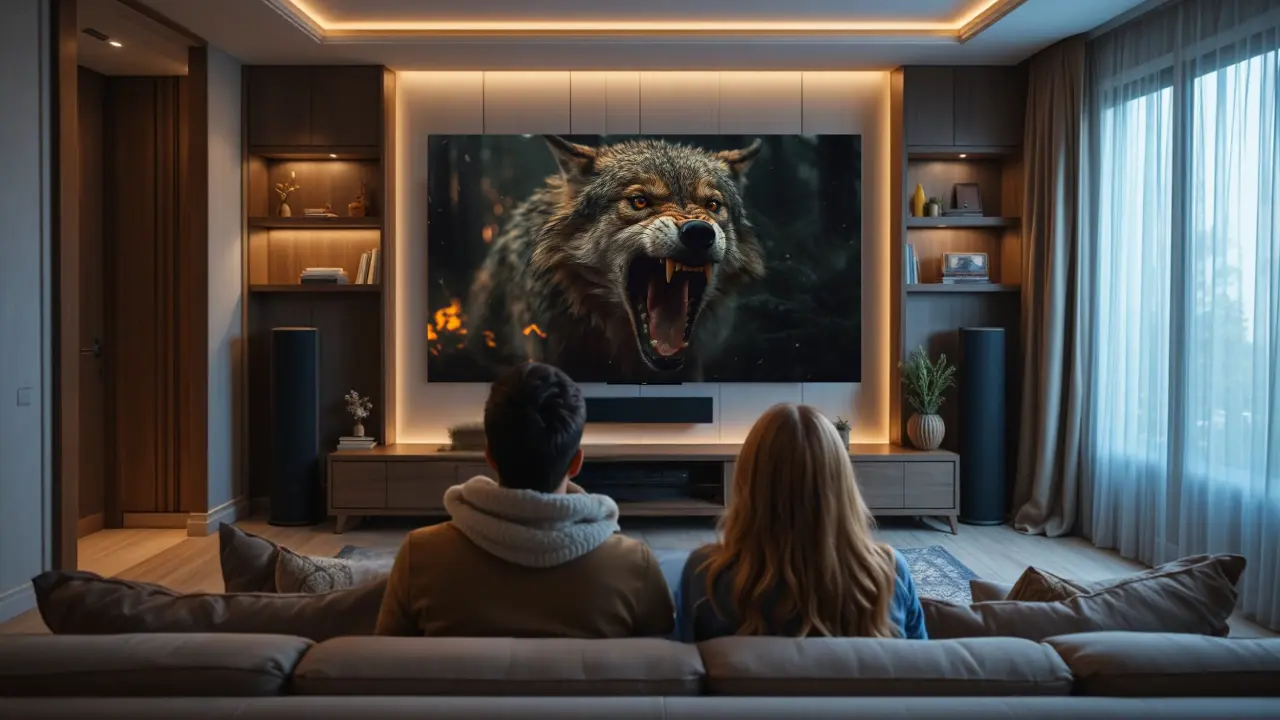

Low Blue Light Mode helps you binge watch safely in winter by reducing eye strain, maintaining natural sleep rhythms, and making long evening viewing sessions easier on the eyes.
When combined with smart picture technologies like ambient light optimisation, OLED pixel dimming, and motion clarity, it allows Indian homes to enjoy extended screen time without fatigue or visual discomfort.
Winter evenings quietly reshape our screen habits
Winter does not announce itself loudly.
It arrives through earlier sunsets. Closed curtains. Sofas that feel warmer after dinner. And screens that switch on sooner than planned.
In Indian homes, winter evenings are not rushed. They stretch. One episode turns into a series. One match flows into highlights, analysis, and social media clips. Families sit longer. Individuals settle deeper.
This shift is natural.
What changes is not how much we watch, but how the screen interacts with our eyes once the room light drops.
That is where strain begins.
Why winter makes screens feel harsher than usual

Blue light exists all year. The problem is contrast.
In winter:
- Ambient light levels are lower
- Pupils stay more dilated for longer
- Bright highlights feel sharper against dark surroundings
This makes prolonged viewing more tiring, even if the screen itself is not brighter than usual.
According to vision research referenced by global ophthalmology associations, extended exposure to blue-heavy light sources in low-light environments increases eye fatigue and disrupts melatonin production.
Winter does not cause screen fatigue.
It amplifies it.
Low Blue Light Mode is not about dimming the experience
Many people assume Low Blue Light Mode simply lowers brightness.
That misses the point.
A well-designed Low Blue Light Mode selectively reduces high-energy blue wavelengths while preserving clarity, colour balance, and contrast.
Think of it like adjusting lighting in a theatre.
You do not turn the lights off.
You soften them so the performance remains immersive without overwhelming the senses.
What a proper Low Blue Light Mode actually does
When implemented correctly, Low Blue Light Mode:
- Reduces eye stress during extended viewing
- Softens whites without yellow distortion
- Maintains colour accuracy for skin tones and scenery
- Keeps text and subtitles clear
The goal is comfort without compromise.
This is especially important in winter, when binge watching becomes habitual rather than occasional.
The hidden system behind visual comfort
Most people judge screens by brightness or resolution.
Eyes do not.
Eyes respond to relative contrast.
They compare the screen to the room, not to a spec sheet.
In winter, the room grows darker faster than the screen adjusts. That mismatch creates strain.
Low Blue Light Mode works by recalibrating this relationship.
The screen stops fighting the room.
It starts to belong to it.
That is the system at work.
Three ways Indian homes handle winter binge watching
Every household ends up choosing one of these approaches.
Option one: Ignore the discomfort
- Bright screen
- Dark room
- Longer sessions
This works until it does not.
Option two: Lower brightness manually
- Washed-out colours
- Reduced detail
- Dull viewing experience
Comfort improves. Enjoyment drops.
Option three: Use smart Low Blue Light technology
- Balanced visuals
- Reduced eye fatigue
- Picture quality stays intact
This is the sustainable choice.
Why OLED screens need smarter eye comfort features
OLED screens are designed for contrast. Deep blacks. Brilliant highlights. Cinematic depth.
In dark winter rooms, that strength can become intense.
Low Blue Light Mode paired with OLED pixel-level dimming allows highlights to stay vivid while reducing visual harshness.
This combination matters.
It keeps the picture immersive without exhausting your eyes.
How advanced TVs handle this intelligently
Modern TVs no longer rely on a single setting.
They use layered systems that respond to the environment.
On televisions like the Haier C90 OLED 140cm (55) Google TV with Dolby Vision IQ, visual comfort is supported by a combination of features working together rather than in isolation .
These include:
- OLED Pixel Dimming, which controls light at individual pixel level to prevent glare
- Dolby Vision IQ, which adjusts brightness and colour based on ambient room lighting
- HDR10+, which fine-tunes contrast scene by scene
- Energy Saving Picture Modes, which help maintain comfortable brightness during long viewing hours
- MEMC 120Hz motion technology, which reduces motion blur and visual strain during fast scenes
The result is a screen that adapts quietly as the room changes.
You do not feel the feature.
You feel the ease.
Why winter binge watching is different for families
Winter viewing is shared viewing.
Parents. Children. Grandparents. All in one room.
Different age groups process light differently.
- Younger eyes adapt faster
- Older eyes fatigue sooner
- Kids sit closer than advised
Low Blue Light Mode creates a middle ground.
It allows everyone to stay engaged without pushing anyone into discomfort.
That matters more than peak brightness ever will.
The sleep connection most people overlook
Blue light plays a role in alertness.
In winter, when nights are longer, suppressing melatonin becomes more noticeable.
Late-night binge sessions often lead to restless sleep, even when the content is relaxing.
Reducing blue light in evening hours helps the body transition naturally from viewing mode to rest mode.
It does not force discipline.
It restores rhythm.
Small changes that multiply the benefit
Low Blue Light Mode works best when paired with simple habits.
Helpful choices
- Keep a soft lamp on behind the TV
- Avoid complete darkness while watching
- Sit at a comfortable distance
Habits to avoid
- Maximum brightness in a dark room
- Falling asleep with the screen active
- Watching from very close range
These are not rules.
They are comfort multipliers.
Why professionals feel this more in winter
Working professionals already spend long hours in front of screens.
Laptops by day. Phones in between. TV at night.
In winter, that stack grows heavier.
Low Blue Light Mode does not reduce screen time.
It reduces the cost of screen time.
That distinction matters.
Comfort is becoming the real definition of premium
Earlier, premium meant sharper. Brighter. Bigger.
Now, premium means sustainable comfort.
People ask different questions today.
Can I watch longer without strain?
Does the screen adjust to my space?
Will I feel fine the next morning?
Low Blue Light Mode answers all three.
Quietly.
The bigger idea to take home
Winter encourages us to slow down.
Screens should respect that pace.
Low Blue Light Mode is not a feature you show off.
It is one you appreciate after hours of use.
When your TV adapts to the season, binge watching stops feeling like overuse.
It starts feeling intentional.
Comfortable evenings. Rested eyes. And entertainment that fits naturally into winter life, not against it.