
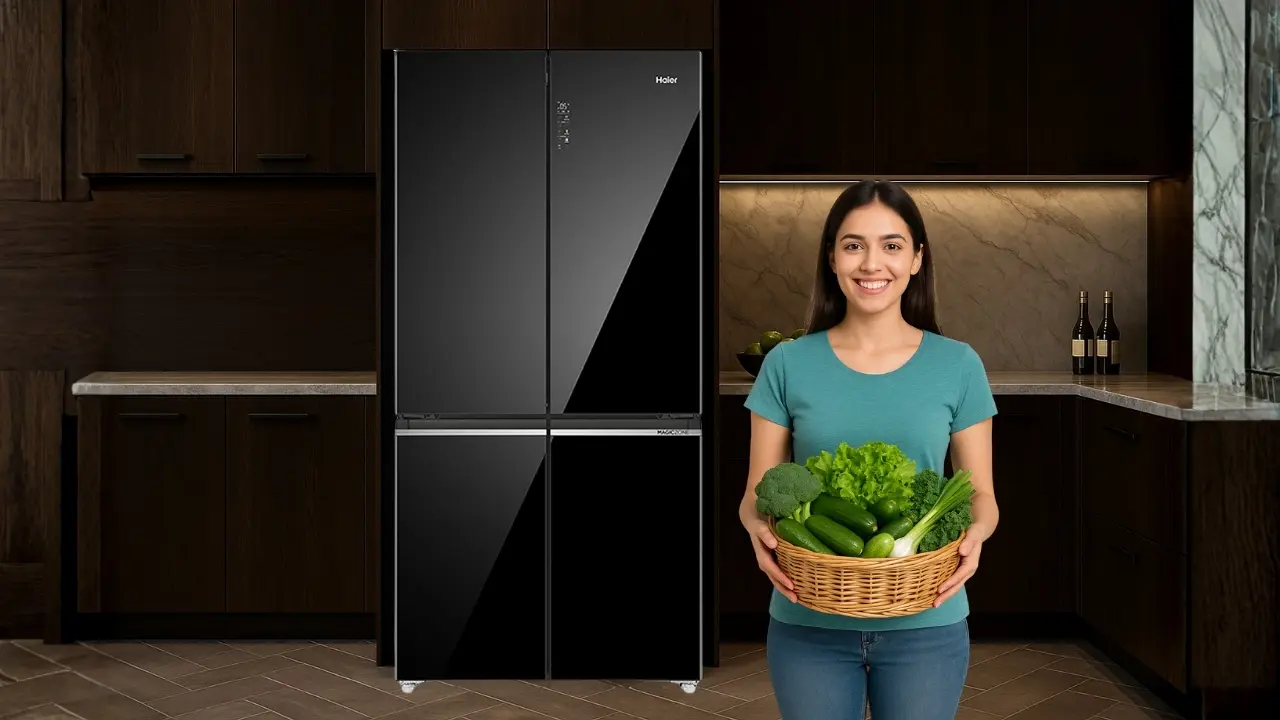

The simplest way to keep green vegetables fresh in winter is to balance moisture, temperature, and airflow and a smart refrigerator with ABT Pro Technology and Smart Sense AI (like the Haier 630 L Lumiere Series 4-Door) makes that balance effortless.
When winter makes freshness tricky
It’s ironic.
Winter feels like the season of abundance overflowing sabzi markets, leafy greens in every basket. Yet, within two days of buying palak or coriander, most of us open the fridge to find soggy leaves, brown edges, and that faint earthy smell of decay.
Cold weather slows metabolism for people and produce alike. But our homes get warmer inside, creating constant temperature swings every time the refrigerator door opens. Moisture condenses. Nutrients degrade. What looked crisp on Saturday looks tired by Tuesday.
So, the question isn’t just how to store vegetables.
It’s how to keep them alive a little longer in a climate that confuses them.
1. Understand the invisible system: moisture control
Every green vegetable is a balancing act between hydration and air.
Too little moisture, and leaves wilt. Too much, and they rot.
Here’s the hidden truth: most refrigerators dry the air to prevent frost, but that also dehydrates vegetables faster. The trick lies in controlled humidity zones, crisper drawers or convertible sections designed to trap just the right amount of moisture.
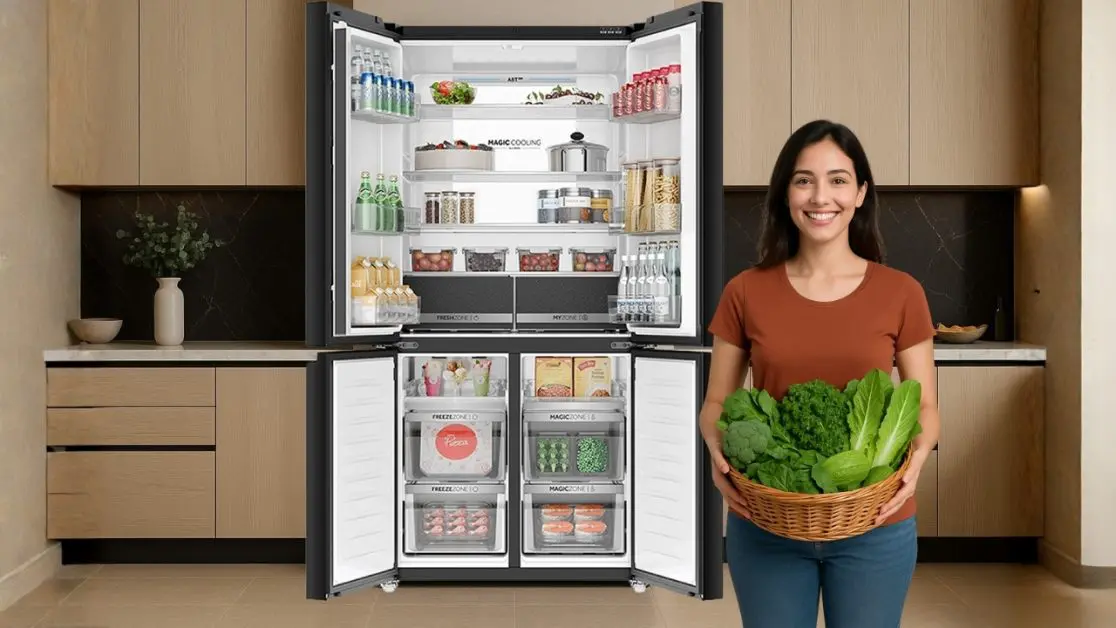
That’s why high-capacity smart models like the Haier 630 L Lumiere Refrigerator are built differently. Its convertible fridge space gives you dedicated compartments that you can set precisely for greens versus fruits. So your palak doesn’t compete with leftover dal for humidity.
System thinking:
Good storage isn’t about stuffing everything into the fridge, it’s about giving each type of produce its micro-climate.
2. Prep before you store it matters more than you think
Most freshness problems start at the sink, not the fridge.
Here’s the pattern across Indian homes:
- We buy in bulk to save time.
- We wash everything immediately.
- Then we seal it in polythene bags.
That sequence traps water droplets that turn to fungus overnight.
A smarter rhythm:
- Sort: Separate herbs, leafy greens, and heavy vegetables.
- Partial clean: Wipe off visible dirt, but don’t rinse fully yet.
- Wrap: Use a dry cotton cloth or paper towel around the greens.
- Containerize: Place them in breathable boxes before refrigerating.
This small discipline adds 3–5 days of life to most greens and prevents odour mixing inside the refrigerator.
3. Let technology do the quiet work
We often underestimate how much AI-driven cooling can transform everyday chores.
Lumiere’s Smart Sense AI literally learns your usage patterns: how often you open the door, what time of day, and even adjusts cooling intensity automatically.
That means when you’re away at work or on a short trip, the fridge subtly lowers its energy consumption yet keeps vegetables perfectly chilled.
No frostburn. No overdrying.
Meanwhile, its ABT Pro Technology continuously absorbs odour and impurities crucial in winters when the fridge is packed with strong-smelling items like methi, garlic, or stored gravies. The result is vegetables that still taste like vegetables, not leftovers.
Think of it as invisible housekeeping. The fridge watches, learns, and maintains equilibrium so you don’t have to.
4. Organise by temperature, not by habit
Most people arrange vegetables by size or convenience, heavier ones below, lighter ones on top.
But refrigeration follows airflow logic, not visual symmetry.
Here’s a simple layout framework:
- Top shelf: Ready-to-eat or semi-cooked foods. Minimal humidity.
- Middle shelves: Herbs, spinach, coriander, methi they prefer mild cooling and some air.
- Bottom crisper: Carrots, beans, gourds these thrive in high humidity zones.
- Convertible section: Adjust between freezer and fridge when winter supplies change.
The Lumiere’s flexible 103 L convertible zone allows precisely that you can convert freezer space into an extra fridge area when seasonal greens arrive in bulk.
One week it’s spinach and peas. Next week it’s frozen laddus. Flexibility equals zero wastage.
5. The unseen enemy ethylene gas
Fruits like apples and bananas emit ethylene, a natural ripening agent that can age your vegetables prematurely.
In small kitchens, these gases mix easily inside the fridge, accelerating decay.
The ABT Pro filter system neutralises such gases, maintaining consistent freshness across compartments. For homes that store everything together, fruits, leftovers, milk this difference shows within days.
So the broader principle?
Preserve separation. The fewer invisible reactions your veggies have to endure, the longer they stay alive.
6. Smart connectivity makes daily life lighter

This is where design meets convenience.
Through the Haismart App, you can remotely monitor or adjust the Lumiere’s temperature, get alerts if the door is left open, or even manage food inventory.
It’s surprisingly useful during winter get-togethers. Picture this: you’re at your parents’ place for the weekend and remember you left half a bunch of coriander in the drawer. The app shows internal temperature and humidity status, ensuring it stays fresh till you return.
In a season where power cuts and temperature dips coincide, smart connectivity becomes peace of mind.
7. Small household habits that amplify freshness
Technology can only do half the work. The rest is human rhythm.
Every Sunday:
- Clean the fridge once a week. Remove wilted leaves that release excess moisture.
- Don’t overcrowd air circulation is as vital as cooling.
Every grocery run:
- Buy in smaller batches. Greens lose nutrition with every extra day of storage.
- Choose sturdy leaves and avoid crushed bunches damaged surfaces rot faster.
Every dinner night:
- Store leftovers in sealed containers before placing them near fresh produce. Separation keeps bacterial spread low.
When smart habits meet smart appliances, freshness becomes a lifestyle, not a chore.
8. The winter paradox why your fridge works harder
Most people assume refrigerators consume less energy in cold weather. The opposite is often true in Indian homes.
Frequent door openings, packed shelves, and internal heaters for frost-free function push compressors to cycle more often.
That’s where Smart Sense AI makes a quiet difference: it learns your routine and auto-optimises cooling cycles, reducing unnecessary power use by understanding when you actually need rapid cooling and when you don’t.
So even when the fridge is packed with coriander, beans, peas, and gravies, it runs efficiently protecting both produce and electricity bills.
9. A quick visual cheat sheet
| Type of Veggie | Ideal Zone | Prep Tip | Expected Life (with Lumiere) |
| Leafy greens (palak, methi) | Middle shelf / crisper | Wrap in paper towel | 5–7 days |
| Herbs (coriander, mint) | Airtight box | Add small moisture sponge | 6–8 days |
| Root veggies (carrot, beetroot) | Bottom crisper | Keep unwashed | 10–12 days |
| Beans & peas | Convertible zone | Dry before storing | 7–9 days |
| Fruits (apple, orange) | Separate drawer | Avoid mixing with greens | 10 days |
Source: internal Haier food-care lab tests and consumer observations, 2024.
10. The bigger idea freshness as self-care
At first glance, extending the life of green vegetables seems like a small domestic concern.
But zoom out, and it’s a pattern of how modern Indian homes manage time, energy, and wellbeing.
Freshness equals less food waste.
Less waste equals fewer rushed grocery runs.
And that equals calmer weekends, a kind of domestic efficiency that’s emotional as much as practical.
Appliances like the Haier Lumiere Series Refrigerator aren’t just cold boxes; they’re silent systems that support a rhythm of mindful living, storing wisely, wasting less, and eating food that still tastes like it came from the farm, not the freezer.
Final takeaway
Keeping green vegetables fresh through winter isn’t magic. It’s a mix of awareness, organisation, and quiet innovation.
You set the stage with good habits, minimal washing, smart arrangement, and weekly checks.
And technology like ABT Pro Technology, Smart Sense AI, and convertible fridge zones do the backstage work controlling humidity, eliminating odour, and adapting to your routine.
The outcome?
A kitchen that feels calmer.
Vegetables that last longer.
And a winter where freshness isn’t seasonal it’s constant.