
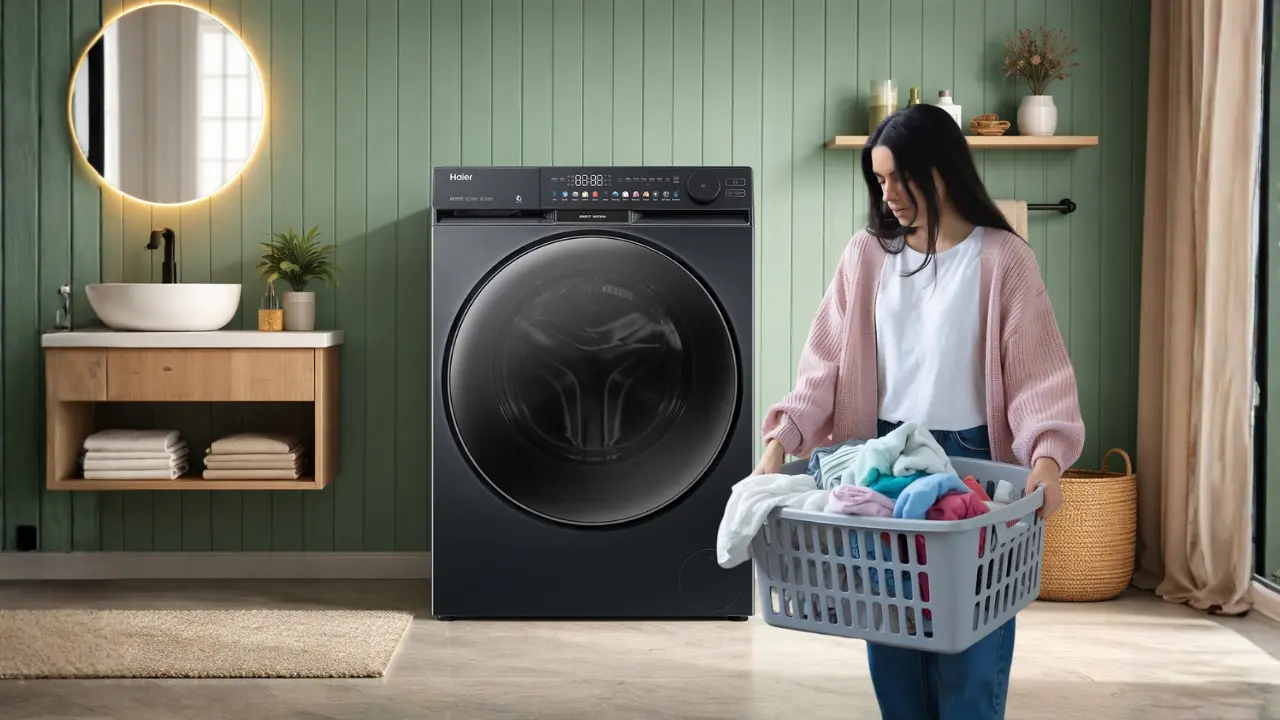

Manual wash settings belong to a time when machines expected humans to think for them. Today’s washing machines think with you.
Intelligent systems now sense fabric, load size, and dirt level automatically, adjusting water, time, and motion without guesswork.
The result is cleaner clothes, lower energy use, and fewer decisions in already busy lives.
It is a Sunday morning in an Indian home.
One person is sorting laundry. Another is making chai. Someone else is negotiating screen time.
And there you are.
Standing in front of the washing machine.
Dial in hand.
Wondering if this load needs more water. Less spin. Extra rinse. Gentle wash. Quick wash.
That moment feels small.
But it reveals something bigger.
Manual wash settings assume you have time, attention, and certainty.
Modern life offers none of those.
Manual control worked when life moved slower
There was a time when manual settings made sense.
Laundry happened once or twice a week.
The clothes were predictable.
Schedules were forgiving.
You learned the machine.
The machine did not teach you.
That system worked because life had fewer variables.
Today, Indian households look very different.
- Mixed loads with office wear, gym clothes, school uniforms
- Frequent washes instead of weekly routines
- Smaller homes with tighter energy budgets
- People juggling work, family, and recovery time
The environment changed. The machines had to follow.
The real cost of manual settings is not effort. It is an error.
Most people think manual settings fail because they are inconvenient.
That is only half the story.
They fail because humans are inconsistent.
Here is what usually goes wrong
- Overwashing
Too much water. Too long a cycle. Fabrics age faster. - Underwashing
Dirt remains. Smell lingers. Clothes go back in. - Energy waste
Long cycles for small loads. Hot washes when cold would do. - Decision fatigue
Small choices repeated weekly become mental noise.
According to appliance usage studies in urban India, washing machines account for nearly 10 percent of household electricity use, with inefficient settings being a major contributor. Manual control multiplies that risk.
Good intentions do not guarantee good outcomes. Systems do.
Why intelligence beats experience
Experience helps until conditions change.
A washing machine that relies on your past judgment assumes every load is similar.
It never is.
Modern machines work differently.
They observe.
They calculate.
They adapt.
Instead of asking you to decide, they ask better questions internally.
- How heavy is this load?
- How absorbent are these fabrics?
- How much dirt is present?
- What combination saves water without compromising cleanliness?
These are not emotional decisions.
They are mathematical ones.
And machines excel at math.
From knobs to knowledge
The biggest shift in laundry is not automation.
It is an interpretation.
Traditional machines did this
- Offered modes
- Waited for instructions
- Executed blindly
Intelligent machines do this
- Sense load weight
- Detect fabric mix
- Adjust water and time dynamically
- Learn from repeated use
This is the difference between a calculator and a spreadsheet.
One reacts.
The other understands patterns.
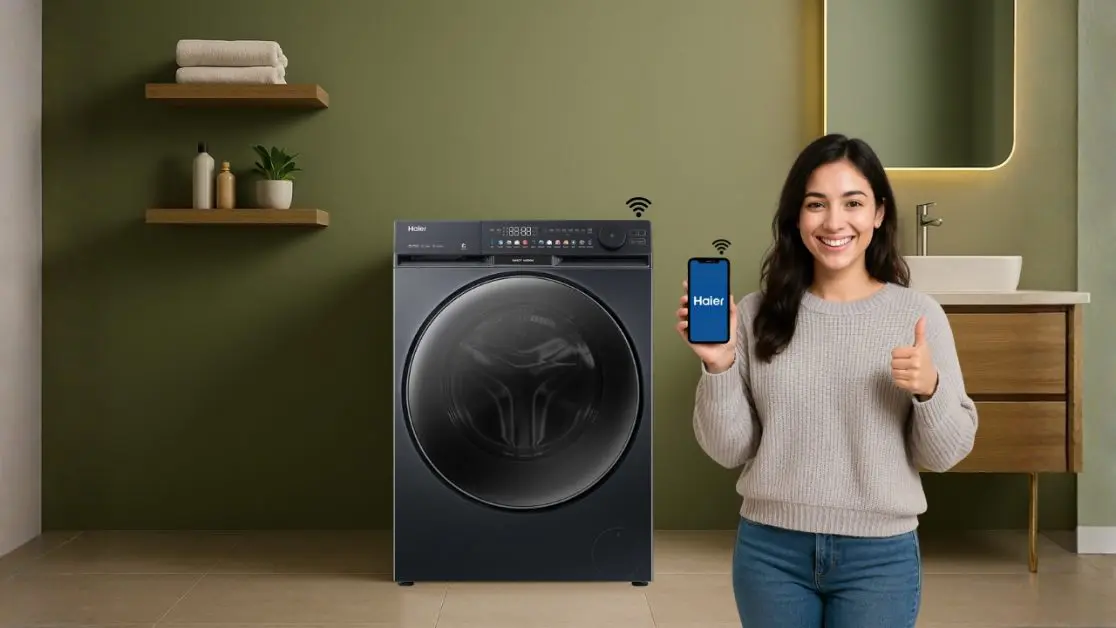
Haier’s One Touch AI Wash system works on this exact principle. With a single input, the machine automatically configures wash parameters based on real-time sensing rather than preset assumptions, reducing both overuse and underperformance .
The quiet revolution in Indian homes
This shift did not happen overnight.
It followed a familiar pattern.
First, people resisted.
Then they tried it.
Then they forgot the old way ever existed.
The same happened with:
- Automatic transmission in cars
- Smart navigation replacing printed maps
- Streaming replacing scheduled TV
Laundry is simply catching up.
When technology removes friction, habits follow.
Energy efficiency is no longer about discipline
Earlier, saving power required restraint.
Shorter cycles.
Lower temperatures.
Smaller loads.
That placed the burden on people.
Modern systems flip that responsibility.
They optimize energy without asking you to think about it.
Features like automatic weighing and Eco Wash adjust water and time precisely to match each load, achieving conservation through design, not sacrifice .
This matters in India, where electricity costs fluctuate and sustainability is no longer optional.
Efficiency that depends on memory fails. Efficiency that depends on systems scales.
Manual settings break down in mixed households
One washing machine.
Multiple users.
Parents.
Children.
Tenants.
Domestic help.
Everyone interacts differently.
Manual settings assume consistency of operator.
Modern homes do not offer that.
Intelligent systems standardize outcomes even when users change.
The machine becomes the stable element in a dynamic environment.
That is not convenient.
That is resilience.
The design shift people notice last
Interestingly, people first talk about features.
Then performance.
Then savings.
Design comes last.
But it matters deeply.
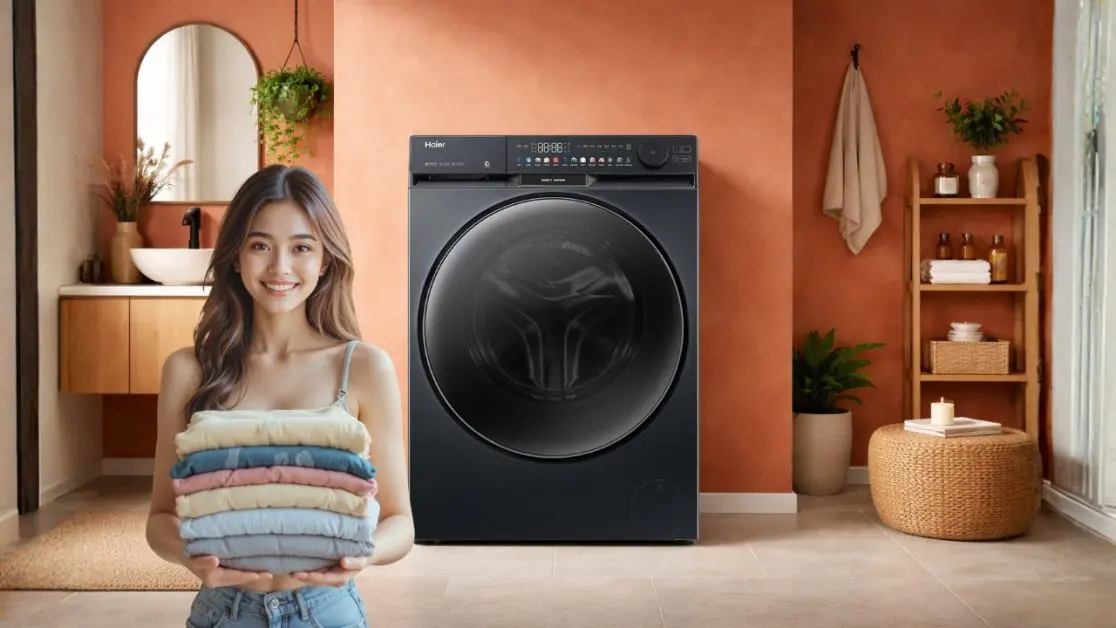
Clean interfaces.
Color touch panels.
Clear feedback.
They reduce intimidation.
They invite trust.
When a machine looks approachable, people use it correctly.
That is why intuitive displays are not cosmetic upgrades. They are behavioral tools.
A simple comparison
| Manual Wash Machines | Intelligent Wash Machines |
| User sets water and time | Machine calculates automatically |
| Fixed programs | Adaptive cycles |
| High chance of overuse | Optimized resource use |
| Relies on memory | Relies on sensing |
| Inconsistent results | Repeatable outcomes |
The table tells a quiet truth.
Control feels powerful. Accuracy is powerful.
What this means for new homeowners
Buying a washing machine is rarely an emotional decision.
Until it becomes one.
Because laundry sits at the intersection of time, effort, cost, and care.
For couples setting up a home, intelligent washing reduces early friction.
For working professionals, it protects time.
For families, it preserves clothes and energy.
The value compounds quietly.
Like good design always does.
The future does not ask you to manage machines
It asks machines to manage complexity.
Manual settings were built for a world with fewer variables.
That world is gone.
Modern appliances work best when they take responsibility.
When they remove decisions instead of adding menus.
When they respect human attention as a limited resource.
Laundry will never be glamorous.
But it can be invisible.
And invisibility is the highest form of service.
The insight worth remembering
Manual wash settings did not disappear because people became lazy.
They disappeared because systems became smarter.
The best technology does not give you more control.
It gives you better outcomes with less effort.
That is not progress.
That is respect for how people actually live.
Frequently Asked Questions
Why do manual wash settings feel so frustrating now, even though they used to work fine?
Manual wash settings were designed for a slower, more predictable life. Today, laundry happens between work calls, school runs, and recovery time. Manual settings demand attention, certainty, and consistency things modern life doesn’t offer. What feels like “control” is often just extra thinking at the wrong moment.
Can manual settings actually damage clothes?
Yes. Overwashing (too much water, long cycles) weakens fabric. Underwashing leaves dirt and odor behind. Both are common with manual guesswork.
Are manual settings less energy-efficient?
Yes. Small loads run on long cycles and unnecessary hot washes increase electricity and water use.
Did manual wash settings disappear because people became lazy?
No. They disappeared because systems became smarter.
The best technology doesn’t give you more control.
It gives you better outcomes with less effort.
Laundry may never be glamorous.
But when done right, it becomes invisible.
And invisibility is the highest form of service.