
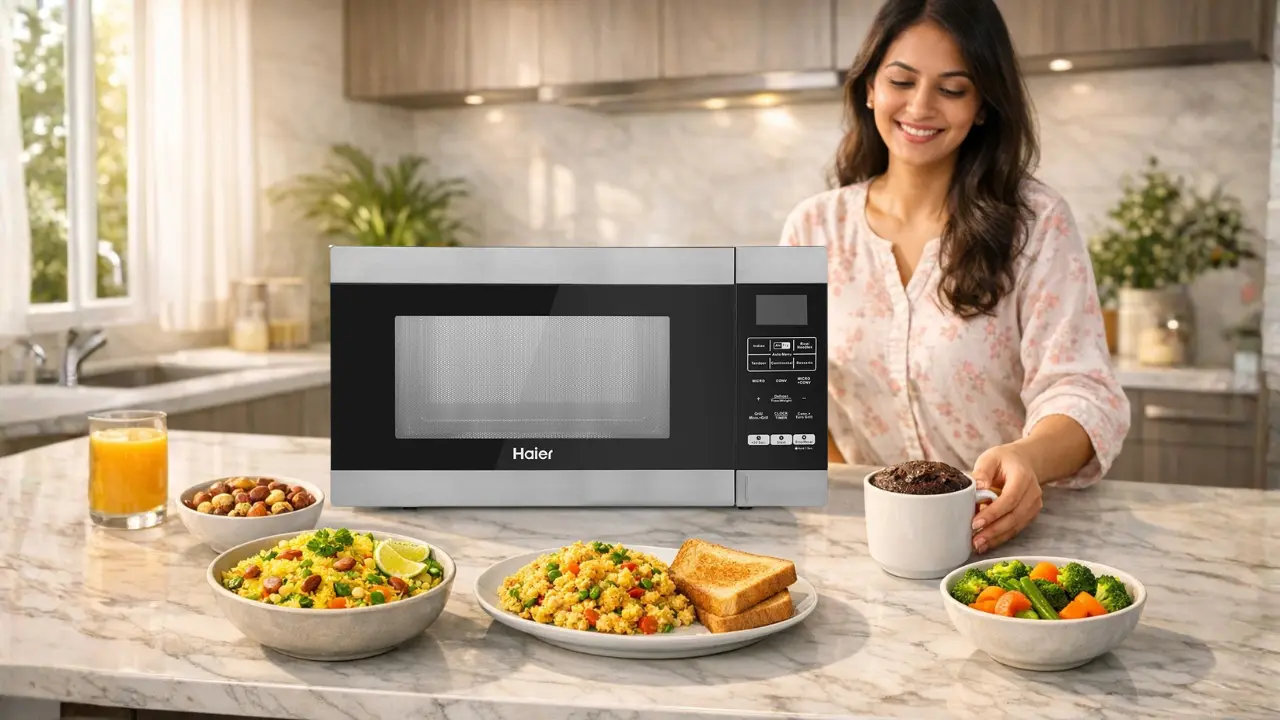

Microwave cooking feels easier in early summer because it reduces heat, saves time, and simplifies meal preparation when temperatures start rising.
Instead of standing near a hot stove, people can cook, grill, or reheat food quickly with minimal effort, making everyday meals lighter, faster, and far more comfortable during warm months.
Early summer quietly changes how Indian homes cook.
Winter meals are slow.
Heavy curries. Thick gravies. Long simmering.
But as March turns warmer, something shifts.
People want food that feels lighter. Kitchens that feel cooler. Cooking routines that feel easier.
And this is where microwave cooking suddenly starts making a lot more sense.
Not because it is new.
Because the season changes the equation.
The Kitchen Heat Problem No One Talks About

Early summer changes the physics of cooking
Picture a typical Indian evening in April.
The ceiling fan is on. Windows are open. The day still carries warmth from the afternoon sun.
Now imagine turning on a gas stove.
Within minutes the kitchen temperature rises.
Oil splutters. Steam fills the air.
Cooking becomes work.
Early summer exposes a simple truth:
Cooking methods that felt comfortable in winter suddenly feel exhausting in warmer months.
The human body reacts quickly to heat stress. According to the World Health Organization, prolonged exposure to high indoor temperatures can increase fatigue and reduce concentration.
Which means cooking style matters.
Microwave cooking solves a hidden seasonal problem.
It reduces ambient heat.
Why Microwave Cooking Feels Easier in Warm Weather
It solves three everyday problems at once
Microwave cooking feels easier not because it replaces traditional cooking.
It removes friction.
Here are the three systems it quietly improves.
| Kitchen Challenge | Traditional Cooking | Microwave Cooking |
| Heat in the kitchen | Gas flame heats the room | Minimal heat released |
| Cooking time | 20 to 45 minutes | Often under 10 minutes |
| Effort required | Constant stirring | Automated cooking |
Microwave ovens work using electromagnetic waves that heat water molecules inside food. This allows food to cook quickly without heating surrounding air significantly.
Which means the kitchen stays cooler.
And comfort changes behavior.
A Typical Early Summer Evening
The 7:30 pm decision many homes face
You return home after work.
The day has been warm.
You are hungry. But not for heavy food.
Three options appear.
- Cook a full meal on the stove
Time required: 30 to 40 minutes
Heat generated: high - Order food online
Time required: 30 minutes delivery
Cost: higher - Cook something quick in the microwave
Time required: 5 to 10 minutes
Effort: minimal
This is why microwave cooking grows popular during early summer.
Not because people stop cooking.
Because people start choosing simpler cooking systems.
The Rise of Fast Home Meals in Indian Cities
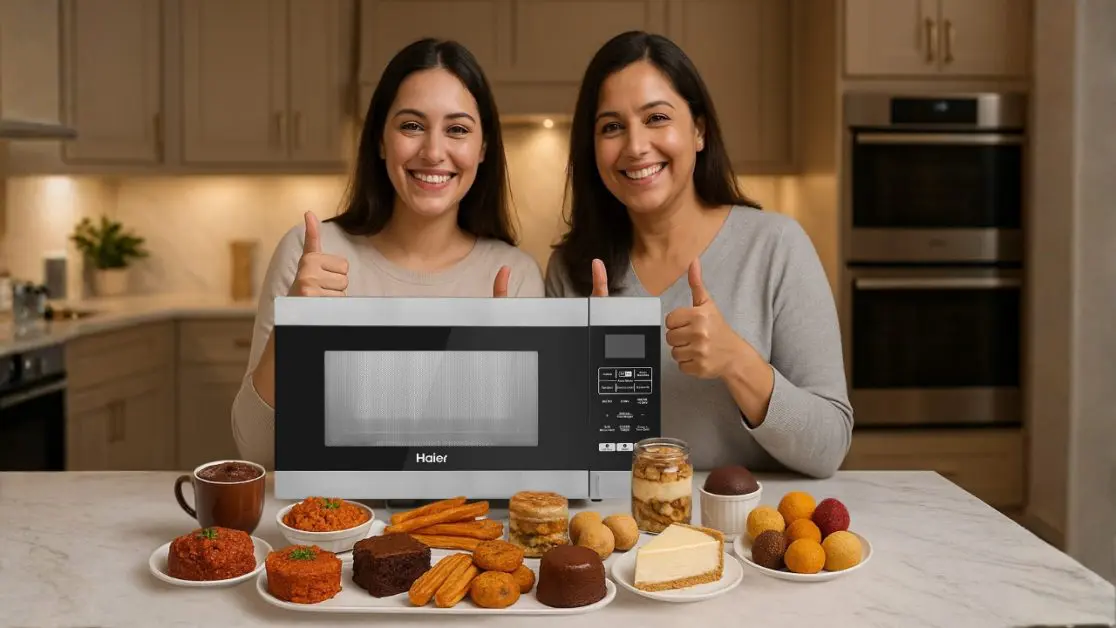
Convenience is becoming a daily priority
Urban India is changing fast.
Consider these shifts:
- India now has over 750 million internet users, driving massive food delivery adoption.
- Urban professionals often return home after 8 pm or later.
- Smaller apartments mean kitchens heat up faster.
Under these conditions, cooking methods that reduce time and heat gain value.
Microwaves fit perfectly into this pattern.
They turn cooking into a short task rather than a long process.
The Hidden Advantage of Convection Microwaves
One appliance. Multiple cooking methods.
Modern convection microwaves combine several technologies in one unit.
Take the Haier 30L Convection Microwave with In Built Air Fryer (HIL3001ARSB).
It includes features designed for everyday convenience:
- 36 air fryer menus
- 305 auto cook menus
- Motorized rotisserie for grilling
- Multiple power levels for different foods
Instead of switching between stove, OTG, and frying pan, one appliance manages multiple cooking styles.
The result is simpler kitchens.
And simpler kitchens reduce daily friction.
Early Summer Meals Are Naturally Microwave Friendly
The season itself encourages lighter cooking
Think about typical early summer meals.
They already align with microwave cooking.
Examples include:
- Vegetable poha
- Paneer tikka
- Steamed vegetables
- Egg bhurji
- Mug cakes
- Light pulao
- Roasted nuts
Many of these dishes cook quickly and require controlled heat.
Microwaves handle these tasks efficiently.
In fact, studies show microwave cooking can preserve nutrients effectively because of shorter cooking times and lower water usage.
That makes lighter meals both quick and nutritious.
The Three Ways People Use Microwaves in Early Summer
Different households solve different problems
Microwave cooking in early summer follows three common patterns.
1. Quick evening cooking
Example:
- Paneer tikka
- Omelette
- Vegetable bowls
These meals take under ten minutes.
Cost benefit
- Low effort
- Low heat
- Balanced nutrition
2. Light snack preparation
Example:
- Roasted peanuts
- Air fried sweet potato wedges
- Corn chaat
These snacks feel lighter than fried alternatives.
Many microwaves support oil free cooking modes, allowing food to be crisped with little or no oil.
Cost benefit
- Healthier snacks
- Less oil usage
- Quick preparation
3. Weekend experimentation
Example:
- Mug cakes
- Baked pasta
- Homemade pizza
Convection microwaves allow baking and grilling in the same appliance.
Some models combine convection, grill, and microwave functions to cook dishes up to 30 percent faster depending on the recipe.
Which turns the kitchen into a small creative lab.
Why Students and Solo Professionals Prefer Microwave Cooking
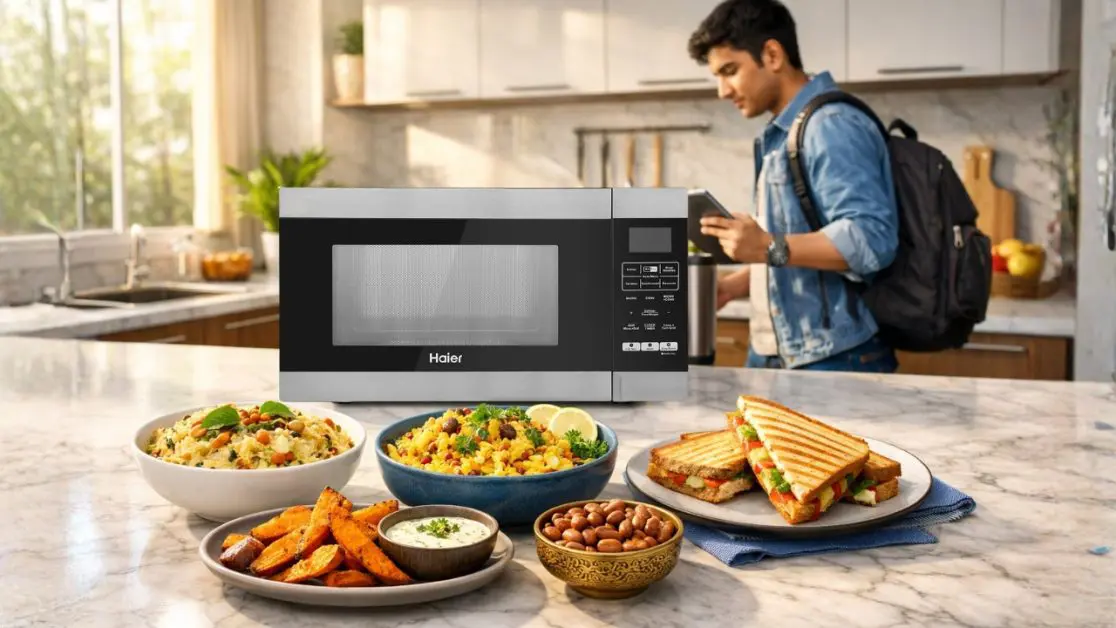
Smaller households need flexible cooking
Students and solo professionals often face a different challenge.
They do not cook large meals.
They cook small portions.
Microwaves support this perfectly.
A single bowl meal.
A quick egg dish.
A small dessert.
Done in minutes.
This flexibility explains why compact models like the Haier 20L Convection Microwave with Mirror Glass Design (HIL2001CSSH) include preset menus and digital controls that automate cooking decisions.
The appliance becomes a small assistant.
Not a complex machine.
The Psychology of Cooler Kitchens
Comfort shapes daily habits
People often assume cooking decisions are purely about taste.
They are not.
They are about comfort.
Consider this simple rule:
The hotter the kitchen feels, the more likely people are to avoid cooking.
This is why summer changes food behavior.
People seek:
- Faster meals
- Lighter food
- Minimal kitchen heat
Microwaves align with all three.
Which explains their seasonal popularity.
The Quiet Role of Smart Appliances in Modern Homes
Technology works best when it disappears
The best appliances do not demand attention.
They remove friction.
A refrigerator keeps ingredients fresh longer.
An AC maintains comfort during hot evenings.
A microwave simplifies quick cooking.
None of these tools feel dramatic.
But together they create a smoother daily routine.
Modern kitchen appliances are not about luxury anymore.
They are about systems that reduce effort.
Early Summer Is the Season of Simpler Cooking
The kitchen does not need to work harder
Every season changes how we live.
Winter rewards slow cooking.
Summer rewards simplicity.
Microwave cooking fits naturally into that shift.
It reduces heat.
It saves time.
It encourages lighter meals.
And sometimes the smartest kitchen upgrade is not a complicated one.
It is the one that quietly adapts to the rhythm of the season.
Because the truth about good technology is simple.
The best tools do not change your lifestyle.
They support the one you already live with.
Frequently Asked Questions
Why does cooking suddenly feel harder when early summer starts?
Early summer increases indoor temperatures, especially in small kitchens. When gas stoves run for long periods, they release additional heat that makes the cooking environment uncomfortable. As a result, people naturally start preferring faster cooking methods like microwave cooking that generate less ambient heat.
Why do I crave lighter meals as the weather gets warmer?
Warmer weather naturally reduces appetite for heavy, slow-cooked meals like thick gravies or deep-fried foods. People often prefer lighter meals such as vegetable bowls, paneer dishes, or steamed foods that cook quickly and feel easier to digest.
Why do I feel less motivated to cook during early summer evenings?
After a hot day, standing near a hot stove can feel exhausting. Heat fatigue reduces concentration and motivation, so many people prefer cooking methods that require less effort and time.
Why does microwave cooking suddenly feel more convenient in March or April?
Microwaves cook food quickly without heating the surrounding air much. During warmer months, this keeps the kitchen cooler and reduces cooking effort, making it feel easier and more comfortable.
How much time can microwave cooking actually save?
Many microwave meals take 5–10 minutes, compared to 20–45 minutes on a traditional stove. Reheating or simple dishes like poha, omelettes, or vegetable bowls can be prepared quickly with minimal supervision.
Why do microwaves feel easier to use after a long day at work?
Microwaves automate much of the cooking process. Instead of constant stirring or monitoring, users can select preset menus and let the appliance cook the food automatically.
Are microwaves only for reheating food?
No. Modern convection microwaves can grill, bake, roast, air fry, and cook full meals.
Why do urban professionals rely more on microwaves today?
Busy work schedules, late evenings, and smaller kitchens make quick cooking solutions more practical.