
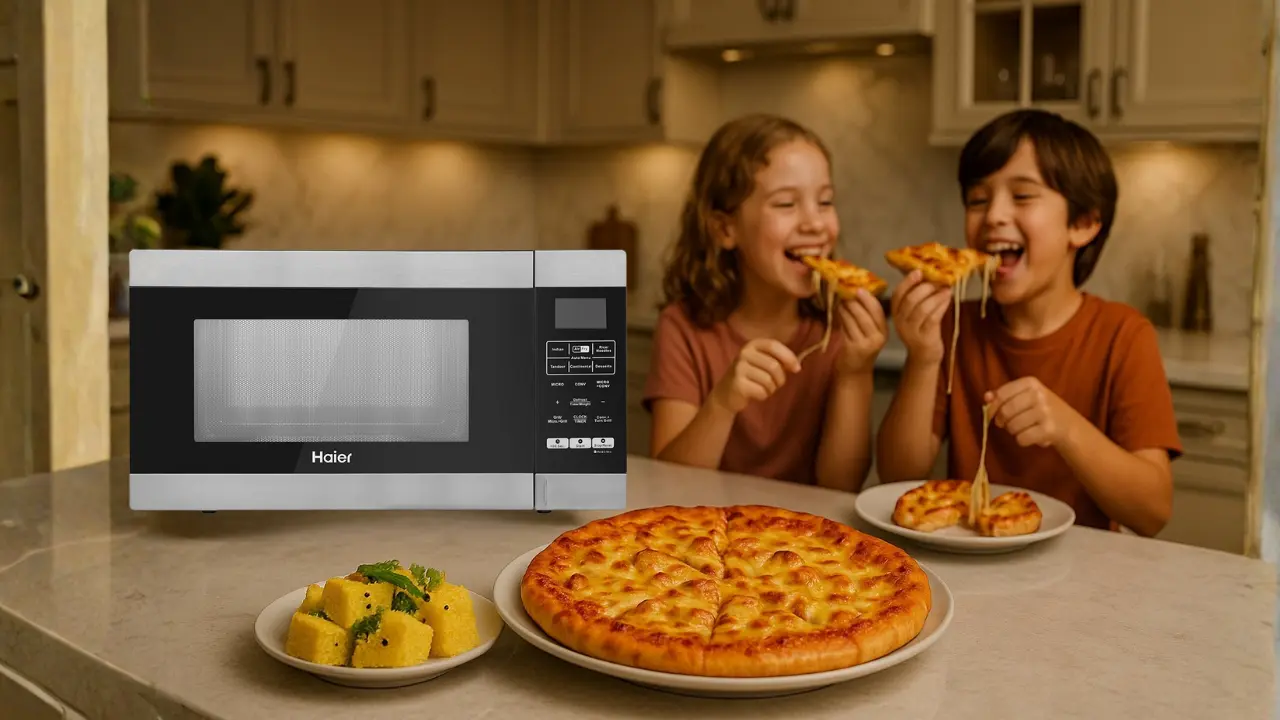

Yes, microwave cooking is safe for kids when used correctly.
Modern microwaves are designed with multiple safety layers, and when parents follow basic precautions, these appliances can become powerful allies in raising healthier, more independent eaters.
But let’s not stop at the short answer.
Because the real question Indian parents are asking isn’t just “is it safe?” it’s “how do I trust this device with the food my children eat every single day?”
That’s what we’re unpacking here.
Why Parents Worry About Microwaves

Parenting is already full of invisible negotiations.
- Is that screen time too much?
- Is this packet snack too processed?
- Is this shortcut I’m taking today shaping my child’s long-term health?
Microwaves often sit right in the middle of this debate.
Some parents picture radiation, nutrient loss, or uneven heating. Others worry about children reheating food unsupervised. And grandparents, especially in Indian homes, sometimes equate microwave cooking with “Western habits” , a departure from slow cooking on gas.
So, the kitchen becomes a quiet battlefield of questions.
What the Science Actually Says
Let’s get one thing out of the way: microwave ovens don’t make food radioactive.
They use electromagnetic waves to excite water molecules, producing heat that cooks the food. Think of it like friction, but at a molecular level. The heat is real but the radiation isn’t the scary kind.
Nutrition experts often point out something surprising: microwaves actually preserve more nutrients than boiling or steaming. Heat-sensitive vitamins like C and B12 degrade with prolonged cooking. Because microwaves cook faster, they lose less.
A 2023 review in the Journal of Food Science and Technology found that vegetables microwaved with minimal water retained up to 7x more antioxidants compared to boiling. That’s not a compromise. That’s an advantage.
Where the Risks Actually Lie

If microwaves are safe, why do parents still hesitate? The answer lies in usage, not technology.
Here are the three actual risks:
1. Burn hazards – Food can heat unevenly. A glass of milk might look lukewarm but contain pockets of scalding heat.
2. Container choices – Using plastic that’s not microwave-safe can leach chemicals into food.
3. Unsupervised handling – Children reheating without guidance may mishandle hot dishes or spill liquids.
Notice what’s missing? “Radiation damage.” Because that’s not a risk.
What Safety Looks Like in Indian Homes
Walk into a modern Indian kitchen today and you’ll see a rhythm forming.
- School tiffins being reheated in the morning rush.
- Dal-chawal from last night being warmed for a teenager after tuition.
- Milk warmed at just the right temperature before bedtime.
Microwaves have quietly become the tool that smooths over unpredictable schedules.
The safety question, then, is not “microwave or no microwave?” but rather “how do we use it wisely with kids in the picture?”
Five Smart Safety Habits Every Parent Can Adopt

1. Choose containers like you choose schools
Not every option is good. Stick to glass, ceramic, or microwave-safe labeled plastics. Avoid melamine and thin plastics.
2. Stir, don’t just serve.
Microwaves can leave hot spots. Stirring milk, curries, or porridge before serving equalises the heat.
3. Use the child lock
Most modern microwaves come with this feature. Haier’s 20L and 25L convection models include digital control panels where the child lock can be activated in seconds.
4. Teach age-appropriate independence
A 10-year-old can safely reheat a paratha on a plate. A 5-year-old should wait for you to serve.
5. Start with safer recipes
Instead of letting kids experiment with raw batters, guide them towards simple reheating tasks such as milk, popcorn, or pre-cooked idlis.
What This Means for Nutrition
There’s a hidden upside to microwave safety.
Because kids can reheat quickly and independently, they’re less likely to skip meals. A leftover sabzi-paratha reheated in 2 minutes is better than a packet of chips grabbed in hunger.
And with appliances like the Haier 25L Convection Microwave, which even has a bread basket function for naans and rotis, parents can diversify meals without making cooking feel like a chore.
Food safety and nutritional diversity both benefit when the microwave becomes part of the family routine.
How Indian Parents Are Already Using Microwaves Safely

Let’s zoom into three lived-in scenarios:
1. School mornings in Bengaluru
Ananya, a working mother, uses her Haier 20L microwave to reheat dal in 90 seconds before packing lunchboxes. She relies on the pre-set auto cook menu 66 options to keep variety alive.
2. Joint family evenings in Delhi
Here, the microwave is less about speed, more about fairness. Everyone eats at different times. A safe reheat ensures that the teenager’s pasta at 8 PM tastes as warm as Dadi’s khichdi at 6 PM.
3. Late-night snacking in Pune
Rohan, a 14-year-old, loves to make popcorn while studying. His parents set the microwave on the child lock after using boundaries built into the routine.
The patterns are clear: when parents set simple rules, microwaves don’t create chaos. They create flow.
Comparing Microwaves to Other Cooking Methods
Here’s a quick snapshot:
| Cooking Method | Speed | Nutrient Retention | Child Safety | Everyday Convenience |
| Gas stove | Slow | Medium | Risk of open flame | High (traditional) |
| Pressure cooker | Medium | High | Steam burns possible | High (bulk cooking) |
| Microwave | Fast | High | Safe with locks/containers | Very high (snacking, reheating) |
The microwave isn’t replacing traditional cooking. It’s filling gaps those methods can’t.
Why October Is the Right Month to Talk About This
October in India is a month of return.
- Kids are back in school routines after Ganesh Chaturthi holidays.
- Festive prep for Navratri and Diwali is around the corner.
- Work deadlines tighten after monsoon mood swings.
This is exactly when parents look for shortcuts that don’t compromise safety or nutrition.
Microwaves fit that need if understood correctly.
Beyond Safety: Creative Possibilities for Kids
Once the basics are mastered, microwaves can move from safety concerns to curiosity tools.
- Learning maths through timing: “Set 90 seconds for milk.”
- Exploring science: Watching how butter melts at different intervals.
- Building food agency: Choosing toppings for a microwave mug pizza.
The Haier 30L Convection Microwave with in-built Air Fryer even comes with 36 dedicated air fryer menus. Imagine teaching kids that fries don’t always have to mean deep oil. That’s a health lesson baked into an everyday snack.
The Real Insight for Parents
Here’s the aphorism worth remembering: Technology doesn’t raise unsafe kids. Habits do.
A microwave is not a shortcut that weakens family health. It’s a bridge that makes healthier choices more accessible.
And in homes where time, nutrition, and safety constantly compete, the microwave like a trusted referee balances the game.
Final Scoop: What This Means for Indian Homes
- Microwave cooking is safe for kids when you use proper containers, stir food, and supervise younger ones.
- Nutrition is preserved better compared to boiling or steaming.
- Family life flows smoother when reheating becomes independent, safe, and reliable.
Haier’s range of convection microwaves from the compact 20L model with 66 auto cook menus, to the 25L with bread basket functions, to the 30L with an in-built air fryer aren’t just appliances.
They’re enablers of trust, nutrition, and everyday independence.
So, the next time you wonder if microwave cooking is safe for kids, remember, it’s not just safe. It’s a smart ally in raising a generation that eats warm, eats right, and eats together.