
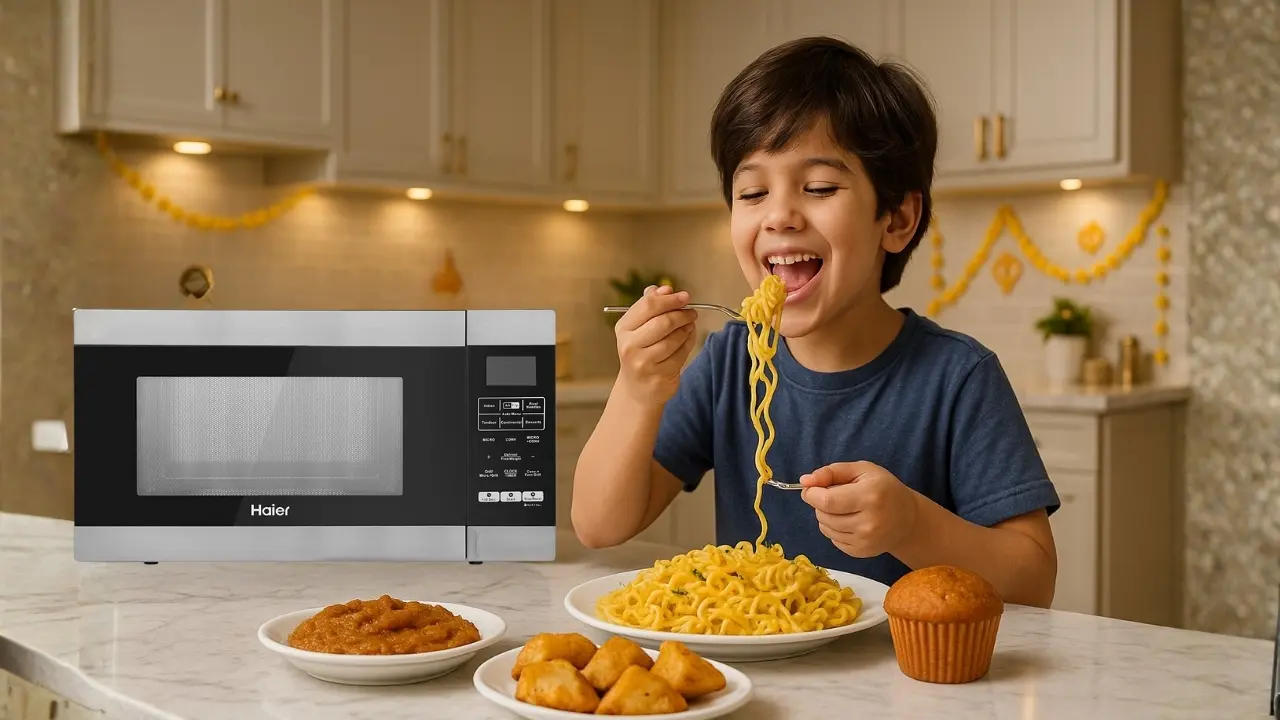

Children’s Day treats have quietly shifted from quick, nostalgic snacks like Maggi and Parle-G to oven-baked goodies, air-fried bites, and creative DIY desserts that families enjoy making together.
This change reflects how Indian homes, appliances, and parenting styles have all evolved, blending tradition with modern convenience.
Why a simple snack tells a bigger story
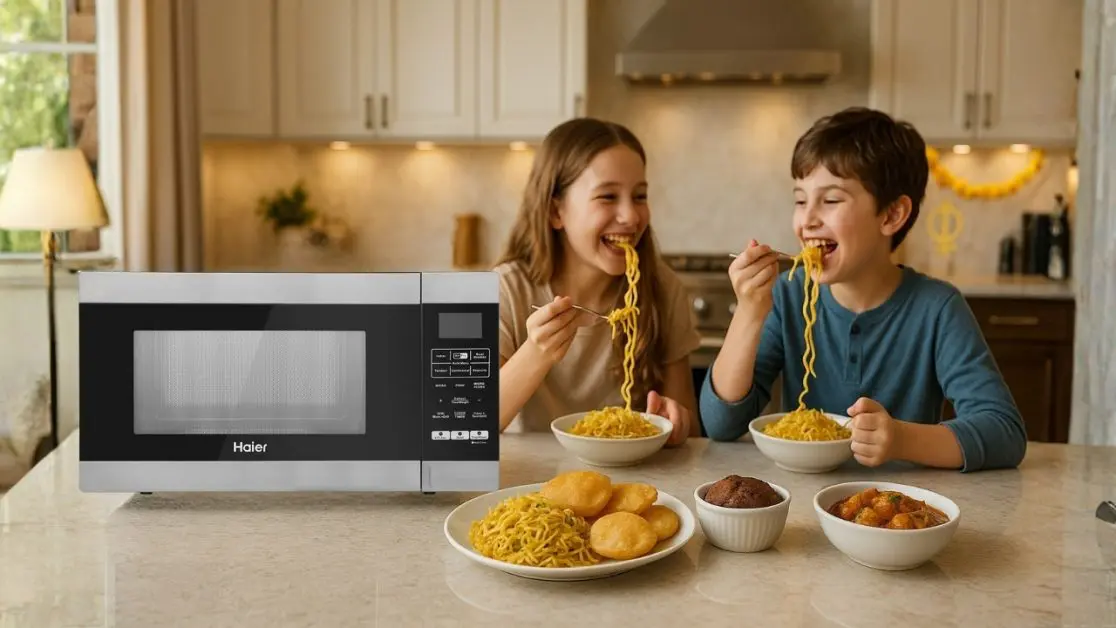
Pause for a moment and imagine this.
A bowl of steaming Maggi balanced on a steel plate. A kid doing homework in the background.
A parent calling from the kitchen. It is one of the most recognisable snapshots of Indian childhood.
Now imagine the same child today.
The same excitement.
But the treat looks different.
A warm muffin rising in the convection microwave. Air-fried potato bites instead of deep-fried ones. A chocolate mug cake that takes exactly one minute.
Different ingredients.
Same emotion.
This shift is not accidental. It reveals something deeper about how Indian homes have changed, how families think about food, and how appliances silently shape these moments.
Childhood treats reflect the era they belong to
Every generation grows up with a signature flavour.
For those who grew up in the 90s, Children’s Day tasted like:
- Maggi mixed with extra masala
- Jam-filled biscuits
- Bournvita milk
- A scoop of vanilla ice cream from the neighbourhood dairy
For Gen Z and today’s kids, Children’s Day looks more like:
- Muffins baked at home
- Air-fried snacks after school
- Fruit smoothies
- DIY pizza pockets
The interesting part is not the ingredients.
It is the pattern.
Parents are choosing treats that are:
- Easier to make
- Slightly healthier
- Less messy
- More fun to prepare together
Treats are not just food anymore.
They are activities. Mini celebrations. A way for parents and kids to create something side by side.
From quick fixes to shared rituals
The older treats were about speed. Everyone was in a hurry. A hot snack was a reward.
The newer treats are about participation. Kids want to stir the batter, sprinkle the toppings, choose the shapes, and press the start button.
It teaches a simple truth.
Food becomes special when a family makes it together.
And that is where modern kitchen appliances show up in the story. Quietly. Naturally. Without trying to be the hero.
A convection microwave that preheats quickly.
An air fryer that makes crispy bites without the oil.
A fridge that keeps fruits fresh for smoothies.
Not loud.
Just helpful.
For example, the Haier 30L Convection Microwave with in-built air fryer has become a favourite in many homes because it lets kids and parents bake, grill, and air-fry using simple preset menus. It turns the kitchen into a small creative studio where treats come to life one experiment at a time.
What changed? And why now?
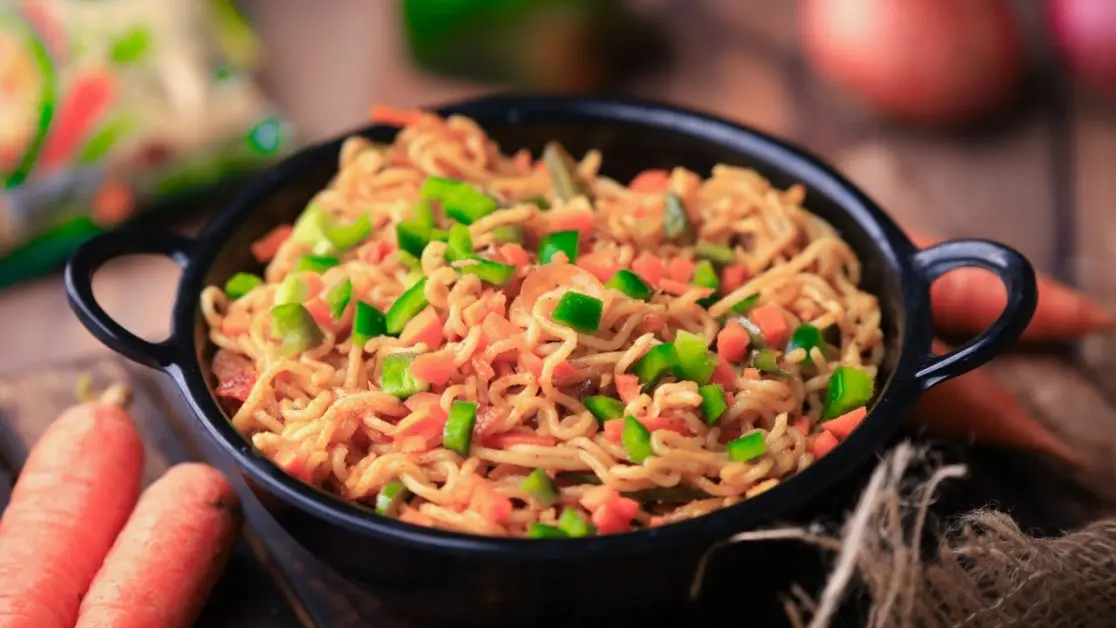
Three invisible forces shaped this evolution.
1. Time changed its shape
Working parents have less time but want more quality moments.
Quick recipes still matter, but now they are designed to be shared.
A muffin batter that takes five minutes.
An air-fried snack that needs no supervision.
A smoothie that blends in seconds.
2. Homes became smarter
With smarter appliances, families now have options that older kitchens never allowed.
A microwave that bakes evenly.
A refrigerator that keeps produce crisp.
A cooktop that heats with precision.
Technology has not replaced old memories.
It has upgraded how we make new ones.
3. Kids got curious
Today’s children love experimenting.
They want colour, texture, and creativity.
A simple snack becomes a mini project.
This curiosity turns Children’s Day from a single moment into a day of playful cooking. And when the kitchen becomes a safe, easy-to-navigate space, kids explore more.
The treats tell us something deeper
Look closely and the pattern becomes clear.
- Maggi was comfortable.
- Muffins are creative.
- Biscuits were quick fixes.
- Air-fried snacks are conscious choices.
- Ice cream cups were indulgence.
- Smoothies are fresh.
It is the same emotion expressed through a different era.
Food has always been a mirror.
It shows us what a family values at a point in time.
A simple comparison that says everything
| Era | Most-loved treat | Why it worked | What it taught kids |
| 1990s | Maggi | Quick, cheap, easy | Comfort in simplicity |
| 2000s | Biscuits, chips | Convenience | Sharing with friends |
| 2010s | Ice creams, chocolate cakes | Celebration | Taste variety |
| 2020s | Muffins, air-fried snacks, smoothies | Health + ease | Creativity and participation |
Patterns rarely lie.
Families are shifting from ready-made to home-created.
So what does this evolution mean for Indian homes?
A small treat has become a big symbol.
It shows how families want to live today.
More mindful.
More together.
More intentional.
Modern appliances support this shift by making kitchens less stressful and more inviting. A child can press one button on a convection microwave and feel like a chef. A parent can air-fry snacks without worrying about oil. A fridge with better cooling makes fresh fruit accessible.
When the tools become easier, the rituals become richer.
Children’s Day now feels like a creative festival

Think about it.
An afternoon where a parent and child bake muffins shaped like stars.
A quick video recipe playing on the TV in the living room.
A chilled chocolate milkshake pulled from the fridge.
Air-fried potato bites that disappear in minutes.
The treat becomes a memory.
The memory becomes a tradition.
The tradition becomes a story kids will tell years later.
And this is how Children’s Day stays timeless.
Not because of what we eat.
But because of how we make it together.
The bigger insight
Every home tells a story through its food.
Every generation rewrites that story in its own flavour.
And every Children’s Day reminds us that a treat is just an excuse to be close, present, and playful.
From Maggi to muffins, this evolution is not about replacing the old.
It is about expanding what joy looks like today.
A simple truth worth remembering:
The best treats grow with the family that makes them.