
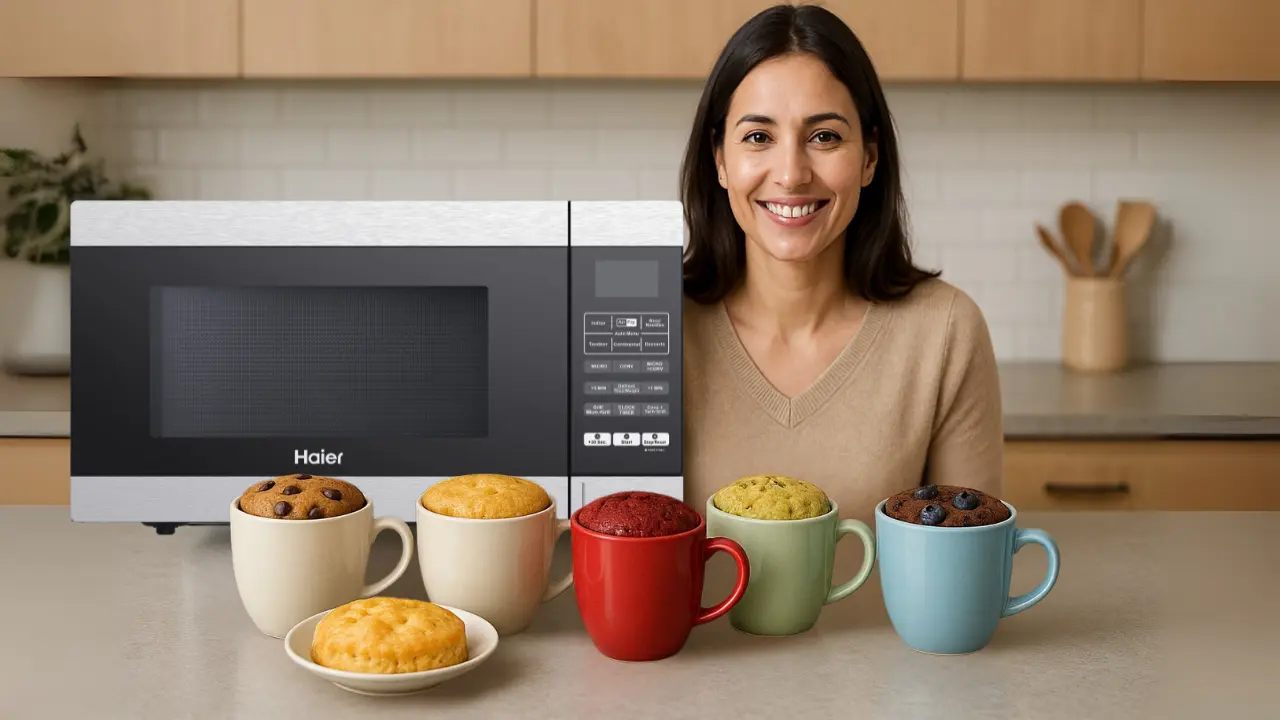

The microwave mug cake, once the monsoon’s go-to comfort food for India’s urban households, has seen its popularity dip this season.
Why?
Changing food trends, rising health awareness, and evolving kitchen hacks have shifted attention away from the quick sugar fix toward smarter, more versatile cooking.
What happened to the mug cake craze?

Remember 2020? A single egg, some cocoa, a splash of milk, and two minutes in the microwave. That’s all it took for a hot, gooey mug cake to flood Instagram feeds and WhatsApp family groups.
Fast forward to this monsoon, and the same recipe feels tired. The trend has slowed down, not because mug cakes stopped working, but because the cultural moment that fueled them lockdowns, work-from-home cravings, and novelty has passed.
Food trends are like pop songs. They rise fast, peak everywhere, and fade when the next tune arrives. Mug cakes are no different.
Why the decline feels bigger this monsoon
Three clear shifts explain the decline:
Health-first cooking
With sugar reduction and portion control on everyone’s radar, people are swapping the indulgent mug cake for air-fried snacks, overnight oats, or millet-based desserts
New kitchen experiments
Lockdown boredom sparked mug cakes. Today’s kitchens hum with different experiments: microwave-friendly gajar ka halwa, sourdough bread attempts, or even DIY granola.
Social media fatigue
The mug cake’s charm was visual. Melty chocolate oozing on TikTok or Reels. Now, algorithms reward variety. Pasta chips, Korean dalgona candy, and monsoon pakoras rule the scroll.
When culture shifts, even the simplest recipes lose their crown.
The microwave isn’t losing – it’s evolving
The irony? The mug cake’s decline doesn’t mean the microwave is fading. If anything, the appliance has grown even more central to Indian kitchens.
Take Haier’s microwave line:
- The 20L Convection Microwave (HIL2001CSSH) makes 66 auto-cook menus accessible, perfect for quick weekday meals.
- The 25L Microwave with Bread Basket (HIL2501CBSH) literally lets you make naan or kulcha in three steps.
- The 30L Convection Microwave with In-Built Air Fryer (HIL3001ARSB) blends 305 auto menus with healthier air-fried options.
This evolution shows a simple truth: it’s not about the recipe going viral, it’s about the appliance adapting to changing lifestyles.
What replaces the mug cake in Indian homes?
If mug cakes were yesterday’s monsoon joy, what’s today’s?
Here are the new contenders:
- Air-fried pakoras: Less oil, same crunch. The air-fryer function in modern microwaves makes this a guilt-free pleasure.
- Bread basket experiments: Naan on a rainy evening, straight from the microwave. It feels both traditional and modern.
- Mug biryanis and pasta: Replacing cake with savory quick meals, especially for working professionals.
- Protein bowls and oats: Fitness-focused households turn to quick prep, not quick sugar.
The shift isn’t away from microwaves. It’s away from one-dimensional indulgence.
What the mug cake decline teaches us about food trends

Food isn’t just fuel. It’s cultural storytelling.
- Mug cakes belonged to lockdowns: They were about instant comfort in uncertain times.
- This year’s shift belongs to balance: Quick still matters, but so does health, variety, and heritage.
- Technology follows culture: Appliances don’t dictate recipes; they adapt to what homes need.
A mug cake may have faded, but the system it revealed the craving for two-minute joy still drives Indian kitchens.
Monsoon moods and microwave magic
The monsoon is still India’s most nostalgic food season. The sizzle of pakoras, the fragrance of masala chai, the comfort of something warm after rain.
What’s changed is how homes prepare these.
- Parents want speed without mess.
- Gen Z wants Insta-worthy plating without elaborate effort.
- Health-conscious families want less oil but the same warmth.
And here, the microwave remains the invisible hero. It keeps adapting, just like Indian kitchens do.
A simple framework for food trends in India

Think of it like this:
1. Novelty sparks a trend (mug cakes in 2020).
2. Utility sustains the appliance (microwaves that can also grill or air-fry).
3. Cultural mood decides what sticks (this year’s love for balanced snacking).
The system is predictable. Recipes fade. Appliances last.
Why the microwave mug cake mattered
Before we dismiss it as a fad, let’s pause. Mug cakes taught an entire generation three important lessons:
- Cooking can be fun, not intimidating. You didn’t need an OTG or bakery tools.
- Portions matter. A single cup meant controlled indulgence.
- Appliances aren’t boring. The microwave became an experimental playground.
That spirit hasn’t gone away. It has simply shifted focus.
Where the story goes next

The decline of mug cakes in India this monsoon isn’t an end, it’s a pivot.
- Families now gather around air-fried samosas instead of chocolate mugs.
- Solo professionals reheat one-pot lentil bowls after work.
- Couples test culture recipes with the bread basket setting.
The microwave has become less about viral hacks and more about everyday resilience.
Key takeaways
- Mug cakes peaked during lockdowns but lost steam this year.
- Health-first living and new social media food trends replaced them.
- Microwaves, however, are more relevant than ever, powering air-frying, bread-making, and multi-menu cooking.
- The story isn’t about the decline of a recipe. It’s about the resilience of the appliance.
Final thought
Food trends are seasonal, but the systems that power them last.
This monsoon may not belong to the mug cake anymore. But it still belongs to the microwave, the quiet enabler of comfort, creativity, and convenience in Indian homes.
The dessert may fade, but the appliance remains. And that’s where the real story is.