


Microwave-safe bowls are trending ahead of Diwali because they make festive cooking safer, faster, and stress-free, helping families balance tradition with convenience in a season full of food, guests, and celebrations.
The real story behind a small kitchen upgrade
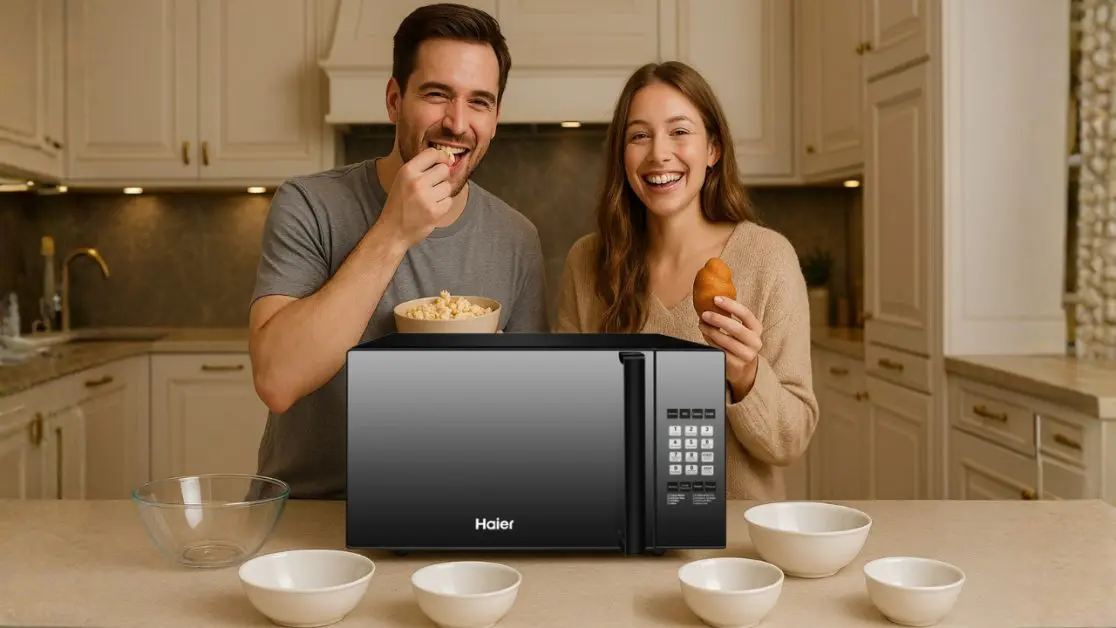
Diwali kitchens are a theatre of extremes.
On one side, gas stoves roar with deep-frying oil, the aroma of ghee-laden sweets filling the air. On the other hand, there’s the growing urgency of modern life: office calls, children’s homework, last-minute rangoli shopping.
In between these competing rhythms sits a humble object now quietly trending: microwave-safe bowls.
What seems like a technical label is becoming a lifestyle shift. And it’s not just about safety. It’s about how Indian households are reimagining festive prep in an age of quick cooking and smarter appliances.
Why does “microwave-safe” suddenly matter?
Microwave-safe bowls are not new. What’s new is how families are relying on them during crunch seasons like Diwali.
Three forces are shaping this shift:
1. Safety at scale
- Diwali means bulk cooking. Think laddoos in dozens, kheer by the litre. Using plastic or glass that isn’t microwave-safe risks cracks, spills, or even toxins leaching into food.
- With guests streaming in, no one wants an avoidable kitchen accident.
2. Speed without compromise
- A microwave-safe bowl lets you reheat mithai, steam dhokla, or melt chocolate for barfi in minutes without shifting utensils from gas to microwave and back.
- Convenience becomes ritual. Families save time not just on cooking but on cleanup.
3. Sustainability in small steps
- Reusable, durable microwave-safe glass or ceramic bowls cut down on disposable plastic containers.
- In festive seasons where waste piles up, small changes signal a shift toward conscious celebration.
The psychology of festive kitchens
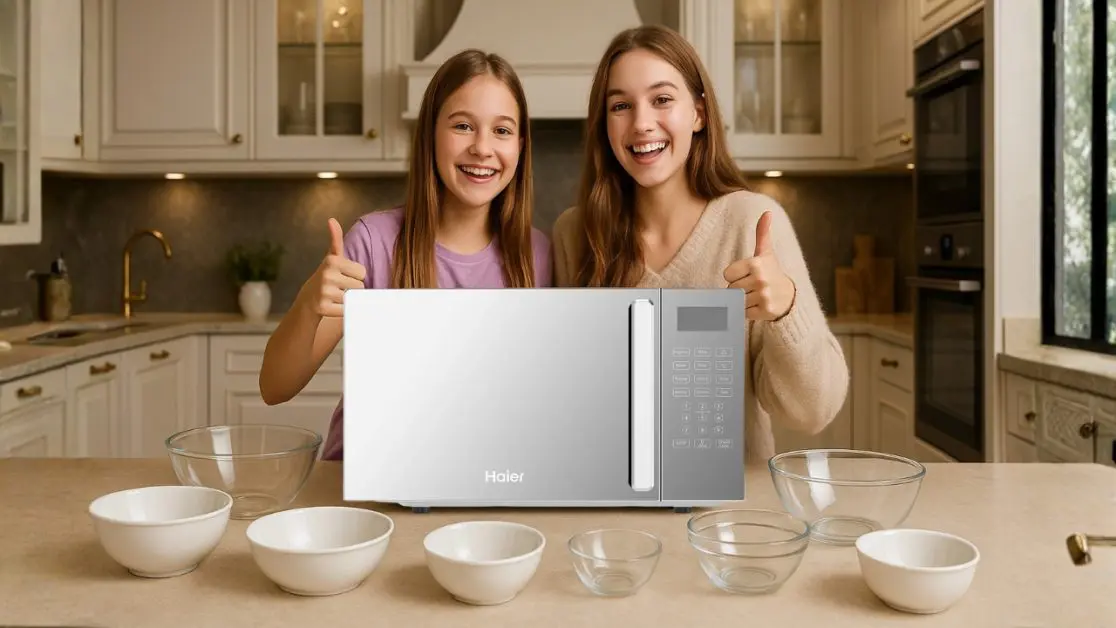
At its core, the rise of microwave-safe bowls is not about bowls at all.
It’s about control.
Festivals stretch people thin. Cooking for relatives, managing work deadlines, preparing for puja everything competes for attention. Microwave-safe bowls give households a sense of predictability: this won’t break, this won’t harm, this will save time.
In psychology, these micro-certainties reduce “decision fatigue.” One less thing to worry about means more energy for decorating diyas or playing cards late into the night.
Where Haier microwaves enter the story
Of course, a bowl is only as useful as the microwave it sits in. And this is where modern convection microwaves are quietly upgrading the festive script.
- The Haier 20L Convection Microwave (HIL2001CSSH), with its 66 auto-cook menus, makes everyday reheating look like artistry. Perfect for solo professionals who still want homemade Diwali snacks without calling mum five times.
- The Haier 25L Convection Microwave (HIL2501CBSH) goes further with 305 pre-set menus and even a bread basket mode. That means naan, kulcha, or tandoori roti can come out hot during card parties without the stress of a tandoor.
- For families that treat Diwali as a week-long feast, the Haier 30L Convection Microwave with In-Built Air Fryer (HIL3001ARSB) makes indulgence guilt-free. Fried samosas with less oil. Gajar ka halwa in minutes. Even a rotisserie chicken for those experimenting with Indo-western festive dinners.
It’s not about selling features. It’s about reframing what “festive cooking” means in 2025: indulgent but efficient, traditional but safe.
How Indian households are actually using them
Walk into ten different homes, and you’ll find ten different hacks.
- Joint families in Delhi keep microwave-safe steel bowls ready for reheating dal makhani late at night when cousins arrive unannounced.
- Working couples in Bangalore melt chocolate in ceramic bowls for DIY Diwali hampers saving a trip to expensive sweet shops.
- Students in Pune rely on microwave-safe glass bowls to reheat festive leftovers without worrying about smells sticking, especially when living in shared PG kitchens.
These are not edge cases. They’re proof of how one small kitchen choice reflects a bigger lifestyle shift.
A quick framework: choosing the right microwave-safe bowl

Not all “microwave-safe” labels are equal. Ahead of Diwali, here’s how households are making smarter choices:
- Glass: Sturdy, non-toxic, ideal for reheating curries and desserts. Avoid sudden temperature shifts.
- Ceramic: Stylish, versatile, perfect for serving directly at the table. Watch out for metallic trims.
- Silicone: Flexible, good for baking or steaming. Easy to store in small kitchens.
- Microwave-safe steel: Emerging option for those who prefer Indian-style durability with modern convenience.
What to avoid? Anything with metal, thin plastics, or unlabelled containers. Festivals are stressful enough without melted bowls or cracked handles.
The hidden system: Diwali is logistics
Here’s the deeper insight.
Festivals are not just cultural. They’re logistical events. Managing food, time, guests, and rituals is as complex as running a business conference.
Microwave-safe bowls are trending because they simplify logistics. They reduce risk, streamline reheating, and extend freshness. When paired with microwaves that can air-fry, bake, or grill, they turn kitchens into logistics hubs that still feel like home.
The aphorism writes itself: The best festive food is not just delicious it’s predictable.
The costs and benefits

Every trend has trade-offs. Let’s name them clearly.
- Costs
- Good microwave-safe bowls (borosilicate glass, high-quality ceramic) cost more upfront.
- They take up storage space compared to disposables.
- Good microwave-safe bowls (borosilicate glass, high-quality ceramic) cost more upfront.
- Benefits
- Save hours during festive cooking and cleanup.
- Protect health by avoiding plastic leaching.
- Enable multi-dish management without stress.
- Fit seamlessly with modern microwaves’ advanced menus.
- Save hours during festive cooking and cleanup.
When you measure benefits against costs, it’s clear why Indian households are making the switch before Diwali.
What this trend teaches us about modern Indian homes
Step back from the bowls, and you see a bigger picture.
- Indian families want tradition and convenience.
- They want indulgence and health.
- They want scale and sustainability.
Microwave-safe bowls are trending not because of marketing, but because they sit perfectly at this intersection.
Final thought: the festival beyond the kitchen
The kitchen is the first domino. Get it right, and everything else flows the rangoli looks brighter, the cards last longer, the laughter feels louder.
Diwali is not remembered for how stressful cooking was. It’s remembered for how easy it felt to be together.
And if something as simple as a microwave-safe bowl can unlock that feeling, it deserves the spotlight it’s getting.