


Winter microwave safety comes down to one simple truth. Most kitchen accidents do not happen because people do not know better.
They happen because winter quietly changes how we cook, rush, and reheat food. Cold mornings, tired evenings, thicker foods, and closed kitchens create small habits that feel harmless but add up fast.
This article breaks those habits down. Calmly. Practically. Without fear tactics.
Because safety is not about rules. It is about awareness.
Why does winter change microwave behaviour more than we realise?
Winter does not just lower temperatures.
It changes rhythm.
Mornings feel shorter. Evenings feel heavier. Kitchens stay closed longer. Food turns thicker. Plates stay colder. People reheat more and cook less from scratch.
Microwaves become the most used appliance in the house.
And with that frequency comes blind spots.
The most common microwave mistakes are not technical. They are seasonal.
Mistake 1: Reheating food straight from the fridge without pause
Cold food behaves differently in a microwave.
Dal thickens. Rice compacts. Gravies separate. Rotis dry faster on the edges than the centre.
When frozen or fridge-cold food goes straight in, microwaves heat unevenly.
That is when steam pockets form.
That is when plates crack.
That is when food explodes quietly and dangerously.
What most people do
- Take food out
- Set full power
- Walk away
What actually works better
- Let food rest outside for 2 to 3 minutes
- Break thick portions into smaller parts
- Stir once halfway through
Microwaves heat water molecules. Winter food hides them unevenly.
That one pause saves spills, burns, and mess.
Mistake 2: Using the wrong containers because it worked once before
That old plastic box.
That chipped plate.
That steel bowl pushed slightly to the side.
Winter cooking increases reheating cycles. Containers that survived summer now fail silently.
Plastic warps faster. Cracks spread quicker. Metal reflects waves dangerously.
Common winter container mistakes
- Using takeaway plastic repeatedly
- Heating cracked ceramic plates
- Covering food with aluminium foil edges
A simple container check
- Microwave-safe glass
- Microwave-safe ceramic
- Ventilated microwave covers
If a container feels brittle in your hand, it will behave worse under heat.
Winter magnifies material stress.
Mistake 3: Overheating to compensate for cold food
Cold food tricks judgement.
People assume longer equals hotter equals safer.
That logic fails inside microwaves.
Overheating dries food, overheats plates, and creates pressure build-up. Steam has nowhere to escape.
This is how lids pop.
This is how soups burst.
This is how hands get burned.
Smarter reheating logic
- Medium power first
- Short intervals
- Stir and check temperature
- Final heat burst only if needed
Heat in stages. Not in desperation.
That rhythm matters more in winter than any season.
Mistake 4: Ignoring condensation and moisture buildup inside the microwave
Winter kitchens trap moisture.
Windows stay closed. Ventilation reduces. Steam lingers.
Microwave interiors collect condensation faster in winter months. That moisture settles into corners, vents, and seals.
Left unchecked, it causes:
- Odour retention
- Uneven heating
- Long-term internal damage
What gets ignored
- Wiping the interior weekly
- Cleaning the turntable ring
- Drying steam vents
A dry microwave heats better.
A clean microwave heats safer.
Moisture is invisible until it becomes a problem.
Mistake 5: Heating food too tightly covered
Covering food prevents splatter.
But airtight covering creates pressure.
In winter, thicker gravies and denser foods expand unevenly. Tight lids trap steam until release becomes violent.
Better covering habits
- Use microwave-safe covers with vents
- Leave lids slightly open
- Use paper towels for light foods
Steam needs an exit.
If it cannot escape, it explodes.
Mistake 6: Forgetting that winter food composition is different
Winter meals change.
More oils.
More ghee.
More cheese.
More starch.
These ingredients heat faster than water. They burn silently before the rest of the dish warms.
Foods that need extra attention in winter
- Cheese-loaded snacks
- Fried leftovers
- Creamy gravies
- Thick dals
- Stuffed parathas
Lower power prevents scorching.
Time alone does not fix it.
Fat heats faster than water. Winter plates carry more of it.
Mistake 7: Treating microwave cooking and reheating as the same thing
Reheating and cooking behave differently.
Cooking needs controlled heat.
Reheating needs even distribution.
Winter blurs that line because people multitask more.
Using auto-cook menus or preset modes becomes safer than guessing.
Modern microwaves are built for this reality.
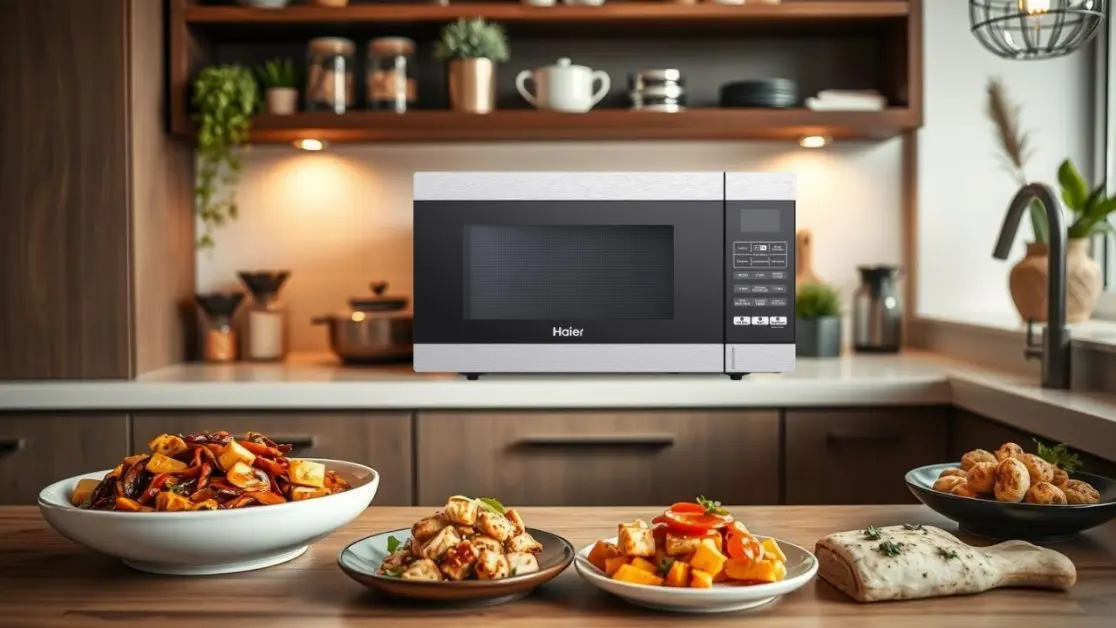
For example, convection microwaves with preset menus adjust power and time automatically based on food type and quantity.
This reduces overheating risks and uneven cooking, especially in winter when food density changes.
Haier’s 30L convection microwave includes multi-power levels, stainless steel cavity design, and auto cook menus that help manage this balance more predictably .
Automation reduces human error. Winter increases it.
That balance matters.
Mistake 8: Skipping basic microwave maintenance during winter
Appliances age faster in winter kitchens.
Temperature differences stress internal components. Moisture settles deeper. Food spills harden faster.
Ignoring maintenance creates risk over time.
Simple winter maintenance checklist
- Clean spills immediately
- Remove and wash turntable weekly
- Check door seal for residue
- Avoid slamming the door
Microwaves fail quietly before they fail visibly.
Care is cumulative. Neglect compounds.
Mistake 9: Standing too close while reheating
Cold kitchens invite hovering.
Hands over the door. Face near the glass. Checking every 10 seconds.
This increases exposure to heat bursts when steam releases suddenly.
Give the appliance space to work.
Use the timer. Step back.
Microwaves are safest when left alone.
Mistake 10: Treating safety as a one-time learning

Microwave safety is not a rulebook you read once.
It is a habit you renew seasonally.
Winter changes food behaviour.
Winter changes kitchen usage.
Winter changes human patience.
Ignoring that reality causes accidents.
Recognising it prevents them.
A quick winter microwave safety checklist
- Let cold food rest briefly before reheating
- Use correct containers only
- Avoid full power for thick foods
- Vent covers properly
- Stir midway when possible
- Clean moisture regularly
- Trust preset modes
- Step back while heating
Simple actions. Real impact.
The bigger picture most people miss
Microwaves are not dangerous appliances.
They become risky when habits go unquestioned.
Winter exposes systems.
It reveals where routines fail.
Where assumptions break.
Where speed replaces care.
The smartest homes are not the ones with the most features.
They are the ones where appliances adapt quietly to human behaviour.
And where people adapt just as thoughtfully in return.
Safety is not a restriction. It is alignment.
When habits align with seasons, kitchens feel calmer.
And winter meals stay exactly what they should be.
Warm. Comforting. And safe.