
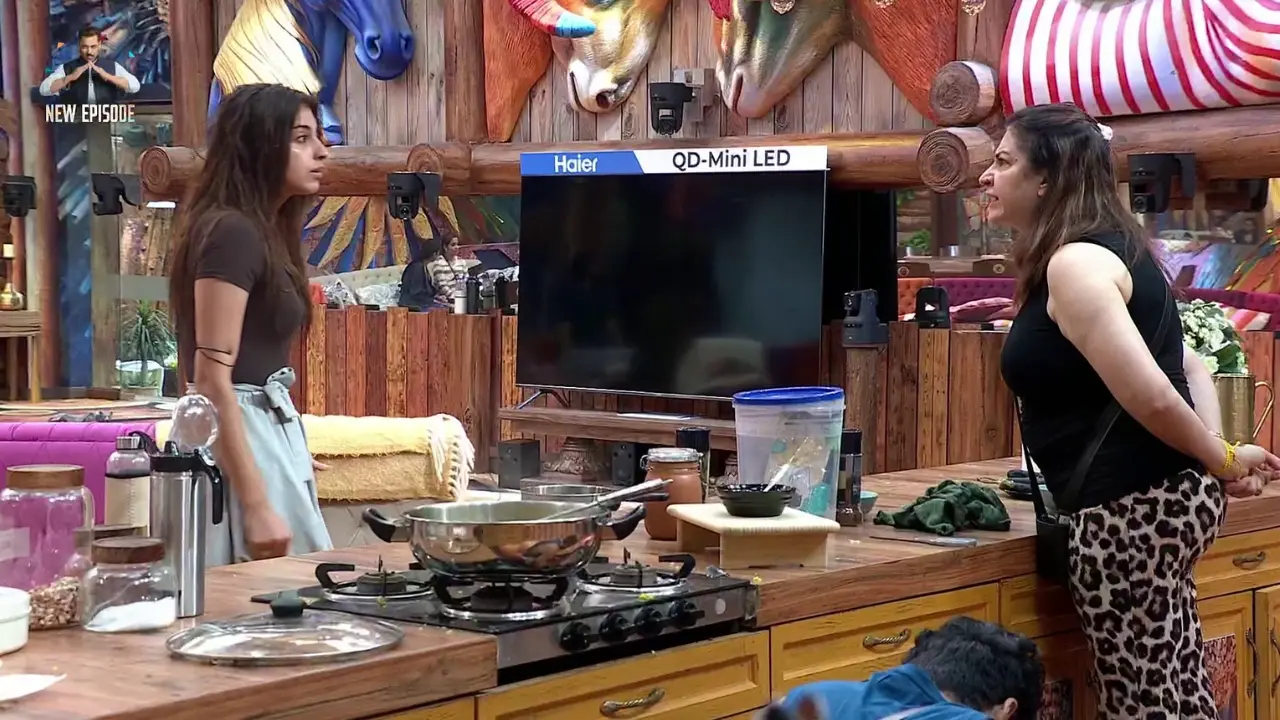

On Bigg Boss 19, every glare, whisper, and clash is exposed because today’s living rooms run on displays so sharp that nothing escapes notice.
And in Indian homes, this shift is changing how families, friends, and even solo professionals watch, judge, and connect through reality TV.
Why Reality TV Feels Different Now

Walk into any Indian living room during primetime, and you’ll see the same scene.
A family huddled together. A group of flatmates ordering biryani. Parents pretending they don’t watch but throwing sly comments from the kitchen.
Bigg Boss isn’t just background noise. It’s theatre. And the screen is the stage.
But here’s what’s new. On today’s displays, contestants don’t get to hide behind bad lighting or shaky edits. The clarity is ruthless. When Abhishek Bajaj shoved Awez Darbar in the pirate ship captaincy task, the whole country didn’t just hear the scuffle; we saw every bead of sweat, every twitch of aggression.
Reality TV has always been about drama. Now, it’s about detail.
What Makes a Display This Unforgiving?
Three things. All working together like a silent referee:
Brightness that adapts to your room
With Dolby Vision IQ, visuals adjust to ambient light, so whether you’re watching in a sunlit Delhi drawing room or a dim Mumbai bachelor pad, the contestants’ faces don’t blur into shadows.
Motion that refuses to lie
MEMC at 144Hz smooths out action, so even in the chaos of a captaincy task, you can’t miss who lunged first. Blame or defend your favourite but you’ll be doing it with evidence.
Sound that places you in the chaos
Harman Kardon speakers with Dolby Atmos pull you into the middle of the house. Whispers in one corner. Shouts in another. Silence after eviction.
In short: the display isn’t a window anymore. It’s a witness.
The Living Room as Courtroom
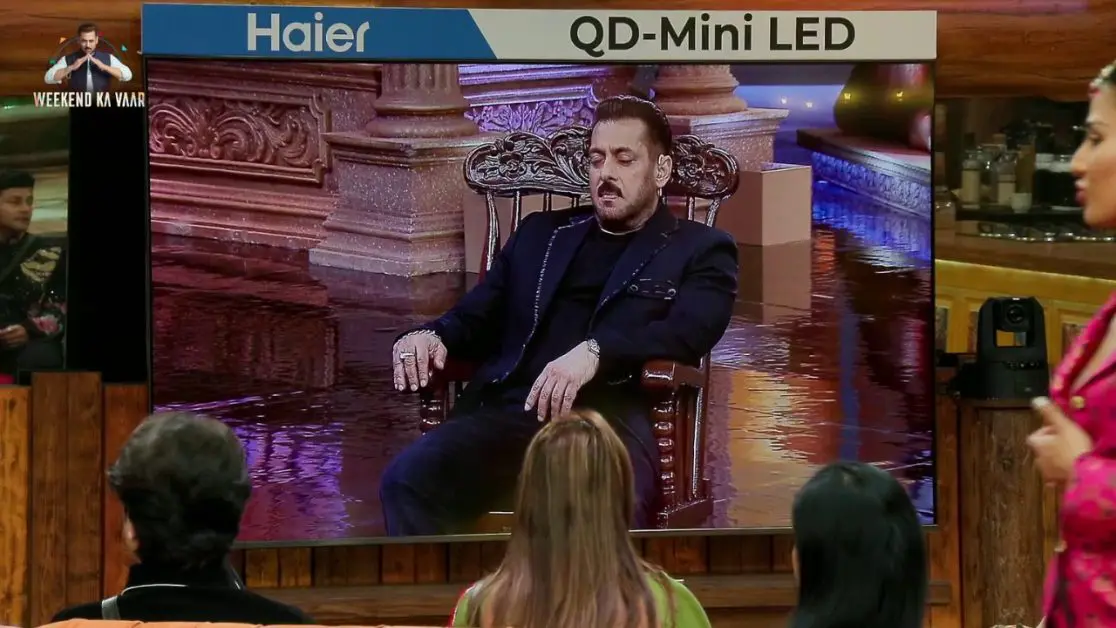
Think about it. When Bigg Boss exposes contestants for breaking rules like when everyone was punished for nomination talk it’s not just the housemates under scrutiny. It’s also us.
We rewind. We replay. We argue.
- Parents call it “too much aggression.”
- Gen Z calls it “peak entertainment.”
- Flatmates bet on who’s next to be evicted.
The sharper the display, the sharper the debate.
Why Millennial and Gen Z Homes Care
It’s easy to dismiss this as just tech talk. But in real homes, the ripple is clear.
- For couples setting up new spaces: The TV isn’t just furniture. It’s a shared canvas for culture, gossip, and weekend therapy.
- For working professionals: It’s the reset button. After 10 hours of Zoom calls, the Bigg Boss house feels oddly like your own office politics but with better lighting.
- For parents: It’s bonding currency. Even if they mock it, they’ll sit down “just for five minutes” and stay till eviction.
What unites all these groups is the demand for displays that don’t compromise. When entertainment is this sharp, compromise feels like betrayal.
Bigg Boss + Big Screens = A Social Phenomenon

Here’s a pattern worth noticing.
1. Clarity fuels virality. Awez Darbar’s fiery retort “Tum log ko aggression dikhana hai toh main dikhata hoon” went viral not because of words alone, but because viewers saw the fire in his eyes.
2. Drama scales with screen size. A 189cm (75) panel doesn’t just show drama. It engulfs you. When you’re face-to-face with contestants in life-size clarity, the house feels like it’s in your home.
3. Communities form around pixels. From WhatsApp family groups to office canteen debates, high-definition viewing has made Bigg Boss less about passive watching and more about collective interpretation.
Reality TV is no longer confined to a set. It spills into society.
The Technology Behind the Spectacle
For those who like numbers as much as narratives, here’s the architecture of this “no-hiding” display:
- Panel Type: QD Mini-LED
- Brightness: Peaks at 2000 nits think Diwali diyas in every pixel
- Contrast: 1,000,000:1 deep blacks that make emotions pop
- Refresh Rate: 144Hz smooth even in chaos
- Audio: 60W Dolby Atmos with Harman Kardon
- Smart Brain: Google TV with personalised recommendations
It’s not just television. It’s engineered transparency.
Everyday Lessons From the Bigg Boss House

Strip away the glamour, and Bigg Boss is just a high-stakes human experiment. What makes it gripping isn’t the fights alone it’s the way small details reveal big truths:
- A glance that betrays an alliance.
- A hesitation before taking a stand.
- A laugh that doesn’t match the words.
The display makes those details impossible to miss. And that’s where it gets interesting for us. Because homes, offices, and relationships all run on similar details.
The clearer the signal, the harder it is to hide intent.
So What Does This Mean for Our Homes?
1. Entertainment becomes evidence. Viewers don’t just watch. They investigate. Every frame is a data point in the argument of who’s right or wrong.
2. Families bond over debate. In Indian homes, disagreement is a love language. A clear display amplifies it.
3. Technology sets the tone. A fridge that keeps sweets fresh, an AC that knows when to save power, a TV that makes drama unavoidable each one is part of the same pattern. Tech isn’t neutral anymore. It shapes culture.
When Displays Become Cultural Catalysts
Think back. The joint family once gathered around a radio. Later, around a CRT television. Now, it’s a QD Mini-LED panel that doubles as a cinema, console, and cultural mirror.
The upgrade isn’t just in pixels. It’s in perception.
- The radio asked us to imagine.
- Old TV showed us enough.
- Today’s displays force us to confront.
That’s why contestants can’t hide. And why can’t we look away.
The Bigger Picture: Why It Matters
If you zoom out, the real story isn’t about Abhishek pushing Awez. Or even about who becomes captain this week.
It’s about a shift in how Indians experience reality itself.
- Sharper screens create sharper memories. We don’t just recall what was said. We recall how it looked and sounded.
- Homes become theatres. From cricket to cinema to reality TV, our walls can’t contain the spectacle.
- Technology shapes truth. In a world drowning in opinions, displays like these cut through noise with clarity.
And that’s the kind of shift that outlives any season of Bigg Boss.
Closing Insight
The display that gives contestants nowhere to hide is the same one that gives us no excuse to look away.
It reminds us of a simple truth, clarity changes behaviour. When everything is visible, choices carry more weight in the house, and in our own lives.
That’s what makes the Haier Mini-LED not just a television, but a quiet cultural force inside modern Indian homes.
Because once you’ve seen reality clearly, there’s no going back.