
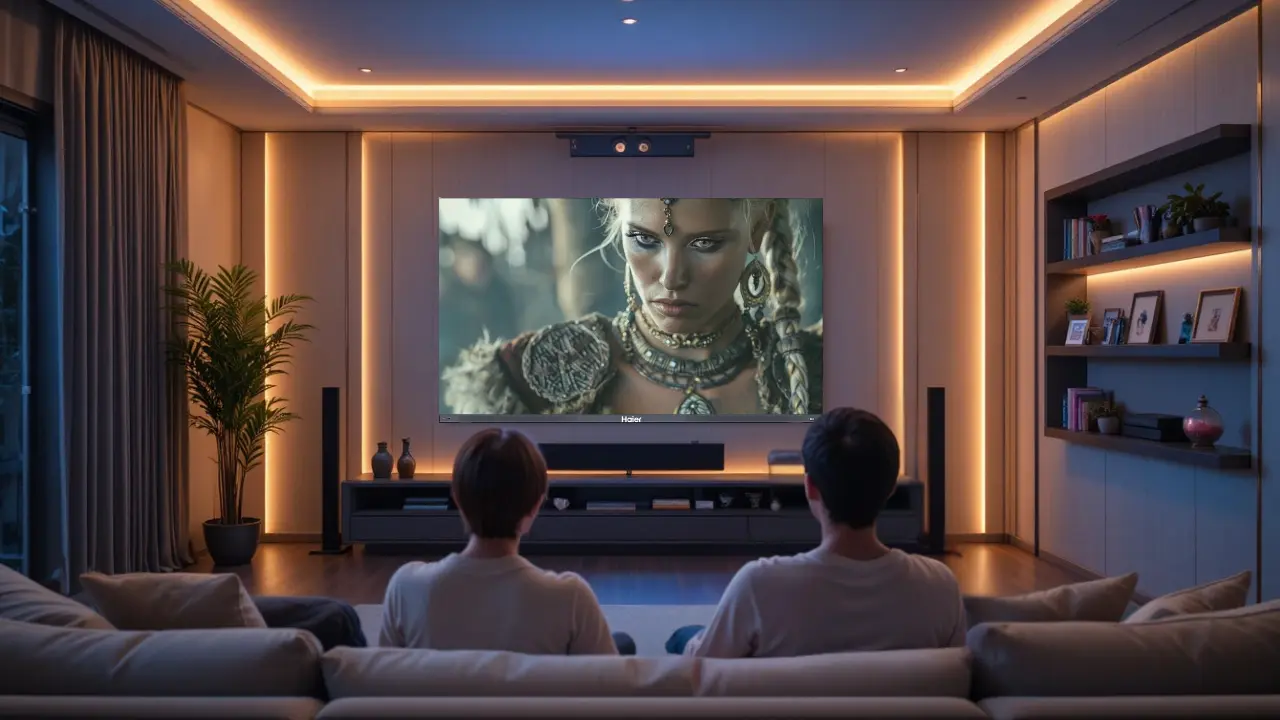

Mini-LED TVs are transforming Indian living rooms by combining cinema-level visuals, intelligent sound, and AI-driven personalization and they’re doing it so seamlessly that many households don’t even realize how much has changed until they sit down to watch their next match or movie.
The Big-Screen Renaissance in Indian Homes
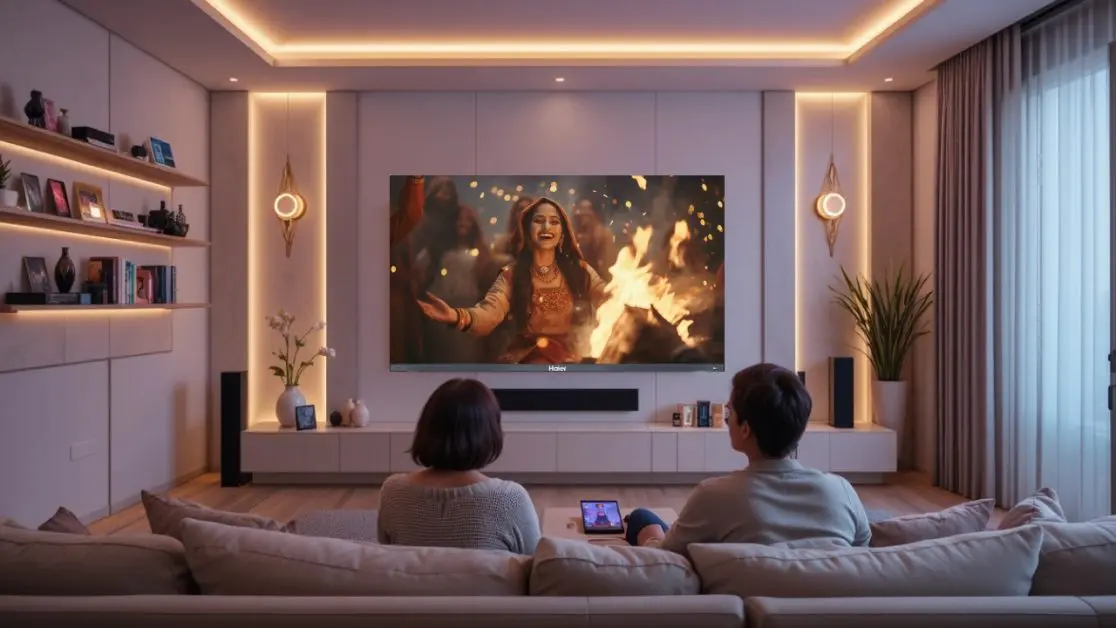
Over the last few years, home entertainment in India has quietly evolved from being a weekend indulgence to a daily ritual.
Think about it, families now plan entire evenings around a match, a new OTT series, or even a YouTube cooking show. The living room has become a mini-theatre, the place where technology meets emotion.
But here’s what’s interesting: the real revolution isn’t loud. It’s not about flashy marketing or gimmicks.
It’s happening at the microscopic level inside the screen itself.
That’s where Mini-LED technology enters the frame.
What Exactly Is Mini-LED and Why Does It Matter?
Every TV screen is powered by light. Traditional LED TVs use clusters of relatively large diodes behind the display. Mini-LEDs, on the other hand, use thousands of microscopic backlight diodes, each smaller than a grain of rice.
This simple but profound shift means:
- Better contrast. Blacks look truly black, not dark gray.
- Higher brightness. Sunlight streaming through your window won’t wash out the screen.
- Precision control. Each zone can brighten or dim independently, making details pop even in shadow.
If OLED gave us elegance, Mini-LED gives us the kind of cinematic balance that makes colors feel alive yet natural.
A Quiet Revolution in Everyday Viewing
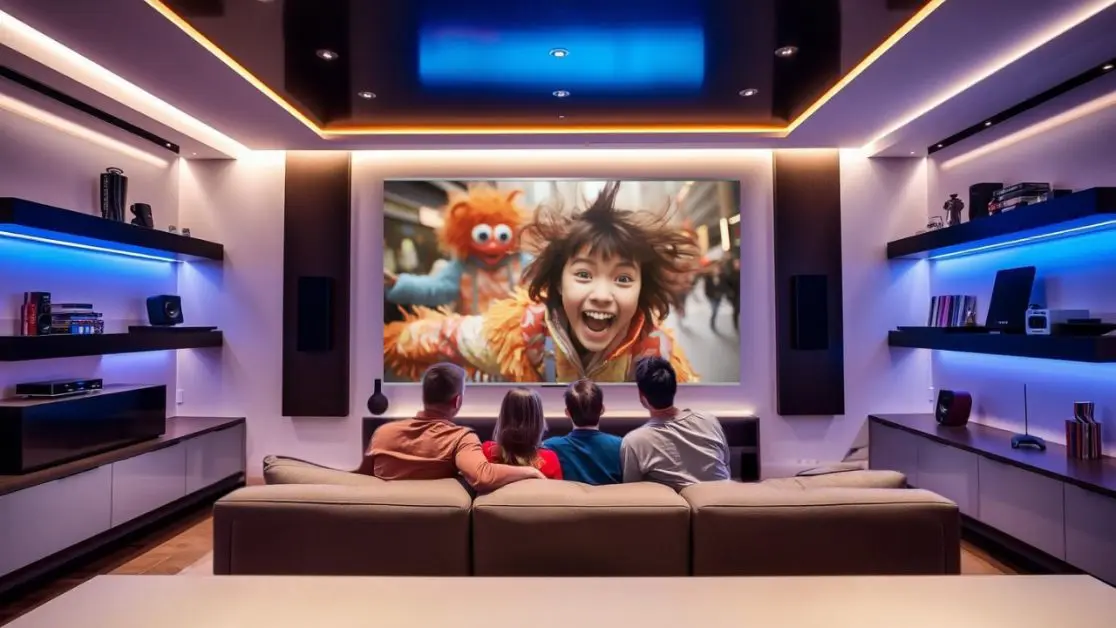
Here’s what that looks like in real life.
A parent watching a night-time Test match in a brightly lit drawing room.
A couple catching up on a rom-com after work, lights off, popcorn ready.
A gamer switching from Netflix to Need for Speed without missing a beat.
Each scenario used to demand compromise brightness or depth, speed or clarity, size or sharpness. Mini-LED dissolves those trade-offs.
The pixels don’t just display light, they respond to life around them.
When AI Meets Mini-LED: Smarter Screens, Sharper Scenes
At the heart of this evolution lies a partnership between AI processors and advanced display tech.
Take Haier’s AI Ultra Sense Processor, co-developed with MediaTek. It uses scene recognition to automatically tune color, motion, and depth. Watching a sunset in RRR? The oranges feel warmer. A rainy chase scene in Mirzapur? The raindrops look textured, almost tangible.
It’s a subtle intelligence not the kind that shouts “smart TV” on every screen, but the kind that quietly learns how you watch and adjusts to match your world.
As one AV reviewer recently put it, “The best technology disappears into the experience.”
Mini-LED does exactly that.
Why Indian Households Are Ready for It

India’s entertainment habits have changed faster than any other market.
We don’t just “watch” content anymore, we live it. Cricket seasons feel like festivals, and family nights are complete only when the screen feels alive.
Three factors make Mini-LED a natural fit for this lifestyle:
1. Bigger living spaces, smarter homes. Urban apartments are getting better designed, and TVs have become design anchors sleek, bezel-less, statement pieces.
2. Content variety. OTT platforms serve HDR, Dolby Vision, and 4K content daily. To truly see it, you need a screen built for it.
3. Energy awareness. Modern consumers care about power consumption, and Mini-LEDs are remarkably efficient compared to older LCD models.
When you put these together, you see why the shift is inevitable not as a luxury trend, but as a logical next step in how Indians consume stories.
The New Standard: Picture That Feels Real
Let’s put this into perspective.
The Haier M92 Series (189cm(75) and M96 Series (254cm(100) QD Mini-LED Google TVs embody this new standard.
Both use QD-Mini-LED panels with thousands of dimming zones 576 in the M92, 2160 in the M96 to deliver unprecedented control over light and shadow.
Pair that with Dolby Vision IQ and HDR10+, and you get a picture that adjusts dynamically to the ambient light in your room. Whether it’s a bright Sunday afternoon or a late-night binge, the tone stays consistent, not washed out or overly saturated.
It’s not about specs on a sheet.
It’s about feeling like you’re in the frame, not just watching it.
Sound That Belongs in the Scene
A picture alone doesn’t make immersion. Sound completes the illusion.
This is where Sound by KEF audio in Haier’s Mini-LED range changes the equation. For decades, Sound by KEF has been a reference name in high-fidelity acoustics. Integrating that heritage into television sound means that dialogues don’t blur, background scores gain texture, and even a crowd cheer during a cricket final feels spatially real.
The M96’s 6.2.2-channel speaker system with Dolby Atmos creates a true three-dimensional field vertical, horizontal, and bass layers that make you turn your head during a scene.
The smaller M92 doesn’t lag either. Its 2.1-channel setup with a subwoofer adds that low-end depth most flat TVs struggle with.
You don’t just hear the music.
You feel where it’s coming from.
When Frames Move as Fast as the Game

Motion clarity has long been the invisible test of a great TV.
Fast-moving content from football to Formula 1 exposes every weakness. Motion blur. Tears. Lag.
Mini-LED panels paired with 144Hz refresh rate and AMD FreeSync Premium Pro fix that beautifully. Whether it’s a Virat Kohli cover drive or an action sequence from Extraction 2, every frame flows seamlessly.
Haier’s implementation even adds MEMC motion technology, which predicts and inserts transitional frames to maintain realism. For gamers, the combination of VRR and ALLM ensures lag-free sessions that rival dedicated monitors.
In short: Mini-LED isn’t just about seeing better. It’s about responding faster.
Sustainability and Design Quiet Innovations That Matter
It’s easy to focus on visuals, but some of the most meaningful innovations happen outside the screen.
Mini-LED TVs like Haier’s new series come with solar-powered remotes, reducing dependency on disposable batteries. It’s a small gesture, but multiplied across thousands of households, it’s a tangible step toward greener living.
Then there’s design: ultra-thin frames, hidden bezels, minimalist stands all reflecting how Indian homes are evolving. We’re no longer just buying a TV; we’re curating a lifestyle.
From “Owning a TV” to “Designing an Experience”
If you walk into a modern Indian living room today, you’ll notice something: the television is no longer tucked into a corner. It’s part of the aesthetic, part of the rhythm of the home.
And yet, what’s fascinating is how Mini-LED quietly enables that shift. It gives you cinema-level immersion without the noise, clutter, or constant calibration.
The tech disappears. The experience stays.
This is the invisible hallmark of progress when innovation blends so seamlessly into daily life that it becomes hard to imagine how we ever lived without it.
What It Means for the Future of Home Entertainment
Let’s zoom out.
India’s entertainment ecosystem is expanding:
- 4K OTT content is standard.
- Gaming consoles are mainstream.
- Audio streaming and smart assistants blend into everyday use.
In this ecosystem, Mini-LED acts as the connective tissue, a display technology built not just for today’s content but for the formats of the future.
Haier’s focus on AI-driven visuals, smart connectivity, and future-ready refresh rates shows a broader philosophy: home technology should simplify, not complicate.
Because the ultimate goal of innovation isn’t to impress.
It’s to disappear into daily life.
A New Kind of Home Cinema Culture
The Indian middle class once dreamt of “home theatres.”
Now, that dream has evolved into something subtler home environments that feel cinematic without trying too hard.
Mini-LED is the bridge to that future. It gives families cinematic detail without needing blackout curtains or soundproof rooms. It gives professionals a Netflix break that feels like therapy, not distraction. It gives children colors and clarity that make learning and imagination more vivid.
And it does all this without shouting for attention.
Quietly. Efficiently. Beautifully.
So, What’s Next?
As India continues to blur the line between work, leisure, and digital living, the living room will remain our most personal stage. The screen will be our window into stories, sports, and shared moments.
Mini-LED isn’t a passing upgrade. It’s the foundation for that next chapter.
And for those who’ve experienced it whether on the Haier M92’s balanced brilliance or the M96’s grand cinematic presence the difference is unmistakable.
Once you’ve seen life in Mini-LED detail, it’s hard to go back.
Final Thought
Technology doesn’t need to shout to make an impact.
Sometimes, the quietest innovations like thousands of tiny lights working in perfect sync are the ones that redefine how we live, connect, and feel.
Mini-LED is doing exactly that for Indian homes.
And this time, the revolution begins not in a theatre, but in your living room.