


Mini LED TVs thrive in low light because they control brightness with far more precision, deepen contrast without straining the eyes, and turn winter evenings into a warm, cinematic ritual.
Their local dimming zones shape the picture instead of flooding the room with glare, making them ideal for long nights at home.
Winter evenings change how we watch television
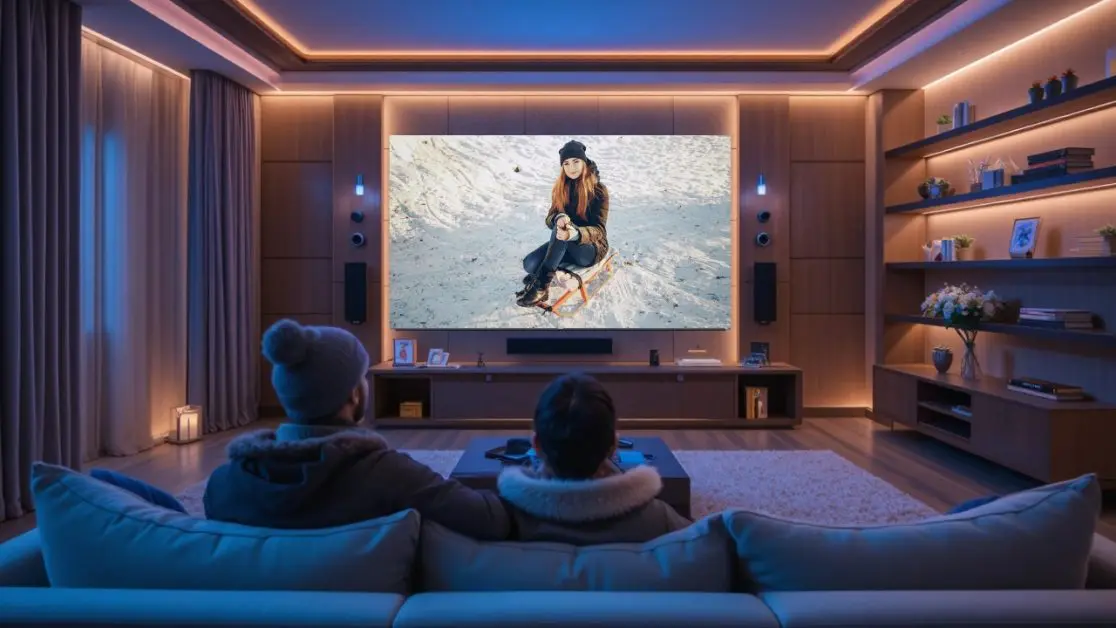
Step into a home at 7 pm in December and you’ll notice a pattern.
The curtains are already drawn.
The lights are softer.
The room feels quieter than usual, as if the world has settled into a slower tempo.
And in this mood, the television becomes the center of the evening. Not as background noise, but as a place. A gathering spot. A wind-down ritual after a day spent tackling the cold.
The question is simple.
What kind of screen works best when the world outside gets darker earlier?
The answer is hiding in the way Mini LED technology handles light itself.
Mini LED shines by not shining too much
Here is the paradox of good winter viewing.
You need brightness, but not harshness.
You want depth, without forcing your eyes to work overtime.
Mini LED solves this puzzle because it uses thousands of tiny LEDs instead of a handful of large ones. Smaller points of light mean tighter control. Tighter control means better contrast. Better contrast means your eyes relax instead of fighting the screen.
This is especially useful on winter nights when the room is dim and your pupils are already wide open. Most TVs throw too much uniform brightness at you. Mini LED does the opposite. It shapes the frame. It curves the light to match the content.
That is why deep blacks look truly deep and why candle-lit scenes on your favourite series feel natural instead of grey.
A real example from the living room
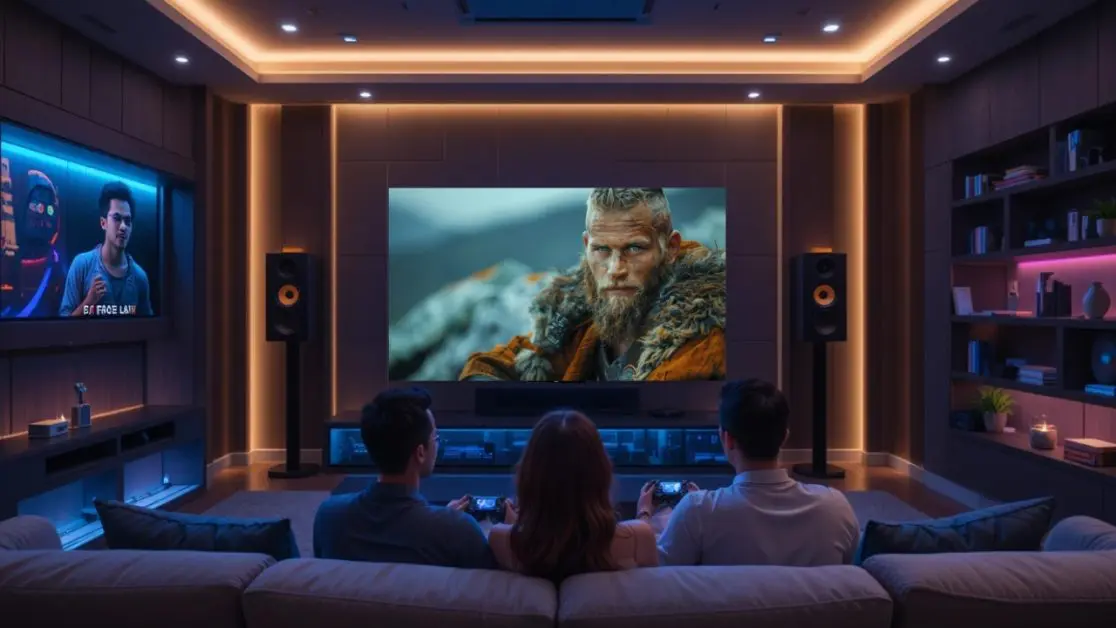
Imagine a family catching up on a Friday evening. The tube-light stays off. Only a warm lamp glows from the corner. There’s chai on the table and someone is wrapped in a blanket already claiming the best seat.
This is where a Mini LED TV quietly shows its strengths.
On the Haier 140cm (55) Mini LED model, you get 144 local dimming zones that adjust independently to the scene on screen.
Step up to the 165cm (65) version and the precision increases to 180 zones.
At 189cm (75), that number jumps to 264 zones.
And on the massive 215cm (85) flagship, you get an impressive 360 zones controlling brightness in real time.
More zones mean the TV can brighten only the stars in a night sky while leaving the surrounding darkness untouched. It’s the difference between watching a scene and entering it.
In winter, that matters.
Low-light rooms reward better contrast
Here is a principle you can rely on.
The darker your environment, the more important your display’s ability to handle contrast becomes.
A normal LED TV lifts the entire picture to compensate for ambient darkness. This flattens the scene. Blacks turn grey. Highlights lose shape. Snow on screen becomes a bright patch instead of a textured surface.
Mini LEDs behave differently.
It brightens the parts that need attention and leaves everything else as it is.
The result feels dimensional, like the picture has its own internal rhythm instead of reacting to the room.
This is why Mini LED TVs turn everyday streaming into something richer. The system works with your eyes, not against them.
Why winter content feels special on Mini LED
Think about the genres that dominate December in Indian homes.
- Slow-burn dramas
- Cricket highlights before the next big series
- Holiday movies
- Family shows everyone pretends they’re watching “just one episode” of
All of them have one thing in common. They demand emotion through lighting.
A warm kitchen scene. A rainy evening chase. A sunset match replay.
Mini LED elevates these because of three predictable reasons.
1. Better depth in dark scenes
Shadow-heavy storytelling looks clearer and more intentional.
2. Brighter highlights without hurting the eyes
Mini LED TVs reach high brightness peaks but in controlled pockets.
Good for HDR performance with formats like Dolby Vision included across Haier models.
3. Colour accuracy in warm lighting
Winter evenings lean towards yellow, amber, and soft white lighting at home.
Mini LEDs bring these tones to life without skewing them.
This is why a winter binge session on a Mini LED TV feels less like viewing and more like enjoying a crafted atmosphere.
The sound needs to match the scene
The picture is half the experience.
Sound completes it.
One overlooked truth about winter evenings is that we listen more carefully. The house is quieter. The fan is at a lower speed. The outside world has wrapped itself in a chill. Subtle audio details become easier to appreciate.
Haier’s Mini LED range uses Sound by KEF Audio and Dolby Atmos to build spatial clarity into the room.
A good 2.1 channel setup with a 50W speaker system ensures:
- Richer dialogues during low-volume viewing
- Fuller bass during action scenes
- Crisp highs without sharpness
Again, this is not about selling volume.
It is about shaping the sound to match the mood of the evening.
A table that simplifies winter screen choices
| Winter Viewing Need | What Normally Happens | What Mini LED Does Better |
| Dim room, warm lamp | Screen looks washed out | Local dimming strengthens contrast |
| Long watch times | Eye fatigue increases | Controlled brightness reduces strain |
| HDR content | Highlights lose detail | Dolby Vision + Mini LED sharpens peaks |
| Family watching | Off-angle dims colours | Wide viewing angles maintain quality |
| Quiet evenings | Sound feels thin | Sound by KEF Audio + Dolby Atmos add depth |
Mini LEDs don’t fix one issue. It fixes a system of issues that appear together during winter.
Three scenarios where Mini LED makes winter feel sorted
1. The solo viewer after work
One jacket on the chair. One bowl of hot noodles. One remote.
The room is calm and the content needs to feel immersive without you cranking up the brightness.
Mini LED handles this beautifully.
2. The family gathering room
Kids want animation. Parents want news. Someone wants to replay a cricket highlight that everyone pretends they haven’t already seen twice.
Wide viewing angles and deep blacks make all these transitions smooth.
3. The weekend movie ritual
Blankets out. Popcorn ready. Lights off.
This is the moment Mini LED was born.
The picture stays punchy even when the room is dark, creating a theatre-like experience without overwhelming your eyes.
Why these benefits matter in Indian homes
Every Indian winter evening carries its own rhythm.
North India battles early sunsets.
South India deals with shorter but milder daylight.
Metro cities switch into hybrid work mode, stretching screen time.
Smaller towns experience more family viewing than individual viewing.
Across all these patterns, one truth stands out.
Low-light usage is not a special case. It is the default.
Choosing a Mini LED TV is not about upgrading a gadget. It is about upgrading a daily winter habit.
A habit shaped by comfort, silence, and a softer pace.
Where Haier fits into this story
Haier’s Mini LED line comes with a consistency that matters for winter viewers.
- Local dimming zones that scale with screen size
- Dolby Vision + HDR10 for dynamic contrast
- Sound by KEF Audio for richer sound texture
- Google TV for easy, personalised browsing
- DLG 120Hz / MEMC smoothing for sports and fast scenes
Each of these is designed less for display showrooms and more for real Indian homes where lighting changes by the hour and usage shifts by the season.
This is what makes Haier a strong winter companion.
Not because you need a new TV.
But because your evenings deserve a better way to unwind.
The larger principle hidden underneath
Technology succeeds when it understands context.
In winter, context is everything.
Lower light.
Longer evenings.
Slower routines.
More screens, but gentler expectations.
Mini LED aligns with this rhythm by giving you clarity without glare, brightness without fatigue, and colour without distortion.
And that is the real insight.
A good winter TV is one that respects the room it lives in.
The final thought
As winter unfolds across Indian cities, a Mini LED TV becomes more than a screen.
It becomes a quiet architect of how nights feel.
Of how families gather.
Of how rest fits into the rhythm of daily life.
When a technology blends into your season instead of fighting it, you don’t just watch better.
You live better.