


Hands-free voice commands in smart TVs are changing how Indian households interact with entertainment.
Instead of reaching for the remote, you can simply speak and the TV responds. It’s faster, smarter, and surprisingly more human.
Why the Remote Feels Outdated
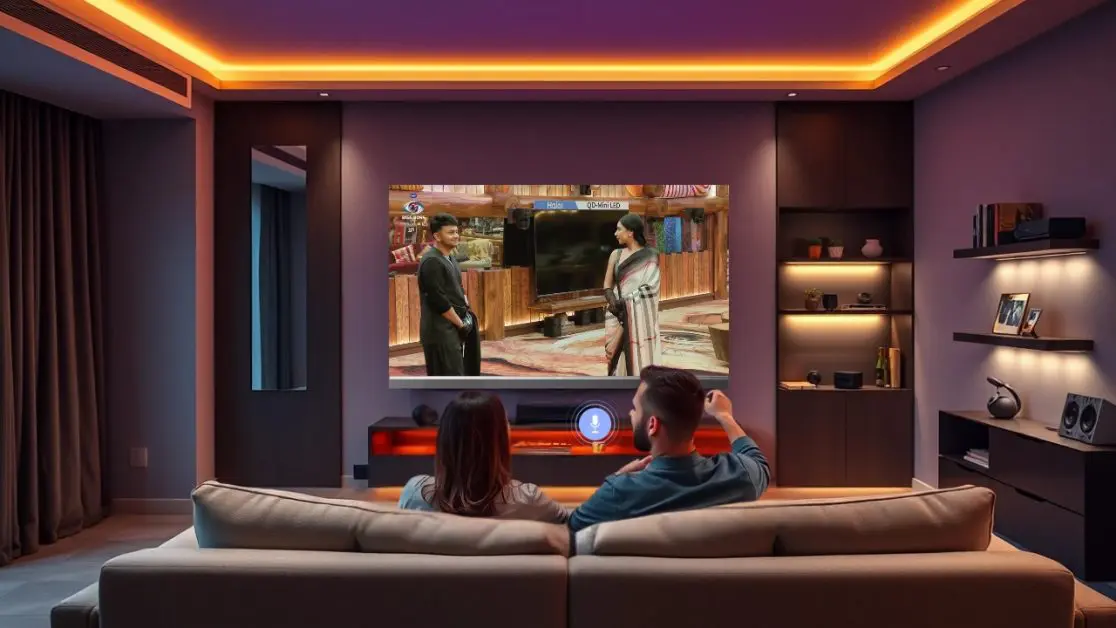
Think about the last time you misplaced your TV remote.
It’s always when the match is about to start or when your hands are messy from dinner prep.
The remote used to be the symbol of control. Now it feels like a limitation. Technology is moving toward natural interaction, and voice is the most natural of all. Just as we talk to family members across the room, now we can talk to our televisions.
The question isn’t why voice commands? Why not sooner?
The Human Advantage of Hands-Free Control
Hands-free voice commands aren’t just about convenience. They change the rhythm of daily life at home.
- Cooking nights – You’re kneading dough for chapatis. Instead of wiping your hands to grab the remote, you just say, “Play music on YouTube”.
- Family TV time – A parent can pause a cartoon to call everyone for dinner without searching cushions for the remote.
- Sports evenings – Friends shout out, “Switch to Sony Sports”, and the match is on instantly.
It’s technology behaving the way people behave.
How It Works Behind the Screen

Modern smart TVs like Haier’s Mini-LED H65M95EUX (165cm (65) and H75M95EUX (189cm (75) come with hands-free voice control powered by Google Assistant.
That means:
1. The TV’s built-in microphones pick up voice commands even across the room.
2. Commands get processed instantly whether it’s to play a movie, adjust volume, or control other smart devices at home.
3. The AI learns patterns, making the experience more personalized over time.
This isn’t futuristic, it’s happening right now in Indian living rooms.
Everyday Scenarios That Reveal the Difference
Voice control shines most in moments when you’re busy, distracted, or relaxed.
1. During festive prep – While arranging Diwali sweets or cleaning for Ganesh Chaturthi, you can line up bhajans or Bollywood playlists with a single request.
2. When kids take over – Little ones who can’t operate remotes can still say “Play Peppa Pig”.
3. Late-night binges – You’re curled up under a blanket and don’t want to reach for anything. Just whisper to dim the volume or switch off.
The invisible benefit? Families argue less about the remote.
Why This Matters in Indian Homes
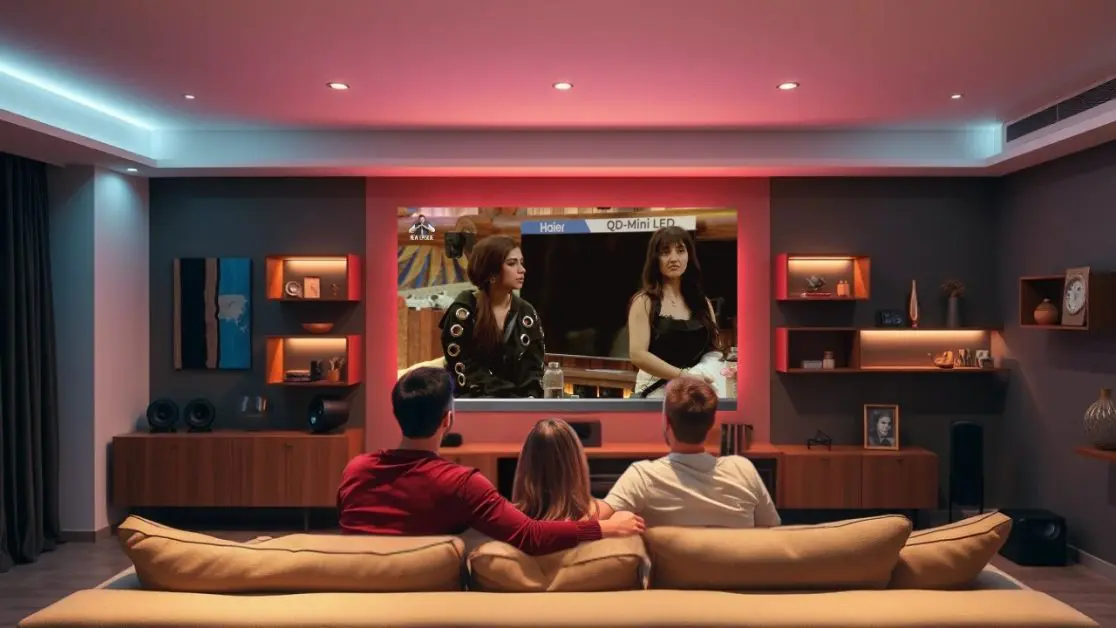
Indian households juggle multiple roles: parents, students, professionals, grandparents often sharing the same space. Voice-enabled TVs remove small frictions that add up.
- For working couples, it saves time.
- For elders, it reduces complexity.
- For children, it feels intuitive.
And in homes where everyone watches content in different languages, voice commands make it simple to switch between Hindi, Tamil, Bengali, or English apps.
Voice as the New Operating System
Think of voice control as the new “OS” for your living room.
Just like the smartphone unlocked touch-based control a decade ago, voice unlocks interaction without effort.
The biggest shift? Your intent becomes the interface.
Instead of navigating menus, you simply say what you want. That changes not only how you watch TV but how you think about using it.
The Bigger Ecosystem: Beyond TV
The game changer isn’t just the TV, it’s how voice control connects with the rest of your smart home.
With Haier Mini-LED TVs acting as an IoT hub:
- You can dim smart lights during a movie without touching your phone.
- You can check weather updates before heading to work.
- You can control appliances like ACs or washing machines that are Google Home-enabled.
The TV becomes less of a box for content and more of a command centre for your life.
Comparing Old vs New: Remote vs Voice
| Situation | Remote Control | Hands-Free Voice Commands |
| Switching channels | Manual navigation, multiple clicks | “Play India vs Pakistan highlights” |
| Adjusting volume | Find button, click repeatedly | “Volume down” |
| Searching content | Typing letter by letter | “Search for Shah Rukh Khan movies” |
| Controlling smart devices | Need separate app or device | “Turn off bedroom lights” |
| Lost remote | Panic and search | No problem voice always works |
The shift is clear: from effort to ease.
Cultural Shifts That Make Voice Feel Natural
India has always been an oral culture. From bedtime stories to street-side chai conversations, speech has been central to how we share and connect.
That’s why voice-enabled TVs feel less like a gadget upgrade and more like a cultural fit. They respect how Indians naturally live by talking, listening, and sharing.
Where Haier Fits Into This Story
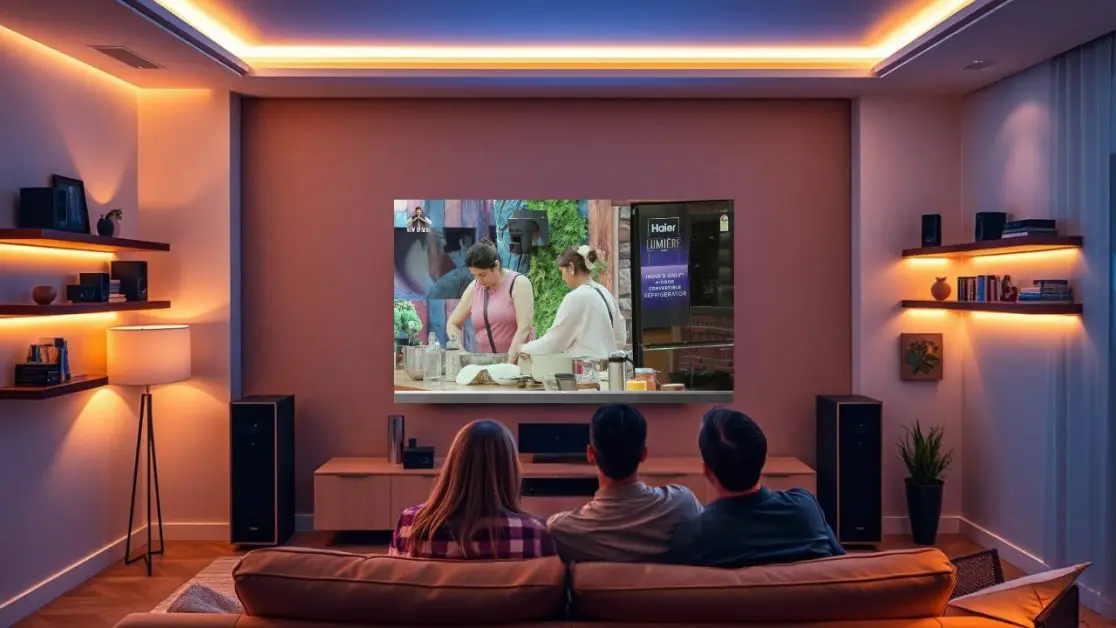
Haier’s Mini-LED range, including the H65M95EUX 165cm (65) and H75M95EUX 189cm (75), brings hands-free voice control alongside features like:
- Dolby Vision IQ + Atmos for cinematic picture and sound.
- Harman Kardon speakers for balanced, room-filling audio.
- 144Hz MEMC refresh rate for smooth sports and action scenes.
- Game Mode with AMD FreeSync Premium for seamless gaming.
But what makes them stand out isn’t just hardware. It’s how seamlessly voice becomes part of your home life.
The Costs and Benefits: A Simple Framework
- Costs: Higher initial investment, a learning curve for elders, reliance on internet connectivity.
- Benefits: Convenience, inclusivity, smarter integration, reduced device clutter, and future-proof living
When you weigh them, the benefits don’t just justify the shift they redefine it.
The Future of Watching Together
Voice-enabled TVs do something subtle but powerful: they bring back collective watching.
When one person speaks, everyone sees the result. It shifts control from one person holding the remote to the entire room being part of the experience.
In a way, it democratizes the living room.
Final Thought: When Tech Becomes Invisible
The best technology doesn’t call attention to itself. It fades into the background, letting life take centre stage.
Hands-free voice commands in TVs are exactly that kind of technology. They don’t just change what’s on the screen. They change how homes feel.
And that’s the real game changer.