
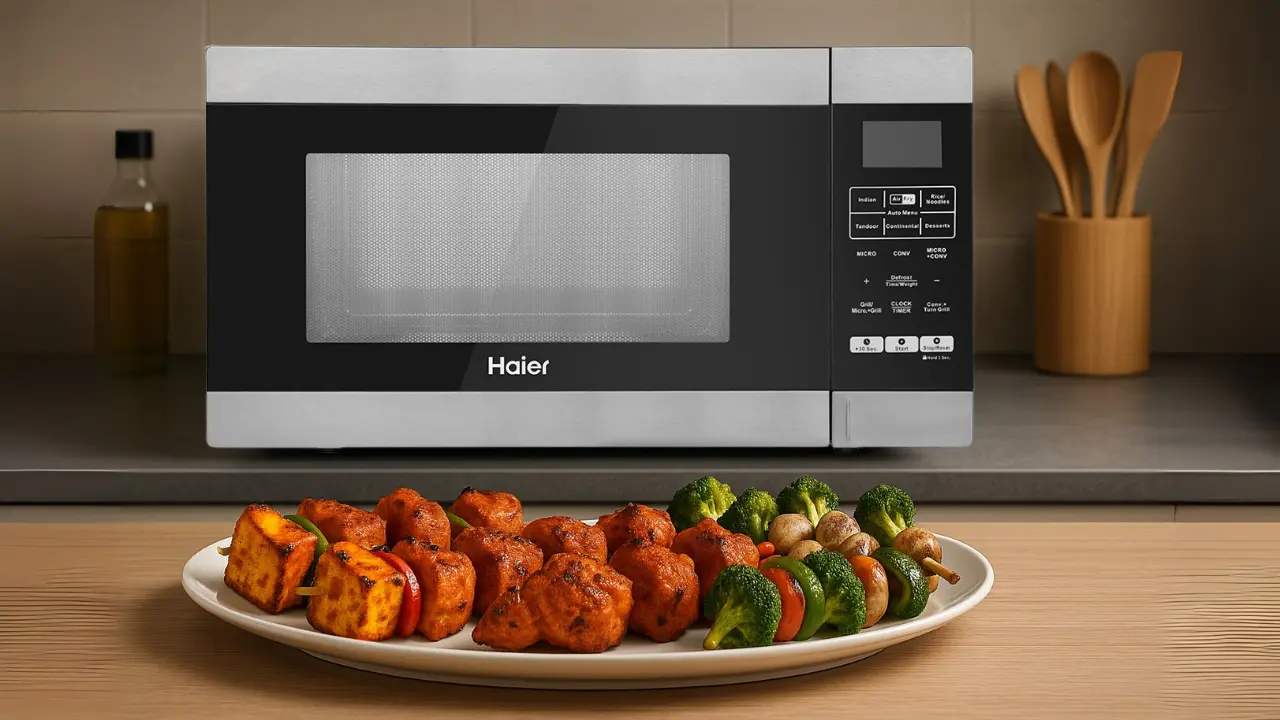

You can make perfectly charred, flavour-packed tikkas during monsoon without smoke by using convection microwaves with rotisserie or air-fry features, which grill evenly indoors while keeping your kitchen fresh.
Why monsoon tikkas feel like an impossible dream
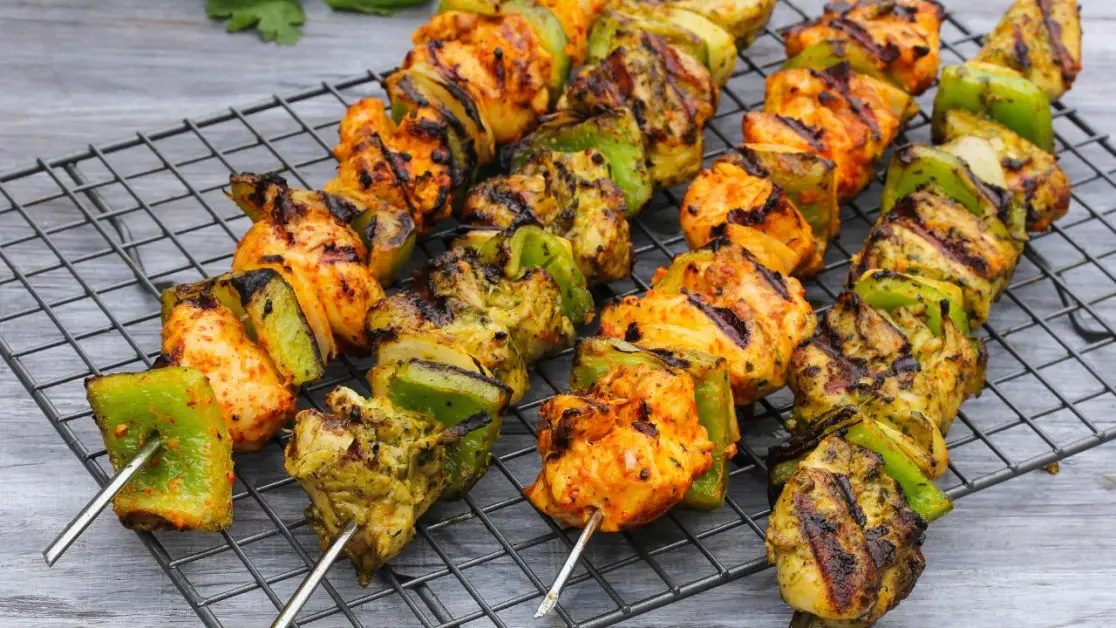
The season brings two things into every Indian household: cravings and constraints.
On one side, there’s the unmistakable pull of smoky paneer tikka, chicken skewers, or vegetable kebabs. Rain makes us long for spice, char, and warmth.
On the other side, there’s damp air, closed windows, and neighbours who don’t want smoke drifting into their balconies.
The result? A paradox every foodie knows too well the appetite for tandoori flavours colliding with the practical reality of cooking in closed monsoon kitchens.
The hidden system behind smoky kitchens
Smoke is not just a by-product of charcoal or grills. It’s a signal of incomplete combustion. Oils drip, spices burn unevenly, and open flames intensify it.
When you move indoors during monsoon, ventilation shrinks, so what was once a pleasant waft outdoors becomes trapped haze inside.
This is why families avoid tikkas until winter. They don’t lack the ingredients or the recipes, they lack a smoke-free system.
The three monsoon-friendly routes
If you step back, the problem is not about the dish. It’s about the method. Here are the three practical systems Indian homes are already adopting:
1. The Rotisserie Route
Convection microwaves with a motorised rotisserie mimic the rotation of skewers in a tandoor. The movement ensures juices spread evenly, so spices roast instead of burn. 30L Convection Microwave, for instance, has a built-in rotisserie designed exactly for this uniform grilling without open flame.
- Pros: Even cooking, hands-free operation, no smoke
- Cons: Needs a little pre-marination time for best results
2. The Air-Fry Route
Air frying is essentially convection on steroids. Hot air circulates at high speed, crisping the outer layer of paneer, chicken, or vegetables. The Haier 30L microwave comes with 36 dedicated air-fry menus so you can choose “Paneer Tikka” instead of guessing the timer.
- Pros: Healthier, oil-free, quick to set up
- Cons: Texture is slightly different from smoky char but the spice carries through
3. The Combination Route
Some models, like 25L Convection Microwave, offer a combo mode convection, grill, and microwave in one. This speeds up cooking by up to 30%. It’s perfect when guests arrive unannounced, and you don’t want to choose between raw interiors or burnt exteriors.
- Pros: Fast, efficient, balanced results
- Cons: Requires experimenting with presets at first
A practical table for quick decisions
| Method | Smoke level | Flavour profile | Best for | Example Appliance |
| Rotisserie Grill | Zero | Authentic char-like | Paneer, chicken, fish | Haier 30L Convection Microwave |
| Air Fryer Mode | Zero | Crispy, oil-light | Veggies, nuggets, tikka | Haier 30L Convection Microwave |
| Combo Convection | Zero | Balanced & fast | Mixed skewers, breads | Haier 25L Microwave with Bread Basket |
Why the monsoon kitchen needs new tools
Every season forces Indian homes to adapt. In summer, AC settings dominate conversations. In winter, geysers run in shifts. In monsoon, the challenge is food and freshness.
Cooking without smoke is not about convenience alone. It’s about keeping homes breathable when humidity already makes air heavy. Appliances that combine grilling with circulation solve two problems at once craving and comfort.
Recipes that actually work indoors
Let’s get specific. Here are three tikka recipes adjusted for a smoke-free, monsoon kitchen:
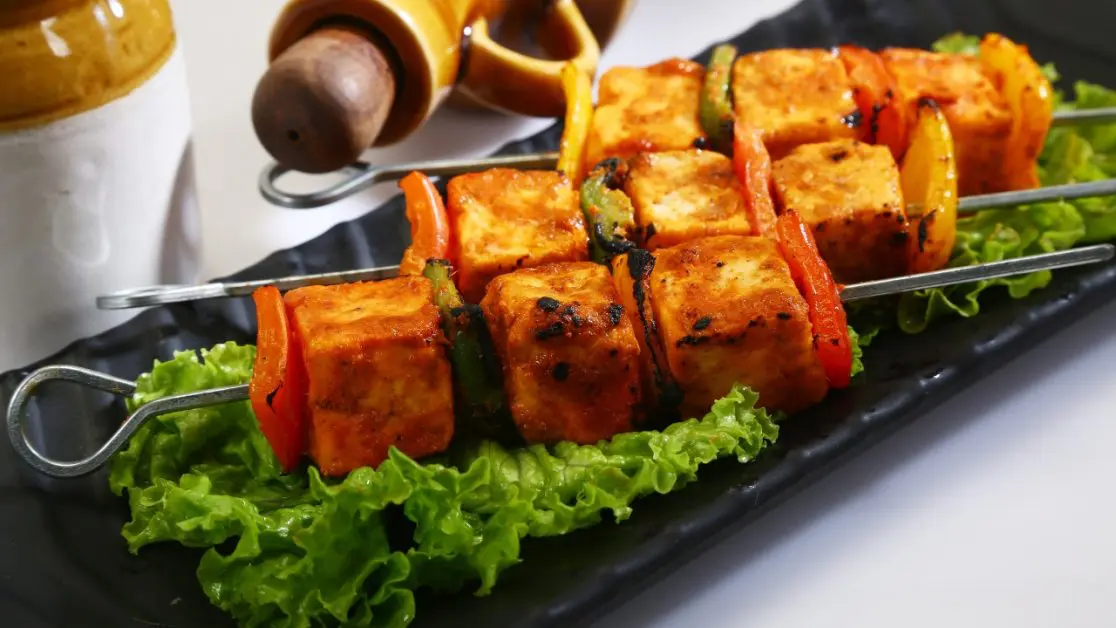
Paneer Tikka (Air-Fry Mode)
- Marinate paneer cubes in hung curd, ginger-garlic paste, and tandoori masala.
- Select the air-fry paneer tikka preset.
- Place pieces on the crispy plate. Cook until the edges brown.
Tip: Adding capsicum and onion cubes gives a restaurant-like finish.
Chicken Tikka (Rotisserie Mode)
- Marinate chicken chunks with curd, chilli powder, and lemon juice for 2 hours.
- Skewer and fix them in the rotisserie rod.
- Start the rotisserie function the automated rotation ensures even char
Tip: Brush lightly with butter halfway for gloss.
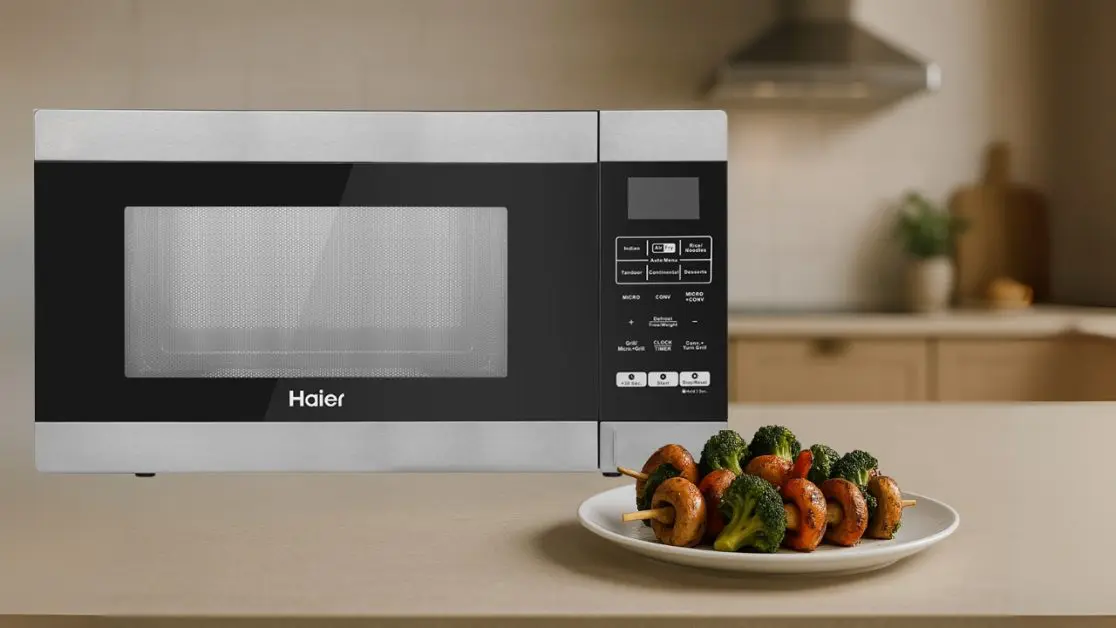
Mushroom & Broccoli Tikka (Combo Mode)
- Marinate mushrooms and blanched broccoli in mustard oil, garam masala, and turmeric.
- Use convection + grill mode to speed up crisping.
- Flip once for even texture.
Tip: Sprinkle chaat masala only after cooking keeps it tangy without burning.
The cultural layer
Think of the monsoon as India’s built-in pause button. Streets slow down. Cricket matches stretch. And kitchens adapt.
Smoke-free tikkas are not about replacing the winter barbeque. They’re about making the flavour calendar longer. Families don’t have to wait till December to host a tikka night. They can do it while the rain taps on the window.
Implications for modern homes
The bigger picture is clear: appliances are no longer seasonal. They are seasonal solutions.
- Refrigerators that adjust cooling for mango season.
- ACs that save power in humid monsoon.
- Microwaves that grill without smoke.
The hidden system is not just technology. It’s adaptable. Homes that adapt faster feel calmer, healthier, and more hospitable.
So what does this mean for you?
If you’ve avoided tikkas because of smoke, you don’t need to compromise anymore.
If you’ve thought grilling is only for winters, that assumption is outdated.
If you’ve wondered whether small kitchens can host big flavours the answer is yes.
The appliances are already here. The decision is whether to use them as reheating boxes or as creativity enablers.
Closing thought
Monsoon is not the season to cancel cravings. It’s the season to test smarter systems.
Tikkas without smoke are just not possible. They are a reminder that Indian kitchens, like Indian families, always find a way to adapt flavour first, season second.