
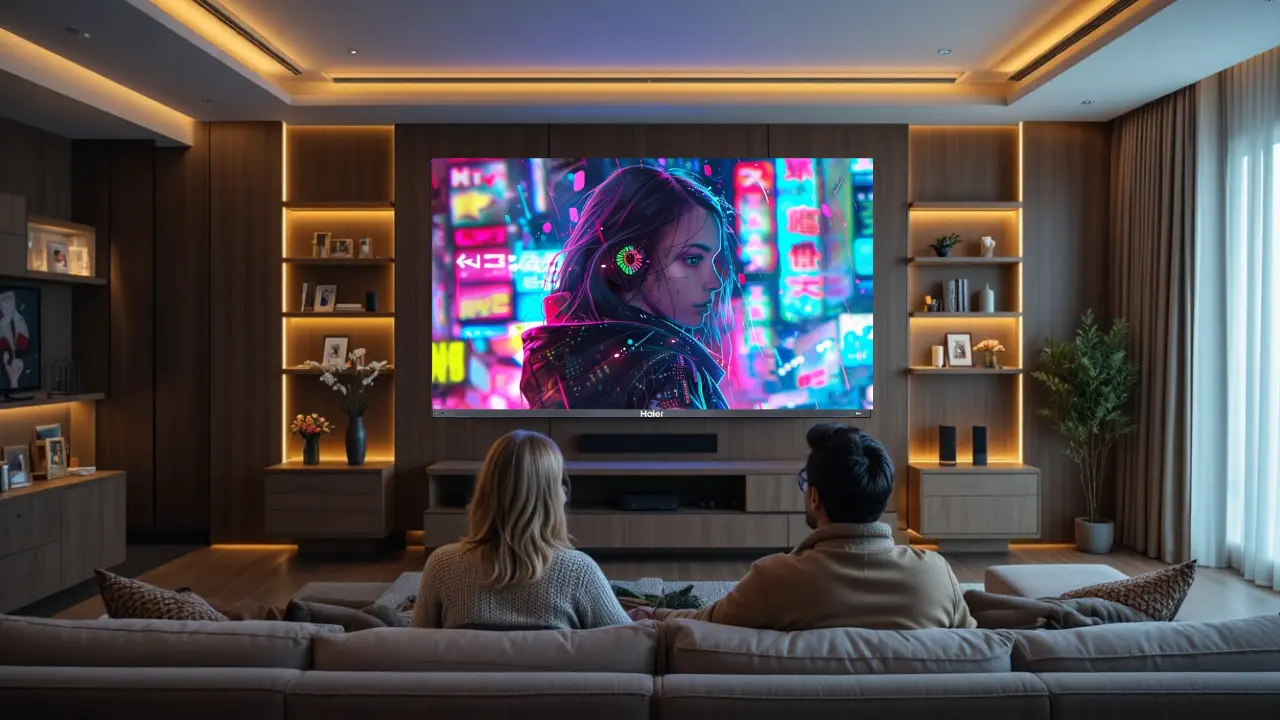

Natural colours powered by AI intelligence mean your TV automatically adjusts brightness, contrast, and tone in real time so skin tones look real, skies look believable, and cricket greens feel alive.
It studies what you are watching and optimises every frame. The result is simple, visuals that feel less processed and more human.
That is the promise.
But the real story is bigger than a feature.
It is about how modern Indian homes experience colour.
Why do some screens look bright but not real?
Walk into an electronics store on a Sunday.
Rows of TVs. All glowing. All sharp. All loud.
Yet something feels off.
The reds look too red. The blues feel electric. Faces shine unnaturally.
Brightness is high. Realism is low.
According to a 2023 Statista report, over 68 percent of Indian urban households prefer large-screen TVs above 140cm (55). Bigger screens magnify everything. Good colour feels cinematic. Bad colour feels exaggerated.
This is where AI intelligence changes the equation.
Traditional picture engines apply one preset to everything. Sports mode. Movie mode. Vivid mode.
But life is not a present.
AI Intelligence Reads the Scene, Not Just the Signal

Modern displays powered by AI intelligence analyse thousands of data points per second.
They detect whether the scene is:
- A dark night sequence
- A sunlit cricket stadium
- A close-up emotional dialogue
- A fast-moving action frame
Each scenario demands a different colour balance.
For example, human skin tones fall within a narrow spectrum. When that balance shifts even slightly, faces look artificial. AI-driven systems detect these shifts instantly.
According to research from the Society for Information Display, colour accuracy directly impacts perceived image quality more than resolution alone. In other words, 4K does not matter if colours lie.
Colour is emotion.
And emotion must feel honest.
What Natural Colours Actually Mean in Real Homes
Let us bring this into the living room.
It is Sunday evening. India vs Australia.
The stadium grass must look natural green, not neon.
The players’ jerseys must pop without bleeding into the background.
Or imagine a Diwali movie night. Warm diyas glowing. Golden hues everywhere. The screen should feel festive, not fluorescent.
Natural colours powered by AI intelligence make this possible because they respond to ambient lighting too. If your room lights are on, brightness adjusts. If the lights dim, contrast deepens.
The screen adapts. Quietly.
Three Ways TVs Handle Colour
One option is static calibration.
- Economical
- Requires manual tweaking
- Does not adapt to changing content
The second option is preset-based optimisation.
- Slightly better
- Works for specific genres
- Fails when scenes shift suddenly
The third option is AI scene recognition.
- Real-time adjustment
- Detects faces, landscapes, movement
- Balances brightness and colour automatically
The cost difference is upfront.
The benefit difference is daily.
When you watch three hours of content every evening, small colour inaccuracies compound into fatigue.
The Hidden System Behind Natural Colours
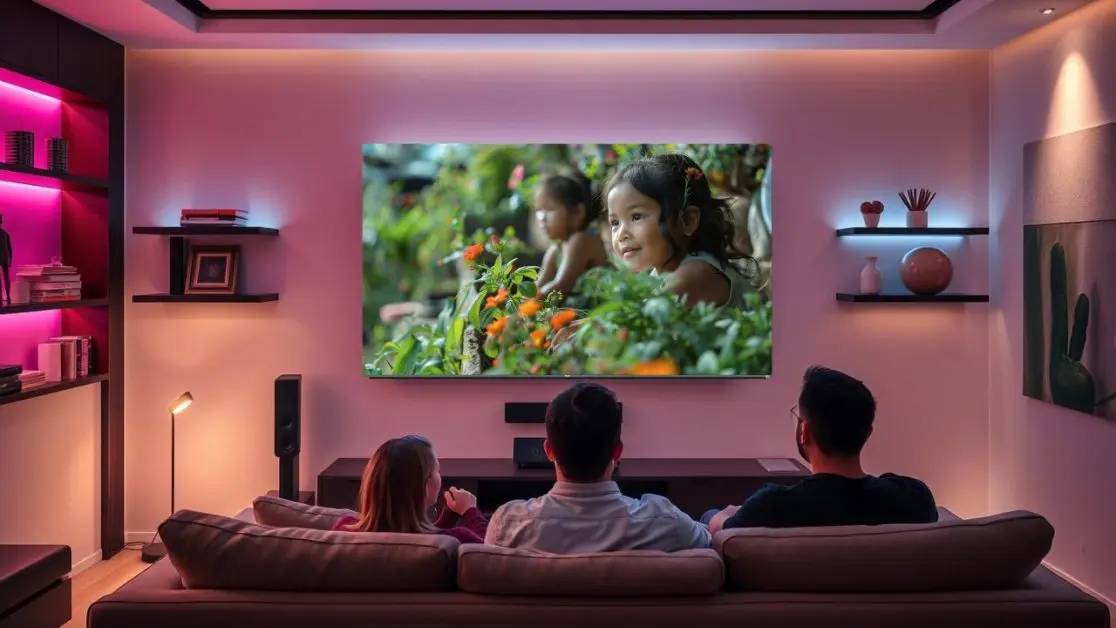
Colour reproduction depends on three core pillars:
| Element | What It Controls | Why It Matters |
| Brightness | Light intensity | Prevents washed-out scenes |
| Contrast | Difference between dark and light | Adds depth |
| Colour Volume | Range of visible colours | Makes visuals lifelike |
AI intelligence works across all three simultaneously.
Take QD Mini LED technology for example. It uses quantum dot layers and precise backlighting zones.
According to industry benchmarks, Mini LED panels can offer significantly higher peak brightness and improved contrast control compared to conventional LED displays.
Haier’s QD Mini LED AI Smart Google TV range, including models like the M92 Series and the M96 Series 254cm (100) display, integrates AI picture optimisation that enhances natural colours scene by scene.
Not louder colours.
Smarter ones.
Why Natural Colours Matter for Families
In Indian homes, the TV is not just a device.
It is a gathering point.
Parents watch the news. Kids stream animated shows. Grandparents watch mythological serials. Working professionals unwind with OTT thrillers.
Each genre demands different tonal balance.
Animated content thrives on vibrant palettes. Historical dramas require subtle earthy tones. Night thrillers need controlled shadows.
A single setting cannot serve all.
AI intelligence ensures transitions feel seamless.
It removes friction from decision-making.
And friction is what tires families.
Data Speaks: Viewing Habits Are Changing
- BARC India reports increased OTT consumption across Tier 2 cities.
- 4K streaming subscriptions in India have grown steadily over the last three years.
- Screen sizes above 165cm (65) are becoming common in urban apartments.
Larger screens amplify imperfections.
Natural colours powered by AI intelligence solve this at scale.
Because when pixels increase, accuracy becomes critical.
The Real Cost of Inaccurate Colours
It is not just about aesthetics.
Inaccurate colours can cause:
- Eye strain during long sessions
- Loss of detail in dark scenes
- Artificial skin tones that reduce emotional connection
The benefit of AI-powered natural colours:
- Better depth perception
- More comfortable binge sessions
- Higher realism without oversaturation
It is economically efficient over time because it reduces the need for manual recalibration and extends viewing comfort.
Comfort compounds.
How This Reflects a Bigger Shift in Smart Homes
Think beyond the TV.
Smart ACs adjust temperature based on room conditions.
Refrigerators monitor freshness zones.
Washing machines detect fabric load automatically.
The system adapts to the user.
Natural colours powered by AI intelligence follow the same philosophy.
Technology should remove decisions, not create them.
Haier’s broader smart ecosystem reflects this shift. Products speak the language of context, not control panels.
What Should You Look For When Choosing AI-Powered Displays?
Here is a practical checklist:
- Real-time scene recognition
- Adaptive brightness sensors
- Wide colour gamut support
- High contrast ratio panel technology
- AI picture engine integration
One option is to prioritise price only.
You save upfront.
You compromise daily.
The second option is to balance technology and usability.
You invest once.
You experience it consistently.
The third option is to treat the TV as part of your lifestyle system.
You choose based on long-term comfort.
You reduce friction in daily routines.
The decision is not technical.
It is emotional.
A Simple Truth About Colour
Natural colour is not about intensity.
It is about integrity.
When technology disappears, experience improves.
When AI intelligence works quietly in the background, families focus on stories, not settings.
The Bigger Implication for Modern Indian Homes
Indian households are evolving.
Hybrid work. Online education. Streaming-first entertainment. Festival celebrations at home.
The screen becomes a daily companion.
Natural colours powered by AI intelligence are not a luxury add-on. They are a response to how we live now.
They ensure that every cricket match, every Diwali movie night, every weekend documentary feels close to reality.
Not exaggerated.
Not artificial.
Just right.
And in a world overloaded with brightness, sometimes balance is the real innovation.
Because at the end of the day, technology should not shout.
It should serve.
Quietly.
Frequently Asked Questions
How do I know if a TV with AI colour optimisation is actually worth it for my home?
AI colour optimisation matters if you watch a variety of content sports, OTT shows, news, and movies. It automatically adjusts colour tone, brightness, and contrast depending on the scene, so you don’t need to manually change picture modes every time.
I feel overwhelmed when comparing TVs in stores. What single feature should I prioritise for better visuals?
Prioritise colour accuracy with AI scene optimisation. Resolution (like 4K) matters, but if colours are exaggerated or inaccurate, the image still feels artificial.
Should I buy a cheaper TV now or invest in an AI-powered display that adjusts colours automatically?
Cheaper TVs may look bright in stores but often require manual calibration at home. AI-powered displays cost more upfront but improve daily viewing comfort by automatically adapting colour balance and brightness.
When I watch three hours of TV daily, does colour technology really make a difference?
Yes. Over long viewing sessions, inaccurate colours can cause eye strain and visual fatigue. AI colour optimisation maintains natural tones, which makes extended viewing more comfortable.
Why do TVs in stores look extremely bright but not realistic?
Retail displays usually run in Vivid mode, which exaggerates brightness and colours to grab attention. While eye-catching in stores, this often results in unnatural reds, electric blues, and shiny skin tones at home.
Why do people’s faces sometimes look plastic or shiny on my TV?
That happens when colour calibration shifts outside the natural human skin tone range. AI picture engines detect facial tones and correct colour balance in real time.
Why does my TV struggle to balance colour when scenes change quickly?
Traditional TVs rely on fixed presets like Movie or Sports mode. When scenes change rapidly like from dark dialogue to bright action the settings may no longer match the scene.
How does AI scene recognition improve fast-moving content?
AI systems analyse each frame and detect the type of scene (sports, dialogue, night scene). They then adjust brightness, contrast, and colour tone instantly.
How does AI intelligence actually analyse what I’m watching?
AI picture engines evaluate thousands of visual data points per second detecting motion, brightness levels, faces, landscapes, and colour ranges.
Does AI colour optimisation work with streaming platforms like Netflix or YouTube?
Yes. The AI works at the display level, so it improves visuals regardless of the content source OTT apps, cable TV, or gaming.